 Sudden Valley Exterior
 Roof Repair Built for Yew Street's Conditions
Yew Street sits inside the broader Sudden Valley community, where roofs take a steady beating from a combination most homeowners don't fully appreciate until they're dealing with a leak: moisture off the lake, salt-tinged air moving through Whatcom County, and driving rain that doesn't just fall straight down but gets pushed sideways into eaves, valleys, and flashing. A roof repair here isn't the same job as a roof repair in a dry inland climate. The materials, the sequencing, and the details around flashing and ventilation all have to account for a roof that stays damp longer than most.
This page covers what roof repair actually means for homes in and around Yew Street — what typically fails first, what a repair needs to include to actually hold, and how we approach the work so it doesn't turn into a repeat visit next winter.
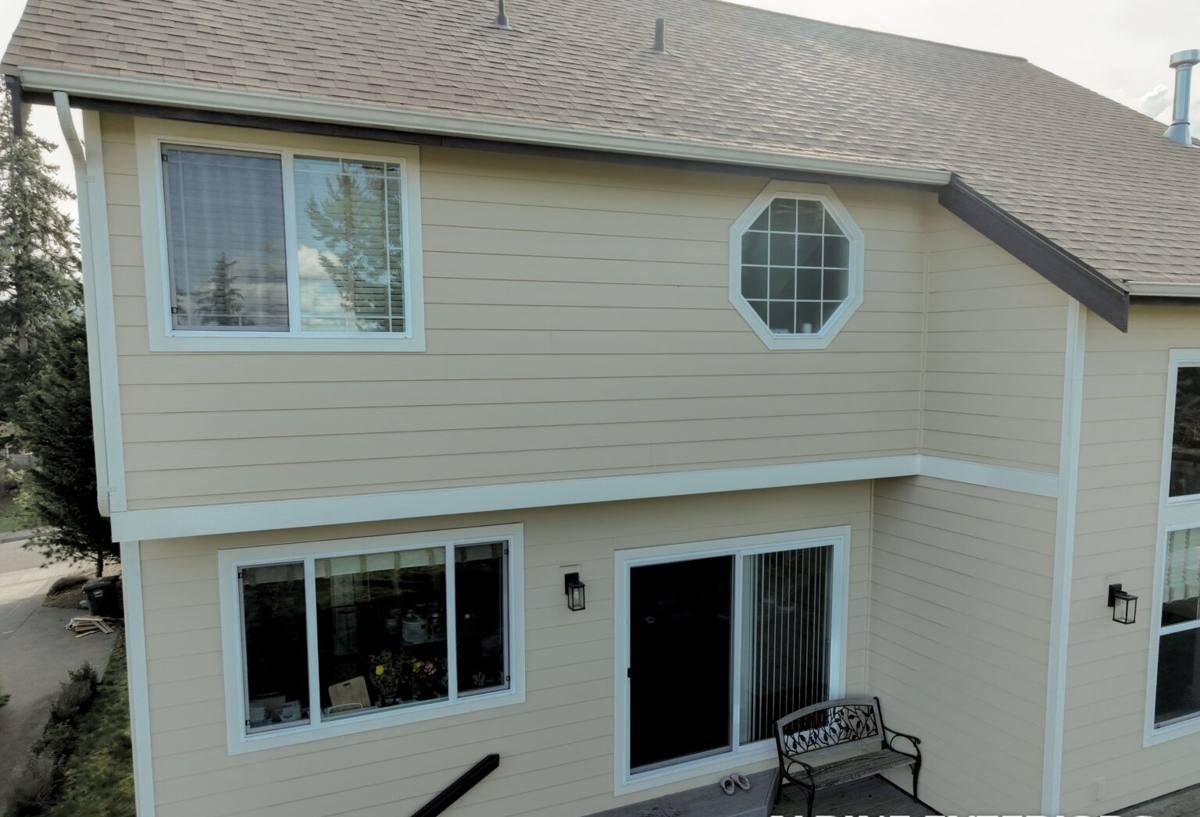
What Whatcom County Weather Does to a Roof Over Time
Three things drive most of the roof repair calls we get from this part of Sudden Valley:
Salt Air
Being close to the water means metal components — flashing, fasteners, vent caps, gutter hardware — corrode faster than they would further inland. Corroded flashing is one of the most common hidden causes of a "mystery leak" that shows up on a ceiling nowhere near where the water is actually entering the roof.
Driving Rain
Wind-driven rain doesn't behave like a calm downpour. It gets forced up under shingle edges, into open valleys, and around anything that penetrates the roof plane — vent pipes, chimneys, skylights. A repair that only patches the visible damage without checking how water moves across that section of roof during a real storm tends to fail again.
Moss Season
Whatcom County's wet season runs long, and shaded, north-facing roof sections in Sudden Valley's tree cover rarely get enough sun to dry out between rains. Moss and algae take hold in that moisture, and once established, moss roots work under shingle tabs and lift them, which is exactly the kind of small opening that turns into a real leak after a few more storms.
Signs a Yew Street Roof Needs Repair
Some damage is obvious. A lot of it isn't, especially from the ground. These are the signs we tell homeowners in this area to watch for:
- Shingles that are cupped, curling at the edges, or missing granules (shows up as bald, darker patches)
- Moss or algae buildup, especially on shaded or north-facing slopes
- Rust streaking below metal flashing or vent stacks
- Soft or spongy spots when walked (a sign of decking damage underneath)
- Water stains on interior ceilings, especially after a windy rainstorm rather than a calm one
- Daylight visible through the attic roof deck
- Granules collecting in gutters or at downspout outlets
- Nail pops or lifted shingle tabs along ridgelines and valleys
Any one of these on its own might be minor. Two or three together, especially near a valley or chimney, usually means water has already found a way in and the repair needs to address more than the surface.
What a Correct Repair Actually Involves
The difference between a repair that lasts and one that doesn't usually isn't the shingles — it's everything underneath and around them.
Checking the Decking, Not Just the Surface
If water has been getting in for a while, the plywood or OSB decking underneath can be soft or delaminating. Replacing shingles over damaged decking just hides the problem until it fails again, often somewhere else nearby. A real repair means pulling back enough material to check the deck condition, not just swapping what's visibly cracked or missing.
Flashing First
Given how much salt-air corrosion affects flashing in this area, we treat flashing as its own line item, not an afterthought. Step flashing at walls, valley flashing, and pipe boots all get inspected and replaced where they're rusted, cracked, or no longer sealing tight — even if the surrounding shingles look fine.
Matching Materials Honestly
We try to match the existing shingle profile, weight, and as close to the color as the product line allows. Exact color matches aren't always possible if the existing roof has weathered or the original product is discontinued — we'll tell you upfront if a patch will be visibly different rather than promising a seamless match we can't deliver.
Moss and Algae Treatment
On a repair in a moss-prone section, we clear existing growth carefully (moss should be removed, not pressure-blasted, which can strip granules and shorten shingle life) and address the underlying cause — usually shade and poor airflow — rather than just cleaning the surface and leaving the same conditions to grow it back.
Ventilation Check
A repair is also a chance to check attic ventilation. Poor airflow traps moisture against the underside of the decking, which accelerates rot and makes moss and algae worse on the outside. If ventilation is part of why a section failed, we'll flag it as part of the repair conversation, not sell it as a separate upsell.
Common Repair Types on Sudden Valley Roofs
| Repair Type | Typical Cause | What's Involved |
|---|---|---|
| Flashing repair/replacement | Salt-air corrosion, age, poor original install | Remove and replace flashing at walls, valleys, or penetrations; reseal correctly |
| Shingle patch | Wind damage, impact, isolated wear | Remove damaged shingles, check decking, install matching replacements |
| Valley repair | Wind-driven rain, debris buildup, worn valley material | Clear debris, inspect underlayment, replace valley flashing or shingles as needed |
| Moss/algae remediation | Long wet season, shaded roof sections | Careful removal, treatment, and addressing airflow or shade contributing to regrowth |
| Decking repair | Sustained leak, rot from trapped moisture | Remove affected shingles and underlayment, replace damaged decking, rebuild the section |
| Vent boot/pipe flashing | Cracked rubber collar, rusted metal boot | Replace boot, reseal around penetration |
Our Repair Process
We keep the process straightforward because most homeowners just want to know what's wrong, what it costs, and whether it's going to hold.
- Inspection. We look at the roof from the ground and, when it's safe to do so, up close — including the attic side if there's active water intrusion, since that tells us where water is actually traveling versus where it's showing up inside.
- Honest diagnosis. We tell you what's actually failing and why, including if the "repair" is really a sign a section is nearing the end of its service life.
- Written scope and estimate. You'll know what's being replaced, what materials are used, and roughly what it costs before work starts.
- The repair. Flashing, decking, and shingles addressed in the order that actually stops water — not just the fastest visible fix.
- Cleanup and check. Debris cleared, gutters checked for granule buildup from the repair area, and a final look to confirm the fix is sound.
Repair or Replace? How We Decide
Not every roof issue needs a full replacement, and not every issue should be patched indefinitely either. A few honest factors that go into that call:
| Factor | Leans Toward Repair | Leans Toward Replacement |
|---|---|---|
| Roof age | Under 15-20 years, depending on material | Near or past expected service life |
| Damage extent | Isolated to one section or penetration | Spread across multiple slopes |
| Decking condition | Solid, no widespread rot | Soft or rotted in multiple areas |
| Repair history | First or second repair in that area | Same spot repaired repeatedly |
| Moss/algae extent | Localized, manageable with treatment | Heavy, long-term growth affecting shingle integrity broadly |
We'll always give you the repair option if it's genuinely sound and cost-effective. If a repair would just be a short-term patch on a roof that's structurally near the end of its life, we'll say so directly rather than let you spend money on something that won't hold.
Why a Crew That Already Works Yew Street Matters
Roofing crews that work broadly across a wide region without much repeat presence in one area tend to treat every roof as a generic case. A crew that regularly works in and around Sudden Valley already has a working sense of which slopes in this specific microclimate hold moss longest, how salt air tends to attack flashing here versus further inland, and what wind-driven rain does to valleys facing the prevailing weather direction. That local pattern recognition shortens the diagnosis step and reduces the chance of a repair that misses the actual cause.
It also matters for accountability. A local crew is easy to call back if something doesn't hold, and has a reputation in the community worth protecting — that's a different incentive than a crew passing through from out of the area.
Between Repairs: Keeping a Yew Street Roof Ahead of the Weather
A repair holds longer when it's not fighting the same conditions unchecked. A few habits that matter more here than in drier climates:
- Clear gutters and downspouts before the fall rains pick up, so water isn't backing up under the roof edge
- Trim back overhanging branches on shaded slopes to cut down on moss-friendly conditions
- Have flashing and vent boots checked every couple of years given how salt air accelerates corrosion locally
- Address moss early — a light growth is a maintenance job, a heavy mat is a repair job
- Walk the attic after a hard wind-driven storm and check for new stains, especially near valleys and chimneys
None of this replaces a proper inspection, but it reduces how often a small issue turns into a repair call in the first place.
If you're dealing with a leak, visible shingle damage, or just want a second opinion on a roof section before it becomes a bigger problem, we're glad to take a look. The estimate is free, there's no pressure, and you'll get a straight answer about whether it's a repair or something bigger — use the form below to get started.