 Sudden Valley Exterior
 An Exterior Company That Knows Fairhaven
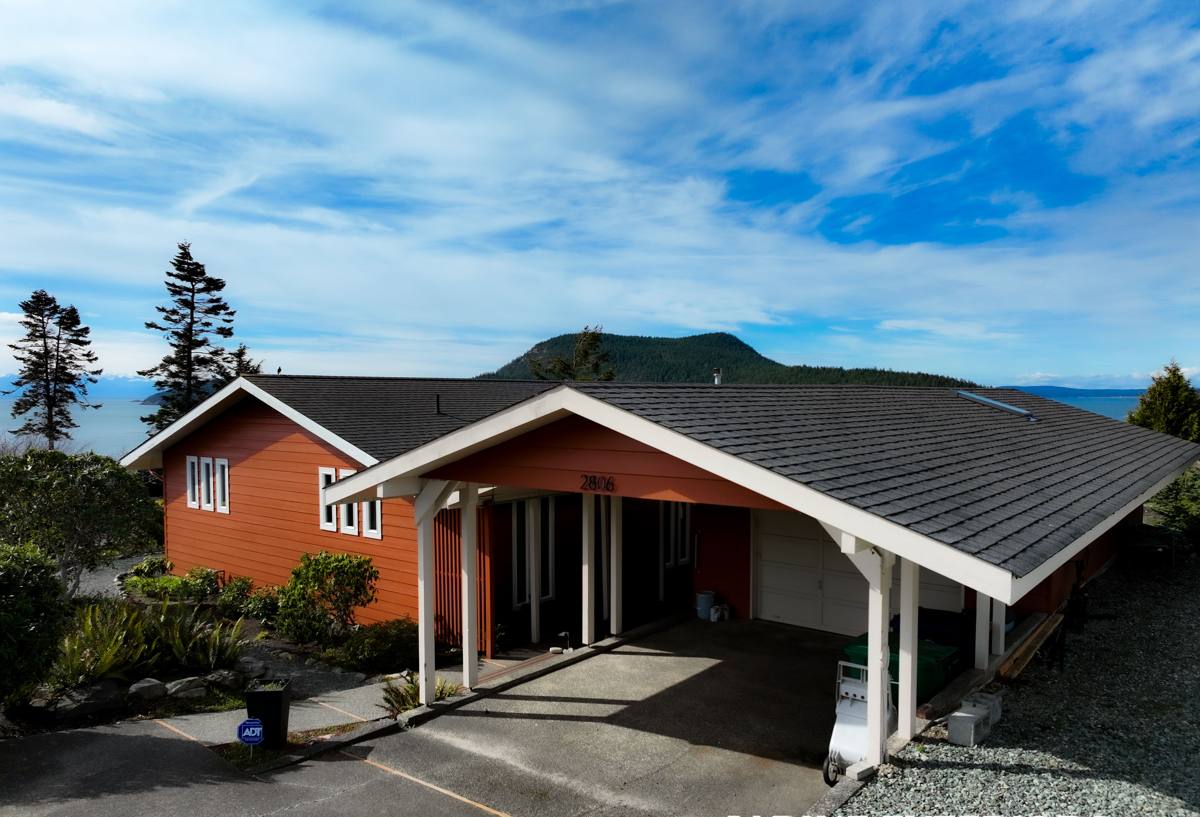
Fairhaven is a distinct part of Bellingham, and the houses there carry the marks of it. Sitting close to Bellingham Bay in Whatcom County, this neighborhood deals with a combination of weather that's harder on a home's exterior than most people realize until they're standing in front of a repair bill. Salt-tinged marine air, rain that comes in sideways more often than straight down, and a moss season that can run most of the calendar year all work on siding, trim, roofing, and windows in ways that a generic exterior job doesn't account for. We do exterior work across Whatcom County, and Fairhaven is one of the areas where getting the details right matters most.
This page isn't about one product or one service. It's about what "doing the exterior right" actually means for a Fairhaven home — the full envelope, not just whichever piece happens to look bad this year. Siding, roofing, windows, and decks all interact with each other and with the same weather conditions, and treating them as one connected system rather than four separate line items is a big part of what keeps a house dry and low-maintenance over the long run.
What Makes Fairhaven's Climate Tough on a House
Salt Air, Year-Round
Homes near Bellingham Bay sit in a steady drift of moisture-laden, mildly corrosive marine air. It's not just a storm-day problem — it's a background condition most of the year. Over time it works on exposed fasteners, flashing, and lower-grade finishes, usually showing up as rust streaking, degraded caulk lines, or a paint or finish that's chalked and faded well before it should be.
Wind-Driven Rain
Being close to open water means rain in Fairhaven doesn't just fall, it gets pushed by wind into places it wouldn't normally reach — lap joints, trim seams, window edges, wall penetrations. Materials and installation details that hold up fine forty miles inland can still let water in here specifically because of how wind interacts with this stretch of coastline.
A Long Moss and Mildew Season
Mild temperatures, consistent dampness, and mature tree cover common in Fairhaven's residential blocks add up to extended moss and mildew growth, especially on shaded or north-facing surfaces. It shows up first in the spots homeowners check least: behind shrubs, under eave overhangs, along the shady side of a roof or wall where things never fully dry out between rain events.
Slope and Drainage
A good portion of Fairhaven's housing sits on sloped terrain rising from the waterfront. That affects how water moves around a foundation, how gutters and downspouts need to be routed, and how much attention grading deserves at the base of exterior walls. On a hillside lot, water management is as much about where the water goes after it hits the house as it is about keeping it out in the first place.
Siding: The Material Choice That Sets the Tone
We install James Hardie fiber cement siding, and only James Hardie. We don't carry a lineup of brands and let price decide the job. That's a deliberate professional standard, based on what we've consistently seen on tear-offs and repair calls in exactly this kind of marine, high-moisture climate.
- Non-combustible core: fiber cement doesn't feed a fire the way wood-based siding products can.
- Factory-applied ColorPlus finish: cured under controlled conditions rather than brushed on-site, so it resists fading, chalking, and moisture intrusion far longer than field-applied paint.
- Climate-engineered HZ formulations: Hardie's HZ5 product line is built for regions with heavy sustained moisture and freeze-thaw cycling, a closer match to coastal Whatcom County than a generic national spec.
- Dimensional stability: it doesn't swell, cup, or warp the way engineered wood can after repeated wet-season moisture cycles.
- A strong transferable warranty, provided the installation follows spec.
We don't install LP SmartSide, vinyl siding, Cemplank, Allura, primed spruce, or cedar. Those are all legitimate products that plenty of contractors install well. Our call was that in a climate this consistently wet and salt-exposed, standing behind one system we understand completely, top to bottom, serves homeowners better than offering a cheaper alternative that quietly shifts maintenance risk onto them a few years down the road. Engineered wood products are more sensitive to moisture at cut edges and fastener penetrations than fiber cement. Vinyl can warp under direct sun, crack in a cold snap, and trap moisture behind the panel if the house wrap and flashing underneath weren't installed carefully. Cedar and primed spruce are genuinely handsome, but they need a painting or sealing schedule that's easy to let slip in a climate this wet, and once it slips, the material's real-world lifespan drops well below what it's rated for.
Roofing: The First Line of Defense
A roof exposed to the same salt air and wind-driven rain as the walls beneath it needs flashing details and material choices built for sustained moisture, not just an occasional storm. Roof valleys, penetrations around vents and chimneys, and the transition points where a roof meets a wall are where we see the most trouble start on Fairhaven homes — not from a single leak, but from years of a small gap letting moisture track slowly into the structure. We handle roof repairs and full replacements, and because we also do the siding underneath, we can trace a leak back to its actual source instead of patching where the water happens to be visible.
Signs a Roof Needs a Closer Look
- Moss buildup along shaded slopes or in valleys that returns quickly after cleaning
- Granule loss showing up in gutters
- Curling, cracked, or missing shingles after a windstorm
- Staining on interior ceilings or in the attic near roof penetrations
- Soft spots or sagging along the roofline
Windows: A Common, Quiet Failure Point
Window flashing is one of the most frequent problems we find hiding behind damaged siding. A window that isn't integrated correctly with the house wrap and siding around it becomes a slow entry point for water — one that can sit unnoticed for years while it works on the framing and sheathing underneath. In a neighborhood dealing with sustained marine moisture and wind-driven rain, that detail carries more weight than it does in a milder inland climate. Window replacement is also a chance to correct old flashing mistakes that a homeowner would otherwise never see, since they're buried behind the trim.
Beyond moisture control, older windows in Fairhaven's homes often lag well behind current energy performance. Replacing single-pane or aging double-pane units with properly flashed, better-insulated windows can noticeably cut down on drafts and the condensation that shows up on cold, damp mornings.
Decks: Where Wood Meets the Wall
A deck attached to the house is only as good as its ledger connection. That's the board that ties the deck framing to the wall, and it's a spot where water intrusion can quietly damage the wall assembly behind it if it isn't flashed correctly. On sloped Fairhaven lots, where drainage already tends to push moisture toward the foundation and lower walls, a poorly flashed ledger board adds another path for water to find its way in. We build and repair decks with that connection treated as seriously as the decking material itself, and we can evaluate an existing deck's ledger and framing as part of a broader exterior inspection.
Why Treating the Exterior as One System Matters
Siding problems rarely start with the siding. A roof valley that's leaking, a window flashed wrong during a past renovation, or a deck ledger trapping moisture against the wall can all surface later as siding damage, even though the siding is just where the water finally became visible. Because we handle siding, roofing, windows, and decks with the same crew rather than subcontracting pieces out separately, we can walk a Fairhaven property and look at the whole envelope at once — tracing a problem back to where it actually started instead of covering it up with new material.
Exterior Cost Factors in Fairhaven
| Factor | What It Affects | Why It Matters Here |
|---|---|---|
| Home age and trim complexity | Total material and labor | Fairhaven's mix of older and infill homes often has more roof intersections and trim detail where wind-driven rain can work its way in |
| Tear-off vs. overlay | Labor scope and substrate access | Tear-off exposes hidden moisture damage that's common under decades-old materials this close to the bay |
| Substrate and structural condition | Repair costs before new material goes on | Trapped moisture behind failing siding or roofing can damage sheathing and framing before it's visible from outside |
| Slope and site access | Labor time and equipment needs | Hillside lots common in Fairhaven can add staging, scaffolding, or crane access time |
| Scope bundling | Overall project cost and timeline | Combining siding, roofing, window, or deck work in one project often reduces total disruption and repeat setup costs versus separate projects |
Real numbers depend on the specific house and its condition, which is why we walk the property in person before quoting rather than pricing off square footage alone.
What to Check Before Hiring an Exterior Contractor
- Confirm an active Washington state contractor license and current insurance
- Ask exactly which siding brand and product line they install, and why
- Ask how they handle hidden substrate damage discovered during tear-off
- Ask whether the same crew handles roofing, windows, and decks, or if those get subcontracted out separately
- Get a written scope that specifies flashing and water-management details, not just a material list
- Ask how they'd assess a house for moss, moisture, and wind exposure specific to its lot and orientation
A Local Crew That Knows This Corner of Whatcom County
A crew that works this stretch of Whatcom County regularly sees how salt air, wind-driven rain, and moss actually behave on real houses over a full year, not just how a product performs on a spec sheet. That shows up in practical decisions on install day: where extra flashing attention pays off, which wall or roof orientations stay damp the longest, and which details are worth the extra time so a homeowner isn't dealing with a callback two winters later. Fairhaven's proximity to the bay and its hillside terrain aren't identical to conditions in every part of Bellingham, and a crew with real time in the neighborhood accounts for that instead of applying the same approach everywhere.
If your Fairhaven home needs new siding, a roof repair or replacement, window work, deck repair or a new build, or just an honest assessment of what's actually going on with the exterior, we're happy to take a look. Reach out using the form below to schedule a free, no-pressure estimate.