 Sudden Valley Exterior
 What Primed Wood Siding Actually Is
Primed wood siding is exactly what it sounds like: solid wood boards, usually pine, fir, or spruce, milled into lap or panel profiles and coated at the factory (or job site) with a primer coat before final paint goes on. It's been a staple of Pacific Northwest home construction for generations, and there's a reason for that — real wood has a warmth and texture that manufactured products spend a lot of effort trying to replicate. It's also relatively inexpensive to buy, easy for a carpenter to cut and fit, and it takes paint well when it's properly prepped.
We get asked about primed wood fairly often, usually from homeowners doing a like-for-like replacement on an older Sudden Valley home that already has it. We're upfront about our answer: we don't install it. Not because it's a bad material in the abstract, but because of what happens to it here, specifically, over the years that follow installation.
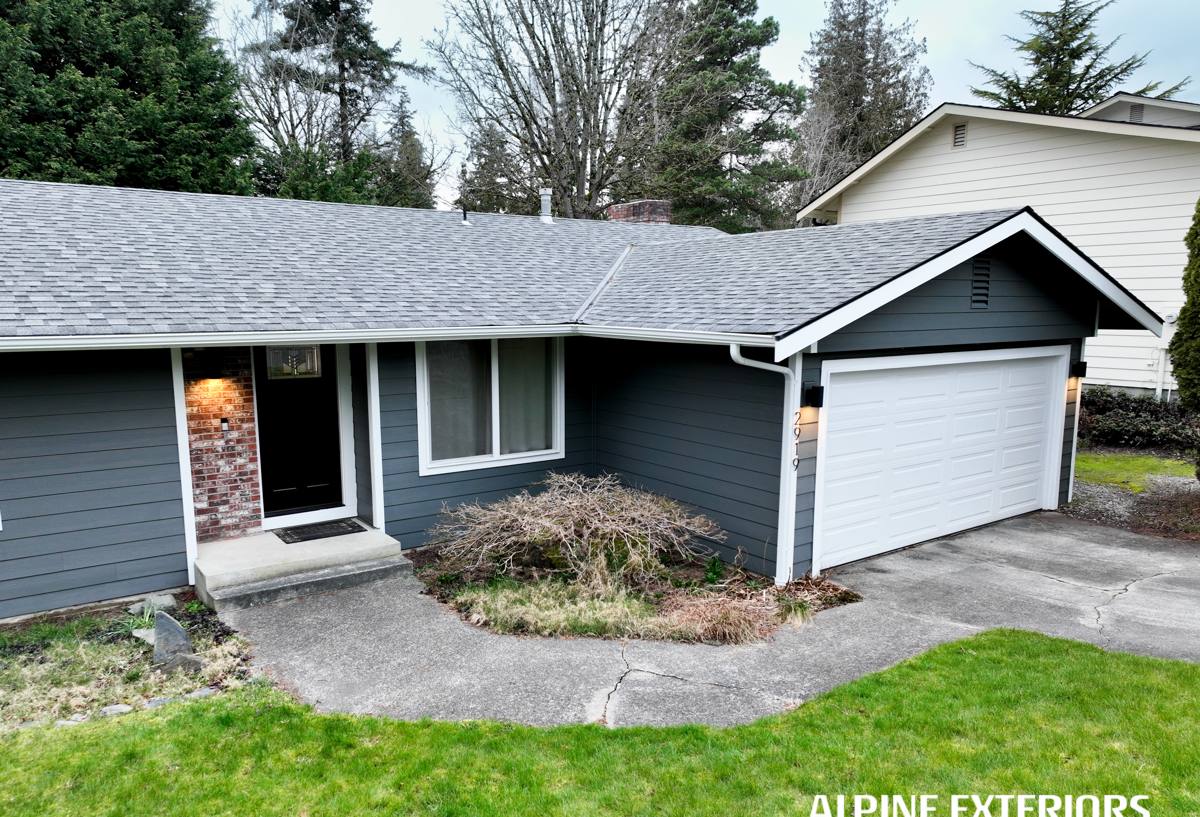
Credit Where It's Due
Before we get into why we walk away from primed wood jobs, it's worth being fair about what the material does well:
- Real wood grain and profile options that some homeowners simply prefer over engineered alternatives
- Straightforward for an experienced carpenter to cut, notch, and fit around trim details
- Lower material cost per square foot than fiber cement or many engineered wood products
- Easy to repair a small section without specialized tools, at least while the wood underneath is still sound
If you live somewhere dry, with mild humidity swings and no salt exposure, primed wood can hold up reasonably well for a long time when it's maintained on schedule. That's just not the environment around Lake Whatcom.
The Moisture Reality of Sudden Valley
Whatcom County sits in a marine climate, and the microclimate around Sudden Valley adds its own wrinkles — lake-effect humidity, tree cover that keeps north and west-facing walls shaded and damp longer after a storm, and a rainy season that stretches for months rather than weeks. Wood siding needs to dry out between wet cycles to stay stable. When it doesn't get that chance, the wood fibers swell, the paint film stretches past its limit, and cracks open up that let water in behind the finish.
Once water gets behind primed wood siding, it doesn't evaporate quickly. It sits against the board, the moisture barrier, and the framing, and that's when rot starts — usually from the inside of the board outward, which means it's often further along than it looks by the time you notice it from the outside.
Salt Air and Driving Rain
Properties closer to the water pick up salt-laden air that accelerates the breakdown of paint film and primer adhesion. Combine that with the driving, wind-blown rain this area gets in fall and winter storms, and you have moisture being forced sideways into every seam, joint, and nail hole in a wood siding installation — not just falling straight down where flashing and overlaps are designed to shed it.
Moss Season
Whatcom County's moss season runs long. Moss and algae hold moisture directly against the siding surface for weeks at a time, and on shaded or north-facing walls it can establish itself within a year or two of a fresh paint job. Once moss takes hold, cleaning it off aggressively enough to matter also tends to strip away paint film, which restarts the exposure clock on bare or thinly primed wood.
The Maintenance Burden Nobody Budgets For
The sales pitch on wood siding rarely mentions what it costs to keep it looking good. Paint isn't a one-time expense — it's a recurring one, and in this climate the recurrence is more frequent than most homeowners expect.
| Maintenance Task | Typical Interval Elsewhere | Typical Interval, Sudden Valley Climate |
|---|---|---|
| Full repaint | 7-10 years | 4-6 years |
| Caulk and joint inspection | Annually | Annually, with more frequent touch-ups near ground level and roof lines |
| Moss and algae treatment | As needed | Every 1-2 years on shaded elevations |
| Rot inspection at trim and butt joints | Every few years | Every 1-2 years |
Every one of those tasks costs money and, if skipped, shortens the life of the siding. Homeowners who buy wood siding for its lower upfront price often end up spending more over a 20-year window than they would have with a lower-maintenance material — they just spend it in smaller amounts, spread out, which makes it easy to lose track of.
Installation Sensitivity
Primed wood siding is far less forgiving of installation shortcuts than most homeowners realize. The factory primer coat protects the face of the board, but every cut end, every nail penetration, and every place two boards meet is a spot where raw wood is exposed unless a crew takes the extra step of field-priming those cuts before the boards go up. Skip that step — which happens more often than it should, especially on tight schedules — and you've built moisture entry points into the wall on day one, invisible until the paint starts failing from the inside out a few years later.
Back-priming (coating the backside of the board before installation) matters just as much and is even easier to skip, since nobody sees it once the siding is up. In a low-humidity climate that omission might not matter much. In Whatcom County, where the backside of the siding is sitting against a wall assembly that's rarely bone dry, it's often the difference between siding that lasts fifteen years and siding that lasts thirty.
We're not willing to install a product where the difference between a good job and a problem job comes down to steps that are invisible at final walkthrough and only show up as a callback years later.
What We Install Instead: James Hardie Fiber Cement
We standardized on James Hardie fiber cement siding for every home we side, and the reasoning is the mirror image of everything above. Fiber cement doesn't swell, rot, or feed moss the way wood fibers do, because it isn't an organic material to begin with — it's cement, sand, and cellulose fiber, engineered specifically to hold its shape through wet-dry cycling.
ColorPlus Factory Finish
Hardie's ColorPlus finish is baked on at the factory under controlled conditions, not brushed on at the job site where weather, temperature, and crew technique all introduce variables. It carries its own finish warranty separate from the product warranty, and it holds color and resists the kind of chalking and fading that field-applied paint struggles with in this climate.
HZ5 Climate Engineering
Hardie manufactures its boards in different formulations for different climate zones. The HZ5 product line is built for regions with freeze-thaw cycling and sustained moisture exposure — a closer match to Whatcom County conditions than a general-purpose board designed for a drier part of the country.
Non-Combustible
Fiber cement doesn't burn. That's a meaningful difference in wildfire-adjacent risk conversations that come up more often in the Pacific Northwest than they used to, and it's simply not a property wood siding, primed or otherwise, can offer.
Transferable Warranty
Hardie backs its products with a strong, transferable warranty — a real asset when you eventually sell the house, since the next owner inherits coverage instead of inheriting a wood siding system that's due for another repaint.
A Straightforward Comparison
| Factor | Primed Wood Siding | James Hardie Fiber Cement |
|---|---|---|
| Moisture behavior | Absorbs and swells; rot risk if paint film fails | Non-organic; doesn't absorb or rot |
| Repaint interval (this climate) | 4-6 years | ColorPlus finish typically lasts well beyond 10-15 years |
| Moss/algae resistance | Low — organic surface, holds moisture | Higher — non-organic surface |
| Fire resistance | Combustible | Non-combustible |
| Upfront material cost | Lower | Higher |
| Estimated lifetime cost | Higher, due to recurring maintenance | Lower over a 20+ year horizon |
Questions Worth Asking Before You Choose a Siding Material
Whether you go with wood, fiber cement, or something else, these are the questions we'd want answered before signing a contract:
- Is the board back-primed and field-primed at every cut end, or just face-primed at the factory?
- What's the manufacturer's actual warranty term, and does it transfer to a future homeowner?
- How is the finish applied — factory-baked or field-applied — and what does that finish's own warranty cover?
- Is the product rated or formulated for a marine, high-moisture climate, or is it a general-purpose version?
- What does the installer's own workmanship warranty cover, separate from the material warranty?
- What's the realistic maintenance schedule for this specific product in this specific climate, not a national average?
Our Bottom Line
Primed wood siding isn't a scam or a poor product on its own terms — it's a material that was designed for conditions gentler than what a home on Lake Whatcom deals with year after year. Between the salt air, the driving rain off the lake, and a moss season that doesn't leave the siding much time to dry, we've seen enough wood siding jobs fail early to know it's not what we want to stand behind. James Hardie fiber cement, installed correctly, is the product we're comfortable putting our name on for homes in this area.
If you're weighing your options for an upcoming siding project, we're happy to walk your home with you, point out what we'd watch for with your specific exposure and elevations, and give you a free, no-pressure estimate.