 Sudden Valley Exterior
 What Allura Fiber Cement Actually Is
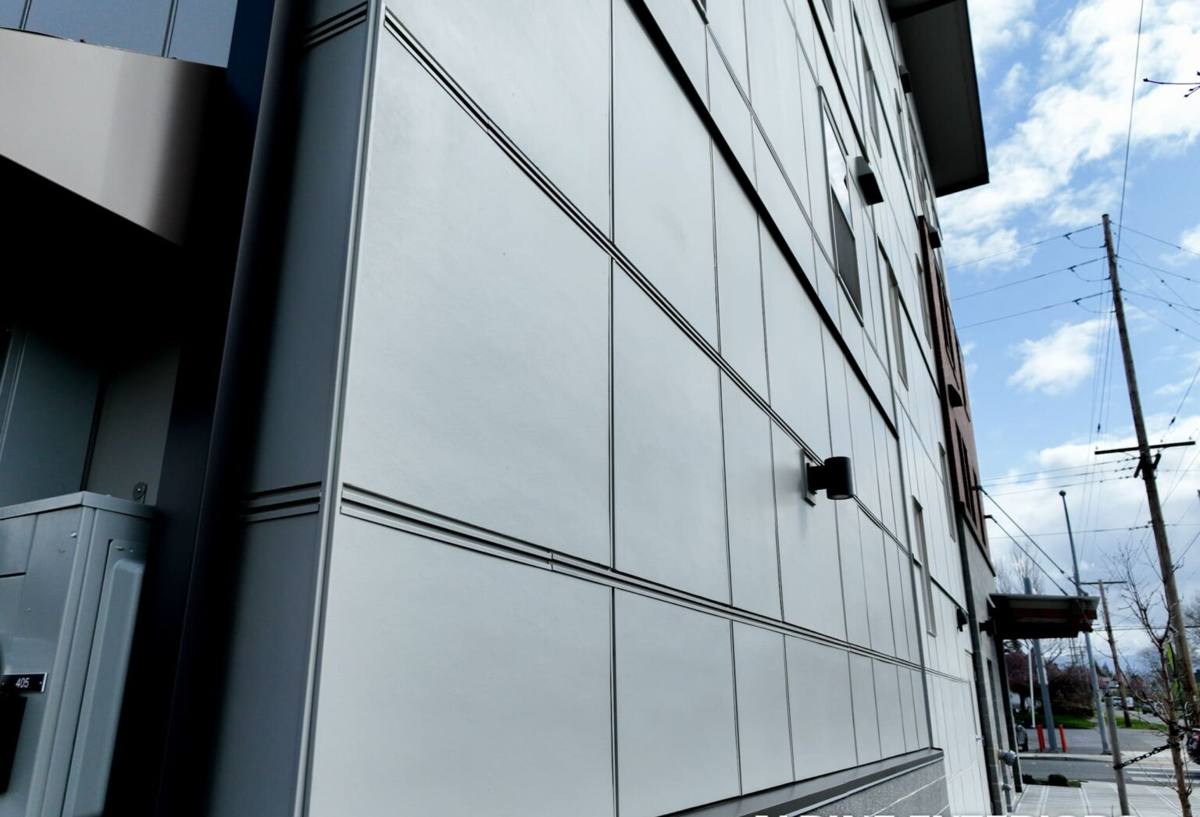
Before we explain why we don't install it, it's worth being straight about what Allura is: a real fiber cement siding product, not a knockoff. Like every fiber cement board on the market, it's made from a mix of Portland cement, sand, and cellulose fiber, pressed and cured into planks and panels. That core recipe makes it non-combustible, resistant to rot, and immune to the termite and woodpecker problems that plague cedar and engineered wood siding. Homeowners comparing brands by spec sheet alone will find a lot of overlap between Allura and the fiber cement products we do install.
So this isn't a page about a "bad" product. It's a page about why, after years of installing and standing behind siding on homes around Lake Whatcom and the wider Sudden Valley area, we made a business decision to install one fiber cement line and stand fully behind it, rather than carry multiple brands and split our expertise, our warranty relationships, and our trim inventory across products with different specs and different track records in this specific climate.
Where Allura Holds Up Fine
- It's genuinely fire-resistant, which matters as much for insurance conversations as for actual fire risk.
- It won't feed carpenter ants or attract woodpeckers the way untreated wood siding can.
- It comes pre-finished in factory colors, so you're not relying entirely on a field-applied paint job for long-term color hold.
- It's available in lap, panel, and shingle-style profiles, giving designers real flexibility.
If a homeowner already has Allura on their home and it was installed correctly, we're not going to tell them it's failing or that they need to rip it off. That's not honest, and it's not our call to make about a product we don't install. Our position is narrower: for new installs and full re-sides, we've chosen not to carry it.
Climate Engineering: The Gap We Care About Most
Sudden Valley sits on Lake Whatcom, and the exteriors here take a specific kind of beating: driving rain off the water, long stretches of overcast humidity, and a moss season that can run most of the year on north-facing walls and anything shaded by fir canopy. Add Whatcom County's proximity to the Salish Sea and the salt-tinged air that carries inland on a west wind, and you've got a climate that punishes any siding product with weak points in its moisture-management engineering.
James Hardie builds its HZ5 and HZ10 product lines around specific climate zones, engineering the board's moisture resistance and installation specs differently for the Pacific Northwest than they would for, say, Arizona or Florida. That regional engineering is backed by a manufacturing and technical-support footprint that's been present and iterating in this market for a long time. We haven't seen the same depth of climate-zone-specific engineering and long-standing regional presence from Allura in the markets we serve, and for siding that's going to sit on a lake-adjacent home for the next 30-plus years, that gap is the whole ballgame.
Why This Matters More Here Than Elsewhere
A siding product that's marginally more moisture-sensitive might be a non-issue in a drier climate. In Whatcom County, where a wall can stay damp for days after a storm and moss will colonize any surface that holds moisture, small differences in water-shedding detail, board density, and factory sealing show up over years, not months.
Factory Finish and Warranty Structure
Both Allura and Hardie ship pre-finished boards, but the finish systems and the warranties behind them aren't identical. This is the kind of detail that gets glossed over in a sales pitch and matters enormously ten years in, when you're trying to figure out who's actually on the hook for a finish problem.
| Factor | What We Look For | Why It Matters Locally |
|---|---|---|
| Finish warranty length | Long-term, transferable coverage on the factory finish itself, not just the substrate | Salt air and UV off the lake accelerate finish wear faster than inland siting |
| Color-match availability for repairs | Deep regional dealer stock so a repaired section matches the rest of the wall | Storm damage or a tree-limb strike years later shouldn't mean a mismatched patch |
| Warranty administration track record | A claims process we've actually seen work for a homeowner | A warranty is only as good as the company standing behind it when it's tested |
| Trim and accessory system depth | Matched fascia, soffit, and batten profiles from the same manufacturer | Mixing brands for trim vs. field siding creates seams and expansion mismatches |
We're not going to publish specific warranty terms here since manufacturers update them, and the fine print matters more than any summary. What we can say is that we've built our installation practices, our crew training, and our warranty conversations with homeowners around one manufacturer's documented system, and we know exactly how that system performs and how claims get handled when something does go wrong.
Distribution and Long-Term Support in Whatcom County
Fiber cement siding isn't a one-and-done purchase. Over the life of a house, there will be a garage door added, a deck ledger board installed, a satellite mount removed, or storm damage that needs a patch. Every one of those jobs works best when the replacement material comes from the same batch family and the same supply chain as what's already on the wall.
Hardie has a dense dealer and distributor network throughout Western Washington, which means we can source matching material quickly, even years after the original install. That's a practical, unglamorous reason, but it's one of the biggest predictors of whether a repair looks seamless or looks like a patch. We haven't seen the same distribution depth for Allura in this specific corner of the state, and that gap becomes a homeowner's problem the day they need a small repair and can't get a matching board without a special order and a wait.
Installation Consistency
Fiber cement is not a forgiving product to install poorly, regardless of brand. Nail placement, gapping, flashing details, and caulking practices all affect how well any fiber cement siding performs against wind-driven rain. The difference between a great fiber cement install and a mediocre one is almost always the crew, not the board.
Because we install exclusively to one manufacturer's published specifications, our crews aren't switching between two or three different fastening schedules, clearance requirements, and flashing details depending on which product showed up on the truck. That focus reduces the single biggest variable in siding failure: installation error. It's also why we're comfortable standing behind a workmanship warranty that references a specific, well-documented installation manual rather than reconciling differences between multiple manufacturers' guidelines on the same job site.
Why We Standardized on James Hardie
We didn't start as a Hardie-only contractor. We landed there after enough years of siding replacements around Lake Whatcom to see which products actually held their color, resisted moss colonization, and kept their factory finish intact through a decade or two of driving rain and salt-tinged air. James Hardie's non-combustible core, its ColorPlus factory finish process, its HZ product lines engineered for wet marine climates, and a transferable warranty backed by a manufacturer with a long track record in this region added up to the product we're willing to put our name behind on every job.
That's the entire reason for this page. We're not trying to talk Allura down as a product category. We're explaining why, as a company that only wants to install one thing and install it right, we picked the option with the deepest regional track record, the most climate-specific engineering, and the support network to back a repair fifteen years from now.
What to Ask Before You Choose a Fiber Cement Brand
- Ask exactly what climate zone or moisture-exposure engineering the product line is rated for, and whether that rating is specific to marine/Pacific Northwest conditions.
- Ask how long the factory finish warranty runs, whether it's transferable to a future buyer, and what voids it.
- Ask how far away the nearest stocking distributor is, and how long a color-matched repair board would take to source.
- Ask whether the installing crew is trained and certified on that specific manufacturer's current installation manual.
- Ask to see the manufacturer's own published installation guide, not just the contractor's summary of it.
- Ask how the product has performed on homes in your specific area over the last 10-15 years, not just in general marketing claims.
The Bottom Line for Sudden Valley Homeowners
Any fiber cement product beats vinyl, wood, or engineered wood siding on durability basics. But "fiber cement" isn't a single spec — it's a category with real differences in climate engineering, finish systems, warranty structure, and regional support. On a lake-adjacent property dealing with driving rain, persistent moss pressure, and salt air working its way inland from the Salish Sea, those differences aren't cosmetic. We chose to install one product line so we could master its specs, stand fully behind its warranty, and keep a repair supply chain that actually works for homeowners a decade after the install truck leaves.
If you're weighing siding options for a home in Sudden Valley or elsewhere in Whatcom County, we're happy to walk your specific house, talk through what we'd install and why, and give you a free, no-pressure estimate.