 Sudden Valley Exterior
 Why Two "Same Size" Roofs Can Cost Very Differently
Homeowners in Sudden Valley often start pricing a roof replacement by asking one question: how much per square foot? It's a fair question, but it's the wrong starting point. Two roofs of identical square footage can land in very different price tiers once you account for material, pitch, layers of old roofing, deck condition, and how hard the house is to access. A flat, simple gable roof with easy driveway access is a different job than a steep, cut-up roof tucked into trees above a lake-view lot — even if the total area is the same.
This page breaks down the factors that actually move the number on your estimate, so you can read a bid and understand what you're paying for instead of just comparing bottom-line totals.
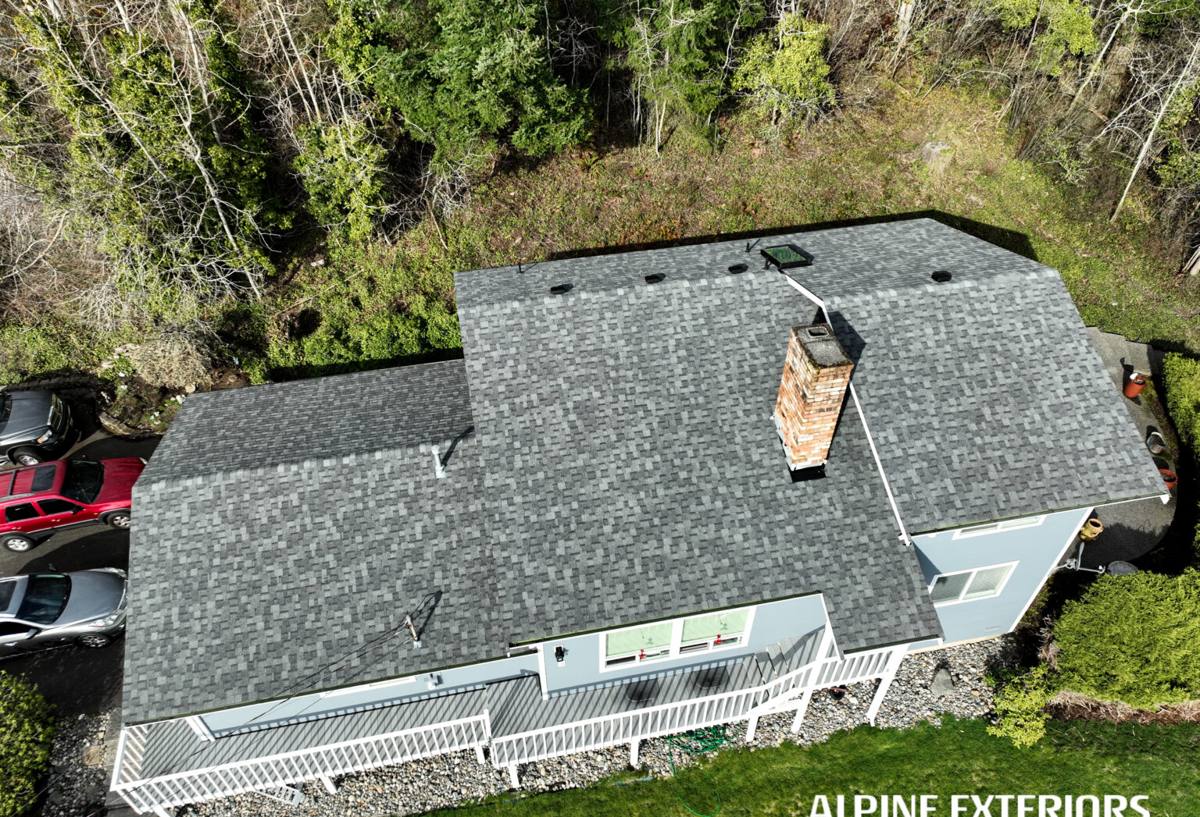
What a Full Roof Replacement Actually Includes
A proper replacement isn't just "new shingles on top of old." It typically involves:
- Tear-off and disposal of the existing roofing material, down to the deck
- Inspection and repair of the roof deck (plywood or sheathing) where it's soft, rotted, or delaminated
- New underlayment, including ice-and-water membrane in vulnerable areas
- New flashing at chimneys, skylights, walls, and roof-to-roof transitions
- Proper intake and exhaust ventilation
- The finish material itself — shingles, metal panels, or another system
- Cleanup, magnetic nail sweep, and haul-away
Any bid that skips over most of this list and jumps straight to a shingle brand and a price isn't giving you the full picture. The parts you can't see from the ground — deck condition, underlayment, and flashing — are usually where a roof either performs for 25+ years or fails early.
Material Choice Is the Single Biggest Cost Lever
More than any other factor, the roofing material you choose sets the baseline for your budget. Here's how the common options compare in general terms:
| Material | Relative Cost | Typical Lifespan | Maintenance Notes |
|---|---|---|---|
| 3-tab asphalt shingle | Lowest | 15-20 years | Least wind and impact resistance; shortest warranty tier |
| Architectural (dimensional) asphalt | Low-Mid | 25-30 years | Best value for most homes; wide color and style range |
| Synthetic/composite (slate or shake look) | Mid-High | 30-50 years | Lightweight, impact-resistant, more expensive materials |
| Standing-seam metal | High | 40-60+ years | Sheds moss and moisture well; higher upfront cost, lower lifetime cost |
| Cedar shake | High | 20-30 years | Needs regular treatment and moss control in our climate |
Asphalt architectural shingles remain the most common choice locally because they balance upfront cost, appearance, and performance. Metal roofing has gained ground here specifically because it sheds needles and moss far better than shingles, which matters under the tree cover common around Lake Whatcom.
Roof Size, Pitch, and Complexity
Roofers price in "squares" (100 square feet), but the square footage alone doesn't tell the whole story. Two roofs of equal area can differ substantially in labor cost because of:
Pitch
Steeper roofs require more safety equipment, slower and more careful work, and often specialized crews. A low-slope roof is faster and safer to work on than a steep one, and that difference shows up directly in labor pricing.
Cut-up Roofs
Dormers, multiple valleys, hips, and roof-to-wall transitions all add seams — and every seam is a place where flashing has to be custom-cut and sealed correctly. A simple rectangular roof goes faster than one with six intersecting planes, even at the same total area.
Access
Many Sudden Valley properties sit on sloped lots, above bluffs, or behind mature trees, which limits where a crew can stage material, set up a dumpster, or use a ladder versus a lift. Difficult access adds time and sometimes equipment rental costs that flatter, easier-access homes don't carry.
What's Underneath Matters: Deck and Structure
Once the old roofing is off, the deck (the plywood or board sheathing your roofing is nailed to) gets inspected. In our wet climate, deck damage is common around old flashing failures, clogged valleys, and areas where moss has held moisture against the roof for years. Rotted or delaminated sections need to be cut out and replaced before new roofing goes on — installing new shingles over a soft deck is a shortcut that shows up as problems within a few years.
This is one of the reasons roof estimates should always include a deck-repair allowance or at least a clear explanation of how deck repairs will be priced if discovered mid-job. A contractor who guarantees a fixed price with zero mention of possible deck repair is either quoting a very recent roof or leaving a gap that will surprise you later.
Underlayment and Flashing: The Parts You Don't See
Underlayment is the water-resistant barrier between your deck and your finish roofing, and it's doing more work than most homeowners realize. In areas that see driving rain — which describes most storms coming off the water here — wind-driven moisture can push up under shingles at eaves, valleys, and low-slope transitions. Self-adhered ice-and-water membrane in those vulnerable zones is inexpensive relative to the whole job and is one of the most cost-effective upgrades available.
Flashing is the metal work around chimneys, skylights, sidewalls, and any place two roof planes meet. Reused or poorly installed flashing is one of the most common causes of leaks in roofs that are otherwise in good shape. New flashing at every penetration should be standard on a full replacement, not an upsell.
Ventilation and Moss: The Whatcom County Factor
Long, wet winters and a genuinely long moss season put extra demands on roofs in this part of Washington. Two things matter most here:
Ventilation
Balanced intake (soffit) and exhaust (ridge) ventilation keeps the attic dry and temperature-stable, which protects the deck from the inside and helps shingles last their full rated life. Under-ventilated roofs trap moisture, which accelerates rot and can void shingle warranties.
Moss and Algae
Moss holds moisture against roofing material and, left unchecked, works its way under shingle tabs and into fasteners. Zinc or copper strips near the ridge, algae-resistant shingle products, and regular gentle cleaning all reduce the moss problem, but no roofing material is completely immune in a climate this wet. This is also where salt-laden coastal air plays a role — it accelerates corrosion on unprotected metal fasteners and flashing, which is why fastener and flashing quality matters more here than in drier inland regions.
Permits, Disposal, and Access Costs
A few line items outside the roofing material itself factor into most bids:
- Building permit fees, which vary by jurisdiction and project scope
- Dump and disposal fees for tear-off material, which scale with the number of layers being removed
- Equipment costs for difficult access — staging, lifts, or extra labor for steep or tree-obstructed roofs
- Any structural or code-required upgrades triggered by the permit process
These costs are usually smaller than material and labor but are worth asking about directly, since some bids bundle them in and others itemize them separately — which can make two bids look further apart than they really are.
Bundling Roof and Siding Work
If your siding is also aging out around the same time your roof needs replacing, there's a real cost advantage to doing both projects together — shared staging, scaffolding, and access costs get spread across one mobilization instead of two. It's also a natural point to reconsider what your siding is made of, since much of what damages roofs in this climate — trapped moisture, moss, driving rain — affects siding too. We install James Hardie fiber cement siding exclusively for that reason: it's engineered for wet Pacific Northwest conditions, doesn't feed moss and mildew the way wood-based products can, and carries a strong factory finish warranty. If a roof estimate turns into a broader exterior conversation, that's worth raising with your contractor.
Getting an Estimate You Can Actually Compare
The best way to compare roofing bids isn't to line up the bottom-line numbers — it's to make sure each bid is quoting the same scope. Before you sign anything, confirm the estimate spells out:
- Exact material, including brand and product line (not just "architectural shingle")
- Number of existing layers being removed and deck-repair pricing method
- Underlayment type, including where ice-and-water membrane will be used
- Ventilation plan (intake and exhaust)
- Flashing scope — new flashing at all penetrations, not reused
- Warranty terms, both material and workmanship
- Cleanup and disposal responsibility
A detailed estimate takes a little longer to read, but it's the only way to know what you're actually buying — and it's the only fair way to compare one contractor's number against another's.
If you're weighing a roof replacement and want a clear, no-pressure breakdown of what your specific roof needs, we're happy to take a look and walk you through it. Use the form below to request a free estimate.