 Sudden Valley Exterior
 Exterior Conditions in Deming
Deming sits inland along the Nooksack River corridor in Whatcom County, on the route toward Mount Baker. It's a different exposure than the lake and coastal communities closer to Bellingham — less salt-laden wind, but more tree canopy, more standing shade, and a longer stretch of the year where surfaces simply don't get a chance to dry out. Combine that with the driving rain that moves through the county for much of the fall, winter, and spring, and you get a climate that's genuinely hard on exteriors, just not always for the reasons homeowners expect.
The biggest factor for a lot of Deming properties is shade. Homes tucked under fir and cedar cover stay damp longer after a storm than homes in open exposure. That extended dampness is what drives moss, algae, and mildew growth on roofing, siding, and trim — and it's a big part of why we see certain materials fail early here that might last longer in a drier, sunnier part of the state. Add in the seasonal swing between soggy winters and warm, drier summers, and exterior materials on a Deming home are being asked to handle expansion, contraction, and near-constant moisture cycling year after year.
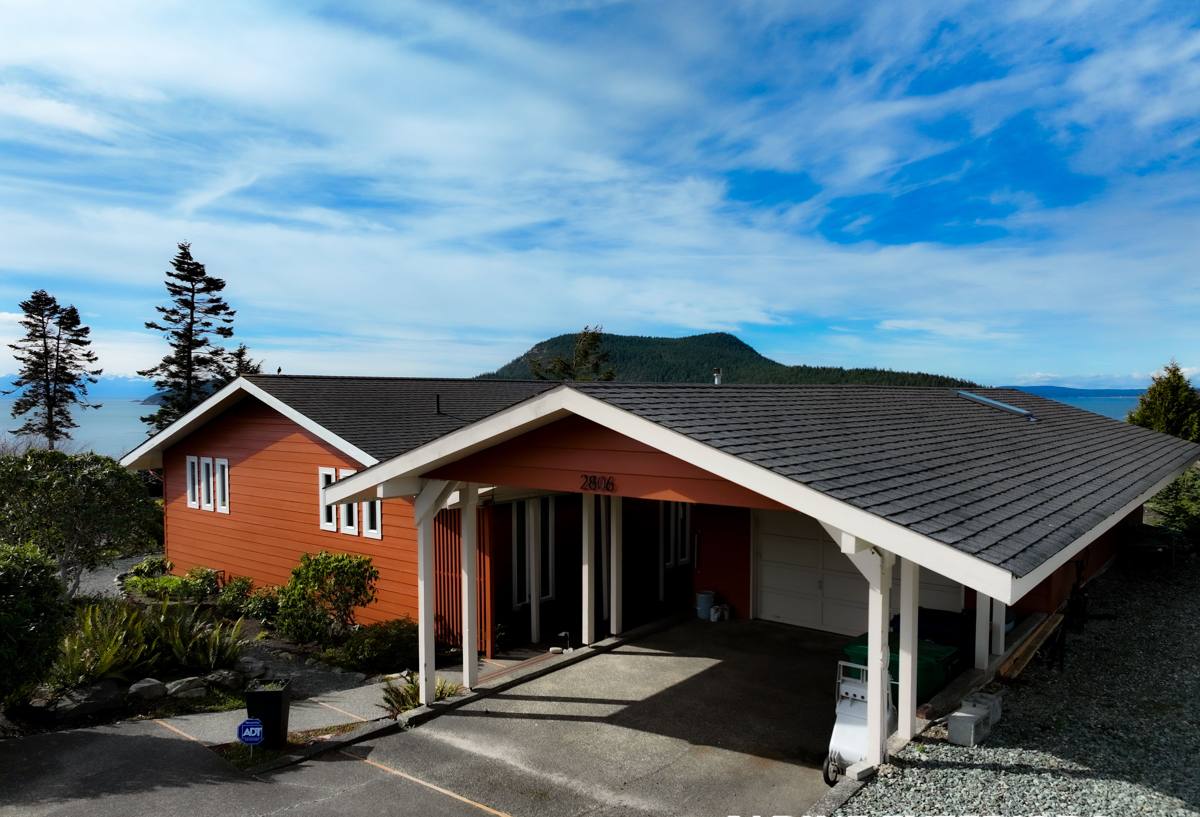
Why Siding Choice Matters More in a Climate Like This
Siding is the single largest surface on most homes, and in a moisture-heavy, shaded environment like Deming, the material behind that surface matters as much as the look of it. We install James Hardie fiber cement siding exclusively, and that's not a marketing preference — it's a standard we've settled on after weighing how different products actually perform once they're up against years of Whatcom County weather.
What We Don't Install, and Why
Vinyl siding is inexpensive and low-maintenance in the sense that it doesn't need painting, but it's a petroleum-based product that expands and contracts with temperature swings, can warp or crack in cold snaps, and traps moisture behind it if the water-resistive barrier and flashing details aren't done exactly right — which becomes a real risk under sustained wet-shade conditions like a lot of Deming lots have. Wood siding, whether cedar or primed spruce, looks great new but demands a repainting and caulking cycle that most homeowners underestimate, and it's a food source for the moisture and mildew this climate produces in abundance. Engineered wood products like LP SmartSide perform better than raw wood in some respects, but they're still wood-based at the core, meaning cut edges, fastener penetrations, and any breach in the factory coating are places moisture can get in and start breaking the product down from the inside. Other fiber cement brands, such as Cemplank or Allura, are chemically similar to Hardie's product but don't carry the same regional engineering, factory finish warranty, or installation network we've built our standards around.
Why James Hardie
Fiber cement doesn't rot, it doesn't feed mold or moss the way wood does, and it's non-combustible — a real consideration given how many Deming properties border forested land. Hardie's ColorPlus finish is baked on at the factory rather than field-painted, which matters in an area where a fresh coat of site-applied paint might not fully cure before the next rain rolls through. Hardie also makes climate-specific product lines engineered for different moisture and temperature profiles, and their installation network and transferable warranty give homeowners a level of long-term backing that off-brand fiber cement doesn't match. Installed correctly — with the right clearances, flashing, and fastening for a wet, shaded environment — it's the material we're comfortable standing behind on Deming homes.
Roofing in a Moss-Prone, Tree-Covered Setting
Roofs in Deming take a beating from organic debris as much as from rain. Needles and leaf litter collect in valleys and behind chimneys, moss gets a foothold on north-facing slopes and anywhere shade lingers, and that combination holds moisture against shingles and underlayment far longer than a roof in open sun ever experiences. Left unaddressed, moss growth lifts shingle edges and accelerates granule loss, which shortens the life of the roof well before its rated age. Good ventilation, proper underlayment, and attention to valleys and penetrations matter more here than in drier parts of the state, and a roof replacement or repair on a heavily shaded Deming lot should account for that from the start, not as an afterthought.
Windows: Moisture, Condensation, and Fit
Older or poorly sealed windows in a damp climate like this tend to show their age through condensation between panes, fogged glazing, and soft trim where water has been sneaking in around the frame for years. In a shaded, high-humidity setting, a window that isn't flashed and sealed correctly won't announce the problem right away — it'll show up as rot in the surrounding wall framing months or years later. When we replace windows, correct flashing and integration with the surrounding siding is just as important as the window unit itself, especially on a home where the walls rarely get a long dry stretch between rain events.
Decks: Ground Contact and Shade Are the Enemy
Decks in Deming face a tougher fight than decks in open, sunny yards. Wood decking under tree cover stays damp longer, which speeds up rot at fastener points, ledger boards, and anywhere two pieces of wood meet without a gap to drain and dry. Composite and capped-composite decking materials handle that kind of sustained moisture exposure better than raw wood, since they don't absorb water the same way, but proper structural framing, ledger flashing, and drainage underneath still matter regardless of the decking material on top. A deck built or repaired without those details in mind is one of the faster things to fail on a shaded Whatcom County property.
Why Hiring Local Matters Here
A crew that works across Whatcom County day in and day out knows the difference between a lot that sits in full sun near open water and a lot buried in tree cover along the Nooksack. That distinction changes how we flash a window, where we expect moss to form on a roof, and how much drying time we build into a siding or deck installation schedule. It also means we're around after the job is done — for warranty work, for a maintenance question, or just to look at something that's bothering you before it becomes a real problem. Exterior work in a climate like this isn't a one-and-done transaction; it's easier to get right, and easier to stand behind, when the crew doing it actually knows the area.
What Drives Cost on Exterior Projects
Every property is different, but a few factors consistently move the price on siding, roofing, window, and deck projects in a setting like Deming's.
| Project | What Drives Cost | Deming-Specific Factor |
|---|---|---|
| Siding | Square footage, trim detail, number of stories, existing siding removal | Extra care needed around shaded, damp wall sections prone to hidden moisture damage |
| Roofing | Roof pitch, square footage, number of penetrations, tear-off vs. overlay | Moss remediation and ventilation upgrades often needed on tree-shaded slopes |
| Windows | Number of openings, window size and style, whether framing repair is needed | Rot repair around old openings is more common where walls stay damp longer |
| Decks | Size, decking material, railing style, structural condition of framing | Ledger and framing inspection is critical on shaded, ground-level decks |
An accurate number always comes from seeing the property in person — online estimates for exterior work are rough at best, since so much depends on what's actually happening behind the existing surfaces.
A Seasonal Exterior Checklist for Deming Homeowners
- Clear roof valleys and gutters of needle and leaf debris at least twice a year, more often under heavy tree cover
- Check north-facing and shaded roof slopes for moss growth each fall and spring
- Inspect siding for soft spots, peeling paint, or gaps at trim and window edges
- Look at deck ledger boards and support posts for soft or discolored wood where they meet the house or the ground
- Check window frames and sills for condensation, fogging, or soft trim as signs of a failing seal
- Keep vegetation and low tree limbs trimmed back from siding and roof edges to improve airflow and drying time
Getting a Straight Answer for Your Property
Every lot in Deming handles moisture differently depending on tree cover, orientation, and how the home was originally built and flashed. The only way to give an honest recommendation on siding, roofing, windows, or a deck is to walk the property and see what's actually going on. If you'd like a free, no-pressure estimate on your home, the form below gets you started — we'll take a look and tell you plainly what we'd do and why.