 Sudden Valley Exterior
 Living on Lake Whatcom: What the Exterior of Your Home Is Up Against
Homes around Sudden Valley and the Lake Whatcom shoreline sit in one of the more demanding microclimates in Whatcom County. The lake itself holds humidity close to the ground long after a storm has passed, tree cover from the surrounding hillsides keeps shaded exterior walls and north-facing roof planes damp for days at a stretch, and moisture-laden air moving in off the greater Puget Sound region adds a salt-tinged element to the corrosion and finish wear we see on homes throughout this part of Washington. Add a moss season that, in practice, runs most of the year in the shaded pockets between properties, and you have an exterior envelope that's working harder than a comparable home twenty minutes east in drier country.
None of this is unique to any one product or material — it's a function of geography. But it does mean the margin for error on installation quality, ventilation, and product selection is smaller here than it is in a lot of places. Flashing details that would be forgivable in a dry climate cause real problems in a lake-adjacent one. That's the lens we bring to every siding, roofing, window, and deck project we do around Sudden Valley.
Siding: Why We Only Install James Hardie Fiber Cement
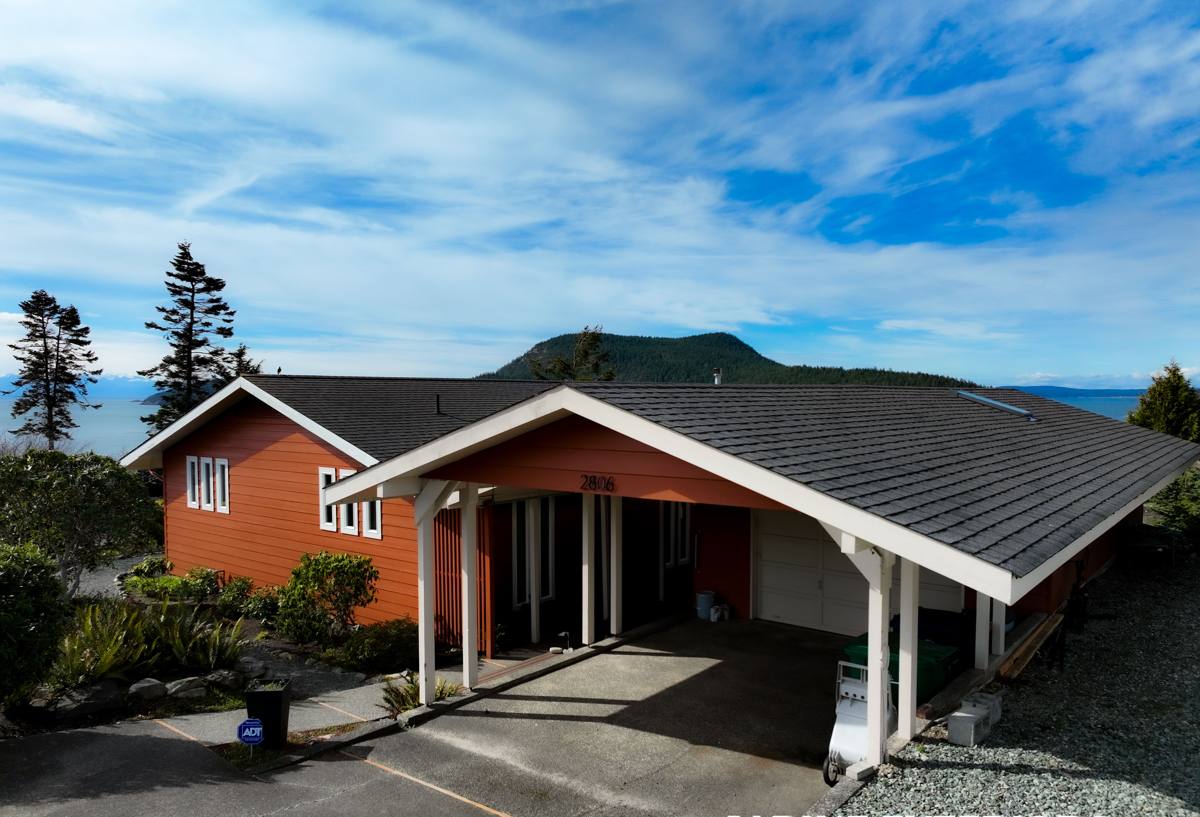
Sudden Valley Exterior Co installs James Hardie fiber cement siding exclusively. We don't offer vinyl, LP SmartSide, Cemplank, Allura, primed spruce, or cedar lap — not because those products don't have a place in the market, but because we've made a professional decision about what holds up best in exactly the conditions Lake Whatcom homes deal with, and we'd rather stand fully behind one system than split our expertise across several.
What Rules Out the Alternatives, Honestly
Vinyl siding is inexpensive and low-maintenance in the sense that it doesn't need painting, but it expands and contracts significantly with temperature swings, and in a climate with sustained dampness it doesn't offer much resistance to moss and algae staining at the seams — and it can't be pressure-washed aggressively without risking damage, which matters when moss buildup is a near-constant fact of life here. Engineered wood products like LP SmartSide use wood strand cores that, while treated, are still wood-based and more vulnerable to moisture intrusion at cut edges and fastener penetrations than a cement-based product. Other fiber cement brands (Cemplank, Allura) are legitimate competitors to Hardie, but we've standardized on one manufacturer so our crews install to one spec, one flashing detail, and one warranty structure every time — consistency we think matters more in a wet climate than it would in a dry one. Primed spruce and cedar are beautiful, traditional choices, but they require an ongoing repainting and sealing commitment that most homeowners underestimate until they're three years in and the south wall is already showing wear while the shaded north wall is holding moss.
What James Hardie Gets Right for This Area
Hardie's fiber cement is non-combustible, doesn't support moss and mildew growth the way wood-based products can, and holds its factory-applied ColorPlus finish for years without the fading and chalking that field-painted products show first. Hardie also engineers regional product lines (their HZ5 line, for instance) specifically for climates with sustained moisture exposure — freeze-thaw cycling, wind-driven rain, and humidity are all accounted for in the product engineering, not just the marketing. Combined with a transferable warranty that follows the house rather than the original owner, it's the product we're willing to put our name behind on every job.
Roofing: The Moss and Moisture Problem Compounds Fast
Roof moss is the single most common issue we get called out for around Sudden Valley. On its own, a light moss layer is mostly cosmetic. Left alone, it lifts shingle edges, holds moisture against the roof deck, and accelerates granule loss — and on the shaded, north-facing slopes common on lake-view lots, moss can re-establish within a season of being cleaned off if the underlying ventilation and flashing aren't addressed. We look at ridge and soffit ventilation, valley flashing condition, and the overall slope drainage as part of any roofing inspection or replacement, not just the shingle layer itself, because on a moss-prone roof the shingle is rarely the whole story.
Signs a Roof Needs Attention Sooner Rather Than Later
- Visible moss or algae streaking, especially on shaded or north-facing slopes
- Granules collecting in gutters or at downspout outlets
- Curling, cupping, or lifted shingle edges
- Daylight visible through the attic at ridge or valley lines
- Soft spots or sagging along roof planes
- Interior ceiling staining after heavy rain
Windows: Managing Condensation and Driving Rain
Older single-pane and early dual-pane windows around Sudden Valley tend to show two problems: condensation building up between panes (a sign the seal has failed) and air infiltration around frames that were never properly flashed to the wall assembly behind them. With driving rain being a normal weather pattern here rather than an occasional event, window flashing and head-flashing details matter as much as the glass unit itself. A window replaced without correcting the flashing behind it will often leak in the same spot within a few years, regardless of how good the new window is.
What We Check Before Recommending Replacement
We look at whether fogging is isolated to a few units or widespread, whether frames show rot or soft spots at the sill, and whether the surrounding siding or trim shows staining that suggests water has been getting behind the window opening. Sometimes a handful of units need replacement while the rest of the house is fine — we won't recommend a whole-house window package when it isn't needed.
Decks: Built for Shade, Damp, and Lake-Adjacent Wear
Decks around Lake Whatcom face a specific combination of stresses: extended shade from surrounding trees keeps decking material damp longer after rain, lake humidity slows evaporation compared to a drier inland lot, and many of these decks see heavier seasonal use with furniture, planters, and foot traffic near the water. Wood decking in these conditions needs more frequent sealing and staining to stay ahead of rot, while composite decking trades that maintenance cycle for a higher upfront cost. We frame and install both, and we're upfront with homeowners about which one actually fits their maintenance appetite rather than upselling the more expensive option by default.
Composite vs. Wood Decking for This Climate
| Factor | Wood Decking | Composite Decking |
|---|---|---|
| Upfront cost | Lower | Higher |
| Maintenance in a damp, shaded lot | Annual sealing/staining recommended | Periodic cleaning only |
| Moss and algae resistance | Lower without upkeep | Higher |
| Typical lifespan here | Shorter if upkeep lapses | Longer with less variability |
| Repair approach | Board-by-board replacement is straightforward | Matching older composite runs can be harder |
Why a Local Sudden Valley Crew Matters
A crew that works this side of Whatcom County regularly develops a feel for which slopes hold moss longest, which lots see the most wind-driven rain off the lake, and which older homes in the area were originally built with materials that don't hold up the way current products do. That's not something a crew based an hour away and passing through once picks up. It also means faster response for storm damage, warranty follow-up, or a question that comes up six months after a project wraps — we're not driving across the county to get back to you.
What to Expect When You Call Us
- An in-person walkaround of the affected siding, roof, windows, or deck — not a drive-by estimate
- A written scope that names the specific product line and materials being used
- Straight talk about what's cosmetic versus what's a real moisture or structural issue
- A written warranty on labor, plus the manufacturer's warranty on materials
- No pressure to bundle services you didn't ask about
Cost Factors Homeowners Should Understand
Every property is different, and we don't publish blanket pricing because square footage, existing damage, access, and scope all move the number. But the factors that most commonly affect cost on Lake Whatcom projects are worth knowing before you get a quote:
| Factor | Why It Matters |
|---|---|
| Extent of existing moisture damage | Rot repair to sheathing or framing adds cost beyond surface replacement |
| Roof or wall complexity | Steep pitches, multiple valleys, and dormers add labor time |
| Site access | Lake-adjacent or hillside lots can limit staging and equipment access |
| Material selection | Product line and finish choice (siding, roofing, decking) shifts material cost |
| Scope bundling | Combining siding and window work at once can reduce duplicated setup costs |
Maintenance That Actually Helps in This Climate
A lot of exterior wear around Sudden Valley isn't a product failure — it's the absence of a few basic seasonal habits. Keeping gutters clear so water isn't overflowing onto siding, trimming back branches that keep specific wall sections in permanent shade, and addressing moss while it's still light rather than after it's established all extend the life of whatever exterior products are on the house. We'll walk any homeowner through what their specific property needs, whether or not they're ready for a project right now.
Getting Started
If you're seeing moss buildup, a roof that's due for a look, siding that's showing its age, windows that fog or leak, or a deck that needs attention, we're happy to come take a look and give you a straight, no-pressure assessment of what actually needs to happen — not a sales pitch for the biggest possible scope. Use the form below to request a free estimate for your Lake Whatcom property.