 Sudden Valley Exterior
 Cedar Has Real Appeal — We're Not Going to Pretend Otherwise
Cedar siding earns its reputation honestly. The grain is beautiful, it takes stain well, it's a renewable material, and a freshly finished cedar home has a warmth that manufactured products spend a lot of marketing dollars trying to imitate. If you grew up around cedar-clad homes in the Pacific Northwest, the pull toward it is understandable. This page isn't an attack on cedar as a material. It's an honest look at what cedar actually asks of a homeowner once it's on the wall, specifically in a place like Sudden Valley, and why our company made the decision years ago to stop installing it.
We install exclusively James Hardie fiber cement siding. That's a deliberate standard, not a lack of options, and we think homeowners deserve to know the reasoning before they commit to a material that will sit on their home for decades.
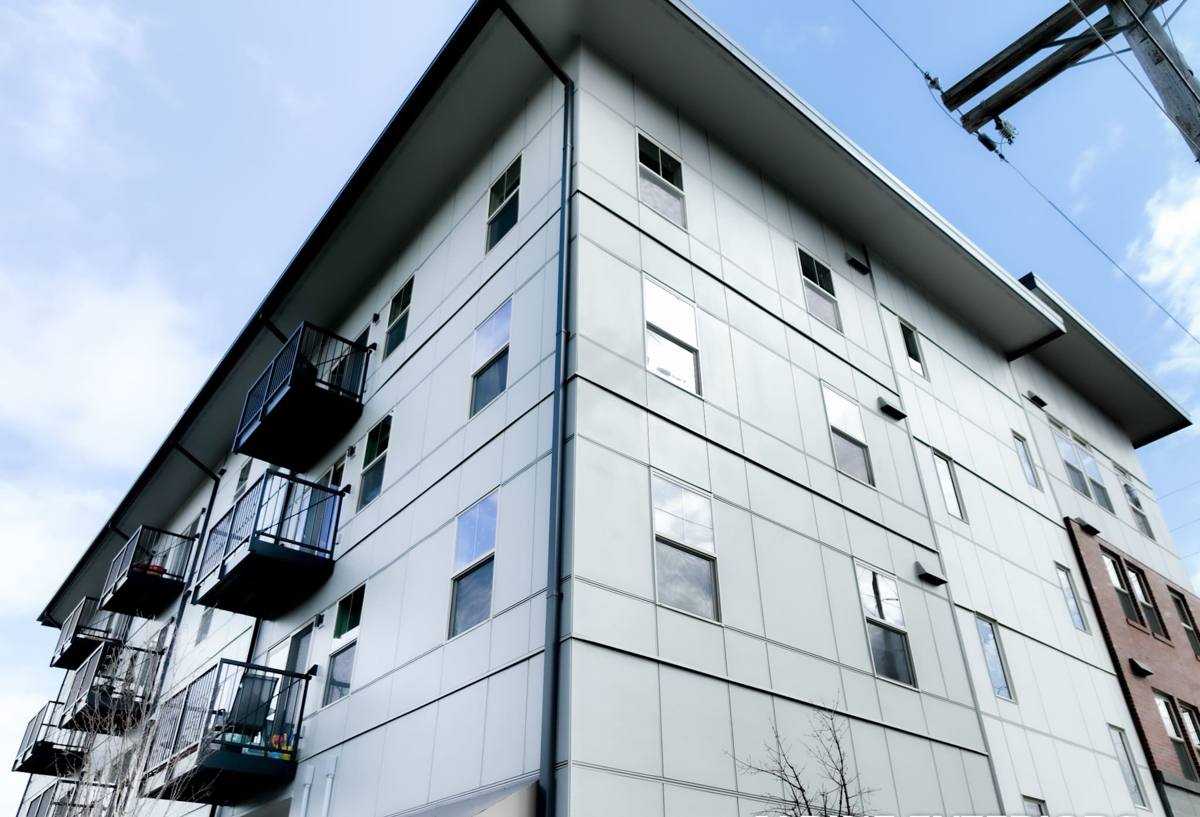
What Cedar Actually Requires, Year After Year
Cedar siding is a maintained product, not a set-it-and-forget-it one. The wood itself is naturally rot-resistant compared to other softwoods, but "resistant" isn't "immune," and the factory doesn't seal that resistance in permanently. It's the homeowner's job to keep reapplying protection on a schedule, indefinitely, for as long as the siding is on the house.
The Refinishing Cycle
Solid-body stains and semi-transparent stains on vertical cedar siding typically need recoating somewhere in the 3 to 7 year range in Western Washington conditions, with south- and west-facing walls wearing faster than shaded north walls. Clear sealers break down faster still, often needing attention every 2 to 3 years if the homeowner wants to preserve the natural wood look rather than let it silver. Skip a cycle or two and you're not just refinishing — you're stripping, sanding, and treating bare, weathered wood before you can even put a new coat on.
Caulking and Joint Maintenance
Every seam, corner, and trim joint on a cedar installation depends on caulk that has a real service life — usually 5 to 10 years depending on product and exposure. Once caulk cracks or pulls away, water finds the gap long before it's visible from the ground.
Sudden Valley's Climate Is Not Gentle on Wood Siding
Whatcom County sits in a spot where three separate weather patterns stack on top of each other for wood siding: sustained damp air off the Sound and lower Lake Whatcom basin, driving rain that hits siding at an angle rather than falling straight down, and long stretches of overcast, low-sun months where surfaces simply don't dry out between storms. That combination is hard on any exterior material, but it's particularly hard on one that depends on an intact protective coating to keep water out of end grain and fastener holes.
The Moss Season Problem
Moss and algae growth on north- and shade-facing cedar walls is one of the most common calls we get from homeowners in this area, and it's a direct result of how many months out of the year those surfaces stay damp. Moss doesn't just look bad — it holds moisture against the wood surface far longer than open air would, which accelerates exactly the kind of slow rot that's hardest to catch early because it's happening under a green film rather than out in the open.
Salt-Influenced Air
Homes closer to the Sound and bay-influenced air deal with salt content that speeds up the breakdown of finishes and fasteners alike. Even inland from the immediate shoreline, that salt-laden marine air moves through the county on a regular basis, and it shortens the effective life of stains, sealers, and the metal fasteners holding cedar boards in place.
The Failure Mode That Worries Us Most: Hidden Moisture
Cedar siding that's failing on the surface is a maintenance problem. Cedar siding that's failing behind the surface is a structural problem, and it's the one that costs real money to fix. Once water gets past a cracked finish or an open joint, it can travel behind the board and into the sheathing, framing, and insulation before a homeowner ever sees a stain on the interior wall. By the time that damage is visible from inside, it's usually been developing for a while.
This isn't unique to cedar — any siding material can fail if installed or flashed incorrectly. But cedar's dependence on an active, homeowner-maintained finish means the margin for error compounds over time in a way that low-maintenance materials don't share. A missed refinishing cycle five years ago can show up as a rot repair today.
What Cedar Maintenance Actually Costs Over Time
Homeowners often price cedar against other siding using the installed cost alone, without accounting for what happens in years 5, 10, 15, and 20. Here's a realistic breakdown of the ongoing obligations, compared to what a factory-finished fiber cement system asks for over the same span.
| Maintenance Item | Cedar Siding | James Hardie ColorPlus |
|---|---|---|
| Refinishing / repainting cycle | Every 3–7 years | Factory finish typically holds 15 years+ before repaint is needed |
| Caulking and joint resealing | Every 5–10 years, ongoing | Minimal — engineered joints, less caulk-dependent |
| Moss / algae treatment | Recurring, especially shaded walls | Occasional wash; surface doesn't feed organic growth the way raw wood can |
| Insect vulnerability | Susceptible to carpenter ants, some borers | Non-organic material — not a food source for wood-boring insects |
| Fire exposure | Combustible | Non-combustible fiber cement |
| Typical service life with proper upkeep | 20–40 years, highly dependent on maintenance consistency | 30+ years, less dependent on homeowner follow-through |
The pattern in that table is the whole story: cedar's long-term cost isn't the siding itself, it's the labor and material that has to go back onto it every few years, indefinitely, to keep it performing the way it did on installation day.
A Practical Maintenance Checklist for Homeowners Who Already Have Cedar
If you already have cedar siding in Sudden Valley and aren't ready to replace it, here's what a realistic annual maintenance routine looks like. Skipping these steps is how small problems become expensive ones.
- Walk the exterior twice a year — once in spring, once in fall — checking specifically for cracked or peeling finish, especially on south and west walls.
- Inspect and clean north-facing and shaded sections for moss and algae buildup before it spreads; use a soft wash approach, not high-pressure blasting, which can drive water behind boards.
- Check all caulked joints, corners, and trim transitions for cracking or separation, particularly after the first hard freeze-thaw cycle of the year.
- Look closely at the bottom few courses near grade and near any deck or porch attachment — these are the highest-risk zones for splash-back moisture and slow rot.
- Probe any suspicious soft spots with a screwdriver or awl rather than assuming a stained board is just cosmetic.
- Budget for a full refinishing cycle on a fixed schedule rather than waiting for visible failure — reactive maintenance on cedar is always more expensive than scheduled maintenance.
Why We Standardized on James Hardie Instead
We made the call, as a company, to install James Hardie fiber cement exclusively rather than offering cedar, LP SmartSide, vinyl, or other fiber cement brands as options. That's not because those products can't be installed correctly by someone — it's because we didn't want to keep asking Whatcom County homeowners to sign up for a maintenance schedule that this climate makes especially demanding.
What Hardie's System Actually Solves
James Hardie fiber cement is engineered specifically to resist moisture, freeze-thaw cycling, and the kind of sustained damp exposure that defines a Puget Sound winter. The HZ5 product line, which is what we spec for this region, is formulated for the wetter, harsher climate zones rather than a one-size-fits-all national product. It's non-combustible, which matters increasingly for insurance conversations, and it doesn't feed insects or fungal growth the way organic wood fiber does.
ColorPlus Finish
The factory-applied ColorPlus finish is baked on under controlled conditions rather than hand-applied on a ladder in variable weather, and it comes with a finish warranty that's substantially longer than what any field-applied stain or paint job can offer. That's the difference between a homeowner planning a repaint every few years and a homeowner not thinking about their siding finish for over a decade.
A Warranty Built Around Real Ownership Timelines
James Hardie's transferable limited warranty is structured around how long people actually own homes, which matters both for current owners and for resale. A cedar exterior with a spotty maintenance history is a harder sell — and often a harder inspection — than one backed by a manufacturer warranty with clear documentation.
What This Means If You're Deciding Between Cedar and Fiber Cement Right Now
If you love the look of cedar, that preference is legitimate, and there are ways to get a similar aesthetic — certain Hardie profiles and colors are designed to echo a natural wood grain look without the upkeep obligation. The honest question to ask yourself isn't just "what does this cost installed" but "what am I signing up for every five years for the next thirty." In a climate with this much sustained moisture, moss pressure, and salt-influenced air, that ongoing obligation is the real cost of cedar, and it's the piece that gets left out of a lot of siding conversations.
We'd rather have that conversation upfront than have a homeowner find out the hard way what a missed refinishing cycle costs in hidden rot repair. If you're weighing cedar against fiber cement for a home in Sudden Valley or anywhere else in Whatcom County, we're happy to walk your specific exposure — sun, shade, wind direction, proximity to the lake or the Sound — and give you a straight answer about what each option would actually ask of you over time. Reach out for a free, no-pressure estimate and we'll look at your home in person before recommending anything.