 Sudden Valley Exterior
 Exterior Work Built for Sunnyland's Climate
Homes in and around Sunnyland sit in one of the more demanding exterior climates in Washington. This part of Whatcom County gets a steady diet of moisture almost year-round, punctuated by wind-driven rain events that push water sideways into siding, window trim, and roof edges instead of straight down where gutters and flashing expect it. Add in the salt-tinged air that rolls in off the water and a moss season that can stretch from fall through spring, and you have a set of conditions that will find every weak point in an exterior system over time. We've built our process around that reality rather than around a generic install spec written for a drier climate.
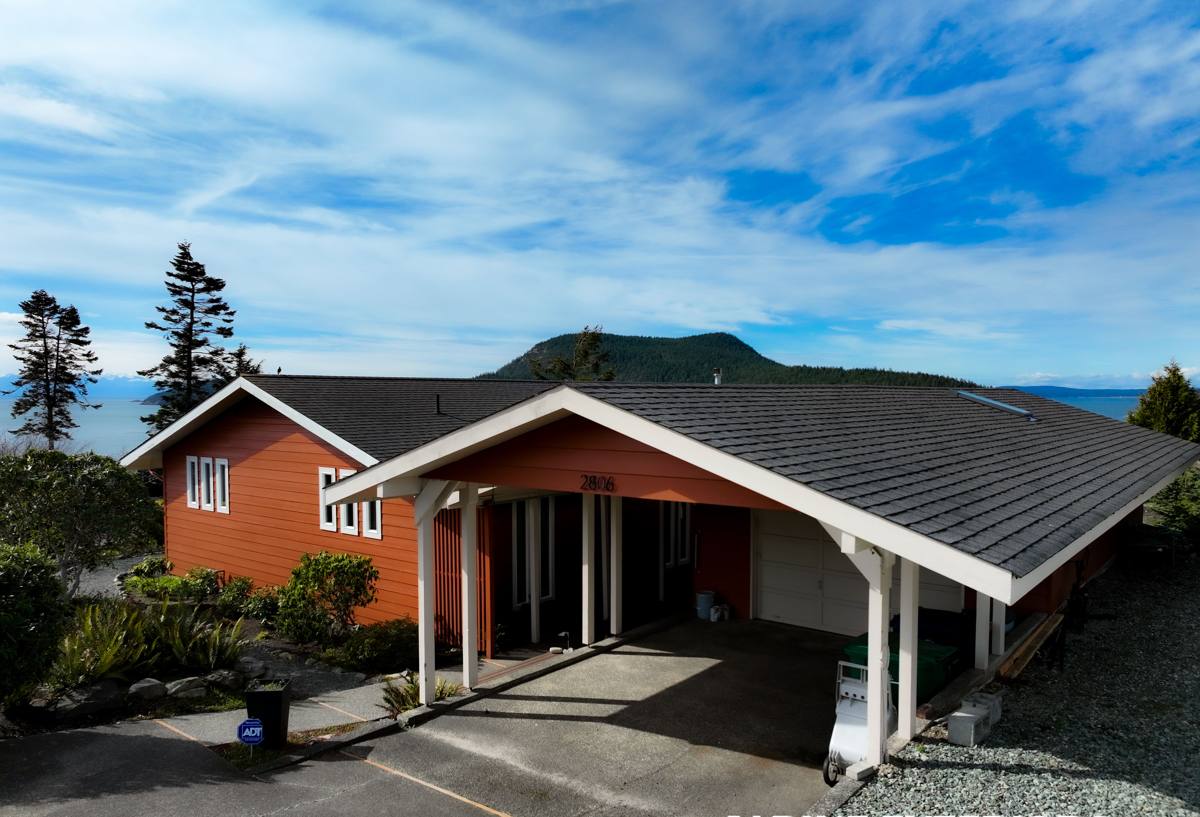
What the Local Climate Actually Does to a House
It helps to understand the mechanisms at work, not just the symptoms, because the "why" drives how we detail every project.
Moisture and Driving Rain
Wind-driven rain doesn't behave like a normal downpour. It gets pushed into laps, seams, and butt joints that were never designed to be a primary water barrier — they rely on a properly installed weather-resistive barrier and flashing behind them to do the real work. When that layer is missing, thin, or installed out of sequence, water gets in behind the cladding long before anyone notices a problem on the surface.
Salt Air
Airborne salt accelerates corrosion on anything metal — fasteners, flashing, gutter hardware, and hinges — and it's harder on paint films and coatings than people expect. A factory-applied finish that's engineered to resist UV and moisture holds up differently than a field-applied coat of paint over bare material, especially in a marine-influenced air pattern.
Moss, Algae, and Shade
Mature trees and long stretches of overcast, damp weather mean moss and algae get a real foothold on north-facing roof slopes, siding in shaded side yards, and deck boards that don't get much sun. Left alone, moss holds moisture against the surface underneath it, which is where the actual damage happens — the moss itself is more of a warning sign than the root cause.
Siding: Why We Install Only James Hardie Fiber Cement
Siding is the single largest surface on a house and the first line of defense against everything described above. We made a deliberate decision years ago to install only James Hardie fiber cement siding — we don't do vinyl, LP SmartSide, Cemplank, Allura, primed spruce, or cedar. That's not a marketing position; it's a standard we hold because of what we've seen these products do, and not do, in a climate exactly like this one.
Vinyl is inexpensive and low-maintenance in the sense that it doesn't need painting, but it expands and contracts with temperature swings, can crack in impact events, and is a fuel source in a wildfire-adjacent region — increasingly relevant as insurance carriers and building codes pay closer attention to combustible cladding. Cedar and primed spruce look beautiful when new, but real wood siding in a wet, shaded, moss-prone climate needs a disciplined repainting and caulking schedule to keep moisture out; skip a cycle or two and you're looking at rot repair, not just a touch-up. LP SmartSide and similar engineered wood products have improved over the years, but they're still wood-based composites that depend on intact factory coatings and correct field sealing at every cut edge to resist moisture — and edge sealing is exactly the kind of detail that gets rushed on a job site.
James Hardie fiber cement doesn't share those vulnerabilities. It's non-combustible, it doesn't rot, and it holds its shape through wet Whatcom County winters and drier summers without the expansion issues that plague vinyl. The ColorPlus factory finish is baked on and warranted separately from the substrate, which means the color coat is engineered for UV and moisture exposure rather than applied on-site under whatever weather the crew happens to get that week. Hardie's HZ5 product line is specifically engineered for climates with more moisture and freeze-thaw cycling, which fits this region better than a one-size-fits-all national spec.
| Factor | James Hardie Fiber Cement | Vinyl | Cedar / Primed Wood |
|---|---|---|---|
| Combustibility | Non-combustible | Combustible | Combustible |
| Moisture behavior | Resists rot, engineered HZ lines for wet climates | Won't rot, but seams and expansion gaps can trap water | Rot risk if coating fails or maintenance lapses |
| Finish durability | Factory-baked ColorPlus finish, separately warranted | Color molded through, can fade/chalk | Field-applied paint, needs repainting cycle |
| Maintenance burden | Low — occasional wash, caulk checks | Low, but cracks are hard to patch cleanly | High — repainting, caulking, rot inspection |
| Typical warranty structure | Long-term transferable product warranty | Varies widely by manufacturer/grade | Product warranty on coating only, not the wood |
Roofing for a Wet, Moss-Prone Climate
A roof in this area needs more than shingles nailed to plywood. We pay particular attention to underlayment quality, because a secondary water barrier matters more here than in drier parts of the state — if wind-driven rain or ice-dam backup gets past the shingle layer, the underlayment is what keeps it out of the attic. Flashing at valleys, chimneys, skylights, and roof-to-wall transitions is where most leaks actually originate, not in the field of the shingles themselves, so we detail those points carefully rather than treating them as an afterthought. On shaded, north-facing slopes we also think about ventilation and moss-resistant strategies, since a roof that stays damp longer after every rain is a roof that grows moss faster and ages sooner.
Windows That Handle Wind-Driven Rain
Window failures around here are rarely about the glass — they're about the flashing and sealant detail at the rough opening. A window can carry a great efficiency rating and still leak if the pan flashing, house wrap integration, and sill sealing aren't done in the right order. We flash every opening to shed water down and out, not just caulk the exterior trim and call it done, because caulk is a maintenance item, not a permanent water barrier. For replacement projects, we also look at how the new window ties into the existing wall assembly, since retrofitting into an older wall in a high-moisture climate takes more care than new construction.
Decks Built to Handle Moss Season
Decks take a different kind of abuse here: standing moisture, shaded boards that never fully dry, and moss that turns a walking surface slick and dangerous by late fall. Proper board spacing and airflow underneath the deck matter as much as the material choice, because a deck that can't dry out between rain events will hold moss and algae no matter what it's built from. We talk through material options with homeowners based on how much sun and shade a specific deck actually gets, since a deck tucked under mature trees needs a different maintenance conversation than one in full exposure.
Signs Your Exterior Needs Attention
A lot of exterior damage in this climate develops slowly and stays hidden until it's significant. These are the things worth checking, especially heading into or coming out of the wet season:
- Soft or spongy spots when you press on siding, especially near the bottom courses and around window and door trim
- Moss or dark streaking on north-facing roof slopes or siding in shaded side yards
- Peeling or bubbling paint on wood trim or siding, which usually points to moisture trapped underneath
- Gutters that overflow during heavy rain, which pushes water directly against siding and fascia
- Deck boards that stay damp or slick days after the rain has stopped
- Gaps or cracked caulk around window and door trim where water can track in
- Musty smells near exterior walls, which can indicate moisture intrusion behind the cladding
Why a Local Crew Matters
Exterior work in Whatcom County isn't the same job as exterior work in Eastern Washington or a drier coastal market further south. Flashing details, underlayment choices, and even the timing of an install around our rain patterns are things you learn by working in this specific climate season after season, not from a general national training manual. A crew that works this area regularly knows which details actually matter here — where water tends to find its way in, which slopes hold moss longest, and how to sequence a job around a weather window instead of forcing it. That local knowledge is part of what you're paying for when you hire a contractor, even though it doesn't show up as a separate line item on an estimate.
How We Approach a Sunnyland Project
Every project starts with an honest look at the whole exterior system, not just the piece the homeowner called about. Siding, roofing, windows, and decks all interact — a leak that looks like a siding problem can actually be a flashing or gutter issue, and fixing the visible symptom without addressing the source just buys a little time before the same damage reappears. We walk the property, explain what we're seeing and why it matters, and give homeowners options rather than a single take-it-or-leave-it bid. Where James Hardie siding is the right fit, we explain why; where a roof or window issue is more urgent than the siding, we'll say so rather than upselling work that isn't the priority.
If you're in Sunnyland or elsewhere in the Sudden Valley area and want a straight assessment of where your home stands, we're happy to take a look. There's no pressure and no obligation — just a clear, honest read on your siding, roof, windows, or deck, and what we'd recommend given how this climate treats a house over time. Use the form below to request a free estimate.