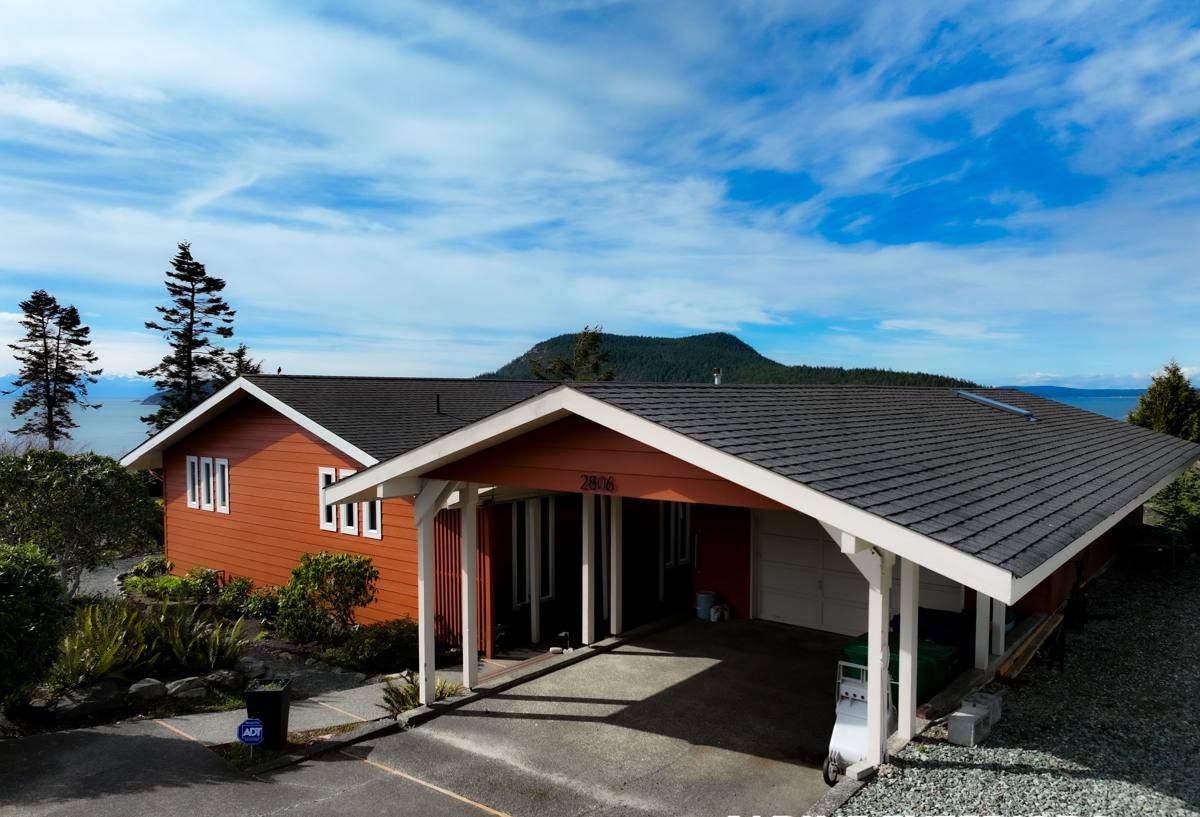
 Sudden Valley Exterior
 Exterior Work in Ferndale: What the Climate Actually Does to a House
Ferndale sits close enough to Puget Sound and the Strait of Georgia that salt-laden marine air is a constant presence, not an occasional visitor. Add Whatcom County's long, wet winters and the mild-but-damp shoulder seasons, and you get a climate that never really lets an exterior dry out completely. Homes here don't fail because of one dramatic storm. They fail slowly, from moisture that never fully leaves the wall assembly, from moss that gets a running start every October and doesn't quit until June, and from driving rain that finds every gap a lesser installation left behind.
We've worked on enough homes in this corner of Whatcom County to know the pattern: north- and west-facing walls take the brunt of wind-driven rain, rooflines under mature conifers stay shaded and damp longer than the rest of the house, and anything close to the water sees faster wear on fasteners, trim, and finishes than the same materials would show twenty miles inland. None of that is a defect in any particular home. It's just what this climate does, year after year, to whatever is asked to stand up to it.
Siding: Why Material Choice Matters More Here Than Most Places
In a dry climate, siding material choice is partly aesthetic. In Ferndale, it's structural. Wood-based products — cedar, primed spruce, engineered wood siding like LP SmartSide — depend on paint film and caulking staying intact to keep moisture out of the substrate. In a marine climate with this much sustained dampness, that paint film is under constant stress, and once water gets behind a wood-based panel, the clock starts on swelling, delamination, and rot that's expensive to catch early and worse to catch late.
Vinyl siding handles moisture better than wood products in one sense — it doesn't absorb water — but it has its own weak points for this climate. It expands and contracts more than fiber cement, its seams and J-channels give wind-driven rain more paths to work with, and enough decades of UV and salt exposure will chalk and fade it faster than a factory-baked finish. It's also a combustible product, which matters more every year as wildfire smoke and ember exposure become a bigger part of Pacific Northwest summers, even here in the wetter northwest corner of the state.
Why We Standardized on James Hardie Fiber Cement
This is the entire reason our company installs only James Hardie siding and turns down installs of LP SmartSide, vinyl, Cemplank, Allura, primed spruce, and cedar. It's not that those products can't perform anywhere — some of them work fine in drier climates or on homes with excellent overhangs and maintenance discipline. It's that we install exteriors specifically for Whatcom County's climate, and fiber cement is the product that handles sustained moisture, salt air, and moss pressure with the least long-term risk.
- Non-combustible: fiber cement doesn't feed a fire the way wood-based or vinyl products can.
- Moisture-resistant core: it doesn't swell, delaminate, or rot the way engineered wood or solid wood siding can when water gets behind it.
- ColorPlus factory finish: a baked-on finish that holds up to UV and salt air far longer than field-applied paint, with touch-up product available for the rare repair.
- HZ5 engineering: Hardie's cold- and moisture-climate product line is built for exactly the freeze-thaw and sustained-damp conditions Whatcom County sees.
- Real transferable warranty: backed by a company with decades of manufacturing history, not a limited warranty full of exclusions for climate exposure.
None of this means other products are junk. It means that when we're the ones putting our name on the installation, we want the material working with the climate, not against it — and in this part of Washington, that's fiber cement.
Roofing: Moss, Shade, and Wind-Driven Rain
Ferndale's tree cover is part of what makes the area attractive, and it's also part of what shortens roof life if the roof isn't maintained and installed with moss in mind. Shaded north-facing slopes stay damp for days after a storm, and that's exactly where moss and algae get established first. Left unchecked, moss lifts shingle edges, holds moisture against the roof deck, and accelerates granule loss.
Good roofing here isn't just about the shingle brand — it's about details: proper underlayment for a climate that sees this much sustained rain, ice-and-water shield in the right places, ventilation that keeps the attic from trapping moisture, and flashing details at valleys and penetrations that are sized for wind-driven rain rather than just vertical rainfall. We install and repair roofing with those specifics in mind, not a generic spec sheet.
Windows: The Quiet Source of Most Water Intrusion
More exterior water damage traces back to window flashing than most homeowners expect. A window that's a few years old and was installed without proper flashing tape and a correctly lapped weather-resistive barrier can leak slowly for a long time before anyone sees a stain inside — by which point the sheathing around it may already be compromised. In a climate with this much sustained rain, that slow leak has more time each year to do damage than it would somewhere drier.
When we replace windows, the flashing detail matters as much as the window unit itself. We also look at how the new window ties into whatever siding is going back on around it, since that's another place where two trades' work has to line up perfectly or water finds the seam.
Decks: Built for a Climate That Never Fully Dries Out
Decks in Ferndale deal with the same sustained dampness as siding and roofing, plus direct foot traffic and standing water risk if drainage isn't right. Composite decking has become the practical choice for a lot of homeowners here because it doesn't need the yearly sealing and staining that wood decking demands to keep moisture out — a maintenance cycle that's easy to fall behind on in a climate where there aren't many fully dry weeks to work with. Proper joist spacing, hidden fastening, and ledger flashing where the deck meets the house are the details that determine whether a deck holds up through fifteen wet seasons or starts showing problems in five.
What a Local Crew Actually Changes
A crew that works Whatcom County regularly has already seen how a given wall orientation, roof pitch, or tree cover pattern behaves in this specific climate. That's not a marketing point — it changes real decisions: where to add extra flashing attention, which elevations need closer inspection during a repair estimate, when moss growth on a roof is cosmetic versus a sign of trapped moisture underneath. An out-of-area crew doing a one-off job doesn't carry that pattern recognition, and on a coastal Whatcom County home, that gap shows up as callbacks and premature repairs.
Signs Your Ferndale Home May Need an Exterior Assessment
- Moss or dark streaking building up on north- or shade-facing roof slopes
- Paint or caulk failing faster than expected on wood-based or engineered wood siding
- Soft spots, bubbling, or visible swelling at siding seams or bottom edges
- Interior staining near window headers or exterior wall corners after storms
- Visible gaps or separation at deck ledger boards or fastener heads
Cost Factors to Expect
| Factor | Why It Affects the Estimate |
|---|---|
| Home orientation and exposure | West- and north-facing walls facing prevailing wind-driven rain often need more flashing detail and labor |
| Existing substrate condition | Rot or moisture damage found once old siding comes off adds repair scope |
| Roof pitch and tree cover | Steeper pitches and heavy shade increase both labor and moss-prevention detailing |
| Material selection | Fiber cement, roofing type, window grade, and decking material all carry different material and labor costs |
| Scope bundling | Combining siding, roofing, window, or deck work in one project often reduces overhead versus separate projects |
How We Approach a Ferndale Project
We start with an honest look at what's actually happening on the exterior — not just what's visible from the driveway, but the shaded slopes, the water-facing walls, and the details that tend to be weak points in this climate. From there we walk through material options, explain why we recommend what we recommend, and give a clear scope before any work starts. If a competitor's estimate uses a different siding product, we're glad to explain the trade-offs as we see them so the decision is an informed one, not a sales pitch.
If you're weighing a siding, roofing, window, or deck project on a Ferndale home, we're happy to walk the exterior with you and put together a free, no-pressure estimate — no obligation, just a straight assessment of what your home needs.