 Sudden Valley Exterior
 Why Fairhaven Decks Wear Out Faster Than the Manual Says
Fairhaven sits close enough to the water that salt-laden air is a daily fact of life, not an occasional nuisance. Combine that with Whatcom County's long wet season and the deep shade many lots get from mature trees, and you have a near-perfect recipe for accelerated deck wear: corroding hardware, moss that holds moisture against wood and composite alike, and framing that stays damp for weeks at a stretch. A deck built to a generic national standard often struggles here unless it was detailed and fastened with this specific climate in mind.
Salt Air and Metal Fasteners
Salt air speeds up corrosion on anything less than fully rated hardware. We regularly find galvanized nails, undersized joist hangers, or mismatched screws that looked fine when installed but have quietly rusted, streaked the decking, and lost holding strength. Once a fastener corrodes enough to weep rust into the surrounding wood, the wood around it is usually compromised too — you can't just swap the screw and call it fixed.
Moss, Algae and Trapped Moisture
A long moss season means organic growth gets a real foothold on horizontal surfaces, especially in shaded corners and anywhere water doesn't drain and dry quickly. Moss and algae hold moisture against the deck boards and framing below, which is exactly the condition wood rot and composite substrate failure need to get started. Left alone through a few wet winters, what starts as a cosmetic issue becomes a structural one.
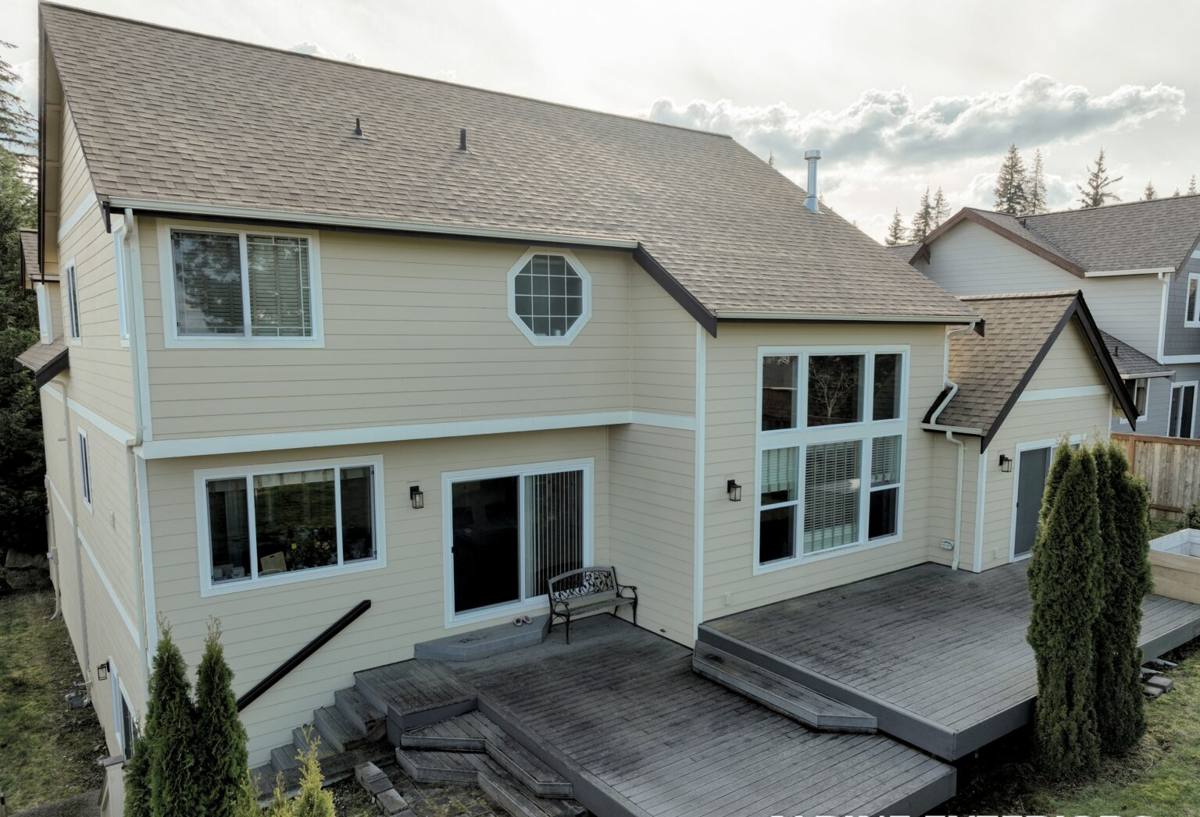
Signs Your Deck Needs Repair — Before It Needs Replacement
Most decks don't fail all at once. They give warning signs for months or years first. Catching them early is what keeps a repair a repair instead of a full rebuild.
- Soft, spongy, or springy spots when you walk across the decking
- Rust streaks bleeding from screw heads or joist hangers
- Visible moss, algae, or dark staining that doesn't dry out between rain events
- Gaps opening up between decking boards or around the ledger board where it meets the house
- Railing posts that wiggle, or a handrail that flexes under hand pressure
- Stair stringers that feel uneven or bounce underfoot
- Visible daylight or water staining underneath the deck where it meets the house wall
Any one of these on its own might be minor. Two or three together, especially near the ledger board or support posts, usually means it's time to get underneath the deck and take a real look before doing anything cosmetic.
What a Correct Deck Repair Actually Involves
A repair that only addresses what's visible from the top often misses the reason the problem started. We treat every repair as a chance to find and fix the actual cause, not just replace the board that's failing.
Structural Inspection First
Before replacing a single board, we get underneath the deck and check the framing: joists, beams, posts, and footings. We're looking for soft or discolored wood, undersized or corroded connectors, and any framing that's been carrying more load than it was built for. This is also where we check that the deck was attached to the house correctly in the first place — a surprising number of older decks in this region were never properly flashed or bolted at the ledger.
Ledger Board and House Attachment
The ledger board — where the deck bolts to the house — is the single most important structural connection on most decks, and it's also the one most exposed to trapped moisture if it wasn't flashed correctly. We check for proper flashing that sheds water away from the house framing, correct bolt spacing, and any sign that water has been getting behind the ledger over time. This is a common failure point we see on older Fairhaven homes where the original build predates current flashing standards.
Decking, Fasteners and Hardware
Once the structure underneath checks out, we address the decking surface itself: replacing rotted or delaminating boards, upgrading corroded fasteners to hardware rated for coastal exposure, and resetting or replacing any joist hangers, post bases, or railing hardware that's lost integrity. We don't mix new corrosion-resistant hardware with old compromised connectors on the same structural point — that just creates a new weak link next to the fix.
Repair or Replace? The Honest Cost Factors
Not every deck problem calls for a full rebuild, and not every deck is worth patching indefinitely. The right call usually comes down to how far the damage has spread and how the framing underneath is holding up.
| Factor | Favors Repair | Favors Replacement |
|---|---|---|
| Framing condition | Joists and posts are solid; damage is limited to surface boards or hardware | Rot or corrosion has spread into multiple structural members |
| Ledger attachment | Properly flashed and bolted, no ongoing water intrusion | Missing or failed flashing with a history of water behind the ledger |
| Age of the deck | Newer structure with isolated, addressable issues | Original build is decades old with materials at end of service life |
| Extent of the damage | Localized — a few boards, one railing section, isolated hardware | Widespread across the deck surface, framing, and stairs |
| Code compliance | Meets current guardrail and attachment standards | Original build predates current code by a wide margin |
When the framing and ledger connection are sound, a targeted repair is almost always the more sensible investment. When the damage has reached the structure in multiple places, spending repair money piecemeal often costs more over a few years than doing the job once, correctly.
Our Process for a Fairhaven Deck Repair
We keep the process straightforward because homeowners deserve to know what's happening to their deck and why.
1. On-Site Assessment
We walk the deck surface and get underneath it to inspect framing, ledger attachment, posts, and footings. This is where we identify the actual cause of any moisture or movement issues, not just the symptoms.
2. A Straight Answer on Scope
We tell you plainly whether this is a repair, a partial rebuild of a section, or a job where full replacement makes more sense — along with why. No upselling a repair job into a rebuild, and no patching over a problem that's going to reappear in a year.
3. The Repair Itself
We address structural issues first, then hardware and fasteners, then surface decking and railings last. Fixing the order backwards is how a lot of deck repairs end up needing to be redone.
4. Final Check for Safety and Drainage
Before we call it done, we confirm railings and guardrails are solid to code, stairs are even and secure, and the deck sheds water the way it's supposed to rather than pooling or channeling it toward the house.
Hardware and Materials: Built for This Climate
Given the salt air and moisture exposure common to Fairhaven properties, we default to fasteners and connectors rated for coastal or high-moisture environments rather than standard galvanized hardware. It costs a bit more up front and saves the homeowner from redoing the same repair in a few years once ordinary hardware starts corroding again. Where flashing is involved — particularly at the ledger board — we use materials designed to shed water completely rather than just resist it temporarily. These are professional-standard choices based on how materials actually perform in this specific environment, not a judgment on any particular brand.
Permits, Code, and Guardrail Safety
Deck repairs that touch structural framing, railings, or stairs can fall under permitting requirements depending on the scope of work, and guardrail height and baluster spacing are governed by current building code regardless of when the original deck was built. We handle repairs with these requirements in mind so a homeowner isn't left with a deck that looks fixed but doesn't actually meet current safety standards. If a repair uncovers code issues with the original build — undersized railings are the most common — we'll flag it and explain the options rather than quietly working around it.
Why Hire a Crew That Already Works in Fairhaven
Deck repair done right depends on recognizing what the local environment does to a structure over time, and that's easier to spot when you've already seen it on other homes nearby. A crew working regularly in this part of Whatcom County knows which connection points tend to corrode first in salt-air conditions, which shaded, moss-prone spots on a typical lot need extra attention, and which older ledger-board installations are likely to have flashing gaps. That local pattern recognition means less guesswork, a faster and more accurate diagnosis, and a repair built to hold up against the specific conditions this property will keep facing every winter.
If your deck is showing any of the signs above, or you just want an honest opinion on whether it needs a repair or something more, we're happy to take a look. Fill out the form below for a free, no-pressure estimate — we'll tell you what we find and what we'd recommend, plainly.