 Sudden Valley Exterior
 Why "How Old Is It?" Isn't the Whole Answer
Most homeowners start the roof-replacement question with a birth year: "the roof is 18 years old, is it time?" Age matters, but it's a rough guide, not a verdict. Two roofs installed the same year, in the same neighborhood, can age at completely different rates depending on attic ventilation, how much shade the trees around the house throw, how steep the pitch is, and whether the original installation was done to spec. In Sudden Valley, where a lot of homes sit under mature conifers close to Lake Whatcom, we regularly see 12-year-old roofs that need attention sooner than a well-ventilated, open-sky roof twice that age.
The honest answer is that a roof's real age is a mix of the calendar and its condition. Below we'll walk through what actually signals "replace" versus "repair and reassess," and why the Whatcom County climate pushes that timeline in a specific direction.
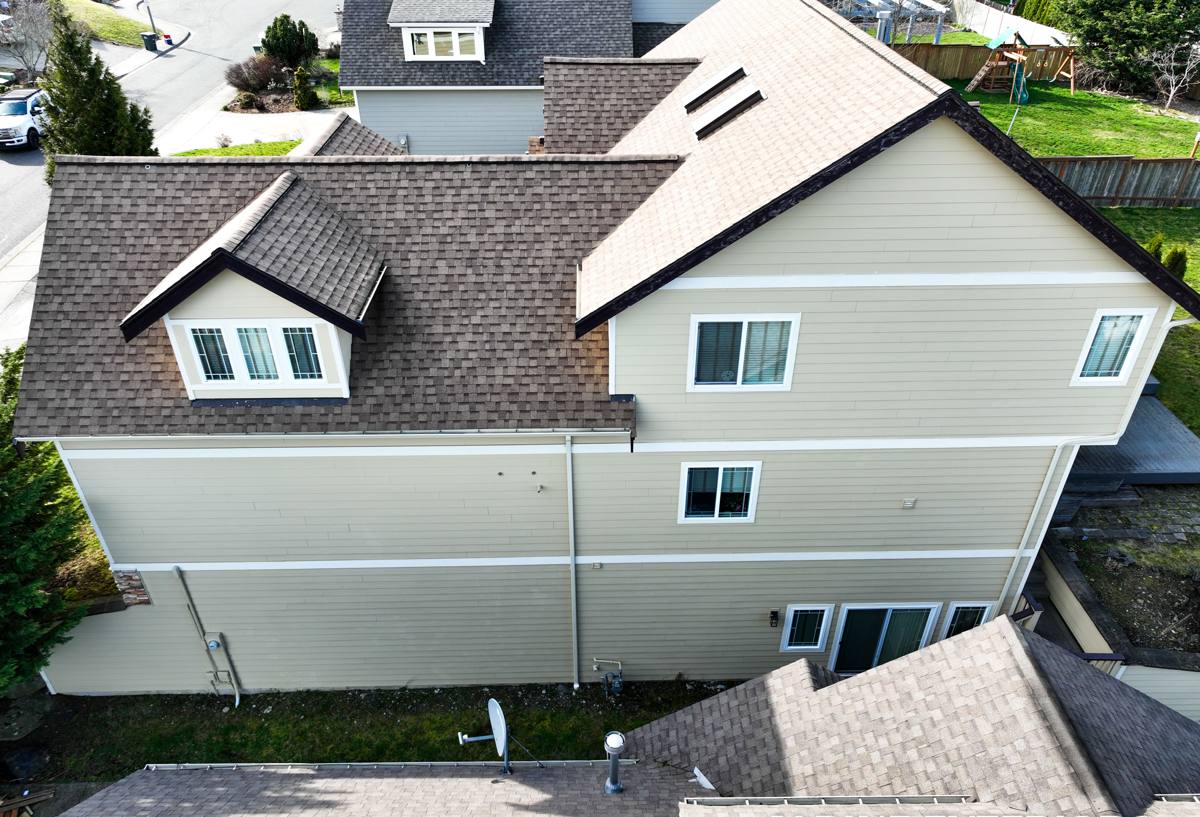
The Warning Signs Worth Getting on a Ladder For
Some signs are visible from the ground with binoculars; others require a closer look, or a professional inspection. Either way, these are the ones that matter most:
- Shingles that are cupping, curling at the edges, or losing so much granule that you can see the black asphalt mat underneath
- Bald patches or streaks where granules have washed into the gutters
- Cracked, split, or missing shingles after a windstorm — especially clustered on the same slope
- Moss colonies thick enough that you can't see the shingle surface underneath, particularly on north-facing slopes
- Dark streaking or a soft, spongy feel when you walk the roof (a sign of trapped moisture in the decking)
- Flashing around chimneys, skylights, and roof-to-wall transitions that's rusted, lifted, or sealed with visible caulk patches
- Daylight visible through the roof deck from inside the attic
- Sagging rooflines, which usually point to a structural or decking problem, not just worn shingles
One or two of these in isolation might mean a targeted repair. Several at once — or any structural sign like sagging or deck rot — means it's time to start planning a full replacement rather than chasing leaks one at a time.
How the Whatcom County Climate Speeds Things Up
Salt Air and Marine Moisture
Being this close to the Salish Sea means the air carries more salt and moisture than an inland climate does. That moisture works its way into fastener heads, flashing seams, and any spot where a shingle's protective coating has already started to wear thin, accelerating corrosion on metal components years before an inland roof would show the same wear.
Driving Rain
Whatcom County doesn't just get a lot of rain — a good share of it comes in sideways off wind-driven storms. That kind of rain finds weaknesses that vertical rain never would: lifted shingle tabs, marginal flashing laps, and nail pops that would otherwise sit dry for years. It's also why underlayment quality and flashing detail work matter more here than in drier regions.
The Long Moss Season
Between the tree cover around Sudden Valley and the region's long, damp shoulder seasons, moss has months of favorable conditions to establish itself every year. Moss doesn't just look bad — it holds moisture directly against the shingle surface and can lift shingle edges as it grows, which shortens the roof's functional life regardless of what the manufacturer's warranty says on paper.
Roofing Material Lifespans at a Glance
These are typical ranges under normal conditions. In a moss-prone, marine-air climate like ours, expect the lower end of each range unless the roof gets regular maintenance.
| Material | Typical Lifespan | How It Handles Our Climate |
|---|---|---|
| 3-tab asphalt shingle | 15-20 years | Least moss- and wind-resistant of the common options; shows granule loss earliest |
| Architectural (laminate) asphalt shingle | 25-30 years | Heavier profile handles driving rain and wind better; still needs moss management |
| Wood shake or shingle | 20-30 years with upkeep | Most vulnerable to moisture retention and moss; requires the most consistent maintenance here |
| Metal (standing seam or panel) | 40-60 years | Sheds moisture and resists moss well, but fasteners and flashing need salt-air-rated hardware |
| Composite/synthetic shake | 30-50 years | Doesn't absorb moisture like wood, holds up well to moss without the upkeep burden |
What to Check From Inside the House
The attic tells you things the roof surface can't. A flashlight walk-through can reveal:
- Water stains on the underside of the decking or on rafters, even old ones — they mark where leaks have already happened
- Damp or matted insulation, which points to an active or recent leak path
- Visible daylight coming through the roof deck
- A musty smell, which often means moisture has been sitting longer than a single storm
- Rusted nail tips poking through the decking, which is normal in small amounts but worth noting if widespread
If you see active staining that lines up with a spot you've also noticed granule loss or moss on the exterior, that's usually enough evidence to stop patch-repairing and get a full evaluation.
Repair vs. Replace: A Practical Way to Decide
Not every problem roof needs a full tear-off. The decision usually comes down to three questions:
Is the damage isolated or spread across the roof?
A single damaged slope from a fallen branch is a repair. Granule loss, curling, or moss across most of the roof means the whole surface is aging out together, and patching one section just delays the inevitable.
Is the decking still sound?
Shingles are replaceable on their own schedule. Rotted or soft decking underneath changes the math — at that point you're paying for structural repair either way, and it rarely makes sense to put new shingles over compromised sheathing.
How many repairs have you already made?
If you're calling for the second or third leak repair in a few years, you're likely spending repair money that would have gone a long way toward the down payment on a new roof — and each repair is a patch on a system that's still aging underneath it.
What Happens to Your Siding When the Roof Comes Off
Roof replacement and siding condition are more connected than most homeowners expect. Tear-offs and re-flashing work happen right at the wall line, and it's common for a roofing project to expose siding that's already been absorbing moisture from years of runoff, ice dams, or failed flashing above it. This is often the moment homeowners in Sudden Valley discover soft trim boards, delaminating panels, or paint that's failed faster than it should have.
It's also why we don't install materials like LP SmartSide, vinyl, Cemplank, Allura, or bare cedar and primed spruce on the homes we work on. Every one of those products has legitimate strengths, but in a climate with this much sustained moisture exposure and moss pressure, we've seen them create more long-term maintenance burden than homeowners are told to expect going in — whether that's edge-swelling on engineered wood, expansion and impact sensitivity on vinyl, or the repainting cycle that untreated wood demands. We install James Hardie fiber cement exclusively: it's non-combustible, the HZ product lines are engineered for specific climate zones rather than sold as one-size-fits-all, the ColorPlus factory finish holds up to marine air without the repaint schedule of field-painted siding, and the warranty is transferable if you sell the home. If a roof project uncovers siding that needs attention, that's the product we'll recommend putting back up.
What a Roof Replacement Actually Involves
A straightforward tear-off and replacement generally includes removing the old roofing down to the deck, inspecting and replacing any damaged sheathing, installing new underlayment rated for wind-driven rain, correct flashing at every penetration and wall transition, and the new roofing material itself. On a typical single-family home, most crews can complete the work in one to a few days depending on size, pitch, and weather windows — though our stretch of Washington means scheduling around rain is part of every roofing timeline, not an exception to it.
A reputable estimate should walk you through decking condition, ventilation, flashing details, and material options — not just a single number for "new roof." If moss has been a recurring issue, ask specifically what the plan is for moss-resistant materials or preventive measures like zinc or copper strips, since that's a detail worth nailing down before work starts, not after the next wet season.
If you're seeing any of these warning signs, or just want an honest read on where your roof stands, we're happy to come take a look. The estimate is free, there's no pressure to sign anything on the spot, and you'll walk away with a clear picture of what your roof actually needs.