 Sudden Valley Exterior
 Exterior Work Built for South Hill's Corner of Whatcom County
South Hill sits within the broader Sudden Valley community in Whatcom County, an area shaped as much by its trees and elevation changes as by its proximity to water. Homes here deal with a specific combination of conditions: moisture that lingers under a forest canopy, wind-driven rain that finds every gap in a building envelope, and a damp season that can stretch from October well into spring. None of that is unique to South Hill, but the combination is persistent enough that exterior materials and installation choices matter more here than they do in drier parts of the state.
We work throughout Sudden Valley and the surrounding Whatcom County area, and South Hill is a neighborhood we know well from siding, roofing, window, and deck projects over the years. That familiarity matters because exterior work here isn't just about following a manufacturer's install manual — it's about understanding how a specific lot, tree cover, and slope orientation change the way water and moisture actually move across a house.
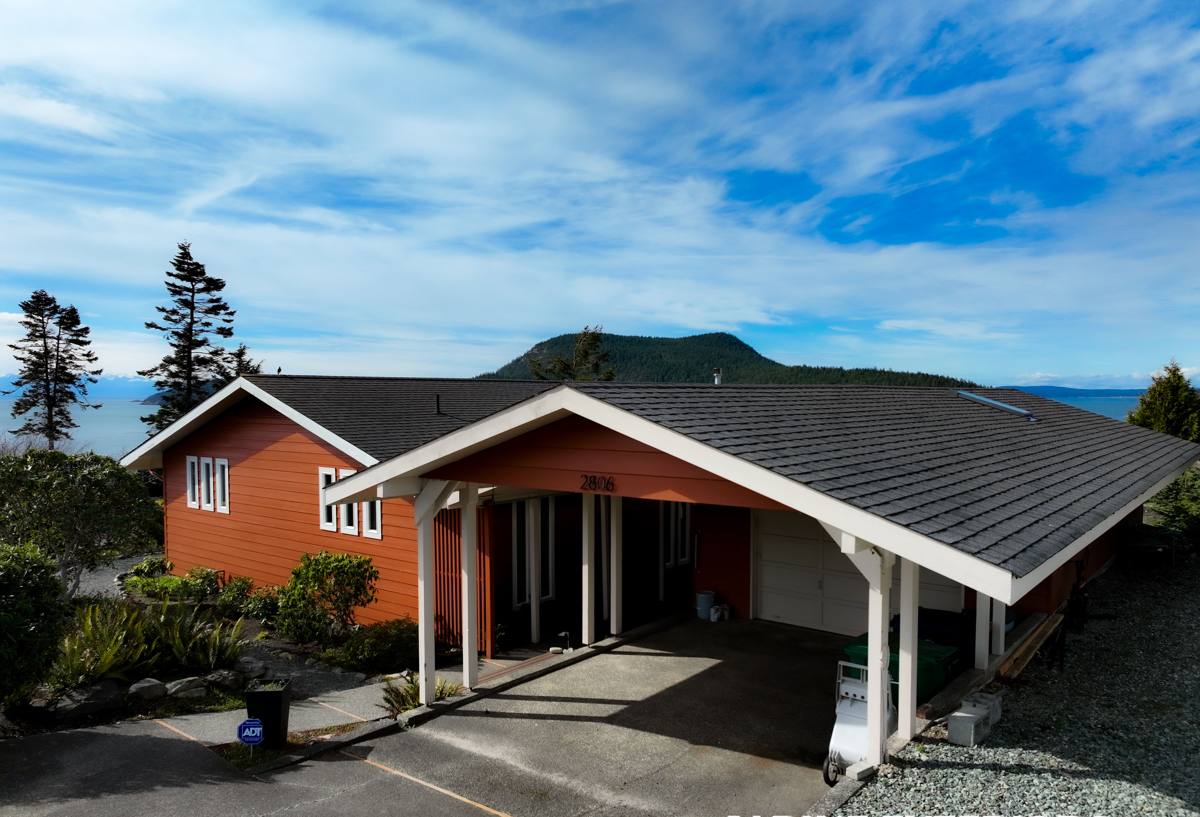
What the Local Climate Does to a Home's Exterior
Salt air, driving rain, and a long moss season all take their toll on homes in this part of Whatcom County. Each of those factors stresses a different part of the exterior in a different way, and understanding the mechanism is what separates a durable repair from one that fails again in a few years.
Salt Air and Corrosion
Even at a distance from open water, airborne salt can accelerate corrosion on fasteners, flashing, and metal trim. Left unaddressed, corroding fasteners loosen siding panels and trim boards, which opens small gaps that moisture then exploits. It's a slow process, which is exactly why it gets missed until a homeowner notices staining or a panel that's started to pull away.
Driving Rain and Wind-Driven Moisture
Rain that falls straight down is manageable with basic overhangs and standard flashing. Rain that comes in sideways during a windstorm is a different problem — it gets pushed up under laps, around window trim, and into any seam that wasn't sealed and flashed correctly the first time. This is where installation quality outweighs material choice. The best siding or roofing product in the world will still leak if the flashing details underneath it were done wrong.
Moss, Shade, and Prolonged Dampness
Tree cover that makes Sudden Valley and South Hill attractive also means many roofs and north-facing walls stay shaded and damp far longer after a storm than they would in an open lot. That extended dampness is what moss and algae need to establish. Moss on a roof isn't just cosmetic — it holds moisture against shingles and can work its way under edges and flashing over time. On siding, sustained dampness is what allows rot to start in wood-based products or paint failure to accelerate on lower-quality finishes.
Siding: Why We Standardize on One Product
We install James Hardie fiber cement siding exclusively. We don't install vinyl, LP SmartSide, Cemplank, Allura, or primed wood products like spruce or cedar. That's a deliberate standard, not a default, and it's worth explaining why — especially in a climate like this one.
Vinyl siding is inexpensive and easy to install, but it's a petroleum-based product that expands and contracts with temperature swings, and it relies on overlapping panels rather than sealed seams — fine in dry climates, less forgiving where wind-driven rain is common. Wood-based engineered sidings and traditional wood siding (cedar, primed spruce) depend on an intact paint or coating layer to stay protected; once that layer is compromised by scuffs, nail pops, or age, moisture gets into the wood fiber itself, and in a damp, shaded climate that can mean rot rather than just a cosmetic issue. Other fiber cement brands compete reasonably well on paper, but we've standardized on Hardie specifically because of its factory-applied ColorPlus finish, its HZ5 formulation engineered for wetter, harsher climates, and the consistency of its warranty when installation follows spec.
None of this means other products are junk — plenty of homes around the country wear them fine. It means that for the specific stresses South Hill homes face — sustained moisture, shade, and coastal-influenced air — we don't think they're the right long-term bet, and we'd rather turn down a lower-cost install than put something on a wall we don't believe will hold up.
James Hardie Product Lines We Use
- HardiePlank lap siding — the standard horizontal siding profile, available in multiple textures and exposures
- HardiePanel vertical siding — often used for accent sections or a board-and-batten look
- HardieTrim — fascia and trim boards that match the siding's durability, not just its color
- ColorPlus factory finish — baked-on color that resists fading and chipping better than field-applied paint, which matters when a house sits under tree shade for much of the year
Roofing in a Long Moss Season
Roofing decisions in South Hill come down to material durability and, just as importantly, how the roof is set up to shed moisture and resist moss. We look at ventilation, underlayment, and flashing details as closely as the shingle or roofing material itself, because a roof that traps moisture underneath will fail early no matter what's on top. For homes with heavy tree cover, we also talk through realistic maintenance expectations — moss growth can be slowed with the right roofing choices and periodic care, but no roof in this climate is entirely maintenance-free.
Windows: Sealing Out Wind-Driven Rain
Window failures in this area are rarely about the glass — they're about the seal and flashing around the frame. Replacement windows installed without proper flashing integration into the surrounding siding or wall assembly are a common source of hidden leaks, especially on walls that take direct wind-driven rain. When we replace windows, we treat the flashing and integration with the siding system as part of the job, not an afterthought, because that's where most real-world leaks actually originate.
Decks: Built for Shade and Standing Moisture
Decks in shaded, tree-covered lots deal with slower drying times than decks in open sun, which means fastener corrosion, board cupping, and moss buildup on walking surfaces show up faster here than in drier settings. Proper spacing between boards, ledger flashing where the deck meets the house, and corrosion-resistant fasteners are basic requirements in this climate, not upgrades.
Comparing Common Siding Options
| Material | Moisture Resistance | Maintenance | Typical Lifespan |
|---|---|---|---|
| Vinyl | Panel-dependent; seams can admit wind-driven rain | Low, but cracks/fades over time | 15-25 years |
| Cedar / Primed Wood | Requires intact coating; vulnerable once breached | High — repainting/staining cycle | Highly variable, often 15-20 years before major work |
| LP SmartSide / Engineered Wood | Better than raw wood but still coating-dependent | Moderate | 20-30 years with upkeep |
| James Hardie Fiber Cement | Non-combustible, dimensionally stable, HZ formulation for wet climates | Low — factory finish, periodic cleaning | 30+ years when installed to spec |
Cost Factors Homeowners Should Understand
Pricing for siding, roofing, window, or deck work in South Hill depends on more than square footage. A few factors that consistently move the number:
- Existing damage — rot or compromised sheathing found once old siding or roofing comes off adds repair work before new material goes on
- Access and lot layout — sloped lots and heavy tree cover common in Sudden Valley can affect equipment access and staging
- Trim and detail complexity — homes with more corners, window trim, and architectural detail take longer to flash and finish correctly
- Product selection — Hardie's various profiles and finishes carry different material costs, though installation labor is a larger share of most projects
- Tear-off vs. overlay (roofing) — full tear-off costs more up front but avoids trapping moisture under old material
Why a Local Crew Matters Here
A crew that works across Whatcom County regularly sees how a given slope, tree line, or shade pattern changes the way a house actually experiences weather — knowledge that doesn't come from a spec sheet. That's part of why we walk every South Hill property in person before quoting anything: the right flashing detail, siding profile, or roof ventilation approach depends on how water actually behaves on that specific lot, not just a general climate zone.
Get a Straightforward, No-Pressure Estimate
If you're weighing a siding replacement, roof work, window upgrade, or deck project in South Hill or elsewhere in Sudden Valley, we're happy to take a look and give you an honest read on condition and options. Fill out the form below for a free estimate — no pressure, no obligation.