 Sudden Valley Exterior
 Why This Decision Trips Up So Many Homeowners
Every siding repair call starts the same way: something looks wrong on the outside of the house, and the homeowner wants to know if it can be patched or if it's a sign of bigger trouble. In Sudden Valley, that question comes with extra weight. Lake Whatcom sits right next to a lot of these homes, humidity lingers under the tree canopy, and the mix of salt-tinged air moving up from the Sound with driving winter rain means siding here works harder than siding in a dry inland climate. Knowing the difference between a cosmetic fix and a sign of failing material underneath is what keeps a small job small.
This guide walks through how to tell the two apart, what typically drives the cost either way, and what we look for on an inspection before we ever recommend tearing anything off a wall.
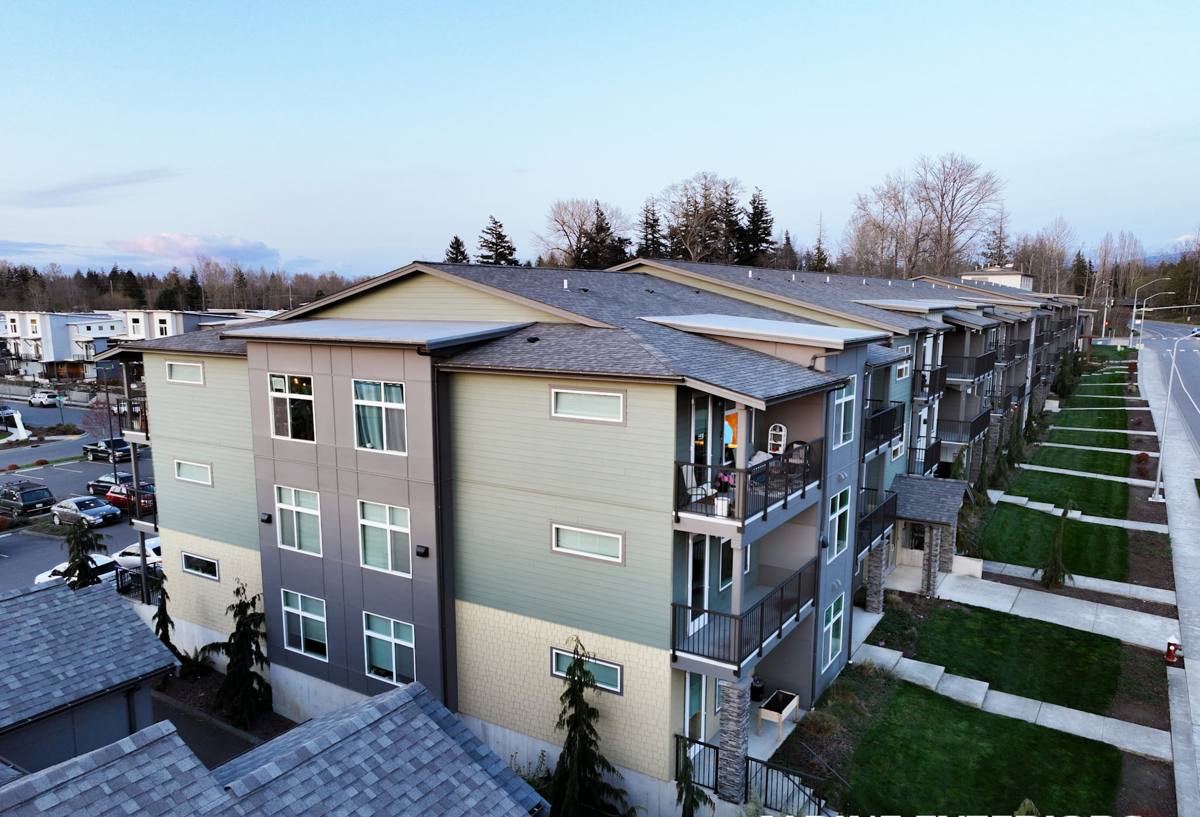
Start With What the Damage Is Actually Telling You
Surface Damage vs. Structural Damage
Not all siding problems are equal. A cracked panel from a stray branch is a different animal than soft, spongy siding you can push a finger through. The first step in any honest assessment is figuring out whether you're looking at a surface issue or a sign that moisture has already gotten past the siding and into the wall assembly.
- Surface-level (usually repairable): isolated cracks or chips, small impact damage, a single failed caulk joint, minor color fading on an aging painted product, a loose or popped fastener.
- Structural or systemic (usually points to replacement): soft or crumbling material when pressed, visible swelling or delamination, mold or fungal growth spreading across multiple panels, warping across a wide section of wall, siding that's pulling away from the sheathing, or rot in the framing behind it.
The tricky part is that surface symptoms and systemic problems can look similar from the ground. A stain near a window might be a one-time flashing issue, or it might mean water has been tracking behind the siding for years. That's why a proper inspection involves more than a visual scan — it means checking moisture content, probing suspect areas, and looking at what's happening at penetrations like windows, doors, and roof lines.
Where Moss Season Changes the Calculus
Whatcom County's long wet season, especially the shaded, moisture-holding conditions common around Sudden Valley's wooded lots, gives moss and algae months to establish themselves on north-facing walls and anywhere siding stays damp longer than it should. Moss itself isn't usually what destroys siding, but it holds water against the surface and can work into seams and butt joints. On wood-based products, that sustained moisture exposure is often what tips a repairable situation into a replacement one.
The Age and Material Question
How old the siding is, and what it's made of, matters as much as what the damage looks like. The same crack in five-year-old fiber cement and thirty-year-old cedar lap siding tells two very different stories.
| Siding Material | Typical Service Life (PNW/coastal conditions) | Repair Outlook |
|---|---|---|
| Cedar / primed spruce | 15-25 years with diligent repainting | Repairable early on; rot and moisture damage accelerate past year 15-20 |
| Vinyl | 20-30 years, but brittle and fades over time | Cracks and warping often can't be color-matched or aren't worth patching late in life |
| LP SmartSide (engineered wood) | 20-30 years per warranty, shorter in wet-prone spots | Edge and seam swelling is a known failure point; once it starts, it spreads |
| Fiber cement (James Hardie) | 30-50+ years | Non-combustible core resists moisture-driven rot; damage is usually isolated and repairable |
The pattern that shows up again and again on older homes in this area: wood-based and engineered-wood sidings that looked fine for a decade start showing multiple, unrelated problems all at once in years 15-25 — a crack here, soft spots there, paint that won't hold anymore. That clustering of unrelated symptoms is usually the signal that the material itself has reached the end of its useful life, not that you've had a run of bad luck.
Cost Factors That Actually Drive the Decision
Homeowners often ask for a flat answer — "is it cheaper to repair or replace" — but the honest answer depends on a handful of specific factors we walk through on every inspection.
- How much of the wall is affected. Repairing one or two panels is straightforward. Repairing damage scattered across 30-40% of a wall starts to approach the labor cost of just replacing that elevation.
- Whether the material is still available or matchable. Discontinued paint colors, weathered vinyl, or aged cedar can be impossible to blend with new material, leaving a visibly patched look.
- What's happening behind the siding. If the sheathing or framing has rot, that has to be addressed regardless of what goes back on the outside — and once a wall is opened up that far, replacing the siding at the same time is usually the more sensible move.
- How many separate repair trips you're likely to need. A material that's failing system-wide will keep generating service calls. At some point, the cumulative cost of repeated repairs outweighs a one-time replacement.
- Energy and moisture performance. Old, gapped, or warped siding is rarely doing its job as a weather barrier, which shows up as drafts or moisture problems inside the house.
What a Legitimate Inspection Should Cover
Before you agree to either a repair or a full replacement, a contractor should be able to walk you through specifics, not just a verbal "it needs to come off." Here's what we check on every siding assessment:
- Moisture readings at suspect panels and at high-risk areas like below windows and at wall bottoms
- Condition of flashing at windows, doors, and roof-to-wall intersections
- Caulking and sealant condition at joints and penetrations
- Fastener condition and whether panels are securely attached
- Signs of pest activity, which often follows sustained moisture
- Condition of the water-resistive barrier and sheathing where damage allows a look behind the siding
- Overall material age relative to expected service life for that product
That kind of inspection takes time, and it should. A quick look from the driveway isn't enough to make a repair-versus-replace call responsibly, especially on a home exposed to the wind-driven rain patterns this area gets off the lake and the Sound.
When Repair Is the Right Call
Repair makes sense when the damage is isolated, the underlying material is still structurally sound, and the cause of the damage was a one-time event rather than an ongoing condition. Examples: storm impact damage to a panel or two, a single failed caulk joint that let water in before anyone noticed, a fastener that backed out and needs resetting, or minor cracking on siding that's otherwise performing well and isn't near the end of its service life. In these cases, a targeted repair protects the investment you already have and there's no reason to spend more than that.
When Replacement Is the Honest Answer
Replacement becomes the right call when damage is widespread, when the material has reached the point where similar problems are popping up in unrelated areas, or when what looks like a small repair turns out to be one symptom of a larger moisture problem behind the wall. It's also worth considering proactively when siding is approaching the end of its expected life span — replacing before failure means you control the timeline and budget instead of reacting to an emergency.
This is where our own standard as a contractor comes into the conversation. We install James Hardie fiber cement siding exclusively — we don't install vinyl, LP SmartSide, Cemplank, Allura, or primed wood products. That's not a marketing position; it's a reflection of what we've seen hold up under Whatcom County's wet, moss-prone conditions versus what tends to generate repeat repair calls. Hardie's fiber cement core doesn't absorb and swell the way engineered wood or solid wood can, it's non-combustible, and the ColorPlus factory finish holds color without the repainting cycle that wood and some engineered products require. When a homeowner is already facing a full or partial replacement, we think it's worth explaining why we'd put Hardie back on their home rather than matching whatever was there before.
A Practical Checklist Before You Decide
- Is the damage confined to one or two isolated areas, or scattered across the wall?
- Does the siding feel soft, spongy, or crumbly anywhere near the damage?
- How old is the current siding relative to its expected service life?
- Can the existing material still be matched in color and profile?
- Has this area of the house had repair calls before?
- Is there visible moss, algae, or persistent damp staining nearby?
- Have you had a contractor check behind the siding, not just look at the surface?
Don't Ignore Small Signs Near the Lake and Woods
Homes around Sudden Valley often sit close to tree cover and near Lake Whatcom itself, which means shaded walls stay damp longer after our long wet stretches and moss gets a real foothold before summer dries things out. A small stain or soft spot that might be low-priority on a home in a drier, more exposed location deserves a closer look here, simply because the conditions that caused it aren't going away on their own. Catching it early is usually the difference between a repair and a much larger project.
Get an Honest Opinion, Not a Sales Pitch
If you're noticing damage, discoloration, or soft spots on your siding, the right first step is a straightforward inspection — not a quote pushed toward the most expensive option. We'll tell you plainly whether what you're looking at is a repair, and if it's more than that, walk you through why and what your options are. Reach out for a free, no-pressure estimate and we'll take a real look at what's going on.