 Sudden Valley Exterior
 Exterior Work in Columbia: Built for a Wet, Salt-Touched Climate
Homes in and around Columbia sit in a part of Whatcom County where the weather doesn't do anything halfway. Rain rolls in off the water for months at a stretch, humidity stays high even between storms, and homes close enough to catch salt-laden air off Bellingham Bay deal with a slow, steady corrosive load that inland properties never see. Add in the tree cover common to this part of the county and you get long stretches of shade that keep siding, decking, and roof surfaces damp far longer than they'd stay in a drier climate. That combination — salt air, driving rain, and a moss season that can run most of the year — is exactly what shortens the lifespan of exterior materials that aren't built or installed to handle it.
We work this area regularly, and the patterns repeat from property to property: north-facing siding that never fully dries out, roof valleys and shaded eaves that green up with moss faster than the rest of the roof, window frames that show swelling or soft spots years before they should, and deck boards that stay slick with algae well into what should be dry season. None of that is a sign of a poorly built home — it's what this climate does to exteriors that weren't matched to it.
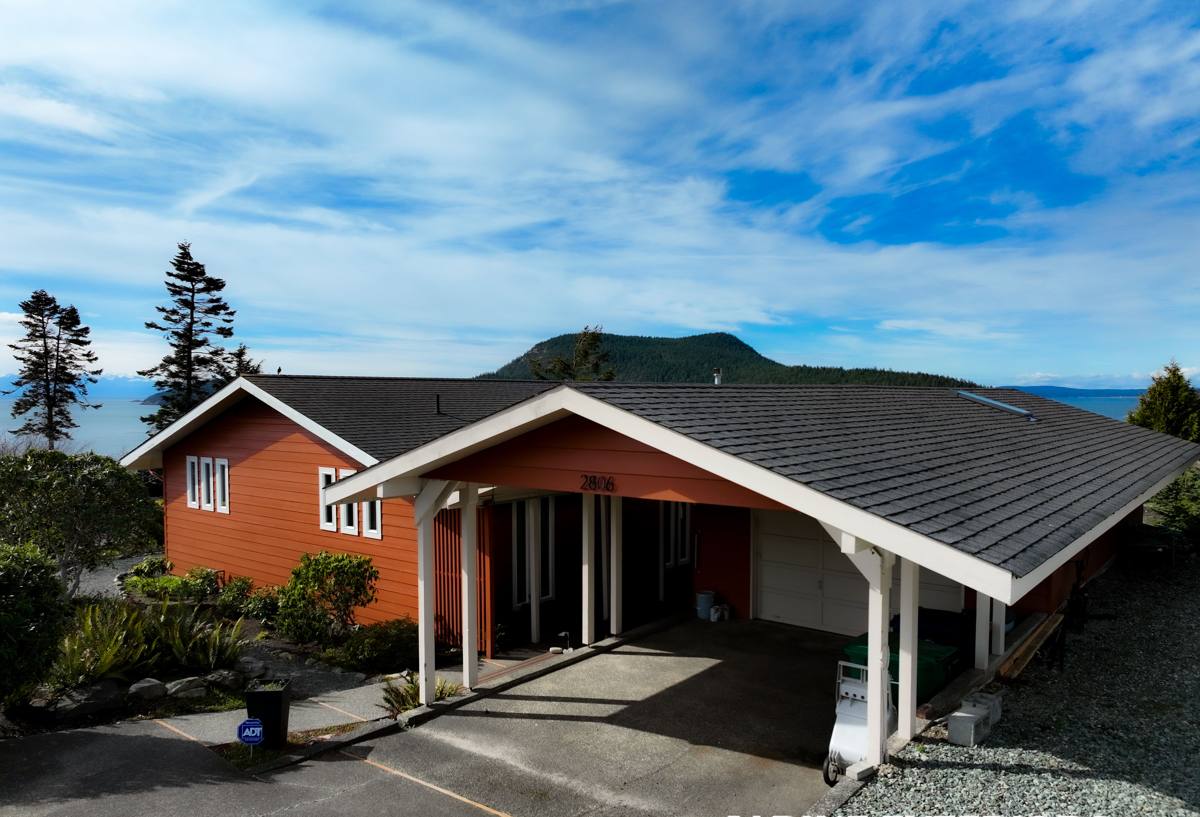
Siding: Why We Install Only James Hardie Fiber Cement
Siding takes the brunt of Columbia's weather because it's the largest exposed surface on the house, and it's constantly cycling between wet and dry. We made a deliberate decision as a company to install only James Hardie fiber cement siding — not vinyl, not LP SmartSide, not Cemplank or Allura, not primed spruce or cedar. That's not a marketing position; it's a practical one based on what holds up here.
What Matters in This Climate Specifically
- Non-combustible material: Fiber cement doesn't burn, feed a fire, or melt against radiant heat — relevant given regional wildfire smoke and ember exposure in recent summers.
- Moisture stability: Fiber cement doesn't swell, delaminate, or rot the way wood-based and engineered-wood products can when they stay damp for weeks at a time, which is a real risk on shaded, north-facing walls common in Columbia.
- Factory-applied ColorPlus finish: Baked-on color resists the fading and chalking that field-applied paint suffers under constant UV and rain cycling, and it holds up better against the mildew and algae growth that thrive in persistent damp.
- Climate-engineered HZ product lines: Hardie's HZ5 formulation is built for the wetter, harsher climate zones of the Pacific Northwest rather than a one-size-fits-all national spec.
We're upfront that other siding products have real strengths — vinyl is inexpensive and low-maintenance in mild climates, LP SmartSide is easier and faster to install, cedar has a look some homeowners love. But vinyl can warp or crack in temperature swings and shows every wave in the wall behind it, engineered wood siding depends heavily on caulking and edge-sealing to keep moisture out over the long run, and natural wood siding needs a maintenance schedule most homeowners underestimate — repainting, caulking, and spot-treating for rot on a recurring cycle. In a climate with this much sustained moisture, those trade-offs compound faster than they would somewhere drier. Fiber cement, installed correctly, removes most of that ongoing maintenance burden.
Roofing in a Long Moss Season
Moss and algae aren't cosmetic problems here — they hold moisture against the roof surface, work into shingle edges, and accelerate granule loss over time, especially on shaded slopes and north-facing planes that never get a full dry-out between storms. Roofs in Columbia benefit from attention to a few things that matter more here than in drier parts of the state:
- Proper ventilation to keep the underside of the deck dry and reduce condensation buildup
- Ice-and-water shield and flashing details at valleys, chimneys, and skylights, where most leaks actually originate
- Gutter and downspout capacity sized for sustained heavy rain, not just peak-storm volume
- Realistic moss-management expectations — zinc strips and periodic cleaning help, but they don't replace a roof system installed with drainage and shade in mind
A roof that looks fine from the ground can still be losing granules or holding moisture under moss mats you can't see from the driveway. Regular inspection matters more here than in a climate that dries out for months at a time.
Windows: Moisture, Drafts, and Efficiency
Older or lower-grade windows in this climate tend to fail in predictable ways: seals break down from constant humidity cycling, frames — especially wood or poorly clad composite — swell or soften at the sill, and single-pane or aging double-pane units fog between the panes once the seal gives out. Beyond comfort, a failing window is a moisture entry point right next to your siding and framing, which is exactly the kind of hidden damage that's expensive to catch late. Well-sealed, properly flashed replacement windows do double duty here: better energy performance in a climate that runs the furnace more months than not, and one less path for water to get behind the exterior wall assembly.
Decks: Standing Up to Rain, Shade, and Algae
Decks in Columbia deal with two problems at once — constant moisture and, on many lots, significant tree cover that limits sun exposure and airflow. That combination is what makes decking surfaces slick with algae well past what homeowners consider "the rainy season." A few things make a real difference:
- Proper joist spacing and board gapping so water sheds instead of pooling
- Ledger board flashing that actually keeps water out of the house-to-deck connection, a common rot point
- Material choice matched to sun exposure — heavily shaded decks put more demand on a material's rot and mildew resistance than sun-exposed ones
- Railings and structural hardware rated for damp, and in properties closer to the water, salt-air exposure
A deck built without those details in mind might look fine for a couple of seasons before soft spots, staining, or slick algae growth show up — usually right where the shade and moisture are worst.
Why a Local Crew Matters Here
Whatcom County's microclimates vary more than people expect over a short distance — proximity to water, elevation, tree cover, and slope orientation all change how much moisture a given wall or roof plane actually sees. A crew that works this specific area regularly recognizes those patterns: which walls need extra attention to flashing and drainage, which roof slopes hold moss longest, which lots need decking rated for heavier shade exposure. That's the kind of judgment that doesn't come from a spec sheet — it comes from having done the work on homes with the same weather exposure, season after season.
A local crew is also easier to hold accountable. Warranty work, follow-up questions, and honest answers about what your specific property actually needs are simpler when the company isn't hours away or handling every job the same way regardless of climate.
What to Expect From Our Process
- Walkthrough and assessment: We look at current siding, roofing, window, or deck condition and identify moisture, ventilation, or drainage issues specific to your lot.
- Honest scope and materials discussion: We explain what we recommend and why — including why we install James Hardie exclusively for siding work.
- Clear estimate: Written, itemized, no pressure to decide on the spot.
- Installation to manufacturer spec: Proper flashing, fastening, and clearances matter more in this climate than almost anywhere else in the state.
- Follow-through: We stand behind the work and are reachable for warranty or maintenance questions after the job is done.
Cost Factors to Understand Before You Budget
| Project | What Drives Cost | Climate-Specific Consideration |
|---|---|---|
| Siding (James Hardie) | Home size, plank profile, trim detail, number of stories | HZ5 formulation and correct fastening/flashing add labor but reduce moisture-related callbacks |
| Roofing | Roof pitch, material, number of penetrations, tear-off vs. overlay | Ventilation and valley/flashing detail matter more given moss and sustained rain exposure |
| Windows | Number of openings, frame material, glass package | Proper flashing integration with existing siding is critical to prevent hidden water intrusion |
| Decks | Square footage, decking material, railing style, structural condition | Shade exposure and ledger flashing quality affect long-term maintenance and lifespan |
Exact pricing depends on the specific property, so we'd rather walk the site and give you real numbers than a generic estimate that doesn't reflect your home.
A Quick Checklist for Homeowners Planning Exterior Work
- Check north-facing and heavily shaded siding for soft spots, discoloration, or peeling paint
- Look at roof valleys and shaded slopes for moss buildup, not just the overall roof surface
- Test window operation and check for fogging between panes or soft spots at the sill
- Inspect deck ledger boards and support posts where they meet the house or ground
- Ask any contractor directly what material they'll use and why it's suited to this specific climate
If you're in Columbia or elsewhere around Sudden Valley and want a straight answer about what your siding, roof, windows, or deck actually need, we're glad to take a look. Reach out for a free, no-pressure estimate using the form below.