 Sudden Valley Exterior
 Exterior Work Built for the Yew Street Area
Homes around Yew Street sit in one of the more demanding pockets of Whatcom County when it comes to weather. Between the lake-effect humidity of Sudden Valley, salt-tinged air moving in off the Sound, and the long gray stretch of fall through spring rain, exteriors here take a steady beating that homes in drier parts of the state simply don't see. We work on houses in this area regularly, and the patterns repeat: siding that's failed at the butt joints, moss creeping across north-facing roof slopes, windows that have gone soft at the sill, and decks with surface checking and slick, algae-dark boards. None of that is bad luck. It's what this climate does to exteriors that weren't built or installed with it in mind.
This page walks through what we see on Yew Street homes specifically, how our siding, roofing, window, and deck work is approached for this kind of exposure, and why we standardized on materials and methods that actually hold up here instead of ones that just look good on install day.
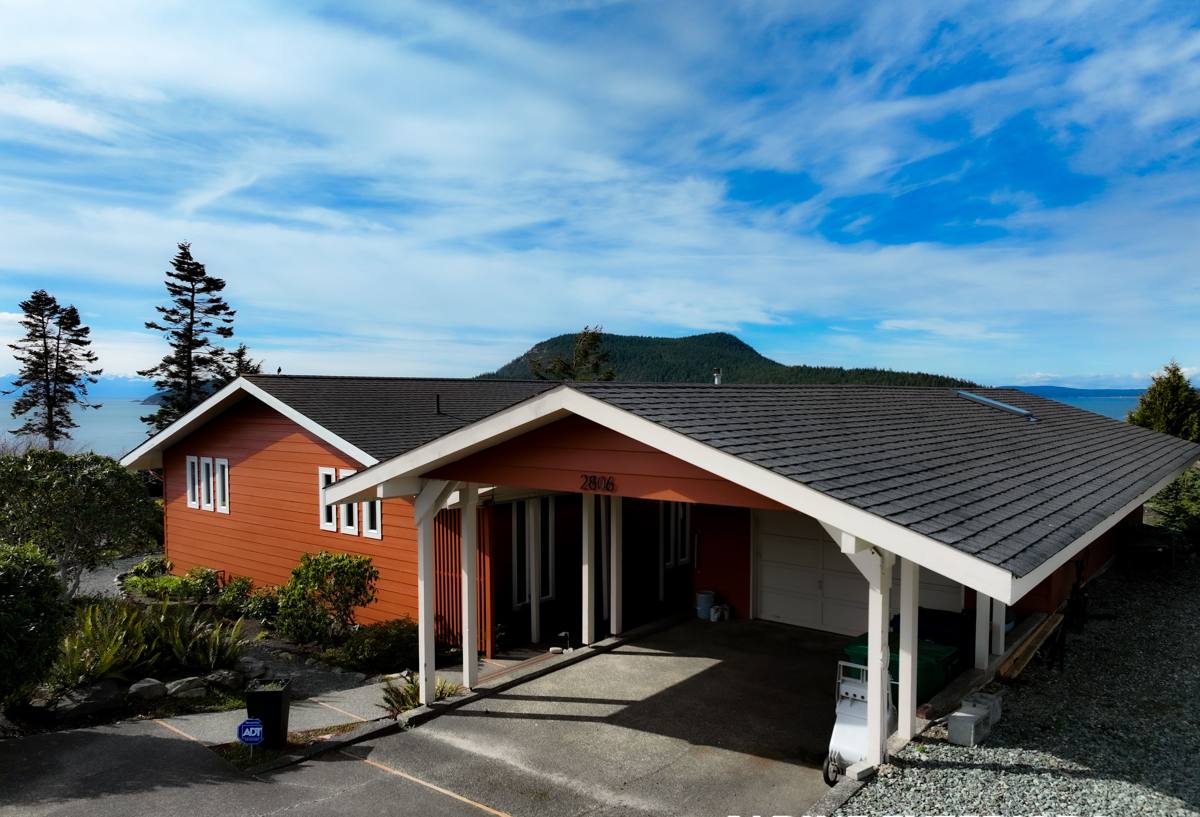
What the Climate Does to a Yew Street Home
Moisture That Never Really Leaves
Whatcom County doesn't get brutal storms so much as it gets relentless, low-grade wet. Driving rain off the water combined with shaded, tree-covered lots means many exterior surfaces around Sudden Valley rarely get a full dry-out between weather systems. That matters more than people expect — most siding and trim failures we find aren't from one bad storm, they're from years of surfaces staying damp a little longer than the material was designed to tolerate.
Salt Air and Slow Corrosion
Proximity to the Sound means a fine salt content in the air that accelerates corrosion on fasteners, flashing, and any metal components on the exterior. Over years, this shows up as rust streaking below nail heads, corroded gutter hardware, and flashing that fails quietly behind the siding where nobody sees it until there's a stain on the interior wall.
Moss, Algae, and the Long Growing Season
The extended damp season here isn't just uncomfortable — it's a growing season for moss and algae on anything that holds moisture: roof shadow lines, north-facing siding, deck boards under tree cover. Moss on a roof isn't cosmetic. It lifts shingle edges, holds water against the roof deck, and shortens the life of the roofing system underneath it. On siding and decking, persistent moss and algae growth is often a sign the material is retaining more moisture than it should.
Siding: Why We Only Install James Hardie
Siding takes the brunt of this climate more than any other exterior component, and it's also the one where material choice matters most. We install James Hardie fiber cement siding exclusively — not as a brand preference, but because the alternatives commonly sold in this market carry trade-offs we're not willing to put on a home in a climate like this one.
What We Don't Install, and Why
- Vinyl siding flexes and gaps over time, and its seams give driving rain a path inward. In sustained wet climates, moisture that gets behind vinyl has few ways to escape.
- LP SmartSide and similar engineered wood products are wood-based at the core. Any breach in the factory coating — a cut edge, a nail hole, a scuff — creates a point where moisture can begin swelling and softening the substrate, especially in a climate that doesn't give surfaces much time to dry.
- Primed spruce and cedar require an ongoing maintenance commitment (recoating, caulking, monitoring) that most homeowners underestimate. In a long wet season, gaps in that maintenance show up fast as cupping, splitting, or rot.
- Other fiber cement brands (Cemplank, Allura) are chemically similar to Hardie, but we've standardized on one system so our crews install to one spec, one flashing detail, and one warranty structure, every time — consistency that matters when callbacks mean a truck trip out to Sudden Valley.
Why Hardie Specifically
James Hardie fiber cement is non-combustible, dimensionally stable across wet and dry cycles, and available in HZ5 formulations engineered for wetter climate zones — relevant for a location that sees this much sustained moisture. The ColorPlus factory finish is baked on under controlled conditions, which holds up better against UV and salt air than field-applied paint, and it carries a transferable warranty that matters if the home changes hands. Installed correctly — proper flashing, gapping, and fastening for this climate — it's the siding system we're comfortable standing behind on Yew Street homes long-term.
Roofing for a Moss-Heavy, High-Rainfall Area
Roofs in this area fail less often from a single event and more from cumulative moisture exposure: moss lifting shingle tabs, valleys that don't shed water fast enough, and flashing around penetrations that corrodes or works loose over the years. Our roofing work on homes in the Sudden Valley area focuses on the details that matter most in this climate — proper valley and step flashing, ventilation that lets the roof deck actually dry between rain events, and moss-resistant material choices where they make sense for shaded, tree-covered lots. A roof replacement here is also the right time to correct ventilation issues, since a lot of premature roof aging we see traces back to trapped moisture in the attic, not just what's happening on the surface.
Windows: Sealing Out Driving Rain
Older windows in this area tend to fail at the sill and the perimeter seal long before the glass itself becomes the issue. Driving rain finds its way in through degraded caulking, warped wood sashes, or flashing that was never properly integrated with the wall assembly in the first place. When we replace windows, the flashing and sealing details around the rough opening get as much attention as the window unit itself — a well-built window installed with a compromised seal will leak just as much as an old one. For homes near the water, we also account for the added corrosion exposure on hardware and frames when helping homeowners choose materials.
Decks: Built to Handle Shade and Standing Moisture
Deck failures around Yew Street are almost always moisture-driven: boards that stay wet under tree canopy, ledger connections that trap water against the house, and fasteners that corrode faster in salt-influenced air. We pay particular attention to ledger flashing (a common source of hidden rot where the deck meets the house), fastener selection rated for coastal exposure, and framing details that let water shed rather than pool. Material choice depends on the homeowner's priorities — some want a low-maintenance composite, others prefer real wood and are willing to keep up with the maintenance — but either way, the structural and flashing details underneath matter more to long-term performance than the decking surface itself.
Cost Factors for Yew Street Homes
Every exterior project is different, but the factors that tend to move price in this area are fairly consistent:
| Factor | Why It Matters Here |
|---|---|
| Tree cover and shade | Slower drying means more moss/algae prep work and sometimes added ventilation considerations |
| Proximity to the water | Salt exposure pushes toward corrosion-resistant fasteners and hardware |
| Existing moisture damage | Hidden rot behind old siding or at deck ledgers often isn't visible until tear-off |
| Roof pitch and complexity | More valleys and penetrations mean more flashing detail and moss-prone areas |
| Access and site conditions | Sloped or wooded Sudden Valley lots can affect staging and material delivery |
Why a Local Crew Matters Here
A crew that mostly works in drier parts of the state will size up moisture protection differently than one that works Whatcom County exteriors every week. Knowing how much dry-out time a job actually has between weather systems, which flashing details matter most on a shaded lot, and where moss tends to accumulate on local roof lines isn't something you get from a spec sheet — it comes from doing the work in this specific climate repeatedly. That's the difference we aim to bring to every Yew Street project: not a generic install, but one built for the conditions the home will actually face.
A Simple Pre-Project Checklist
- Walk the exterior and note any moss, algae, or discoloration on siding and roof surfaces
- Check window sills and frames for softness, gaps, or peeling paint
- Look at deck ledger boards and fastener heads for rust or staining
- Ask any contractor what flashing details they use at wall-to-deck and roof-to-wall transitions
- Confirm what siding material is being proposed and why, not just the price
- Get warranty terms in writing, including whether they're transferable
If you're seeing any of these signs on a home near Yew Street, or just want an honest read on where your siding, roof, windows, or deck stand, we're happy to take a look. Reach out for a free, no-pressure estimate using the form below.