 Sudden Valley Exterior
 Exterior Work Built for Acme's Climate
Acme sits in the foothill country of Whatcom County, where Cascade rain systems stall out and dump moisture on homes for days at a stretch. Add in the salt-laden air that drifts inland off Puget Sound, long stretches of gray, humid weather, and the moss and lichen growth that thrives in shaded, damp conditions, and you have an exterior environment that punishes anything less than a properly installed, moisture-resistant building envelope. Sudden Valley Exterior Co. works this territory regularly, and we've built our approach around what actually happens to siding, roofing, windows, and decks here — not what a product brochure says should happen in a showroom climate.
This page walks through what homes in and around Acme tend to face, how we approach each part of the exterior, and why we standardized on the materials we use.
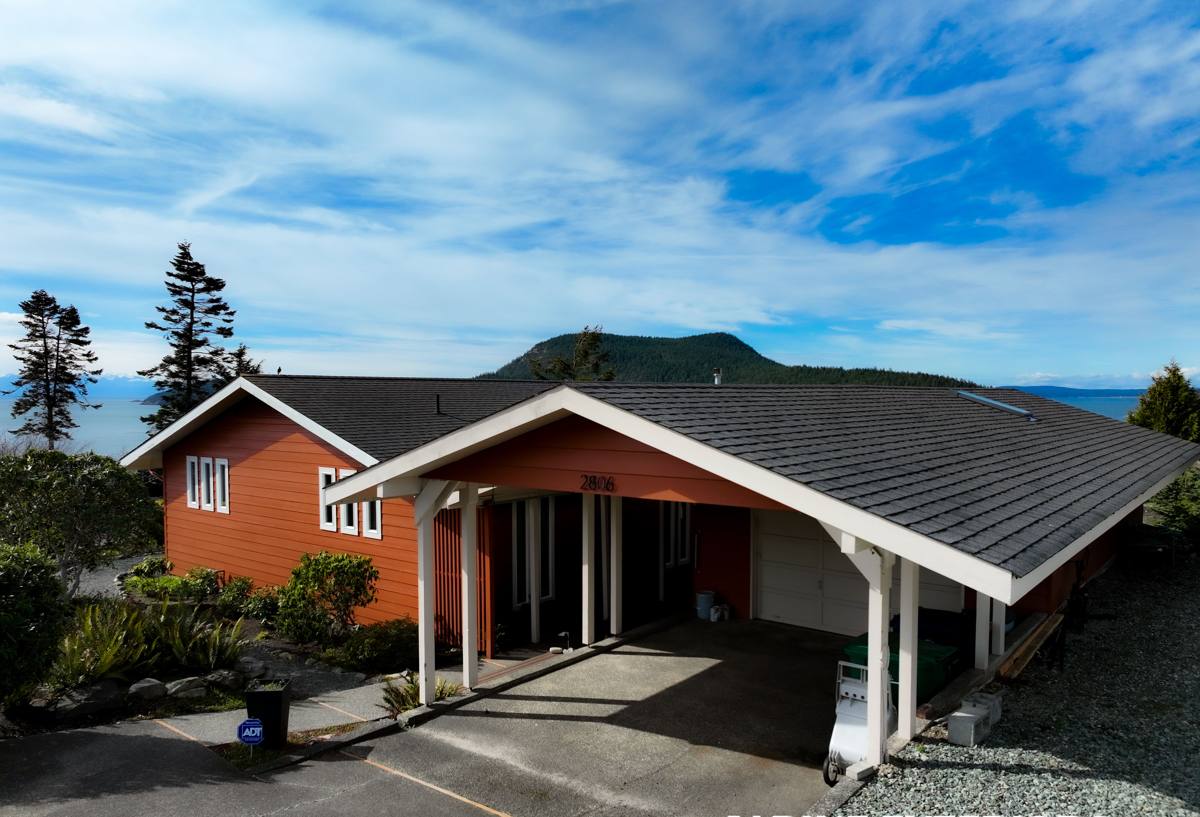
What the Local Climate Does to a House
Moisture That Doesn't Let Up
Whatcom County gets a long wet season, and Acme's mix of tree cover and foothill topography means fog, dew, and shade linger longer on north-facing walls and rooflines than they would in a more exposed location. Wood-based siding products, in particular, absorb that ambient moisture over the fall and winter, swell, and then dry out unevenly come summer. Repeated cycles of this are what eventually cause paint failure, soft spots, and rot at seams and butt joints.
Moss, Algae, and Salt Air
Moss doesn't just grow on roofs here — it colonizes shaded siding, deck boards, and window sills too. It holds moisture against the surface far longer than open air would, which accelerates whatever decay process is already underway. The salt component in the air, even well inland from the water, adds a slow corrosive element to fasteners, flashing, and metal roofing components that homeowners rarely think about until a rust stain shows up.
Wind-Driven Rain
Storms moving through this part of Whatcom County frequently drive rain sideways rather than straight down, which pushes water into laps, seams, and trim joints that were designed for a gentler climate. This is where installation quality — not just material choice — starts to matter as much as the product itself.
Siding: Why We Only Install James Hardie
We get asked regularly why we don't offer vinyl, LP SmartSide, cedar, or primed spruce siding. It's a fair question, and the honest answer is that we made a standard for our own crews based on what holds up in this climate with a normal maintenance schedule — not neglect, not perfect upkeep, just what a typical homeowner actually does.
Wood-Based and Engineered Wood Products
Cedar and primed spruce look great new and can be a reasonable choice in a drier climate with diligent recoating. In Acme's wet, shaded conditions, they need more frequent repainting and caulk maintenance to keep water out of end grain and seams. LP SmartSide is an engineered wood product with a factory-applied treatment, and it has genuinely improved over the years — but it's still wood at its core, meaning seams, cut edges, and fastener penetrations are places where moisture can eventually work in if caulking and paint aren't kept current. We're not saying it fails on every house; we're saying the maintenance margin for error is thinner than we're comfortable installing and standing behind long-term.
Vinyl Siding
Vinyl is inexpensive and low-maintenance in the sense that it doesn't need painting, but it has its own trade-offs: it can warp or become brittle over time, seams are visible, and it offers no fire resistance since it's a petroleum-based product. In a region with wind-driven rain, vinyl's reliance on a drainage plane behind it — rather than the panel itself resisting moisture — puts a lot of weight on installation detail.
Other Fiber Cement Brands
Cemplank and Allura are also fiber cement products, and fiber cement as a category is the right material family for this climate — non-combustible, dimensionally stable, and resistant to moisture-driven swelling. We chose to standardize on James Hardie specifically because of its ColorPlus factory finish (a baked-on finish that resists chipping and fading better than field-applied paint), its HZ5 product engineering for wet Pacific Northwest exposure, and a transferable warranty structure we can stand behind on every job we do — not because other fiber cement brands are inherently unsound.
What James Hardie Gets Right for This Area
- Non-combustible fiber cement core — doesn't feed a fire the way wood-based products can
- Engineered moisture resistance that doesn't swell or rot the way wood siding can in a wet climate
- ColorPlus factory finish reduces repainting cycles compared to field-painted siding
- HZ product lines are specifically engineered for high-moisture, freeze-variable Pacific Northwest exposure
- Strong transferable warranty backing when installed to Hardie's specifications
Roofing for Wet, Moss-Prone Conditions
Roofing in Acme has to account for sustained moisture exposure and moss growth as much as it does for wind and weight loads. Proper underlayment, flashing at every valley and penetration, and adequate ventilation matter more here than in drier parts of the state, because a roof assembly that traps moisture underneath the surface will fail from below long before the shingles or panels themselves wear out. We pay close attention to ridge and eave ventilation, ice-and-water shield in vulnerable areas, and flashing details around chimneys, skylights, and dormers — the spots where most roof leaks in this region actually originate.
Windows: Sealing Against Driving Rain
Wind-driven rain finds weak spots at window flanges and trim before almost anywhere else on a house. When we replace windows, the flashing and sealing details around the opening matter as much as the window unit itself. A high-performance window installed with poor flashing will leak; a modest window installed correctly, with proper head flashing and a continuous water-resistive barrier tie-in, generally won't. We also look at glazing performance for the long, gray Whatcom County winters — better-insulated glass helps with comfort and condensation control, which is its own moisture issue on interior sills during the cold months.
Decks: Built to Handle Standing Moisture
Decks in this area take a beating from shade, moss, and standing moisture, especially under tree cover common around Acme properties. Ledger board flashing, proper board spacing for drainage and airflow, and joist protection are the details that determine whether a deck lasts one maintenance cycle or many. We build decking systems — whether composite or wood — with drainage and ventilation as first-order design considerations, not afterthoughts.
Comparing Exterior Material Approaches
| Material | Moisture Behavior in This Climate | Maintenance Load | Fire Resistance |
|---|---|---|---|
| James Hardie fiber cement | Engineered for wet climates, dimensionally stable | Low — factory finish, periodic caulk checks | Non-combustible |
| Vinyl siding | Doesn't absorb moisture, but relies on drainage plane behind it | Low, but can warp/crack over time | Combustible (petroleum-based) |
| Cedar / primed spruce | Absorbs moisture, prone to swelling and rot without upkeep | High — regular repainting and caulking | Combustible |
| LP SmartSide / engineered wood | Treated wood core, better than raw wood but still moisture-sensitive at seams | Moderate — paint and caulk maintenance needed | Combustible |
Why a Local Crew Matters
Acme's terrain and tree cover create microclimates that vary noticeably from one property to the next — a shaded, north-facing wall a hundred yards from a more exposed lot can have a completely different moss and moisture pattern. A crew that works Whatcom County regularly recognizes those patterns on sight: where flashing tends to fail first, which walls need extra attention to ventilation, and how much moss buildup is normal versus a sign of a deeper moisture problem. That local pattern recognition is hard to substitute with a generic installation checklist, no matter how good the checklist is.
What to Ask Any Contractor Before You Hire
- Are you licensed and insured to work in Whatcom County, and can you provide proof?
- Do you install to the manufacturer's specific climate-zone requirements, or a generic standard?
- Who handles flashing and moisture barrier details — is it a dedicated step, or an afterthought?
- What's the warranty structure, and is it transferable if you sell the home?
- Can you explain why you recommend a specific product for this specific property?
Our Approach on Every Acme Project
Whether the scope is a full siding replacement, a roof overlay or tear-off, window replacement, or a new deck, we start by evaluating what the existing exterior is telling us — where moisture has been getting in, where moss and algae are concentrated, and what that says about ventilation and drainage on the rest of the house. From there we build a plan using materials engineered for this climate, installed to the manufacturer's actual specifications rather than a shortcut version of them.
If you're in Acme and dealing with siding that's showing its age, a roof that needs attention before the next wet season, windows that let in drafts, or a deck that's seen better days, we're happy to take a look. A free, no-pressure estimate is a simple way to find out what your home actually needs — just fill out the form below to get started.