 Sudden Valley Exterior
 Exterior Work Built for Cordata's Climate
Cordata sits inland enough from the water to feel like it should be sheltered, but Whatcom County weather doesn't respect that assumption. Homes here still take on the same driving rain that soaks the rest of the county for eight or nine months a year, the same low winter sun angles that keep north-facing walls damp for days after a storm, and enough salt-tinged air drifting in off the Sound and the bay to accelerate corrosion on fasteners, flashing, and hardware that isn't rated for it. Add a mild, wet climate that's practically a greenhouse for moss and algae, and you've got a recipe for exteriors that look fine for a year or two and then start failing quietly — behind the siding, under the shingles, around the window flanges — long before anyone notices from the curb.
We work throughout Whatcom County, and Cordata's mix of newer subdivisions and older single-family homes gives us a good cross-section of what holds up out here and what doesn't. This page walks through how we approach siding, roofing, windows, and decks for this specific area, and why we think the products and methods matter as much as the labor.
Why Moss and Moisture Are the Real Enemy
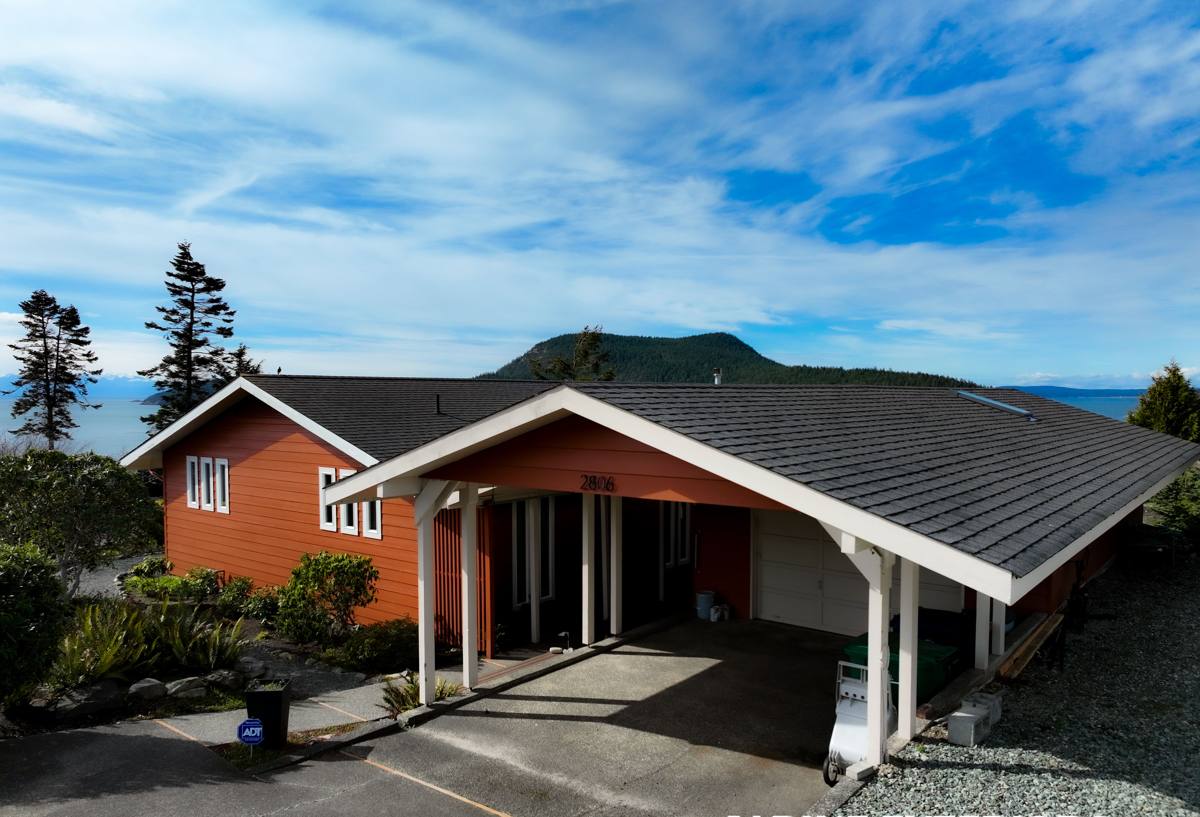
Most exterior damage we find in this part of Whatcom County isn't storm damage — it's slow, cumulative moisture exposure. Moss holds water against a roof or a wall long after the rain has stopped, and that constant dampness is what actually breaks materials down, not any single downpour. On roofs, moss lifts shingle edges and traps grit and organic debris that keeps the surface wet. On siding, it's usually not the moss itself but what it signals: a shaded, poorly ventilated wall section that never fully dries between rain events.
Driving rain — rain pushed sideways by wind, not just falling straight down — is the other half of the problem. It gets behind trim, into seams, and up under laps that were installed with clearances meant for a drier climate. A siding or roofing job that would hold up fine in Eastern Washington can fail here in a few seasons if it wasn't detailed for wind-driven moisture.
What This Means for Homeowners
- North and west-facing walls typically need more attention — they dry slowest and catch the most wind-driven rain
- Roof valleys, gutters, and any shaded, tree-covered sections need regular moss and debris removal
- Caulking, flashing, and fastener choices matter more here than in drier climates — cheap hardware corrodes faster near the coast
- Ventilation behind siding and in attics isn't optional — trapped moisture is what causes rot, not rain itself
Siding in Cordata: Why We Only Install James Hardie
We install James Hardie fiber cement siding exclusively. We don't install vinyl, LP SmartSide, Cemplank, Allura, or unprimed cedar or spruce, and that's a deliberate standard, not a limitation in what we're capable of installing.
Vinyl siding is inexpensive and easy to install, but it's a plastic product that expands and contracts with temperature swings, and in a wet, mild climate like ours it doesn't stand up as well to long-term UV exposure and moisture cycling as fiber cement does. Wood-based composite products like LP SmartSide use engineered wood strand technology that performs well when detailed and maintained correctly, but wood-based cores are inherently more moisture-sensitive than fiber cement, and in a climate where walls rarely get a long dry stretch, that sensitivity matters. Cedar and primed spruce look great initially but demand a maintenance schedule — recoating, caulking, moisture monitoring — that most homeowners underestimate until the wood starts showing rot at the butt joints and corners.
James Hardie fiber cement is non-combustible, doesn't absorb moisture the way wood-based products do, and holds paint and factory finish far longer than wood siding. The ColorPlus factory-applied finish is baked on under controlled conditions, which gives it better fade and chip resistance than field-applied paint, and it comes backed by a strong transferable warranty. Hardie also engineers specific product lines — HZ5 and HZ10 — for different climate zones, which matters in a region where the difference between a wet, temperate winter and a freeze-thaw cycle inland can be significant.
None of this means other products are junk — they have real uses and real fans. It means that for the climate we work in, and for the standard we want to put our name behind, fiber cement is the material we trust to still look right in fifteen years.
Hardie Siding Lines We Install
| Product Line | Best For | Notes |
|---|---|---|
| HardiePlank Lap Siding | Most single-family homes | Traditional lap look, wide color and texture range |
| HardieShingle | Accent areas, gables, dormers | Cedar-shake appearance without wood maintenance |
| HardiePanel | Modern or board-and-batten styles | Vertical panel system, clean lines |
| HardieTrim | Corners, window and door surrounds | Matches siding profile, resists moisture at joints |
Roofing for Cordata Homes
Roofing in this area is less about picking an exotic material and more about getting the details right for a climate that stays wet for most of the year. Underlayment quality, proper flashing at valleys and penetrations, and ventilation all matter more than the shingle brand itself. A roof that traps heat and moisture in the attic will fail from the inside — sheathing rot, mold, premature shingle aging — regardless of how good the shingles look from the street.
We also pay attention to moss-resistant strategies where they make sense: proper gutter sizing so water doesn't back up under the shingle edge, and recommending periodic moss treatment or removal on shaded sections rather than letting it build up for years between service calls.
Windows: Sealing Out the Damp
Old, single-pane or poorly flashed windows are one of the most common sources of hidden water intrusion we find during siding jobs. When we're replacing siding around existing windows, we check flashing and integration at the same time — a new wall system installed around a leaking window just moves the problem, it doesn't solve it.
For window replacement itself, the priorities in this climate are correct flashing integration with the wall assembly, good seals, and glass packages that help with both heat retention and condensation control during the cold, damp months. A window that's beautiful but poorly integrated into the siding system will cause more problems than the one it replaced.
Decks That Survive the Wet Season
Decks in Whatcom County take a beating from standing water, moss, and UV cycling between rare sunny stretches and long grey ones. The most common failure points we see are ledger board connections where the deck meets the house — a chronic source of hidden rot if not properly flashed — and horizontal surfaces that hold water because of poor drainage slope or debris buildup between boards.
Whether we're building new or replacing an aging deck, proper ledger flashing, adequate joist spacing, and drainage-conscious decking choices matter more here than they would in a drier climate. Composite decking can reduce some maintenance burden, but the substructure and flashing details are what actually determine how long a deck lasts.
Why a Local Crew Matters
A crew that only works in dry climates, or that's used to production-builder timelines in a different region, tends to under-detail for wind-driven rain and moisture cycling — not out of carelessness, but because it's not what they're used to accounting for. Working exteriors throughout Whatcom County day in and day out means we're constantly seeing what actually fails here, not what fails in a manufacturer's brochure or a general how-to guide written for a national audience.
That local pattern recognition shapes real decisions: where we add extra flashing even when code doesn't strictly require it, which wall sections get closer attention during installation, and when we flag a homeowner about a moss or drainage issue that's going to become a siding or roofing problem in a few years if it's ignored now.
What to Expect When You Work With Us
Every project starts with a walk-around of the exterior — siding, roofline, windows, decks, whatever's relevant to what you're asking about — so we can point out anything we see, not just quote the specific job you called about. From there we put together a written estimate that spells out materials, scope, and timeline, with no pressure to sign on the spot.
- On-site walkthrough and assessment of existing conditions
- Written, itemized estimate — materials, labor, and timeline
- Discussion of product options and why we recommend what we recommend
- Clear start and completion windows, weather-dependent where relevant
- Final walkthrough before we consider the job done
Cost Factors to Understand
Exterior project costs vary a lot based on home size, existing condition, and scope, so we won't put a number on this page that doesn't apply to your house. What we can tell you is what tends to move the price up or down.
| Factor | Impact on Cost |
|---|---|
| Existing wall/roof condition (rot, hidden damage) | Higher — repairs add labor and material before new work starts |
| Home height and roof pitch | Higher — access and safety requirements increase labor |
| Number of corners, dormers, and trim details | Higher — more cutting, flashing, and finish work |
| Straightforward, single-story, simple roofline | Lower — faster install, less staging and complexity |
| Product line and finish selection | Varies — factory-finished materials cost more upfront but reduce future maintenance |
A Simple Maintenance Checklist for Cordata Homes
- Clean gutters and downspouts at least twice a year, more often near trees
- Remove moss from roofs and shaded siding sections before it spreads
- Inspect caulking around windows, doors, and trim annually
- Check deck ledger boards and fastener condition each spring
- Look for discoloration or soft spots on siding near ground level and downspout discharge points
- Trim back vegetation that keeps walls or roof sections shaded and damp
If you're weighing siding, roofing, window, or deck work on a Cordata home, we're happy to take a look and give you a straightforward, no-pressure estimate — just fill out the form below to get started.