 Sudden Valley Exterior
 Roof Replacement in Ferndale: What Local Homes Are Up Against
Ferndale sits close enough to the water that salt air is a real factor in how a roof ages, and far enough into Whatcom County's wet-season pattern that moss, moisture cycling, and driving rain off Bellingham Bay all take their turn wearing down a roof system. None of that is unusual for this part of Washington, but it does mean a roof replacement here isn't a one-size-fits-all job. Materials, ventilation, and detailing all need to account for a climate that stays damp for months at a stretch and throws wind-driven rain at roofs from odd angles.
We replace roofs across this area regularly, which means we're not guessing at what fails first on a Ferndale house. We're working from what we actually see when we tear off an old roof: rot at valleys and eaves, moss holding moisture against shingles, and ventilation that was undersized or blocked from day one.
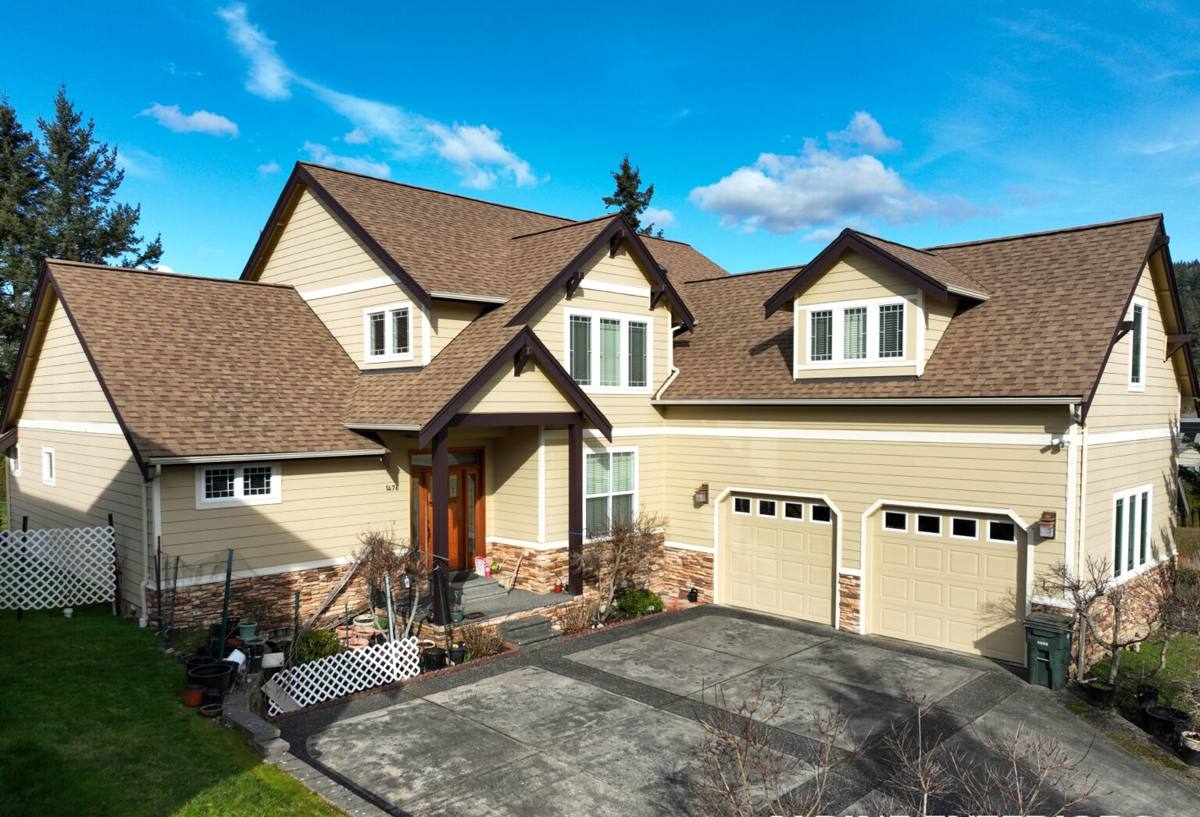
Why This Climate Is Hard on Roofs
Salt Air and Coastal Exposure
Proximity to the water means airborne salt settles on roofing materials and metal components over time. It's a slow process, but it accelerates corrosion on exposed fasteners, flashing, and any lower-grade metal used in valleys or around penetrations. Roofs closer to the water tend to show wear on metal components sooner than the same roof would inland, which is one reason we're particular about the flashing and fastener materials we spec for this area.
Driving Rain
Rain here doesn't always fall straight down. Wind off the bay pushes it sideways, which drives water up under shingle edges, into loose flashing, and through gaps that would never leak in a calmer climate. A roof built for driving rain needs deeper flashing laps, properly sealed valleys, and underlayment that's rated for wind-driven moisture, not just standard felt.
Moss Season
Whatcom County's long, wet stretch from fall through spring gives moss months to establish itself, especially on north-facing slopes and shaded sections of roof. Moss isn't just cosmetic. It holds water against the roofing surface, works its way under shingle tabs, and can lift edges enough to let water in behind the material. A roof that isn't detailed or maintained with moss in mind will age faster than its warranty suggests it should.
Signs a Ferndale Roof Needs Replacing, Not Patching
- Granule loss heavy enough that you're finding grit in gutters every season, not just after a storm
- Shingles that are cupping, curling, or cracking across multiple slopes rather than one isolated area
- Moss that keeps coming back within a season or two of cleaning, even after treatment
- Soft spots, staining, or sagging in the decking visible from the attic
- Flashing around chimneys, vents, or valleys that's rusted, lifted, or was never properly integrated with the roofing material
- Repeated leaks in different spots rather than one recurring problem area
- A roof approaching or past the manufacturer's expected service life for its material and this climate
If it's one or two of these, a repair may still make sense. If it's several at once, or the roof is old enough that repairs are becoming a pattern, replacement is usually the more honest recommendation, both for your budget and for what's protecting the rest of the house.
What a Correct Roof Replacement Involves Here
Tear-Off and Deck Inspection
We remove the old roofing down to the deck rather than layering over it. That's the only way to actually see what's underneath — rot, soft spots, or prior repairs that were never done right. Any damaged decking gets replaced before anything new goes down. Covering over a compromised deck just hides the problem and shortens the life of the new roof.
Underlayment Built for Wind-Driven Rain
Given how often rain comes in sideways here, we don't treat underlayment as a formality. Synthetic underlayment, properly lapped and sealed, and self-adhered membrane at eaves, valleys, and other vulnerable spots gives the roof a real second line of defense if wind ever pushes water past the surface layer.
Flashing That Accounts for Salt Exposure
Flashing around chimneys, skylights, vents, and valleys is where most roof leaks actually start, not in the field of the roof itself. We use corrosion-resistant metal and proper step and counter-flashing techniques rather than relying on sealant alone, which matters more here than it would further inland given the salt air.
Ventilation Sized for a Wet Climate
Balanced intake and exhaust ventilation keeps moisture from building up in the attic, which protects the deck from the underside and helps prevent the ice-and-condensation cycle that can happen even in our relatively mild winters. Undersized or blocked ventilation is one of the more common issues we find on older Whatcom County roofs, and it shortens the life of even a well-installed roofing material.
Moss-Aware Detailing
Where a roof has shaded, north-facing, or heavily treed sections prone to moss, we talk through options like zinc or copper strips near the ridge, which help suppress regrowth over time, and make sure valleys and low-slope transitions are detailed so water and debris don't pool where moss gets its start.
Comparing Common Roofing Materials for This Climate
| Material | How It Handles Moisture & Moss | Salt Air Durability | Typical Considerations |
|---|---|---|---|
| Architectural asphalt shingle | Good when properly ventilated and treated; needs periodic moss maintenance | Solid, especially with corrosion-resistant flashing and fasteners | Best balance of cost and performance for most Ferndale homes |
| Standing seam metal | Sheds moisture and moss very well due to smooth, sloped surface | Requires marine-grade or coated metal near the coast to avoid premature corrosion | Higher upfront cost, long service life, good for exposed or coastal lots |
| Wood shake / shingle | Holds moisture and encourages moss growth more than other options | Not our recommendation this close to the water; higher maintenance burden | We'll install if requested but walk homeowners through the tradeoffs first |
| Synthetic composite | Resists moisture absorption well; low moss retention | Generally strong, but flashing and fastener quality still matter most | Good middle ground where appearance and low maintenance both matter |
Wood shake isn't off the table if a homeowner wants that look, but we're straightforward about the maintenance it demands in a climate this wet and how that trade-off plays out over the life of the roof, especially this close to the coast.
What Affects the Cost of a Roof Replacement
- Roof size, pitch, and complexity — more valleys, dormers, and penetrations mean more labor and flashing work
- Material choice — asphalt shingle, metal, and composite options carry different material and installation costs
- Deck condition — rot or soft spots found during tear-off add repair costs that can't always be predicted before opening the roof up
- Ventilation upgrades — bringing an undersized system up to spec is worth budgeting for on older homes
- Access and site conditions — steep pitches, tall homes, or tight lot access can affect labor time
Costs vary enough by roof that we don't quote firm numbers without seeing the roof in person, but we're upfront about the broad range for a given material and roof size once we've had a look, and we explain what's driving the cost rather than just handing over a total.
Our Process for a Ferndale Roof Replacement
- On-site inspection. We walk the roof, check the attic for ventilation and moisture issues, and look at flashing, valleys, and any problem spots you've already noticed.
- Straight assessment. We tell you whether replacement is actually necessary, or whether a repair is the more honest call, and explain why.
- Written estimate. Material options, ventilation plan, and cost factors laid out clearly, no pressure to decide on the spot.
- Scheduled tear-off and install. Full removal to the deck, deck repair as needed, proper underlayment, flashing, and ventilation, then the new roofing material.
- Final walkthrough. We go over the finished roof with you before we consider the job done.
Why Hiring a Crew That Already Works in Ferndale Matters
A roofing crew that works this part of Whatcom County regularly already knows how salt air treats metal, how moss behaves on shaded slopes near the water, and where driving rain tends to find its way into a roof that wasn't detailed for it. That's not something you get from a general roofing playbook written for a drier climate. It shows up in the small decisions — flashing material, underlayment choices, where ventilation gets placed — that determine whether a roof holds up here or starts showing problems in a few years instead of a couple decades.
If your roof is showing its age, or you just want an honest read on where it stands, we're happy to take a look. Reach out for a free, no-pressure estimate using the form below.