 Sudden Valley Exterior
 Exterior Homes in Barkley Face a Tough Climate
Barkley sits inside Whatcom County's marine climate zone, close enough to Bellingham Bay to catch salt-laden air on windy days and far enough into the Pacific Northwest weather pattern to get months of low-angle rain, heavy dew, and long stretches without direct sun. That combination is hard on the outside of a house. Wood fibers swell and split. Paint film chalks and peels years before it should. North- and east-facing walls, fences, and roof edges that stay shaded most of the day grow moss and algae almost year-round. None of this is unusual for the area — it's just the reality of building and maintaining a home in this corner of Washington, and it's why exterior material choices matter more here than they would in a drier climate.
Sudden Valley Exterior Co works throughout Whatcom County, and Barkley properties show the same patterns we see across the region: siding that's failed at butt joints and corner boards, roofs that hold moisture under moss mats, window frames that have gone soft at the sill, and decks with surface checking on the boards that get the most weather exposure. The fixes aren't exotic — they're about choosing materials engineered for wet, salt-touched conditions and installing them correctly the first time.
What "Driving Rain" Actually Does to a House
Driving rain isn't just water falling straight down — wind pushes it sideways into wall assemblies, under trim, and into any gap in flashing or caulking. Over years, that wind-driven moisture finds the weak points in a building envelope: unsealed siding seams, undersized roof overhangs, window flanges that weren't lapped correctly with the water-resistive barrier. A material or installation detail that works fine in a calm, dry climate can fail here simply because Whatcom County gets more sideways water than most places.
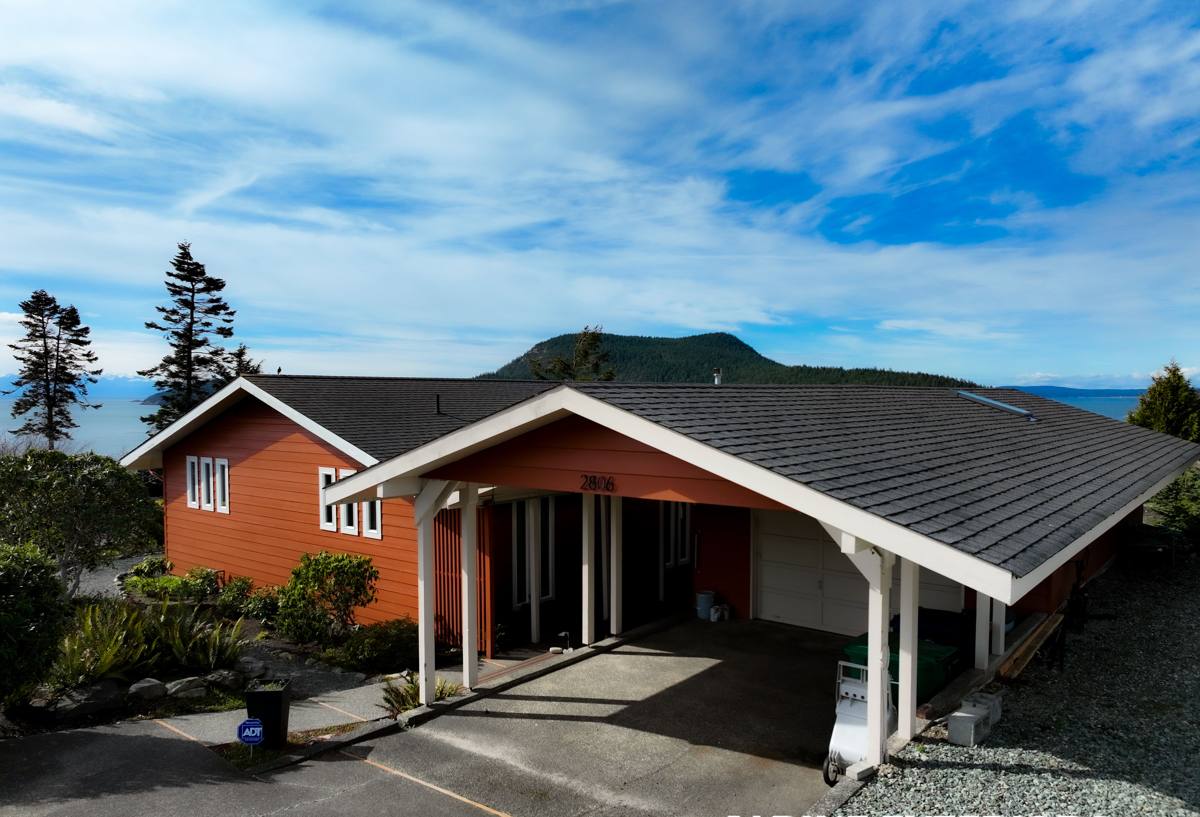
Why We Install Only James Hardie Fiber Cement Siding
Sudden Valley Exterior Co made a deliberate decision to install James Hardie fiber cement exclusively — not vinyl, not LP SmartSide, not Cemplank or Allura, not primed spruce or cedar. That's a real trade-off we ask homeowners to think through, not a marketing line, so here's the honest reasoning.
Wood and Engineered-Wood Siding (Cedar, LP SmartSide, Primed Spruce)
Cedar has genuine appeal — natural grain, a warm look many homeowners love — and engineered wood products like LP SmartSide have improved moisture resistance over older wood siding. But both are still wood-based products, and wood-based materials absorb moisture at cut ends, fastener holes, and any place the factory coating gets breached. In a climate with this much sustained dampness and moss growth, that moisture exposure shows up over time as swelling, delamination at edges, or paint failure that requires repainting on a cycle most homeowners find frustrating. These products can perform well with disciplined maintenance; we simply don't think that maintenance burden is a fair ask in this climate, so we don't install them.
Vinyl Siding
Vinyl is affordable and low-maintenance in the sense that it doesn't need repainting, but it's a thin plastic product that expands and contracts with temperature swings, can crack in impacts, and has a look — especially up close — that reads as vinyl rather than as a finished, architectural exterior. It also isn't repairable in small sections the way fiber cement is; a damaged panel usually means a visible patch or a full wall replacement.
Other Fiber Cement Brands (Cemplank, Allura)
These are legitimate fiber cement products and share some of the same basic material advantages as James Hardie. Where we've drawn our line is around factory finish quality, engineered climate-specific product lines, and warranty structure. James Hardie's ColorPlus finish is baked on and backed by its own finish warranty, and Hardie engineers specific product formulations for different regions — including a HardieZone HZ10 line built for Pacific Northwest-style wet climates. That combination is why we standardized on one manufacturer rather than installing whichever fiber cement is cheapest that week.
What James Hardie Siding Delivers in Barkley Conditions
- Non-combustible core material — fiber cement doesn't feed a fire the way wood-based siding can
- Engineered moisture and moss resistance built for wet Pacific Northwest climates
- Factory-applied ColorPlus finish that resists fading and chalking far longer than field-applied paint
- Rigid panels that hold a straight, tight reveal instead of cupping or bowing over time
- A manufacturer warranty structure designed to transfer with the home at resale
None of that means Hardie siding is maintenance-free. It still needs to be caulked, inspected, and occasionally recoated at trim and cut edges over its service life. What it doesn't need is the repeated repainting cycle or moisture vulnerability that wood-based sidings carry in this climate.
Roofing Built for Whatcom County's Wet, Mossy Winters
Roofs in Barkley deal with the same moss pressure as siding, plus the added stress of standing water at low-slope sections, ice at higher elevations in cold snaps, and wind-driven rain working under shingle edges near ridges and valleys. We look closely at three things on every roofing project in this area: proper underlayment for wind-driven rain protection, ventilation that keeps moisture from condensing in the attic, and flashing details at every penetration and valley — the places roofs actually fail. Moss removal and prevention matter too; left unaddressed, moss holds moisture against shingles and shortens roof life regardless of how good the shingle itself is.
Windows: Sealing Out Moisture, Not Just Air
In a climate this wet, window failure is usually a water problem before it's an energy problem. Old aluminum-frame or poorly flashed windows let moisture track down into the wall cavity around the frame, which rots sheathing and framing long before anyone notices a draft. When we replace windows, correct flashing and integration with the water-resistive barrier matters as much as the glass package itself. Good glass with a bad install still leaks; the reverse holds up.
Decks That Survive Repeated Wet-Dry Cycles
Decks in Barkley take a beating from the same driving rain and shaded-moss conditions as siding and roofing, plus foot traffic and standing water on horizontal surfaces. Board spacing, proper flashing where the deck ledger meets the house, and material choice all affect how long a deck lasts before boards cup, checkerboard, or rot at fastener points. We build and repair decks with attention to drainage and ledger flashing first — the parts that cause structural problems if they're done wrong — and material selection second.
Comparing Siding Options for This Climate
| Material | Moisture Behavior in Wet Climates | Maintenance Over Time | Typical Longevity Concerns |
|---|---|---|---|
| James Hardie Fiber Cement | Engineered for wet-climate resistance; non-combustible | Periodic caulk/trim inspection; factory finish resists fading | Long service life when installed to spec |
| Cedar / Primed Spruce | Absorbs moisture at cuts and joints | Repainting/staining on a recurring cycle | Swelling, splitting, paint failure over time |
| LP SmartSide / Engineered Wood | Improved but still wood-based; vulnerable at breached coating | Coating maintenance required | Edge swelling if moisture reaches the substrate |
| Vinyl | Doesn't absorb moisture but not repairable in sections | Low maintenance but limited repair options | Cracking on impact, temperature-driven warping |
| Other Fiber Cement (Cemplank, Allura) | Similar base material advantages to Hardie | Varies by finish system and warranty | Depends on manufacturer's climate-specific formulation |
A Homeowner's Exterior Inspection Checklist
- Check north- and east-facing siding and roof sections for moss buildup, especially under trees
- Look for paint chalking, peeling, or bubbling on wood or engineered wood siding
- Inspect window sills and frames for soft spots or discoloration that suggests trapped moisture
- Check deck ledger boards and fastener points for staining or softness
- Look at roof valleys and flashing for granule loss, rust, or gaps after storms
- Note any siding panels that have started to cup, bow, or separate at seams
Why a Local Crew Matters for a Barkley Property
Exterior work in this climate isn't just about the materials — it's about installation details that account for wind-driven rain, moss pressure, and sustained dampness. A crew that works throughout Whatcom County year-round knows how local weather patterns stress a building envelope and builds flashing, ventilation, and reveal spacing accordingly. That's different from a crew that mostly works in drier regions and treats this climate as an afterthought. Local also means we're not far away if a question comes up after the job is done, and we're familiar with the permitting and inspection expectations that apply to homes in this part of Whatcom County.
Getting Started
If you're weighing a siding replacement, a roofing project, new windows, or deck work on a Barkley property, we're happy to take a look and talk through what your home actually needs — no pressure, no obligation. Use the form below to request a free estimate, and we'll walk the exterior with you and explain what we see.