 Sudden Valley Exterior
 Asphalt Shingle Roofing for Yew Street Homes
If you own a home along Yew Street, you already know the roof over your head works harder here than it would somewhere drier. Sudden Valley sits close enough to the water and the surrounding tree cover that roofs deal with a steady mix of driving rain, salt-tinged air, and shade that never quite lets the north-facing slopes dry out. Asphalt shingle roofing is still the right call for most homes in this neighborhood — it's proven, repairable, and reasonably priced — but only when it's specified and installed with this specific climate in mind. A shingle roof built the same way you'd build one in a dry inland town will underperform here, sometimes by a decade or more.
This page covers what we look at when we're on a Yew Street roof, what a correct installation actually involves, and why local experience matters more with shingle roofing than most homeowners expect.
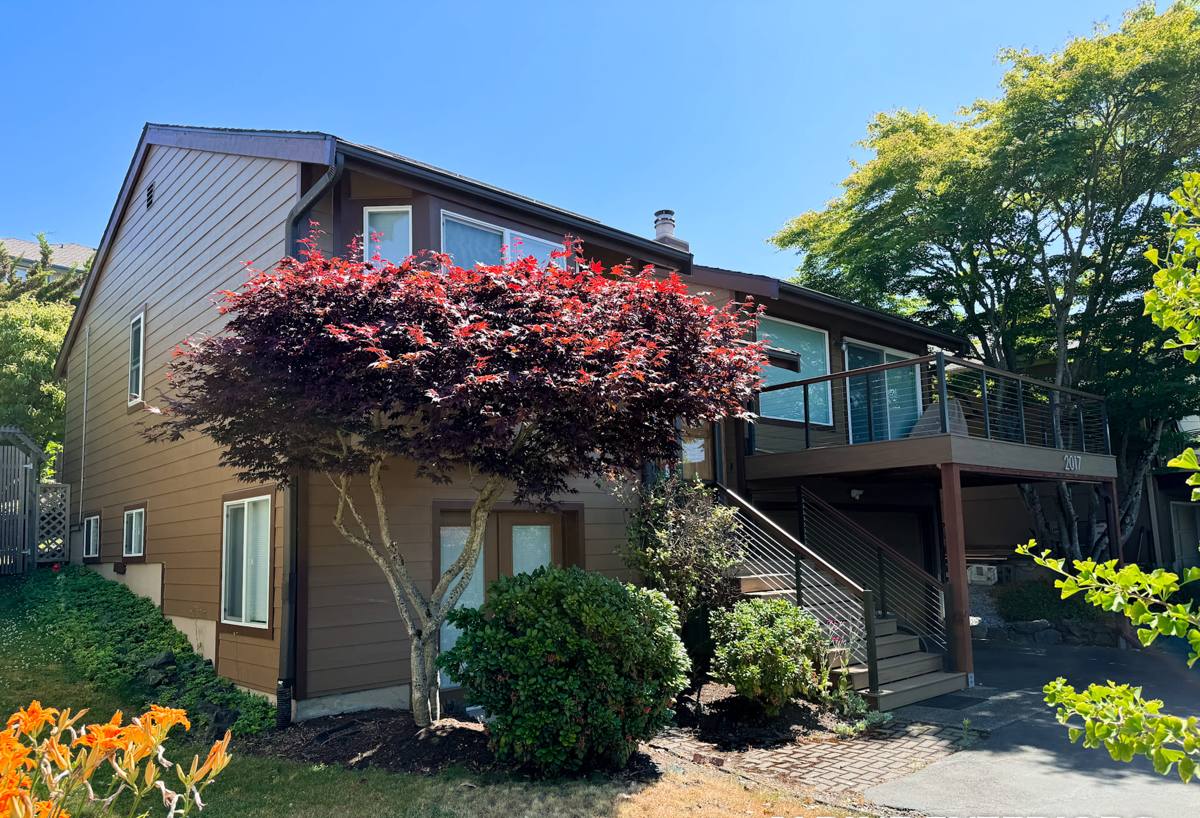
What Whatcom County's Climate Does to a Shingle Roof
Every roofing material has a weak point. For asphalt shingles in this part of Whatcom County, the weak points are moisture and moss — and Yew Street gets a full dose of both.
Salt Air and Driving Rain
Wind-driven rain doesn't just fall straight down — it pushes up and under shingle tabs, works into fastener penetrations, and finds any seam that wasn't sealed or lapped correctly. Homes closer to open water or exposed ridgelines take this harder than sheltered lots, and salt-laden air accelerates corrosion on exposed metal flashing, nails, and vent caps faster than it would inland. Over years, that corrosion is often what fails first — not the shingles themselves.
The Long Moss Season
Western Washington's moss season isn't a few weeks — it's most of the year. Shaded slopes, north-facing sections, and anywhere debris collects will grow moss and algae readily. Moss isn't just cosmetic: it holds moisture against the shingle mat, lifts tabs as it grows under the edges, and shortens the life of the roof if it's left unmanaged. A roof that would last 25+ years in a dry climate can lose real years of service life to unmanaged moss growth here.
Temperature Swings and UV
Shingles here don't bake the way they would in a hot, dry climate, but they do go through repeated wet-dry and freeze-thaw cycles through the fall and winter. That cycling stresses the asphalt mat and any spots where water has already gotten a foothold, which is why small leaks tend to become bigger problems faster in this climate than in milder, drier regions.
What a Correct Asphalt Shingle Job Looks Like Here
A shingle roof is a system, not just a layer of shingles. In a climate like this, every layer under the visible shingle matters as much as the shingle brand itself.
Underlayment
We use synthetic underlayment rather than old-style felt on most Yew Street jobs — it holds up better to the wet install conditions that are common here and gives the roof a more reliable secondary barrier if wind or ice ever gets under a shingle tab.
Ice and Water Barrier at Vulnerable Points
Eaves, valleys, and any low-slope transitions get a self-adhering ice-and-water membrane underneath the shingles. This is the section of roof most likely to see standing water or wind-driven rain intrusion, and it's cheap insurance against the kind of slow leak that rots decking before anyone notices a stain on the ceiling.
Flashing
Step flashing at walls and chimneys, proper valley metal, and corrosion-resistant materials around vents and penetrations are non-negotiable in a salt-air environment. Reused or improperly lapped flashing is one of the most common causes of "mystery leaks" we get called out to diagnose on older Yew Street roofs.
Ventilation
A shingle roof that can't breathe traps moisture in the attic, which shows up as premature shingle failure from underneath, condensation, and — in shaded, damp lots like much of this area — an environment that's friendlier to mold and rot. Balanced intake and exhaust ventilation is part of a correct install, not an upsell.
Fastening
Proper nail count and placement matter more here than in calmer climates, because wind-driven rain will exploit any tab that isn't sealed down tight. We fasten to manufacturer spec, not the minimum code allows.
Our Process on a Yew Street Roof
- Inspection and assessment — We look at the deck condition, existing ventilation, flashing points, and moss/algae history before quoting anything. On older homes we'll check the attic side too, since that tells us more about hidden moisture problems than the shingles do.
- Honest scope — Full replacement isn't always necessary. If the deck and flashing are sound and the issue is isolated, we'll say so.
- Material selection — We walk through shingle class, algae-resistant granules, and warranty structure based on your roof's exposure and slope, not a one-size-fits-all package.
- Tear-off and deck check — Old material comes off completely so we can inspect the decking for soft spots or rot before anything new goes down.
- System install — Underlayment, ice-and-water membrane, flashing, shingles, and ventilation, installed as a system in the sequence above.
- Final walk-through — We review the finished roof with you, including what routine maintenance (like moss control) will look like going forward.
Moss and Algae: What "Algae-Resistant" Shingles Actually Do
Many manufacturers now offer shingles with copper-infused or copper-releasing granules designed to slow algae and moss growth. These help, particularly on shaded north-facing slopes, but they are not a substitute for keeping a roof clear of debris and out of standing shade wherever design allows. On a lot with heavy tree cover, we'll be upfront that no shingle is fully maintenance-free — the goal is to slow growth and make periodic cleaning easier, not eliminate the issue.
Basic Moss Maintenance Checklist
- Clear gutters and valleys of needles and leaf debris at least twice a year
- Have visible moss growth treated or gently removed before it spreads under tab edges
- Avoid pressure washing shingles — it strips granules and shortens shingle life
- Trim back overhanging branches where practical to reduce shade and debris load
- Schedule a roof check after major storms, especially if branches or debris hit the roof
Choosing a Shingle Class for This Neighborhood
Not every shingle product is built the same, and the right choice depends on your roof's slope, exposure, and how long you plan to stay in the home. Here's how the common tiers generally compare for a home in this climate:
| Shingle Type | Typical Lifespan Here | Wind/Rain Performance | Best For |
|---|---|---|---|
| 3-tab (economy) | 12–18 years | Lower wind rating, more seams exposed to driving rain | Budget-driven projects, secondary structures |
| Architectural (laminate) | 20–30 years | Higher wind rating, better tab adhesion in wet conditions | Most primary residences in this area |
| Premium/designer | 25–30+ years | Strongest wind ratings, thicker mat resists moisture cycling | Exposed lots, homeowners prioritizing longevity |
For most Yew Street homes, we steer people toward architectural shingles with algae-resistant granules — the jump in durability and wind performance over 3-tab is significant, and it's a better match for the driving rain this area sees regularly.
Cost Factors Specific to This Area
Every roof quote depends on the specifics of the home, but a few factors come up consistently on Yew Street jobs:
- Roof pitch and access — Steeper roofs and tree-crowded lots take longer to work safely and affect labor cost.
- Deck condition — Hidden rot from long-term moisture exposure sometimes isn't visible until tear-off, which can add plywood replacement to the scope.
- Flashing complexity — Chimneys, dormers, and multiple valleys add material and labor beyond a simple gable roof.
- Existing ventilation — Older homes sometimes need ventilation upgrades as part of a correct re-roof, not just new shingles.
- Shingle tier — Architectural and premium products cost more upfront but typically cost less per year of service life in a wet, mossy climate.
Why Local Experience Matters for This Kind of Roof
Shingle roofing looks simple from the ground, but the failures we get called to fix on older Yew Street homes almost always trace back to shortcuts that don't show up until years later — missing ice-and-water membrane at the eaves, flashing that wasn't properly lapped, or ventilation that was never balanced. A crew that installs roofs across a wide range of climates might not think twice about those details. A crew that works this stretch of Sudden Valley regularly builds every roof assuming salt air, driving rain, and a long moss season are part of the job, because they are.
We also know what "normal wear" looks like on a shingle roof in this specific environment versus what's an early warning sign, which matters when you're deciding whether a repair is enough or a full re-roof makes more sense.
Signs Your Yew Street Roof May Need Attention
- Granules collecting in gutters or at downspout outlets
- Curling, cupping, or lifted shingle tabs, especially on shaded slopes
- Visible moss or algae streaking, particularly on north-facing sections
- Daylight visible through the attic decking or damp insulation after storms
- Rusting or corroded flashing and vent caps
- Shingles missing or displaced after high winds
Any one of these on its own might just mean a targeted repair. Several together usually mean it's worth a full inspection before the wet season adds more stress to the roof.
Get a Free, No-Pressure Estimate
If your roof is showing wear, due for replacement, or you just want an honest opinion on its current condition, we're happy to take a look. Fill out the form below for a free estimate on asphalt shingle roofing built for what Yew Street actually deals with each year — no pressure, no obligation.