 Sudden Valley Exterior
 Why Sunnyland Homes Need Windows Built for This Climate
Windows on this side of Whatcom County take a beating that homes further inland never see. Between the driving rain off the water, the humid air that never fully dries out, and the long stretch of the year when moss and algae have the shade and moisture they need to spread, a window that isn't detailed correctly will show it within a few seasons — not a few decades. We see it constantly in Sunnyland: sashes that stick from swollen wood, frames with dark streaking at the corners, and seals that failed years before the glass was supposed to fog.
A "custom window" job in this neighborhood isn't about fancy shapes or oversized glass, though we do plenty of that too. It's about matching the window unit, the flashing detail, and the frame material to a climate that stays wet for months at a time. Get that wrong and the nicest window on the market will still fail early. Get it right and it'll outlast most of what's currently on the house.
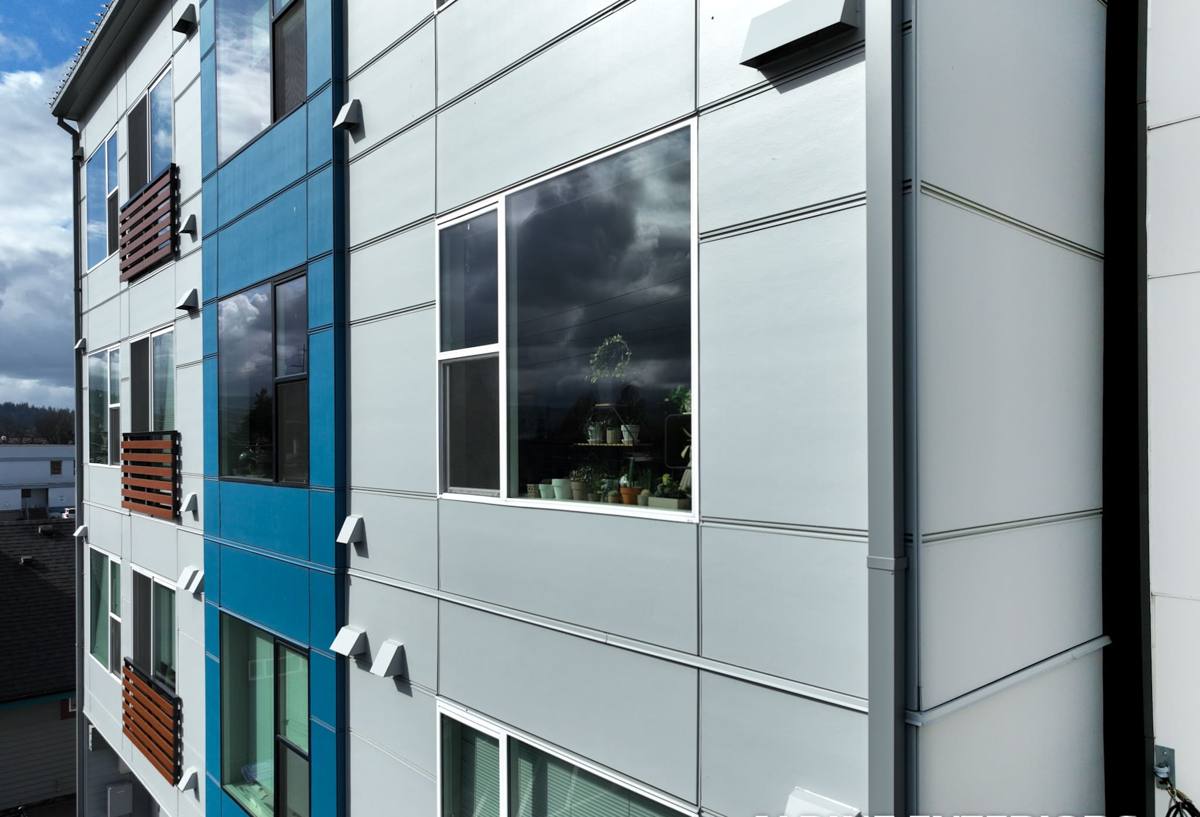
What a Correct Custom Window Job Actually Involves
Flashing and Moisture Management Come First
The window unit itself gets most of the attention, but the flashing is what actually keeps water out of the wall. On a rainy-side property like most of what we work on around Sudden Valley, we install self-adhered flashing membrane at the sill and jambs, lap it correctly with the house wrap, and make sure the sill pan sheds water back outside instead of pooling under the frame. This is the step that gets skipped or rushed on cheap installs, and it's the step that causes rot you don't see until it's expensive.
Frame Material Matched to the Site
Not every window on a Sunnyland home should be the same material. A window under a deep eave on the leeward side of the house can handle a wider range of materials than one that takes rain straight-on from the prevailing weather. We look at each opening's actual exposure — sun, wind-driven rain, proximity to trees and moss growth — before recommending what goes in it.
Fit and Insulation Detail
Custom sizing matters most on older Sunnyland homes where openings were never perfectly square to begin with. We measure each opening individually rather than assuming a standard size, then insulate the gap around the frame properly — not stuffed with excess fiberglass, not left with gaps that let moist air condense inside the wall cavity.
Signs Your Windows Are Already Behind the Curve
Most homeowners call us after noticing one of these. If you're seeing more than one, it's worth an honest look before it becomes a bigger repair.
- Visible fogging or moisture between the panes (failed seal)
- Dark green or black streaking at the sill or lower corners of the frame
- Sashes that stick, drag, or won't stay open on their own
- Soft or spongy wood when you press on the sill or bottom rail
- Noticeable draft or cold spot near the frame in winter
- Paint or finish peeling specifically around the window, not the wall generally
- Condensation forming on the inside of the glass regularly
Comparing Frame Materials for This Climate
We install a range of materials because no single one is right for every home or every budget. Here's how they actually perform in a wet, moss-prone environment like this one — not marketing claims, just how they hold up.
| Material | Moisture Behavior | Maintenance | Typical Lifespan |
|---|---|---|---|
| Vinyl | Won't rot; can flex slightly in temperature swings | Low — occasional cleaning | 20–30 years |
| Fiberglass | Very stable, minimal expansion/contraction, handles moisture well | Low | 30+ years |
| Wood-clad | Good if the cladding and flashing are done right; the wood interior still needs protection | Moderate — exterior cladding low-maintenance, interior needs periodic finish care | 20–30 years with upkeep |
| Aluminum | Durable but conducts cold and can condense in our humidity without a thermal break | Low | 20–30 years |
Our standard recommendation for most Sunnyland homes is vinyl or fiberglass because both resist the rot and moisture-related failures we see most often here. Wood-clad is still a good option for homeowners who want a specific interior look, as long as the install detail is right. We'll walk through the honest trade-offs for your specific home rather than pushing one product line.
Our Process, Start to Finish
1. On-Site Assessment
We look at every opening being replaced, not just the ones you've flagged. Exposure, existing damage, and framing condition all factor into the recommendation.
2. Honest Written Estimate
You get a written scope covering materials, flashing detail, and any framing repair we expect to need — no vague allowances that turn into surprise charges mid-job.
3. Precise Measurement and Ordering
Custom windows are ordered to the actual opening, not a catalog standard. This is where a rushed measurement causes gaps, drafts, or a unit that doesn't sit square.
4. Removal and Inspection
Old units come out carefully so we can inspect the sill and framing underneath. If there's rot or water damage hiding behind the old window — which isn't rare in this climate — we address it before anything new goes in.
5. Install with Proper Flashing
Sill pan, flashing membrane, and air sealing go in before the window itself. This sequence is non-negotiable regardless of how tight the schedule is.
6. Final Walkthrough
We check operation, seals, and finish work with you before calling the job done, and explain anything you should watch for as the windows settle in through their first season.
What Drives the Cost
Custom window pricing varies more than people expect, mostly because the condition behind the old window matters as much as the new unit itself. Broad factors:
| Factor | Why It Matters |
|---|---|
| Frame material | Vinyl is typically the most budget-friendly; fiberglass and wood-clad cost more up front but shift maintenance and lifespan |
| Opening condition | Rot or framing damage found during removal adds repair cost before the new window goes in |
| Glass package | Low-E coatings and gas-filled units cost more but perform better against our damp, cool winters |
| Size and shape | Standard rectangular openings cost less than custom shapes or oversized units |
| Number of openings | Whole-house replacements typically bring a lower per-window cost than one-off jobs |
We won't quote a number without seeing the actual openings — anyone who does is either guessing or planning to change the price later. What we can say honestly: budget for the possibility of some hidden repair cost on an older home, since it's common enough here that we plan for it rather than treat it as a surprise.
Why It Matters That We Already Work in Sunnyland
A crew that's worked this specific area knows things a contractor coming from outside Whatcom County has to learn on your job. We know which exposures take the worst weather, how fast moss establishes on north-facing trim here, and what kind of framing and construction is common in homes of this area's age. That knowledge shows up in small decisions — which flashing detail to prioritize, which material to steer a homeowner toward for a particular opening — that add up to a window system that actually holds up rather than one that looks fine on install day.
It also means we're not guessing at permitting or code requirements for the area, and we're not disappearing after the job if something needs a follow-up look during the first wet season.
Living With New Windows Through Moss Season
New windows don't eliminate the conditions that caused the old ones to fail — they just start you with a clean slate and, if installed correctly, materials and detailing that resist those conditions much longer. A few habits keep them performing well:
- Rinse sills and tracks periodically during the wet months to keep organic buildup from taking hold
- Keep nearby vegetation trimmed back so airflow and sunlight can reach the window and dry it out between rains
- Check exterior caulking and sealant annually and touch up before gaps open up
- Operate sashes periodically even in winter so they don't sit stuck in one position
None of this is heavy maintenance — it's the difference between windows that make it to their full lifespan and ones that start showing problems early because moisture was left to sit.
If your Sunnyland home has windows showing any of the signs above, or you're planning ahead rather than reacting to a problem, we're happy to come take a look. The estimate is free, there's no pressure attached to it, and you'll get a straight answer about what your specific windows actually need — just fill out the form below.