 Sudden Valley Exterior
 Homes in Happy Valley face a specific combination of weather that most window manufacturers never test for in a showroom: salt-laden marine air moving in off the water, wind-driven rain that finds every gap in a poor seal, and a moss season that stretches for months and never fully lets a house dry out. Windows here don't fail because they're old — they fail because they were never matched to this climate in the first place. This page covers what actually matters when you're replacing windows in Happy Valley: what the climate demands, what a correct installation looks like, and how our process works from first call to final walkthrough.
What Whatcom County Weather Does to Ordinary Windows
Western Washington's marine climate is deceptively hard on building materials. It's rarely dramatic — no hailstorms, no extreme freezes — but it's relentless. Salt air corrodes exposed hardware and fasteners over years, driving rain tests every seal and flashing detail hundreds of times a season, and the long stretch of damp, low-light months means moss, algae, and mildew get a foothold anywhere moisture lingers. None of this is unique to any one house; it's the baseline every window in this part of Whatcom County has to survive, year after year.
The practical effect shows up slowly. A window that was installed with a marginal seal doesn't leak on day one — it starts letting in a little moist air during the wettest months, that moisture condenses on cooler interior surfaces, and a few seasons later you've got soft wood at the sill or a faint mildew smell in the room. Energy loss follows the same pattern: a small gap around the frame doesn't feel like much in July, but it adds up every single day the furnace or heat pump is running against it.
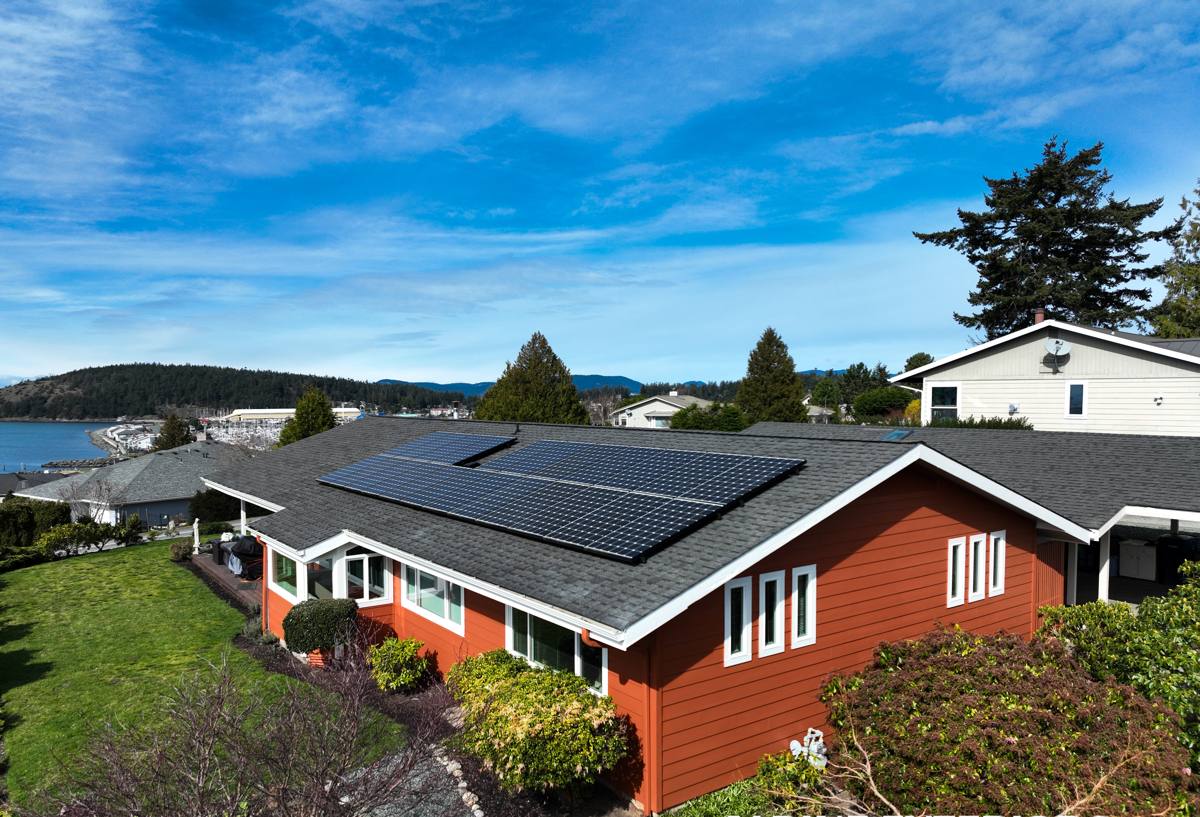
What "Energy-Efficient" Actually Means Here
Energy-efficient windows are a system, not a single feature. The glass package matters, but so does the frame material, the spacer between the panes, and — more than anything in this climate — how well the whole unit is sealed into the rough opening. A high-performance window installed with a mediocre seal will underperform a mid-grade window installed correctly.
Frame Material Trade-Offs
We install and recommend based on how each material actually behaves in a wet, marine climate over the long run, not just on price:
- Vinyl — low maintenance, good insulating value, resists moisture well; the trade-off is less structural rigidity on very large openings.
- Fiberglass — dimensionally stable through temperature and humidity swings, holds paint well, higher upfront cost but very low long-term maintenance.
- Wood-clad — attractive interior wood look with an exterior-facing clad shell; the cladding has to be detailed correctly at every joint or moisture will eventually find the wood underneath. We're selective about where we recommend this option given how much rain this area sees.
Glass Packages
Double-pane with a low-E coating and argon fill is the practical baseline for this climate — it meaningfully cuts heat loss and reduces condensation risk on the interior glass surface. Triple-pane adds another layer of insulation and sound dampening, which is worth discussing for homes closer to road noise or with rooms that run cold in winter, but it's a real cost and weight increase and isn't automatically the right call for every opening. We'll walk you through where it makes sense on your specific home rather than upselling it across the board.
Signs Your Current Windows Are Working Against You
Most homeowners don't call about windows until something is visibly wrong, but the early signs are usually there well before that:
- Fog or haze between the panes (a failed seal on the insulated glass unit — this can't be fixed, only replaced)
- Noticeable draft when you hold a hand near the frame on a windy day
- Condensation forming on the inside of the glass regularly, especially in bathrooms or kitchens
- Windows that are hard to open, close, or lock — often a sign the frame has shifted or swollen
- Soft, discolored, or spongy wood at the sill or the trim around the window
- Visible moss, algae, or dark staining on the exterior trim or sill that keeps coming back
- A noticeable jump in heating costs without any other explanation
What a Correct Installation Actually Involves
The window unit itself is maybe half the job. The other half — the part that determines whether it performs well for the next twenty years in this climate — is how it gets set into the wall.
Flashing and Weatherproofing
Every opening needs a proper drainage plane: flashing tape or pan flashing at the sill so any water that does get past the window sheds back outside instead of soaking into the framing, house wrap integrated correctly at the head and jambs, and sealant used at the right points — not everywhere, since over-sealing can trap moisture rather than let it escape. This is the step that gets rushed on a low-bid job and the step that actually determines whether you have a rot problem in five years.
Insulation and Air Sealing
The gap between the window frame and the rough opening needs to be filled with a low-expansion foam or backer rod and sealant — never packed tight with fiberglass insulation alone, which doesn't stop air movement the way a proper seal does. This detail is invisible once the trim goes back on, which is exactly why it's worth asking about before you hire anyone.
Our Process
- On-site assessment — we look at your existing windows, note which ones are underperforming and why, and check the condition of the surrounding trim and framing.
- Product selection — we go over frame material, glass package, and hardware options based on your home, your budget, and which direction each opening faces.
- Accurate measurement — every opening is measured individually; older homes especially rarely have perfectly square or uniform openings.
- Removal and prep — old windows come out carefully, and we check the framing underneath for any moisture damage before anything new goes in.
- Installation — proper flashing, air sealing, and shimming so the window is plumb, level, and fully supported.
- Final check and cleanup — every window is tested for smooth operation and a tight seal before we consider the job done.
Cost Factors to Understand Before You Get Quotes
Window replacement pricing varies a lot from house to house, and the biggest driver usually isn't the sticker price of the window itself — it's what the install actually requires.
| Factor | Why It Matters |
|---|---|
| Frame material | Vinyl, fiberglass, and wood-clad carry different material and labor costs |
| Glass package | Double-pane low-E is the standard baseline; triple-pane and specialty coatings add cost |
| Number and size of openings | Larger or custom-sized windows take more time and material to fabricate and install |
| Condition of the existing opening | Rot or moisture damage found during removal adds repair work before the new window can go in |
| Trim and flashing detail | Older homes often need trim rebuilt or re-flashed to current standards, not just a window swap |
| Access and building height | Second-story or hard-to-reach openings take longer and require more equipment |
Living With a Long Moss Season
Even a well-installed window needs a little seasonal attention in this climate. Keeping sills and tracks clear of debris, checking that weep holes at the bottom of the frame aren't clogged with moss or grime, and wiping down exterior trim periodically all go a long way toward protecting the investment. A quality window with a correctly sealed installation shouldn't need more than that — if a window is demanding constant upkeep just to stay watertight, that's usually a sign something in the original install wasn't done right.
Why Local Experience Matters
A window that performs well in a dry inland climate isn't automatically the right choice for a home exposed to Whatcom County's wind-driven rain and salt air. Crews who work Happy Valley and the surrounding Sudden Valley area regularly know which details actually matter here — where flashing tends to get skipped on a rushed job, which frame materials hold up and which ones don't, and how to detail an install so it's still performing the way it should years from now, not just at the final walkthrough. That local track record is worth asking about directly when you're comparing contractors.
If your windows are drafty, fogged, hard to operate, or just costing more to heat around than they should, we're happy to take a look and walk you through honest options — no pressure, no obligation. Use the form below to request a free estimate.