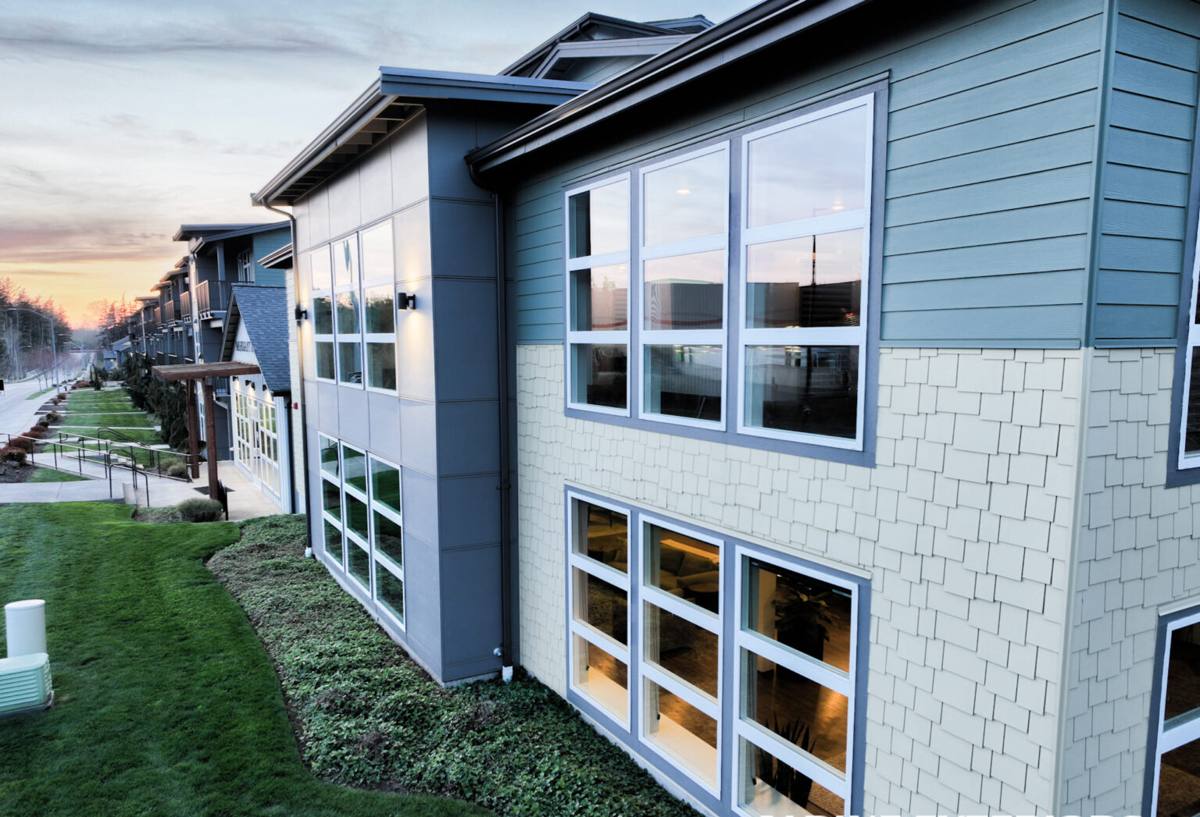
 Sudden Valley Exterior
 Why Window Replacement in Acme Works Differently Than Elsewhere
Acme sits in the wooded, lake-adjacent stretch of Whatcom County that runs alongside Sudden Valley, and the weather here doesn't behave like weather twenty miles away. The same pattern that pushes salt air inland, drives rain sideways against west-facing walls, and blankets roofs and siding in moss for months at a time reaches Acme too — often worse, because heavy tree canopy and valley terrain trap moisture instead of letting it move through. Windows take the brunt of that. They're the weakest point in an exterior wall by design, and in this climate, a window that's improperly flashed or sealed doesn't fail quietly over a decade — it fails in two or three wet seasons.
That's the case for treating window replacement in Acme as its own job, not a smaller version of what works in a drier climate. The product matters, but the installation details matter more, and both need to account for near-constant humidity, extended damp periods, and the organic growth that comes with them.
What a Correct Window Replacement Actually Involves
Window replacement gets sold as a simple swap — old window out, new window in — but the parts nobody sees are what determine whether that window lasts five years or twenty-five in this climate.
Removing the Old Window and Inspecting the Opening
Before anything new goes in, the opening gets inspected for hidden damage: soft or rotted framing, failed old flashing, or moisture that's already worked its way behind the siding. In a climate with a long moss season and persistent damp, it's common to find some degree of trapped moisture in older openings, especially on north- and west-facing walls. Skipping this step and installing a new window over a compromised opening just seals the problem inside the wall.
Flashing and Moisture Management
Flashing is the single most important part of a window installation and the part most often done wrong by crews unfamiliar with wet-climate work. Correctly lapped flashing tape, a sloped sill pan, and proper integration with the home's weather-resistive barrier are what actually keep driving rain out — the window unit itself is almost secondary. Water has to be directed out and down at every layer, never trapped where it can sit against wood framing.
Insulation and Air Sealing
The gap between the new window frame and the rough opening needs to be filled with a low-expansion foam or backer rod and sealant designed for that purpose — not stuffed with fiberglass, which does nothing to stop air or moisture movement. Poor sealing here is a common cause of the drafts and condensation homeowners notice within the first year or two.
Trim, Casing, and Finish Work
Exterior trim and caulking are the last line of defense against wind-driven rain. In this region, the caulk and paint or stain used on exterior trim should be rated for continuous damp exposure, and joints should be detailed so water sheds away from the wall rather than pooling at horizontal trim pieces — a common spot for rot to start.
Matching the Window to Acme's Conditions
There's no single "best" window material — every option is a set of trade-offs, and the right call depends on the home, its exposure, and how much upkeep the homeowner wants to take on.
| Frame Material | Moisture Resistance | Maintenance | Typical Lifespan |
|---|---|---|---|
| Vinyl | Good — won't rot, but seals and hardware can degrade over time | Low | 20–30 years |
| Fiberglass | Very good — dimensionally stable in wet/dry cycling | Low | 30–40+ years |
| Wood-Clad | Depends heavily on cladding integrity and installation quality | Higher — cladding and interior wood need periodic attention | 20–30+ years with upkeep |
We tend to steer Acme homeowners toward vinyl or fiberglass frames for most applications, simply because the constant damp here punishes any product where moisture can find its way behind a cladding layer. Wood-clad windows can still be the right choice for homes where the interior wood look matters, but we're upfront that they carry a higher maintenance commitment in this climate — that's a trade-off, not a flaw, and it's one homeowners should choose with eyes open rather than have decided for them.
Glass Packages: More Than Just "Double-Pane"
The frame gets most of the attention, but the glass package affects comfort and energy use just as much.
- Low-E coatings reduce heat loss in winter and heat gain in summer without noticeably darkening the glass.
- Argon or krypton gas fills between panes improve insulation value over plain air-filled units.
- Warm-edge spacers reduce condensation risk at the edge of the glass, which matters in a climate prone to interior condensation during cold, damp stretches.
- U-factor and Solar Heat Gain Coefficient (SHGC) ratings on the label tell you more about real-world performance than the marketing name of the glass package — we go over both with every homeowner.
Our Process, Start to Finish
- On-site assessment. We look at every window being considered, check the condition of the surrounding framing and siding, and note exposure — which walls take the worst weather.
- Measurement and product selection. Every opening gets measured individually; older homes are rarely perfectly square, and we don't assume they are.
- Written estimate. Clear pricing by window, with the reasoning behind any material or glass recommendations spelled out, not buried in a single lump sum.
- Installation day. Old units come out, openings get inspected and repaired if needed, and new windows go in with proper flashing, insulation, and sealant — in that order, every time.
- Cleanup and walkthrough. We walk every window with the homeowner before we consider the job done, checking operation, seals, and finish work.
- Follow-up. We check back after the first real wet stretch of weather to confirm everything is performing as it should.
Warning Signs It's Time to Replace, Not Repair
Not every problem window needs full replacement, but in Acme's climate, certain signs mean repair is just delaying the inevitable:
- Fogging or moisture trapped between panes of double-glazed glass — the seal has failed and can't be restored
- Soft, discolored, or spongy wood at the sill or bottom corners of the frame
- Visible moss, algae, or black staining building up on the frame or sill despite regular cleaning
- Windows that stick, won't stay open, or no longer latch securely
- A noticeable draft or cold spot near the window even with it fully closed
- A jump in heating costs without any other obvious cause
Why a Crew That Already Works in Acme and Sudden Valley Matters
Local experience shows up in details that aren't obvious until something goes wrong. A crew that regularly works this part of Whatcom County knows to expect longer driveways and tree-covered lots that affect staging and access, understands which exposures on a given property will take the worst of the driving rain, and has already worked through Whatcom County's permitting requirements when a job calls for it. That familiarity also shows up in product choices — sealants and finishes that hold up in near-constant damp conditions aren't always the same ones that work fine in a drier region, and a crew that's replaced windows here for years has already learned which products underperform in this specific climate.
It also means fewer surprises during the job itself. Homes around Sudden Valley and Acme often share similar construction eras and quirks, and a contractor who's seen those patterns before can flag issues — old flashing, marginal framing, prior water intrusion — before they turn into change orders mid-project.
What Drives the Cost of Window Replacement
Costs vary enough by home and project that we won't quote a number without seeing the job, but the main factors are consistent from house to house.
| Cost Factor | Why It Matters |
|---|---|
| Number and size of windows | More openings and larger units mean more material and labor |
| Frame material | Vinyl generally costs less upfront than fiberglass or wood-clad |
| Glass package | Low-E coatings, gas fills, and impact-rated glass add cost but improve performance |
| Condition of the existing opening | Rot or water damage found during removal adds repair work before the new window can go in |
| Access and site conditions | Difficult access, second stories, or tight lot conditions affect labor time |
| Trim and finish scope | Full exterior trim replacement costs more than reusing sound existing trim |
Keeping New Windows Performing for Years
A correctly installed window still needs some basic upkeep in this climate to reach its full lifespan. Rinsing frames and sills periodically keeps moss and algae from taking hold, especially on shaded, north-facing windows where growth tends to start first. Checking exterior caulking once a year — typically before the wet season sets in — catches small cracks before they let water behind the trim. Keeping gutters and downspouts clear matters here too, since overflow running down a wall is one of the more common causes of water finding its way into a window opening from above rather than through the window itself.
If you're weighing whether your windows in Acme need attention now or can wait, we're happy to take a look and give you an honest answer either way. Reach out for a free, no-pressure estimate — we'll walk the windows with you, explain what we see, and give you a clear picture of your options before any decision gets made.