 Sudden Valley Exterior
 Building a Deck That Actually Holds Up in Sunnyland
A deck in Sunnyland doesn't fail the same way a deck in a dry climate fails. It doesn't crack from sun exposure first — it rots from the inside out, starting at the spots you can't see: the ledger board bolted to the house, the post bases sitting in standing water, the hidden fastener that was never rated for wet-use contact. Whatcom County's marine climate is hard on outdoor wood structures in a specific, predictable way, and building a deck that's meant to last here means designing around that from the first stake in the ground, not adding a coat of sealant after the fact.
We build and repair custom decks for homeowners in Sunnyland and the surrounding Sudden Valley area, and the failures we get called out to fix are almost always the same handful of shortcuts. This page walks through what a correctly built deck looks like in this climate, what we actually do on a project, and why the details matter more here than they would somewhere drier.
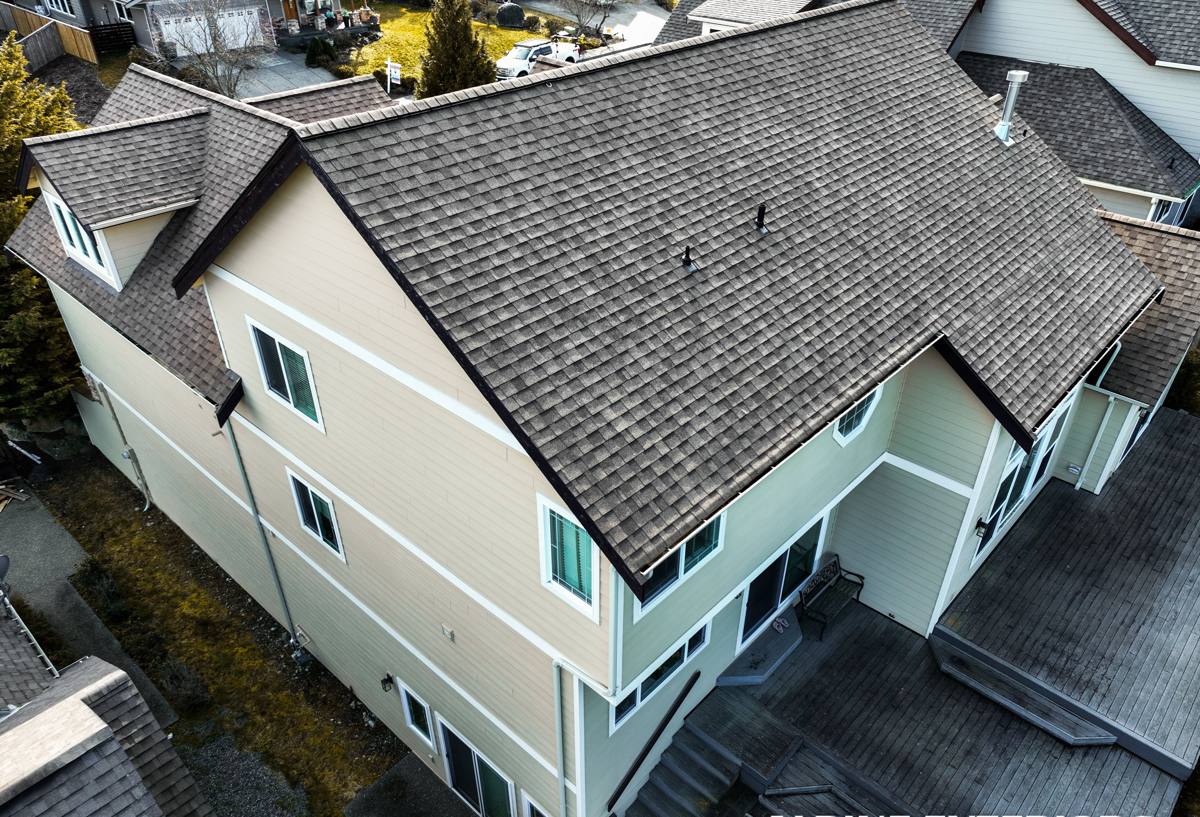
What Whatcom County's Climate Does to a Deck
Three things drive almost every deck problem we see in this area, and they compound each other.
Driving Rain
This isn't gentle, straight-down rain. Wind-driven rain off the water gets pushed sideways into joints, under flashing, and into any gap that wasn't sealed correctly. A deck detail that would be fine in a calmer climate — a slightly short flashing lap, a butt joint left unsealed — becomes a moisture entry point here.
Salt Air
Proximity to the water means airborne salt settles on exposed metal — fasteners, joist hangers, structural screws, railing hardware. Standard zinc-coated (electro-galvanized) fasteners corrode faster in this environment than most homeowners expect, and once a fastener starts to rust, it loses holding strength long before it looks obviously bad from the top.
A Long Moss Season
Moss and algae aren't just a cosmetic problem in Whatcom County — they hold moisture against the decking surface for months at a time, especially on north-facing or shaded sections of a deck that never fully dries out between rain events. That constant dampness is what actually rots boards, more than any single storm.
None of this means a deck can't hold up for decades in Sunnyland. It means the build has to account for all three from the start.
What a Correctly Built Deck Involves
Ledger Attachment and Flashing
The ledger board — where the deck attaches to the house — is the single most common failure point we find on older decks in this area. It has to be through-bolted (not just screwed), flashed with a proper drip cap that directs water away from the house wall, and separated from the wall sheathing with a moisture barrier. A ledger that's leaking is often invisible from the deck surface; the rot shows up in the rim joist or wall framing behind it, sometimes years later.
Footings and Post Bases
Footings need to be set below frost depth and sized for the soil conditions on the lot — Whatcom County soil varies a lot from property to property, and what worked next door isn't automatically right for your site. Post bases should hold the post above the concrete, not embedded in it, so water doesn't wick up into the end grain. This is a detail that's cheap to do right during construction and expensive to fix later.
Fasteners and Hardware
Given the salt air, we don't use standard electro-galvanized hardware on exterior deck framing here. Hot-dip galvanized or stainless structural screws, joist hangers, and bolts cost more up front but are a maintenance-and-safety decision, not an upsell — a corroded joist hanger is a structural problem, not a cosmetic one.
Drainage and Airflow Underneath
A deck that sits low to the ground with poor airflow underneath stays damp longer after every rain, which speeds up rot and gives moss more time to establish. Proper joist spacing, grading away from the structure, and (where the deck is low or covers usable space below) a drainage system underneath all extend the life of the framing significantly.
Choosing a Decking Material for This Climate
There's no single "best" decking material — there's a best fit for your budget, your maintenance appetite, and how much shade and moss exposure your particular lot gets. Here's how the common options actually compare in a wet, mossy, salt-air environment like Sunnyland's.
| Material | Moisture Behavior | Moss/Algae Resistance | Maintenance |
|---|---|---|---|
| Pressure-treated pine | Absorbs and releases moisture readily; can cup or check if not sealed | Needs regular cleaning; moss takes hold in shaded areas | Re-seal every 1–2 years; annual wash |
| Cedar | Naturally moisture-resistant, but surface still needs upkeep | Better natural resistance, still needs cleaning in shade | Oil/seal every 1–2 years; annual wash |
| Composite (capped) | Doesn't absorb moisture into the core; won't rot | Surface can still grow moss/algae in constant shade — needs washing | No sealing; periodic washing |
| Composite (uncapped) | More moisture-sensitive at cut edges than capped composite | Similar to capped, edges need attention | Low, but edge sealing on cuts matters |
The honest trade-off: composite costs more upfront and doesn't rot, but it isn't maintenance-free in a moss-prone climate — it still needs periodic washing on shaded sections, or you'll get the same green film you'd get on wood. Wood costs less upfront but needs a real maintenance commitment (cleaning and sealing on a schedule) to get a long service life out of it here. We'll walk through this honestly based on your site's actual sun and shade pattern, not just push the higher-margin product.
Our Custom Deck Process
Every project starts with a site visit, not a phone quote. Deck problems and opportunities in Sunnyland are site-specific — shade pattern, slope, soil, proximity to the house's existing drainage — and none of that shows up in a photo.
- On-site assessment of grade, drainage, sun/shade exposure, and (for rebuilds) condition of existing framing
- Design conversation covering size, layout, railing style, and decking material trade-offs for your specific lot
- Permit review and submission where required by the jurisdiction
- Footings and framing built to the structural details above — proper ledger flashing, corrosion-resistant hardware, correct post base detailing
- Decking installation with attention to gapping and fastening appropriate to the material's expansion behavior in wet weather
- Railing and stair installation to code, with hardware matched to the same corrosion-resistance standard as the framing
- Final walkthrough covering how to maintain the specific material you chose through the moss season
Permitting in Whatcom County
Most new decks and many deck rebuilds above a certain height or size require a building permit locally, and inspections typically check footing depth, ledger attachment, and railing/guard heights. Skipping this isn't just a legal risk — it also means nobody with code expertise ever verified the structural details that matter most for long-term safety, which is exactly where we see problems on older, unpermitted decks. We handle permit submission as part of the process so you're not chasing paperwork separately.
Common Problems We Find on Older Sunnyland Decks
When we're called out to look at an aging deck in the area, the same handful of issues come up repeatedly:
- Ledger boards attached with deck screws instead of through-bolts, with no flashing behind them
- Rusted or corroding joist hangers and fasteners that were never rated for this climate
- Posts embedded directly in concrete, rotting from the base up
- Heavy moss buildup on shaded boards that's been holding moisture against the wood for years
- Railing posts loosening because the original attachment wasn't through-bolted to blocking
Most of these are fixable without a full rebuild if they're caught early. Left alone, they eventually force a full tear-out — which costs more than the repair would have.
Deck Maintenance Through Whatcom County's Wet Months
Whatever material you choose, a few habits make a real difference to how long a deck lasts here:
- Sweep leaves and debris off the deck surface before fall rains set in — trapped organic matter is what feeds moss
- Wash shaded and north-facing sections at least once a year, since they dry out slowest
- Check and re-seal wood decking on the schedule appropriate to the product — don't wait until it visibly grays
- Keep gutters and downspouts near the deck clear so runoff isn't dumping extra water onto or under the structure
- Have fastener and framing condition checked periodically, especially on decks built more than 10–15 years ago
Why a Crew That Already Works in Sunnyland Matters
A deck built by a crew unfamiliar with this specific microclimate tends to look fine for the first year or two and then start showing problems right where the shortcuts were taken — because the failure modes here (ledger rot, hardware corrosion, moss-driven decay) are slow and specific to marine, wet-winter climates like Whatcom County's. We work in Sunnyland and the surrounding Sudden Valley area regularly, which means we're not guessing at how much shade a north-facing deck will actually get through a Whatcom County winter, or what fastener grade actually holds up against the salt air coming off the water. That local pattern recognition is what keeps a deck from becoming a five-year problem instead of a twenty-five-year investment.
If you're planning a new custom deck, replacing decking on an existing structure, or want an honest look at whether an older deck needs repair or a full rebuild, we're happy to come take a look. Reach out for a free, no-pressure estimate using the form below.