 Sudden Valley Exterior
 Why Deming Homes Need Windows Built for This Climate
Deming sits in the Nooksack River valley, tucked between the wet lowlands of Whatcom County and the foothills that climb toward Mount Baker. That location means two things for your windows: a lot of moisture moving through the air almost year-round, and temperature swings that are sharper than what homes closer to the water deal with. Add in the driving rain that comes through on a west wind and the long stretch of gray, damp months where moss and mildew get a foothold on anything that stays wet, and you've got a climate that is genuinely hard on window frames, seals, and glazing.
Generic, off-the-rack windows are engineered to a national average. They're not wrong for every climate, but they're not built with Whatcom County's combination of rain volume, humidity, and cool nights in mind. Custom windows — sized, sealed, and specified for the actual opening and actual exposure of your home — hold up better here, and they're often the only real option once a house has settled, been added onto, or has openings that don't match modern stock sizes.
The Moisture Cycle Around Deming
Homes in and around Deming see extended stretches of damp weather rather than isolated storms. That steady moisture works into any gap in a window's seal, and once it's behind the trim or inside the frame cavity, it doesn't dry out quickly. Over a few seasons, that's what turns into soft wood, stained drywall below a sill, or a slow fog building up between panes.
Moss, Mildew, and What They Signal
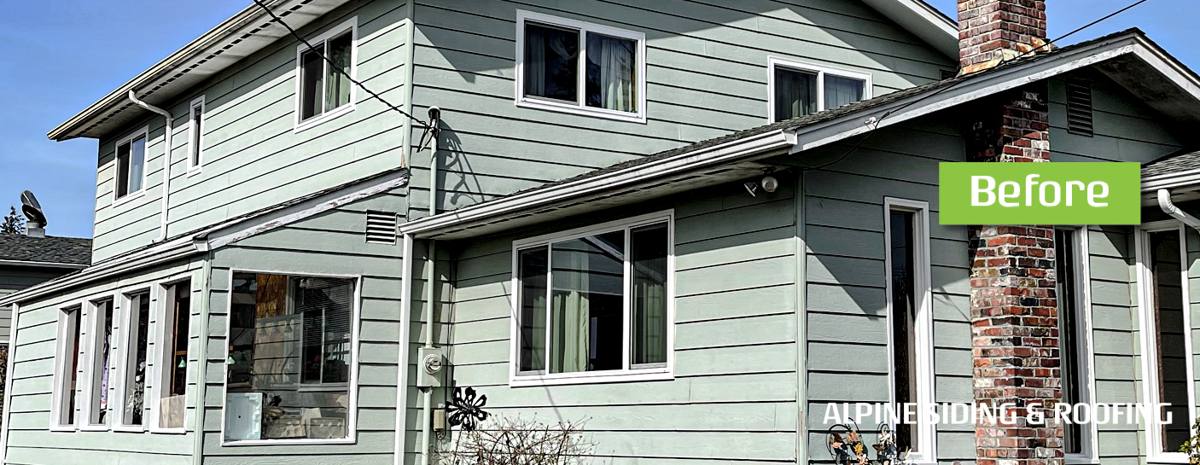
A little moss on the north side of a house is normal in this part of Washington. Moss or black mildew streaking specifically around a window frame is different — it usually means water is sitting somewhere it shouldn't, either on a sill that's lost its slope, in a corner joint that's opened up, or behind failing caulk. It's a visual clue worth paying attention to before it becomes a rot problem.
What "Custom" Actually Means Here
Custom windows aren't a marketing label — it's a specific approach for openings that don't fit standard manufacturer sizes or standard installation methods. In Deming that comes up often because of the mix of older farmhouses, additions built over the decades, and cabins that were never framed to a modern module. Custom work covers:
- Openings that are out of square or slightly out of level after decades of settling
- Non-standard shapes — arched tops, oversized picture windows, odd bay configurations
- Replacing a window with a different style (casement to slider, or adding a larger opening) rather than a like-for-like swap
- Matching sightlines and trim profiles on additions so new windows don't look bolted on
- Sizing for high-performance glass packages that are heavier and need a properly reinforced frame
If your home just needs a straight, same-size replacement in a square opening, that's a simpler job — but a lot of Deming houses aren't that simple, and forcing a stock window into an opening it wasn't made for is exactly how leaks start.
Signs Your Current Windows Are Losing the Battle
Most window failure in this climate is slow. Homeowners usually notice one of these before they think to call anyone:
- Fogging or a milky haze between panes on a double-pane window — the seal has failed and the gas fill or dry air pocket is gone
- Wood trim or sills that feel soft, spongy, or show dark staining
- Visible daylight or a draft you can feel with your hand along the frame edge
- Moss or dark mildew growth concentrated right at a window corner or sill, not spread evenly across the wall
- Windows that are hard to open, close, or latch — often a sign the frame has swollen or shifted
- A noticeable rise in heating costs with no other explanation
- Condensation forming on the inside of the glass regularly, even in normal humidity
Any one of these on its own isn't an emergency. Several at once, or any sign of soft wood, usually means it's worth having someone look before winter rain finds the gap.
What a Correct Installation Actually Involves
The window unit itself is maybe half the job. The other half — flashing, sealing, and integration with the wall assembly — is what determines whether that window is still performing in ten years or leaking in three. In a climate like this, we treat that half as non-negotiable.
A correct installation includes a sloped sill pan so any water that gets past the glass has somewhere to go besides your framing, proper flashing tape sequenced so water sheds outward at every layer (not just caulk relied on as the only barrier), backer rod and sealant sized for the gap rather than caulk smeared over a wide opening, and insulation in the gap between the frame and the rough opening so you're not trading an air leak for a thermal gap. Skipping any of these steps is how a brand-new window ends up with the same rot problem five years later — the product wasn't the issue, the installation was.
Frame Material Trade-Offs for This Climate
| Material | Moisture Behavior | Maintenance | Typical Lifespan | Best Fit |
|---|---|---|---|---|
| Vinyl | Won't rot; seams and welds need to be quality-checked | Low — occasional cleaning | 20-30 years | Most Deming homes, budget-conscious replacements |
| Fiberglass | Excellent — stable through wet/dry and hot/cold cycles | Low | 30-40+ years | Larger openings, exposed elevations, long-term owners |
| Wood-clad | Good if the cladding is intact; interior wood still needs protection | Moderate to high | 20-30 years, cladding-dependent | Homes prioritizing a traditional wood interior look |
| Aluminum | Conducts cold and can condense heavily without a thermal break | Low | 20-30 years | Limited use here; we specify thermally broken units only |
We don't push one material on every job. The right call depends on the exposure of that particular wall, how much upkeep you want to do, and what the rest of the house looks like.
Glass and Performance Choices That Matter Here
Deming gets cold, wet winters and warm, dry-ish summers, so the glass package matters as much as the frame. A Low-E coating with argon fill is standard on most quality replacements now and does real work cutting winter heat loss and summer glare. Triple-pane adds another layer of insulation and a meaningful reduction in interior condensation on cold mornings, which matters if you've had persistent fogging on interior glass in past winters. It costs more and adds weight, so it's worth it on north- and west-facing exposures more than on a sheltered south wall.
Whatever glass package you choose, make sure the U-factor and condensation resistance ratings are specified in writing, not just "energy efficient" as a sales phrase. Those numbers are what actually tell you how the window will perform through a Whatcom County winter.
Our Process for Deming Projects
- On-site assessment — we look at the actual opening, the wall assembly, current window condition, and any signs of existing water intrusion before recommending anything.
- Measurement and specification — exact sizing, frame material, and glass package selected for that specific opening and exposure.
- Scheduling around weather — in this valley, we plan installation for a dry window whenever possible so the opening isn't exposed to driving rain mid-install.
- Removal and inspection — old units come out carefully so we can check the rough opening and framing underneath for rot or prior water damage before anything new goes in.
- Flashing, sill pan, and air-seal detailing — done to the sequence that keeps water moving out, not in.
- Installation and interior/exterior finish — trim, caulk lines, and hardware set and tested.
- Walkthrough — we operate every window with you and point out anything you should keep an eye on.
Why a Crew That Already Works in Deming Matters
Window installation is weather-sensitive work, and a crew that already schedules jobs around this valley's rain patterns is going to catch fewer surprises than one coming from outside the area on a generic timeline. We know which exposures on a Deming property tend to take the worst of a west wind, what the moisture load looks like on a north-facing wall shaded by trees, and how much lead time makes sense given how quickly a dry stretch can turn wet here. That local pattern-recognition doesn't show up on a quote sheet, but it shows up in how the job actually goes.
It also matters for follow-up. If something needs a caulk touch-up after the first hard rain of the season, or a sill needs a look after an unusually wet winter, it's a lot easier when the crew that installed it is still working in the same area and not three counties away.
Keeping New Windows Performing After Install
A correctly installed window still benefits from basic upkeep in this climate:
- Clear debris from sills and weep holes each fall so water has somewhere to drain
- Check exterior caulk lines annually, especially after a hard freeze, and re-seal any that have cracked
- Keep gutters clear above windows — overflow is a common cause of water tracking down onto frames it was never designed to handle
- Wipe down interior glass if condensation forms overnight, and improve room ventilation if it happens regularly
None of this is heavy maintenance, but skipping it for years is how even a good window starts showing the kind of moss and staining problems we described earlier.
If your Deming home has windows showing any of these signs, or you're planning a remodel that calls for custom sizes or shapes, we're glad to take a look. Reach out for a free, no-pressure estimate — the form below gets you started.