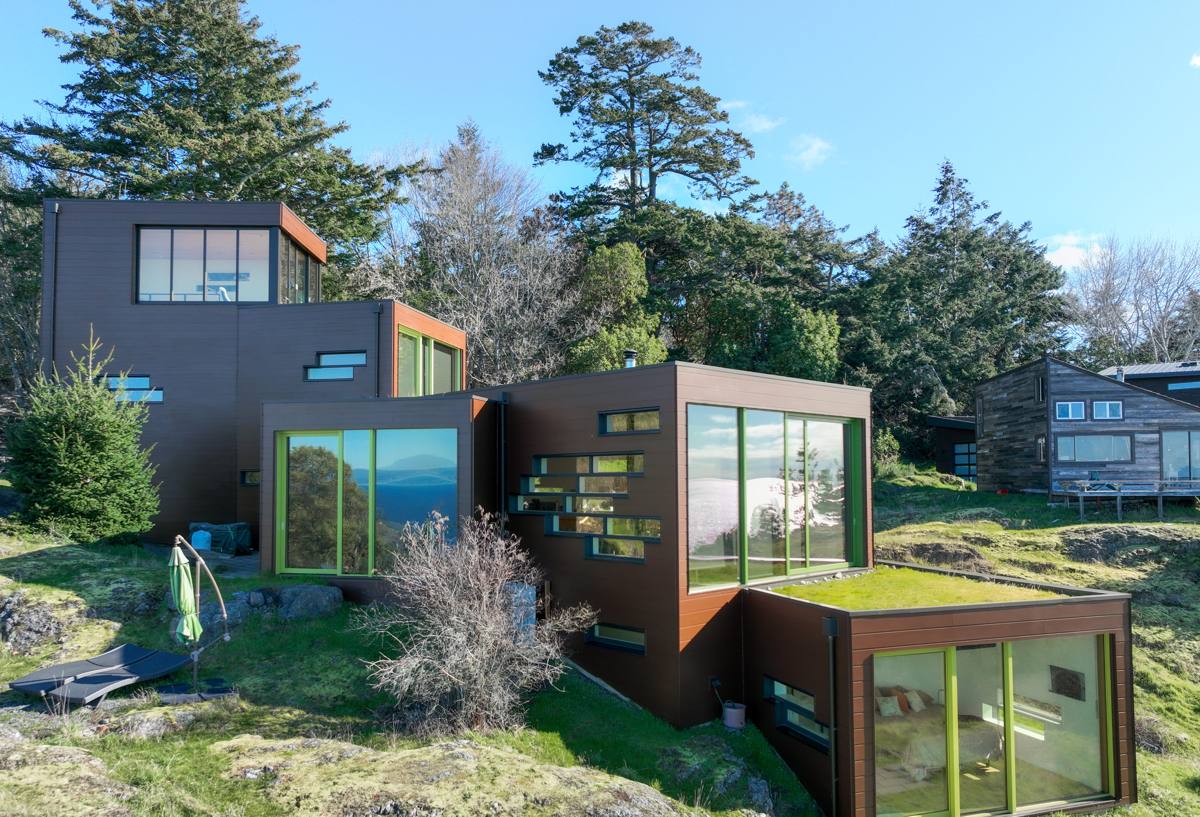
 Sudden Valley Exterior
 Why South Hill Homes Need Windows Built for This Climate
South Hill sits inside a stretch of Whatcom County that takes weather seriously. Homes here deal with salt-laden air moving in off the water, long stretches of driving rain through fall and winter, and a moss season that seems to start earlier every year and stick around longer. None of that is dramatic on its own, but stacked together over a decade or two, it's exactly the combination that finds every weak point in a window: soft caulk lines, tired seals, frames that have started to absorb moisture instead of shedding it.
Energy-efficient windows aren't just about a lower power bill, though that's real and worth chasing. In this climate they're also about keeping water out, keeping frames from rotting or corroding, and keeping the inside of the glass from fogging or sweating when the temperature swings. A window that's rated well for efficiency but installed poorly will still leak, still fog, and still cost you money. A window that's installed correctly but chosen poorly will still feel drafty on a windy January night. You need both pieces right, and that's the standard we hold every South Hill job to.
Signs Your Current Windows Are Working Against You
Most homeowners don't replace windows because they woke up thinking about U-factors. They replace them because something is bothering them day to day. If any of these sound familiar, it's worth having a window looked at before it turns into a bigger repair:
- Cold drafts near the window frame even when it's fully latched
- Condensation or fogging between the panes (a sign the seal has failed)
- Visible moisture staining, soft wood, or bubbling paint on the interior sill or exterior trim
- Windows that are hard to open, close, or lock — a sign the frame has shifted or swollen
- Noticeably higher heating bills compared to similar homes nearby
- Moss or dark streaking building up on the exterior sill or below the window over one season
- Rooms near large windows that feel noticeably colder than the rest of the house
Any one of these by itself isn't an emergency. Several of them together, especially on a window that's original to the house, usually means the seal, the frame, or both have reached the end of their useful life.
What "Energy-Efficient" Actually Means
The term gets used loosely in this industry, so it's worth breaking down into the parts that actually matter for a South Hill home. Efficiency comes from three things working together: the glass package, the frame material, and how airtight the installation is. A high-end glass package installed with a sloppy air seal will underperform a mid-range window installed correctly.
Glass and Coatings
Most efficient windows today use double or triple-pane glass with a Low-E (low-emissivity) coating, which is a microscopically thin layer that reflects heat back into the room in winter and blocks excess heat in summer. The space between panes is typically filled with argon or krypton gas instead of plain air, which slows heat transfer further. None of this is exotic — it's standard in any properly specified replacement window — but the specific combination matters for how the window performs against wind-driven rain and temperature swings typical of this area.
Frame Material
Frame material affects both efficiency and how the window holds up against salt air and moisture over time. We'll walk through the tradeoffs below, but in general the frame is where a lot of long-term problems start if the wrong material or a poor installation is used in a wet, coastal-influenced climate.
Air Sealing
This is the piece that's easiest to get wrong and hardest for a homeowner to inspect after the fact. A window can carry a great efficiency rating on paper and still perform poorly if the gap between the window unit and the rough opening isn't properly insulated and sealed. This is where installation quality matters as much as the product itself.
Frame Material Comparison
| Frame Type | Efficiency | Moisture Behavior | Maintenance |
|---|---|---|---|
| Vinyl | Good to very good, multi-chambered profiles perform well | Doesn't rot or corrode; seams need to be well-sealed | Low — occasional cleaning |
| Fiberglass | Very good, stable in temperature swings | Excellent resistance to moisture and expansion | Low, higher upfront cost |
| Wood / Wood-Clad | Good with proper glazing | Vulnerable to moisture intrusion if seals or cladding fail | Higher — finish and seal upkeep matter in this climate |
| Aluminum | Weaker unless thermally broken | Can corrode faster in salt-influenced air without proper coatings | Moderate |
We don't push one material on every job. The right choice depends on the home's exposure, the style of the house, and the homeowner's tolerance for upkeep. What we do insist on is being honest about the tradeoffs up front rather than letting a homeowner find them out the hard way three winters later.
What a Correct Installation Actually Involves
In a climate with this much driving rain, the installation matters as much as the window itself — arguably more. A quality window installed carelessly will leak at the frame within a few seasons. Here's what we treat as non-negotiable on every South Hill job:
- Full removal of the old window and inspection of the rough opening for hidden rot or water damage before anything new goes in
- Repair of any framing or sheathing damage found — never installing a new window over a compromised opening
- Proper flashing at the sill and head, sequenced so water is directed out and away from the wall assembly, not trapped behind it
- Continuous insulation and air sealing in the gap between the window unit and the framing
- Correct, weather-appropriate caulking and sealant at all exterior joints
- Interior trim and finish work that restores a clean, finished look
- A final function and seal check before we consider the job done
Skipping the flashing detail or rushing the sealant step is the single most common reason a "new" window ends up with a moisture problem within a few years. It doesn't show up as a leak right away — it shows up as a soft spot in the trim, a musty smell, or a spike in the heating bill once insulation nearby has absorbed water.
Our Process for South Hill Homeowners
1. On-Site Assessment
We look at the actual condition of your current windows and framing, not just the glass. That includes checking for existing moisture damage, since that changes the scope of the job and needs to be addressed honestly before any window goes in.
2. Product Recommendation
Based on your home's exposure, your budget, and how the house is used, we recommend frame material and glass package options — with the tradeoffs explained plainly, not just the upsell.
3. Written Estimate
You get a clear scope of work and pricing before anything is scheduled. No surprise add-ons once the crew is on site.
4. Installation
Our crew follows the same flashing, sealing, and insulation sequence on every window, every job — it's not something we skip to save time on a smaller project.
5. Final Walkthrough
We check every window operates correctly, seals properly, and looks finished inside and out before we call the job complete.
Cost Factors Homeowners Should Actually Weigh
| Factor | Why It Matters |
|---|---|
| Number of windows and sizes | Larger openings and custom sizes cost more per unit |
| Frame material | Fiberglass and quality vinyl generally cost more upfront than basic vinyl but often less over time in maintenance |
| Extent of existing damage | Rotted framing or sheathing found during removal adds labor and material cost, but skipping repairs costs far more later |
| Glass package | Triple-pane and specialty coatings add cost but can matter more on north- or west-facing walls exposed to weather |
| Access and story height | Second-story or hard-to-access windows take more time and equipment |
We'd rather walk you through these factors honestly during the estimate than quote a low number that grows once the crew finds problems behind the old trim. If we find damage during removal, we'll show it to you and explain the options before proceeding.
Moss, Rot, and the Window Frame Connection
Moss doesn't just grow on roofs. In shaded, damp corners of a South Hill property, it can build up on sills, exterior casing, and anywhere water sits instead of draining. Once moss and organic buildup take hold near a window, they hold moisture against the wood or frame longer than it would otherwise sit, and that's exactly the condition that leads to soft trim and slow rot. Part of a correct window job in this climate includes making sure water has somewhere to go — proper sill slope, clear weep paths on vinyl and fiberglass frames, and sealant that isn't already failing when we start.
If you've noticed moss or dark staining building up around your windows over the past season or two, it's worth having it looked at even if the window itself still opens and closes fine. Catching it early is a much smaller job than catching it after it's reached the framing.
Why Local Experience in South Hill Matters
Whatcom County weather isn't uniform — a home with more exposure to wind and rain off the water needs different attention than one tucked into a more sheltered lot a few streets over. A crew that works this specific area regularly gets a feel for which homes tend to have moisture issues behind older trim, which orientations take the worst of the driving rain, and how long moss buildup takes to become a real problem here versus somewhere drier. That's not something you can fully substitute with a generic install checklist — it comes from doing the work in this specific area, season after season.
It also means when we say a window needs a certain kind of flashing detail or a specific sealant for this climate, it's based on what actually holds up here, not a one-size-fits-all national spec sheet.
After the Install: Simple Maintenance That Protects Your Investment
- Rinse sills and tracks periodically to keep moss and debris from building up
- Check exterior caulking once a year, especially after a hard winter, and have any cracking resealed
- Keep gutters and downspouts clear so water isn't running down the wall near window openings
- Wipe down interior sills if you notice condensation, and let us know if it becomes a regular occurrence — it can signal a ventilation or seal issue worth checking
- Trim back vegetation that keeps a window shaded and damp longer than the rest of the house
New windows are a long-term investment, and a little regular attention keeps both the seal and the frame performing the way they were installed to.
If your windows are drafty, fogging, or just past their prime, we're happy to take a look and give you a straightforward, no-pressure estimate — no obligation, just an honest read on what your home actually needs. Use the form below to get started.