 Sudden Valley Exterior
 Why Silver Beach Homes Need Siding Built for This Climate
Homes around Silver Beach and the broader Sudden Valley area sit inside one of the wettest, greenest microclimates in Whatcom County. Between the marine-influenced weather that moves in off the Sound, the driving rain that comes sideways off the lake and surrounding hillsides, and a moss season that can stretch from October well into spring, exterior siding here is under near-constant load. It's not one bad storm that causes problems — it's months of low-grade moisture exposure, shaded north walls that never fully dry out, and organic growth that finds a foothold anywhere water is allowed to sit.
That combination is exactly what separates a siding job that looks fine for two years from one that actually holds up for twenty. Homeowners in this area don't need siding that's merely attractive — they need a system engineered for sustained moisture, plus an installation crew that understands how water actually moves around a lakeside or tree-shaded property. This page is specifically about siding installation for Silver Beach-area homes: what the climate demands, what correct installation looks like, and how our process is built around both.
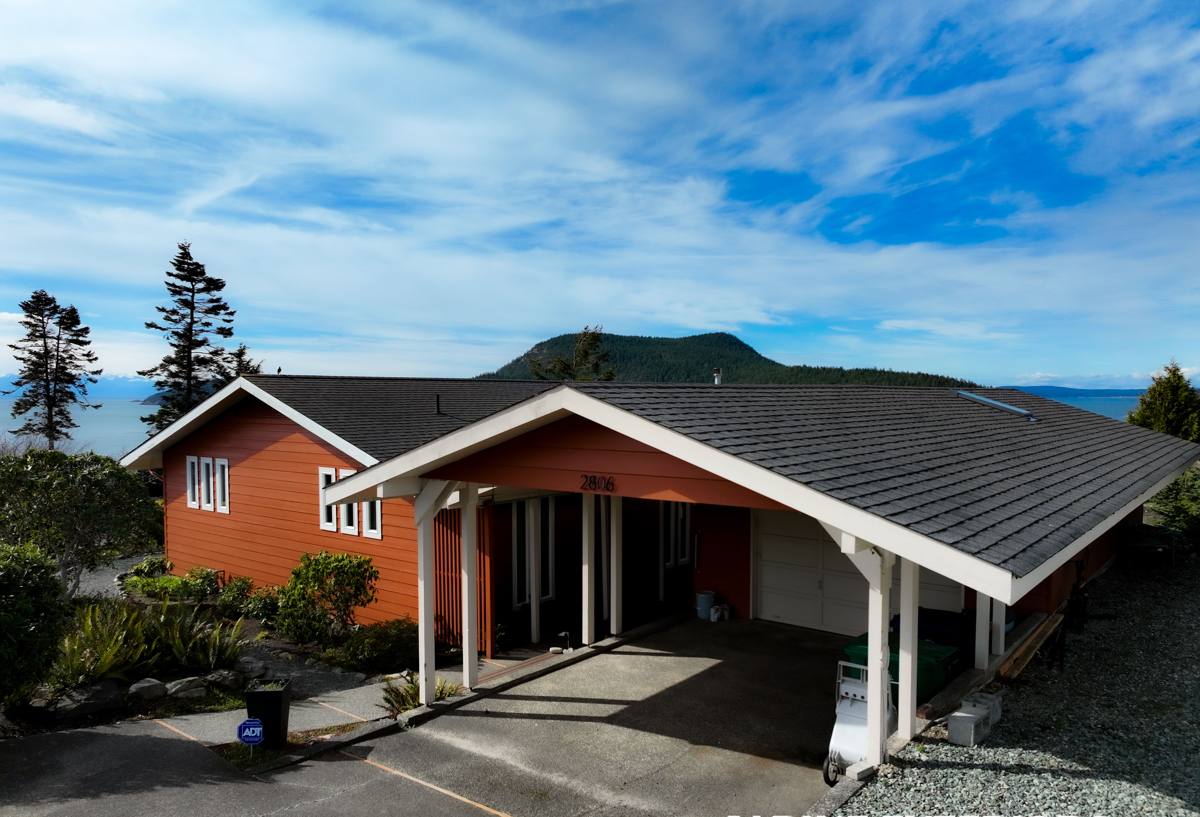
What Constant Moisture and Moss Do to the Wrong Siding
Not all siding materials respond to Whatcom County's wet season the same way. Wood-based products — including primed spruce and engineered wood siding — are cellulose at their core, and cellulose absorbs water. Once moisture gets past the paint film, whether through a hairline crack, a poorly sealed cut edge, or years of moss holding dampness against the surface, the substrate itself starts to swell, delaminate, or rot from the inside out. Vinyl siding doesn't rot, but it has its own weakness here: it's a thin, flexible material that expands and contracts with temperature swings, and its seams and J-channels give moss and algae plenty of shaded, damp crevices to colonize. Neither material was engineered specifically for a climate where the surface can stay damp for weeks at a stretch.
The visible symptoms show up gradually — dark streaking on north- and west-facing walls, soft spots near the bottom courses, caulk lines that keep failing no matter how often they're redone, paint that blisters instead of just fading. By the time those symptoms are obvious, the damage underneath is usually already ahead of them. That's the core reason we standardized on one material system rather than offering a menu of options that perform differently in the same conditions.
Why This Matters More on Shaded and Lake-Adjacent Lots
Homes tucked under tree canopy or sitting close to the water lose direct sun exposure that would otherwise help siding dry out between rain events. Less sun means longer dry-out time, and longer dry-out time means more opportunity for moss, algae, and mildew to establish themselves on the siding surface and in the seams. On these lots, material choice and installation detailing both matter more than they would on an open, sun-exposed site.
Why We Install Only James Hardie Fiber Cement
We install one siding system — James Hardie fiber cement — and we don't offer LP SmartSide, vinyl, Cemplank, Allura, primed spruce, or cedar as alternatives. That's a deliberate standard, not a lack of options. Fiber cement is a mix of cellulose fiber, sand, and Portland cement, which makes it non-combustible and dimensionally stable in a way wood-based and vinyl products simply aren't. It doesn't feed moss the way a cellulose surface can, it doesn't warp or swell the way engineered wood can when water gets behind it, and it doesn't go brittle and crack in cold snaps the way vinyl can.
James Hardie also builds region-specific product lines engineered for different climate zones (their HZ5 line, for example, is formulated for the Pacific Northwest's wet, moderate climate), and every board comes with a factory-applied ColorPlus finish baked on under controlled conditions rather than field-painted on site. That finish resists the fading, cracking, and peeling that field-applied paint is prone to in a climate that rarely gives paint a long dry cure window. The backing is a transferable limited warranty that stays with the house if it sells — something that matters to buyers doing due diligence on an older home in a wet region.
We're not going to tell you LP SmartSide, vinyl, or cedar are bad products in general — each has a legitimate place and each has real strengths. What we will say is that after years of doing exterior work specifically in Whatcom County's rain and moss conditions, we don't think any of them hold up as reliably here as fiber cement does, and we'd rather install one product correctly and stand behind it than offer several and hedge on the outcome.
What a Correct Siding Installation Involves
Fiber cement siding is only as good as the assembly it's installed into. The board itself resists moisture well, but a siding system fails at the seams, fasteners, and flashing details long before the panels themselves give out. A correct installation in this climate means paying close attention to the parts of the job that aren't visible once it's done.
- Weather-resistant barrier: A properly lapped and sealed house wrap or building paper behind the siding, installed so water sheds outward rather than tracking behind the cladding.
- Rainscreen or drainage gap: Furring strips or a drainage mat that create an air gap behind the siding, letting incidental moisture drain and the wall assembly dry out between rain events — critical on shaded, slow-drying walls.
- Flashing at every penetration: Windows, doors, hose bibs, light fixtures, and vents all need proper head flashing and kick-out flashing so water is directed away from the wall, not into it.
- Correct fastener spacing and type: James Hardie specifies fastener type, spacing, and placement for each product line and climate zone; getting this wrong voids warranty coverage and invites moisture intrusion at every nail hole.
- Proper clearance at grade and roof lines: Siding held to the manufacturer's minimum clearance above roofing, decks, and soil so it isn't sitting in standing water or splashback.
- Factory-cut edges sealed: Any field cuts touched up with the correct sealant so the cut edge doesn't become the one place moisture gets in.
Every one of these steps is invisible once the siding is up, which is exactly why they get skipped by crews trying to move fast. They're also exactly the steps that determine whether a siding job is still performing in year fifteen or needs remediation in year five.
Our Installation Process, Step by Step
We run the same disciplined process on every Silver Beach and Sudden Valley-area project, because the climate doesn't reward shortcuts.
- On-site assessment: We walk the exterior, check the current siding and sheathing condition, identify moisture-prone zones (shaded walls, low clearance points, past leak history), and measure for material takeoff.
- Written scope and estimate: A clear breakdown of product line, color, trim details, and what the job includes — no vague allowances.
- Tear-off and sheathing check: Old siding comes off and we inspect the sheathing underneath for rot or damage before anything new goes up. Compromised sheathing gets repaired, not covered over.
- Weather barrier and drainage plane: House wrap and rainscreen installed per manufacturer spec, with all seams properly lapped and taped.
- Flashing installation: Every window, door, and penetration flashed before siding closes around it.
- Hardie panel or plank installation: Installed to James Hardie's fastening schedule and clearance requirements for our climate zone.
- Trim, caulking, and touch-up: Factory-matched caulk at seams and cut edges, trim installed, and a final detail pass.
- Final walkthrough: We review the completed job with the homeowner before calling it done.
Choosing the Right Hardie Line and Color for a Silver Beach Home
James Hardie makes several distinct product lines, and picking the right one depends on the look you want and how the wall performs in our climate.
| Product Line | Profile | Best Fit For |
|---|---|---|
| HardiePlank Lap Siding | Traditional horizontal lap, smooth or cedar-textured | Most single-family homes; the standard choice for a classic PNW look |
| HardiePanel Vertical Siding | Large-format vertical panels | Modern facades, gable accents, or mixed with lap siding for contrast |
| HardieShingle Siding | Staggered or straight-edge shingle profile | Craftsman or cottage-style homes common in lake and shoreline neighborhoods |
| HardieTrim Boards | Corner boards, fascia, and window trim | Finishing detail on any of the above; keeps trim consistent with the field siding |
On homes with heavy tree cover or minimal direct sun, we typically steer homeowners toward ColorPlus finishes in the manufacturer's darker, more UV-stable tones, since dark colors on shaded walls show algae and dirt streaking less than pale colors that rely on frequent washing to stay clean-looking. That's a practical, not aesthetic, recommendation — the final color choice is always the homeowner's.
Cost Factors for Siding Installation in This Area
Every home is different, and we don't quote real numbers without walking the property, but the cost of a Silver Beach-area siding installation is driven by a consistent set of factors.
| Factor | Why It Matters Here |
|---|---|
| Sheathing condition | Homes with prior moisture intrusion often need sheathing repair before new siding goes on — this is discovered during tear-off, not always visible beforehand |
| Wall complexity | Steep rooflines, multiple gables, and dormers common on lake-view homes add cutting, flashing, and labor time |
| Product line and profile | Lap, panel, and shingle profiles carry different material and labor costs |
| Trim and detail level | Corner boards, window casing, and accent trim add both material and finish labor |
| Site access | Sloped, wooded, or lake-adjacent lots can require more staging and material handling than a flat, open lot |
| Rainscreen/drainage plane | A proper drainage gap adds a modest material and labor cost but is essential for wet, shaded walls |
Why a Crew That Already Works Silver Beach Matters
Siding installation isn't a one-size-fits-all job, and a crew that's already worked lake-adjacent, tree-shaded homes in this part of Whatcom County brings something a crew from outside the area doesn't: pattern recognition. We know which wall orientations tend to hold moisture longest, which older homes in this area were built with sheathing types that need extra scrutiny during tear-off, and how much of a drainage gap actually makes a difference once moss season sets back in. That knowledge shapes decisions on-site — where to add extra flashing, which cut edges need the most careful sealing, how tight to run fastener spacing on a wall that gets almost no afternoon sun.
It also means we're not guessing at how James Hardie's HZ5 product line performs locally — we've installed it through multiple wet seasons on homes with the same exposure conditions Silver Beach properties face, and we stand behind that work with a company that isn't going anywhere.
Homeowner Checklist: Signs Your Siding Needs Attention
A few warning signs are worth checking for before small problems become expensive ones.
- Dark streaking or green growth that returns within weeks of being cleaned off
- Caulk lines cracking or pulling away at seams and trim
- Soft or spongy spots when pressed near the bottom courses or around windows
- Paint that's bubbling or peeling rather than just fading evenly
- Visible gaps or warping at panel seams
- Interior signs like musty smells or peeling paint on exterior-facing walls, which can indicate moisture getting through from outside
If any of these are showing up on your home, it's worth having the siding and the wall assembly behind it evaluated before the next wet season sets in — catching a moisture problem early is almost always cheaper than remediating rot damage later.
Ready to Talk About Your Home
If you're weighing a siding replacement for a Silver Beach or Sudden Valley-area home, we're glad to walk the property, look at what's actually happening with your current siding and sheathing, and give you a straightforward, no-pressure estimate for a James Hardie installation built for this climate. Use the form below to get started.