 Sudden Valley Exterior
 Why Silver Beach Decks Wear Out Faster Than You'd Expect
If you own a home in the Silver Beach area near Sudden Valley, you've probably noticed your deck aging faster than a deck would in a drier climate. It's not bad luck and it's not necessarily bad lumber — it's the environment. Whatcom County sits under a long wet season, and this stretch of it deals with the added one-two punch of salt-laden air off the water and driving, wind-blown rain that gets pushed into places a calm rain never would. Add a moss season that runs longer here than it does even twenty miles inland, and you've got conditions that break down decks from the framing up, not just the surface down.
A deck replacement done right for this area isn't the same job as a deck replacement in a dry inland suburb. The structure, the fastener choice, the drainage detailing, and the decking material all need to account for what this specific microclimate does to wood and metal over time. That's the lens we bring to every Silver Beach deck we replace.
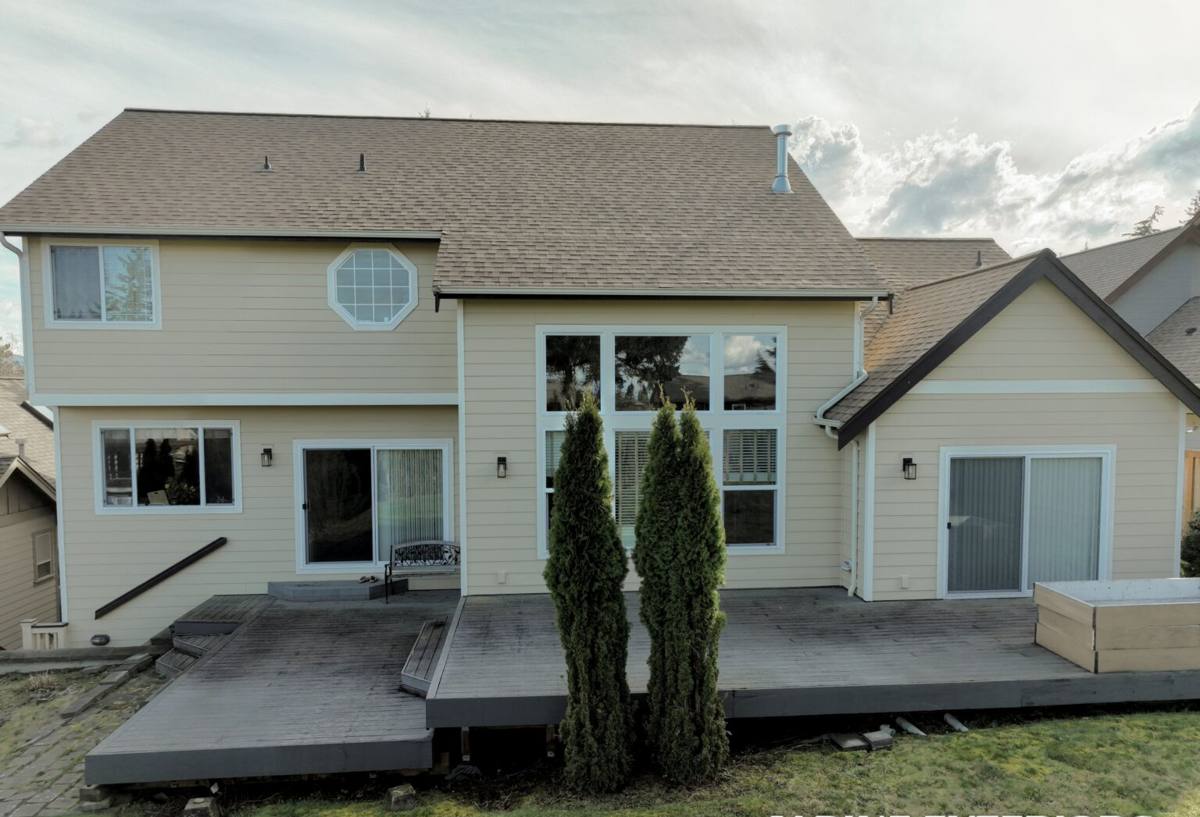
Signs You Need Replacement, Not Another Repair
Plenty of decks get patched for years past the point where patching still makes sense. Here's how to tell which situation you're actually in.
- Soft, spongy, or spring-back decking boards, especially near the house or in shaded corners where moss holds moisture longest
- Rust streaking or crumbling around fasteners and joist hangers — a sign the metal is failing, not just the wood
- A ledger board (where the deck attaches to the house) that's soft, discolored, or separating slightly from the siding
- Persistent green or black staining that returns within weeks of cleaning, even after a good scrub
- Visible sag between joists, or a deck that feels different underfoot than it did a few years ago
- Support posts or footings that show cracking, heaving, or rot at the base
One or two of these on an otherwise sound deck usually means targeted repair is still reasonable. Several of them together, especially anything involving the ledger or the framing, usually means the deck has passed the point where repair is the honest answer. We'll tell you straight which category yours is in — we don't have any incentive to talk you into a full replacement you don't need.
What Salt Air, Driving Rain, and Moss Actually Do
Salt Air
Salt in the air accelerates corrosion on anything metal — fasteners, joist hangers, post bases, and railing hardware. Standard hot-dip galvanized fasteners can hold up for a while, but in a salt-influenced environment they corrode faster than the same hardware would inland. Once a fastener starts rusting, it loses holding strength long before it looks obviously bad, which is part of why decks can feel solid right up until they don't.
Driving Rain
Wind-driven rain doesn't just fall straight down — it gets pushed sideways into gaps, under flashing, and behind ledger boards that weren't detailed to shed water. Over years, that moisture works its way into end grain and fastener holes, which is where rot almost always starts on a deck. It's rarely the flat, exposed face of a board that fails first; it's the hidden edges and connections.
Long Moss Season
Moss needs shade and sustained moisture, and this area supplies both for a good stretch of the year. Moss on a deck surface isn't just cosmetic — it holds water against the wood constantly, which keeps boards from ever fully drying out between rain events. That constant dampness is what turns ordinary wood aging into active rot, especially on the north-facing or heavily shaded sections of a deck.
Decking Material Comparison for This Climate
There's no single "best" decking material for every situation — it depends on your budget, how much upkeep you want to do, and how much shade and moisture the deck actually sees. Here's how the common options stack up for a Silver Beach property.
| Material | Moisture Behavior Here | Maintenance | Typical Lifespan |
|---|---|---|---|
| Pressure-treated lumber | Needs consistent sealing to resist the wet/dry cycling; end grain and fastener holes are the weak points | Annual cleaning, resealing every 1-3 years | 10-15 years with upkeep |
| Cedar | Naturally rot-resistant but still needs finish maintenance in a wet, mossy environment | Cleaning and refinishing every 2-3 years | 15-20 years with upkeep |
| Composite decking | Doesn't absorb water into the board itself, but moss and algae still grow on the surface if shaded and damp | Periodic washing, no sealing needed | 25-30 years |
| PVC/cellular decking | Fully moisture-resistant board material; best option for heavily shaded or moss-prone sections | Occasional washing | 25-30+ years |
Where we land most often for Silver Beach clients: if a deck gets real sun exposure and you don't mind maintaining a finish, cedar still looks great and holds up fine. For decks that sit in shade for a good part of the day — which describes a lot of lots around here given the tree cover — composite or PVC decking earns its higher upfront cost by not needing to be refinished every couple of years and by resisting the moss problem at the board level, even though the surface will still need occasional washing.
What a Correct Deck Replacement Actually Involves
A deck replacement is more than swapping old boards for new ones. The parts you don't see are what determine whether the new deck lasts 10 years or 25.
Framing and Structure
We inspect and typically replace joists, beams, and posts as part of a full replacement rather than reusing old framing under new decking. Reusing framing that's already been through years of this climate is how homeowners end up paying for a new deck surface on top of a structure that fails a few years later.
Ledger Attachment
The ledger board connection to your house is the single most important structural and moisture detail on the whole deck. It needs proper flashing that directs water away from the house framing, not just caulk and hope. This is also the connection point most likely to have been done wrong or minimally on an older deck, so we pay close attention here on every replacement.
Fasteners and Hardware
Given the salt air in this area, we use corrosion-resistant fasteners and hardware rated for the exposure rather than standard hardware — it costs a bit more upfront and saves you from hidden connection failures down the line.
Drainage and Airflow
Proper board spacing, joist tape on framing, and grading underneath the deck all matter more here than in a dry climate, because the goal is giving water somewhere to go instead of somewhere to sit. Under-deck moisture is a major contributor to moss growth and rot in shaded yards.
Footings
Footing depth and condition get checked against current code requirements — older decks in this area were sometimes built to standards that have since been tightened up, and a full replacement is the right time to bring that up to date.
Our Process for a Silver Beach Deck Replacement
- On-site assessment. We inspect the existing deck's framing, ledger, footings, and decking to confirm replacement is the right call and identify anything the climate has already compromised.
- Honest scope and estimate. You get a clear breakdown of what's being replaced, material options with real trade-offs explained, and a written price — no vague allowances.
- Permitting. We handle the permit process where required so the footings, framing, and railings meet current code.
- Demolition and disposal. Old decking, framing, and hardware are removed and hauled off; we protect your landscaping and siding during the teardown.
- Structural rebuild. New footings (where needed), framing, and a properly flashed ledger connection go in first, before a single deck board is placed.
- Decking and railing installation. Your chosen material goes down with corrosion-resistant fasteners, correct spacing for drainage, and railing that meets current code height and spacing requirements.
- Final walkthrough. We go over the finished deck with you, including what maintenance it does and doesn't need going forward.
Keeping a New Deck Looking Good in This Climate
Whatever material you choose, a little seasonal attention goes a long way in an environment like this one.
- Sweep debris off the deck regularly, especially in fall — trapped leaves hold moisture and feed moss growth
- Rinse or wash the surface a couple times a year to interrupt moss and algae before it establishes
- Trim back overhanging branches where practical to get more sun and airflow onto shaded sections
- For wood decking, reseal on schedule rather than waiting until the finish has visibly failed
- Check railings and stair connections annually for any looseness — hardware in this climate should be inspected, not just assumed fine
- Keep gutters and downspouts near the deck clear so runoff isn't dumping extra water onto or under it
Why Local Experience Matters for This Job
A deck replacement crew that hasn't worked in this specific climate will often default to generic details — standard fasteners, standard flashing, whatever decking is easiest to source — because that's what works where they're used to building. In Whatcom County, and specifically in areas like Silver Beach with real salt air exposure and heavy moss pressure, those generic defaults show up as problems within a few years: rusted hardware, a ledger that's rotting behind the flashing, or decking that's growing moss again within a single season.
We work on decks in this area regularly, which means we're not guessing at how the salt air, the rain patterns, or the shade and moisture around Sudden Valley properties affect a deck over time — we've seen it, and we build accordingly from the framing up. That's the difference between a deck replacement that needs redoing in eight years and one that's still solid in twenty-five.
Get a Straightforward Estimate
If your deck near Silver Beach is showing its age, we're happy to take a look and give you an honest read on whether it needs repair or full replacement, along with a clear, no-pressure estimate for the work. There's a form below — reach out and we'll get you scheduled.