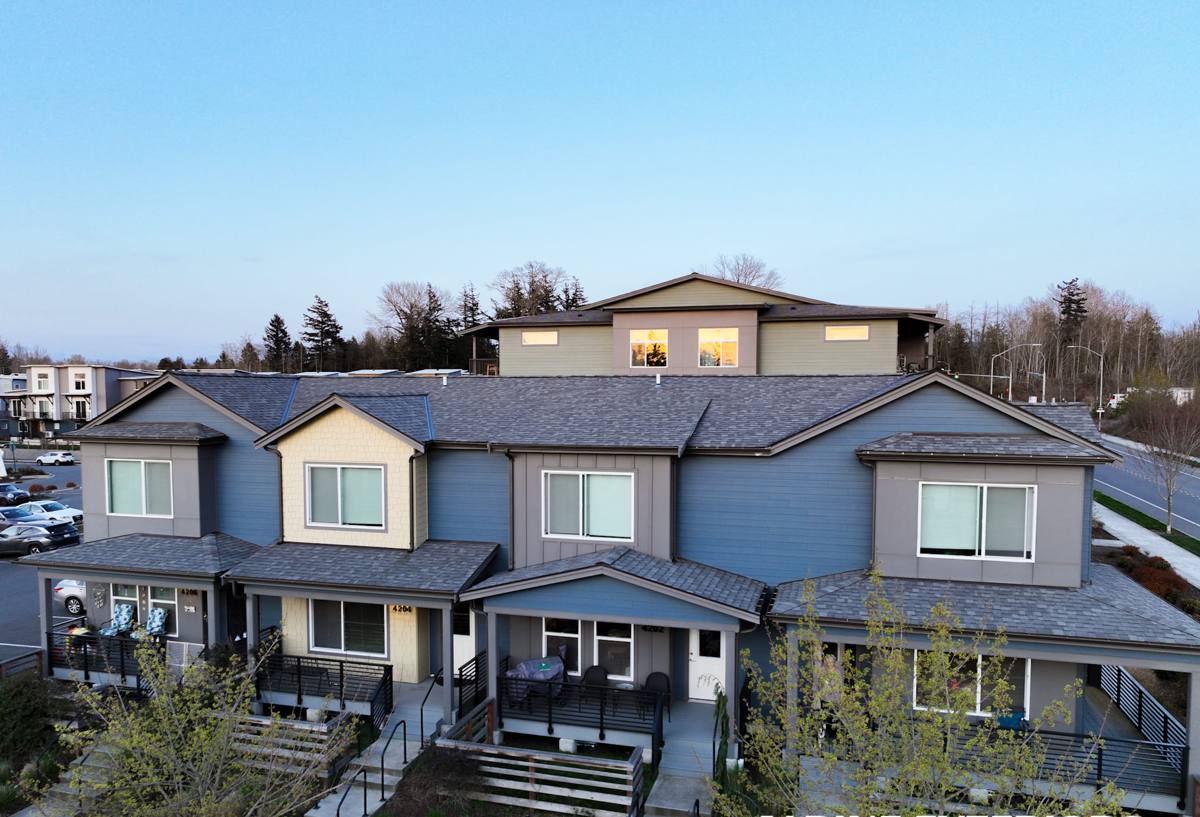
 Sudden Valley Exterior
 Custom Windows in Barkley: Built for Where You Actually Live
Barkley homes sit in a stretch of Whatcom County where the weather doesn't do anything halfway. You get long stretches of driving rain off the water, salt-laced air that moves inland more than most homeowners realize, and a moss season that seems to start earlier every year and last longer. Windows here take a beating that windows in drier climates never see. When we talk about "custom" windows for a Barkley home, we're not just talking about matching an odd-sized opening — we're talking about specifying the right glass, frame, and flashing detail for this specific microclimate, on this specific house.
A lot of window problems we get called out for in Barkley weren't caused by bad windows. They were caused by a window that was fine on paper but installed without accounting for how water actually moves around this house, in this weather, over the following ten or fifteen years.
What the Local Climate Actually Does to Windows
It helps to be specific about what "salt air, driving rain, and moss season" means for a window assembly, because each one attacks a different part of the system.
Salt Air
Even at a distance from saltwater, airborne salt accelerates corrosion on hardware — hinges, locks, cranks, and especially the fasteners holding a window in place. Aluminum cladding and lower-grade vinyl hardware show pitting and discoloration years before they would in an inland climate. This is why hardware and fastener quality matter as much as the glass package on a coastal-influenced job like this.
Driving Rain
Wind-driven rain doesn't just hit a window straight on — it gets pushed sideways and upward into gaps that would never see water in a calm rain. Windows that aren't flashed correctly at the head, sill, and side jambs will eventually let water track behind the trim and into the wall cavity, even if the window itself is a good product. Most "window leaks" we diagnose in this area are actually flashing and sealant failures, not glass or frame failures.
Moss and Sustained Moisture
A long wet season keeps wood trim, sills, and surrounding siding damp for weeks at a stretch. Moss and algae hold moisture against the surface even after the rain stops, which is hard on painted wood trim and can slowly degrade caulk joints and sealants faster than manufacturers' published lifespans suggest. Windows installed with proper drainage planes and back-ventilated trim handle this far better than those installed tight to the wall with no way for moisture to escape.
What "Custom" Means on a Real Job
Every older home in Barkley has openings that don't match today's standard window sizes exactly. "Custom" work covers a few different scenarios, and the right approach depends on your walls, your budget, and how much of the existing frame is still sound.
Retrofit (Pocket) Replacement vs. Full-Frame Replacement
A retrofit, or pocket, replacement installs a new window inside the existing frame, leaving the surrounding trim and siding undisturbed. It's faster and less invasive, and it's the right call when the existing frame is dry and structurally sound. A full-frame replacement removes the window down to the rough opening, which lets us inspect and repair any water damage, install new flashing from scratch, and correct problems from the original build. In a climate that pushes water into every gap, we'll always recommend pulling back further than a pocket replacement if we find soft wood, stained sheathing, or old caulk-only "flashing" behind the trim — patching over hidden rot just moves the problem down the road.
Frame Material Options
| Material | How It Handles This Climate | Maintenance |
|---|---|---|
| Vinyl | Good moisture resistance, no repainting; quality varies widely by manufacturer | Low — occasional cleaning |
| Fiberglass | Expands/contracts closer to glass, holds up well to sustained damp and temperature swings | Low |
| Wood (clad exterior) | Interior wood warmth with a protected exterior face; exposed wood trim needs upkeep in this rain pattern | Moderate — exterior cladding low, any exposed wood needs monitoring |
| Aluminum | Strong but conducts cold and is more prone to salt-air corrosion at fasteners and hardware over time | Moderate — hardware inspection recommended |
We don't push one material as universally "best" — we walk through the trade-offs for your specific exposure (how much direct weather that side of the house takes) and your budget, and let you decide with full information.
Glass Packages Worth Discussing
For Barkley specifically, a few glass and gas-fill decisions matter more than a generic spec sheet would suggest:
- Low-E coatings help manage heat loss during the long stretches of overcast, cool weather typical of a Whatcom County winter.
- Argon or krypton gas fill between panes improves insulation performance, which matters when your heating system is running for months at a time.
- Tempered glass in required locations (near doors, low sills, wet areas) isn't optional by code, and we'll flag anywhere your existing windows fall short.
- Warm-edge spacers reduce condensation at the glass edge, which is a common complaint in homes that stay humid through moss season.
Signs Your Barkley Home May Need New Windows
Not every drafty window needs full replacement, and not every old window is a lost cause. These are the signs worth having a professional look at:
- Visible fogging or moisture trapped between panes of double- or triple-glazed units — the seal has failed and can't be repaired
- Soft or discolored wood trim at the sill or corners, especially on walls that face prevailing wind and rain
- Windows that are difficult to open, close, or lock — often a sign of frame warping or settling
- Visible daylight or a noticeable draft around the frame when it's closed and locked
- Paint that bubbles or peels repeatedly at the same spot on the trim, even after repainting
- Green or black staining at the sill or lower corners — a sign moisture is sitting there longer than it should
- Noticeably higher heating bills compared to similar homes nearby, with no other clear cause
How Our Process Works
1. On-Site Assessment
We look at each opening individually — not just the glass, but the trim, the sill condition, and how water currently drains away from that spot on the house. We'll tell you honestly if a window can be repaired instead of replaced.
2. Custom Measurement and Product Selection
We measure the actual opening, not a catalog size, and walk through frame material, glass package, and grille or style options that match your home's existing look.
3. Removal and Opening Inspection
Once the old window is out, we check the rough opening for hidden water damage before anything new goes in. This is the point where problems that caused the original failure get caught and fixed, not covered up.
4. Flashing and Weatherproofing
This is the step that matters most in a driving-rain climate. Proper flashing tape, a correctly lapped weather-resistive barrier, and a sloped sill pan direct water out and away from the wall, not into it. This detail is the difference between a window that lasts and one that leaks in five years.
5. Installation and Air Sealing
The window is set plumb, level, and square, then properly shimmed, fastened, and insulated around the frame — not just caulked at the trim.
6. Final Trim and Cleanup
Interior and exterior trim work is finished to match the surrounding home, and the site is cleaned up before we walk you through the completed work.
What Drives the Cost
| Factor | Why It Matters |
|---|---|
| Retrofit vs. full-frame | Full-frame costs more upfront but addresses hidden damage and resets flashing entirely |
| Frame material | Vinyl is typically the most economical; fiberglass and clad-wood cost more but perform differently long-term |
| Glass package | Low-E coatings, gas fill, and tempered glass requirements add cost but improve performance and code compliance |
| Number and size of openings | Larger or specialty-shaped windows require custom fabrication, which adds lead time and cost |
| Existing damage | Rot repair at the opening, discovered during removal, is priced separately from the window itself |
We give straightforward, itemized estimates so you can see exactly what you're paying for — no vague lump-sum numbers that hide the details.
Maintenance in a Marine Climate
Even a well-installed window needs some seasonal attention here. A few habits go a long way:
- Clean weep holes and sill tracks at least once a year so water can actually drain instead of pooling
- Rinse salt residue and grime off exterior frames and hardware periodically, especially after storms
- Check and refresh exterior caulk joints where trim meets siding before the rainy season sets in
- Keep gutters and downspouts clear so runoff isn't sheeting down across window heads
- Watch for moss buildup on horizontal trim surfaces and clear it before it holds moisture against wood
Why a Crew That Already Works Barkley Matters
Window installation done to a generic national standard often falls short in a climate like this one. A crew that regularly works Sudden Valley and the surrounding Whatcom County neighborhoods has already seen how water moves around homes built in this area's typical styles and eras, knows which details tend to fail first in this weather pattern, and doesn't have to relearn local conditions on your project. That local repetition is what separates a window that looks right on installation day from one that's still performing correctly ten winters from now.
If you're weighing repair versus replacement, or just want an honest read on what your Barkley home's windows actually need, we're glad to take a look. Reach out for a free, no-pressure estimate using the form below.