 Sudden Valley Exterior
 Deck Building in Sehome Isn't the Same Job as Deck Building Elsewhere
A deck built for a dry inland climate and a deck built for the Sehome area near Sudden Valley are not the same project, even if they look identical on paper. Whatcom County's combination of salt-laden air moving in off the water, long stretches of driving rain, and a moss season that can run most of the year changes almost every decision that goes into a deck — from the footings in the ground to the fasteners holding the boards down. A crew that treats this as a generic build is setting the homeowner up for problems in year three or four, not year twenty.
This page is about one thing: building and replacing decks for homes in and around Sehome, close to Sudden Valley, the right way for this specific climate. Not a national checklist. Not a one-size-fits-all spec sheet. What actually holds up here.
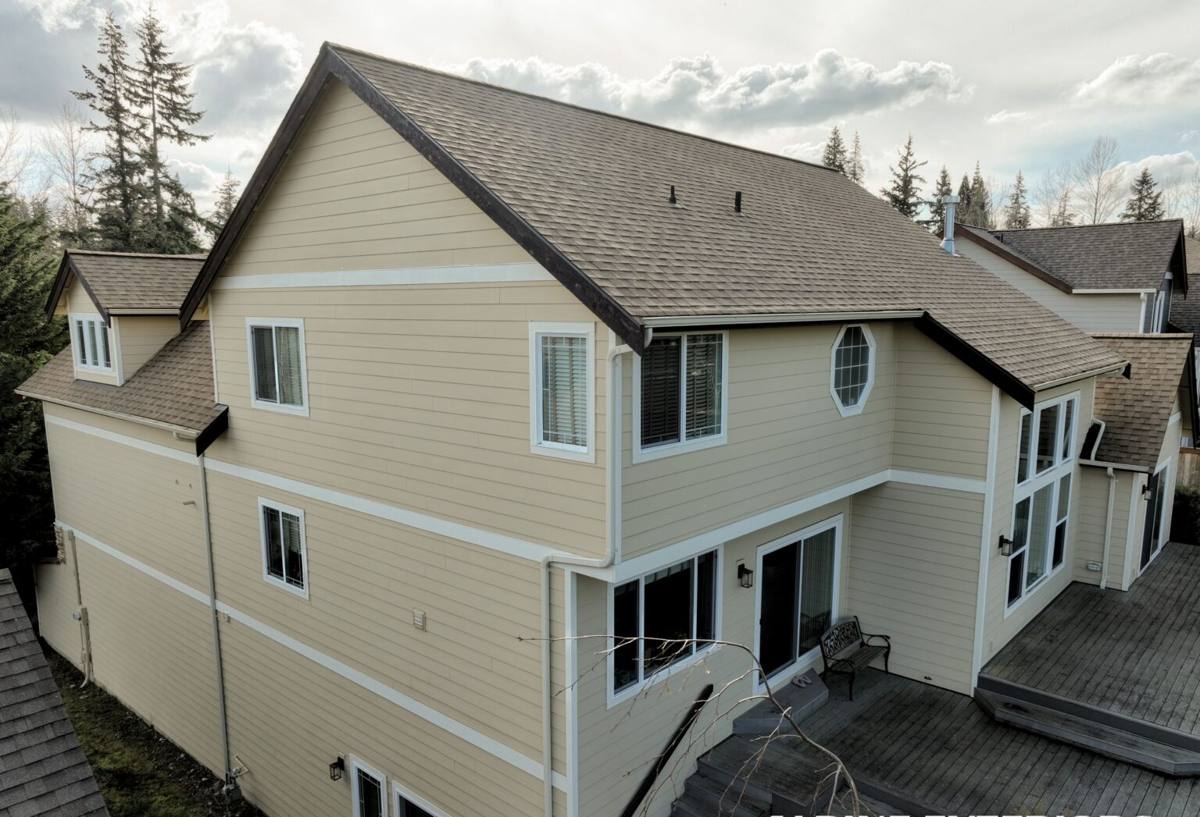
What the Local Climate Actually Does to a Deck
Three conditions do most of the damage to decks in this part of Whatcom County, and they compound each other:
- Salt air accelerates corrosion on any hardware that isn't rated for it — screws, joist hangers, bolts, and structural connectors can start rusting from the inside out long before the wood around them shows any wear.
- Driving rain doesn't just fall straight down here; wind pushes it sideways into ledger boards, under railings, and into any gap where flashing or sealant was skipped. Water finds the shortcuts.
- Moss and algae take hold anywhere a deck stays shaded and damp for extended periods, which describes a lot of yards around Sehome given the tree cover and lake-influenced humidity. Moss doesn't just look bad — it holds moisture against the decking surface and turns walking surfaces slick and dangerous.
None of these are exotic problems. They're predictable, and a deck designed with them in mind from the start will simply need less repair, sooner replacement, and fewer surprises than one that wasn't.
Where Deck Failures Actually Start
The Ledger Board Connection
Most rot-related deck failures we see don't start in the decking boards people can see — they start at the ledger board, where the deck attaches to the house. If that connection isn't properly flashed to shed water away from the house sheathing, water gets trapped between the deck and the wall every time it rains. In a climate that sees this much sustained rainfall, an under-flashed or unflashed ledger is a slow-motion problem, not a maybe.
Post Bases and Footings
Wood posts sitting directly in or near standing water, or footings that weren't poured below the frost and drainage line for this area, are the second most common source of long-term structural trouble. Post bases that hold the post up off the concrete, rather than embedding wood into it, matter more here than in a drier climate because there's simply more contact time with moisture.
Fastener Corrosion
This is the one homeowners notice least until it's serious. Standard interior-grade screws or the wrong hanger coating will corrode faster near the salt-influenced air common to this region, leaving joist hangers weakened at exactly the connections carrying the most load.
Decking Material Comparison for This Climate
There's no single "best" decking material — there's a best material for a given budget, sun exposure, and how much upkeep the homeowner actually wants to do. Here's how the common options actually perform under Sehome and Sudden Valley conditions:
| Material | Moss/Moisture Resistance | Maintenance | Typical Lifespan Here | Upfront Cost |
|---|---|---|---|---|
| Pressure-treated wood | Good if sealed regularly; treatment resists rot but surface still holds moss in shaded spots | Annual cleaning, re-sealing every 1-2 years | 15-20 years with upkeep | Lowest |
| Cedar | Naturally rot-resistant but needs consistent sealing to keep that resistance active | Regular cleaning and refinishing to prevent graying and moss buildup | 15-20 years with upkeep | Mid-range |
| Composite decking | Very good — doesn't absorb water the way wood does, so less food source for moss, though surface film still needs washing | Periodic washing, no staining or sealing required | 25-30+ years | Highest |
In our experience, composite earns its higher price on shaded, tree-covered lots where moss and standing moisture are a constant fight — the maintenance savings add up over the life of the deck. On sunnier, more open lots, a well-maintained wood deck can perform very well and costs less to install. We'll give you an honest read on which fits your specific lot rather than pushing whatever has the best margin.
How We Build a Deck for This Area
1. Site and Drainage Assessment
Before any material gets chosen, we look at how water actually moves across the lot — where it pools, how much shade the deck footprint gets through the day, and how exposed the location is to wind-driven rain. This shapes footing placement, decking gap spacing, and whether we recommend a solid or gapped fascia.
2. Flashing the Ledger Correctly
Every ledger-attached deck gets proper flashing integrated with the house's existing water-shedding layers, not just caulked and hoped for. This is the single highest-leverage step for preventing hidden rot at the house connection.
3. Corrosion-Rated Hardware Throughout
Structural screws, joist hangers, and post hardware are matched to the corrosion resistance this climate calls for — not the cheapest fastener that meets code minimums. It costs a little more up front and saves the homeowner a hardware failure ten years in.
4. Framing and Footings
Footings are set to the depth and drainage standard required for this county, and posts are set on bases that keep end grain off standing water. This is also where we pull the required permit through the appropriate local building department — for both Sudden Valley and the broader Whatcom County jurisdiction, deck permitting requirements depend on size, height, and attachment method, and we handle that process rather than leaving it to the homeowner.
5. Decking Installation and Spacing
Board spacing is set to allow proper drainage and air circulation underneath, which directly slows moss and algae growth on the walking surface. Rushed installs with tight, uneven gaps trap moisture and are one of the fastest ways to shorten a deck's life in this climate.
6. Railings and Final Details
Railing posts and connections get the same corrosion-aware hardware treatment as the frame, since railings take direct weather exposure and see constant hand contact and stress.
Railings, Fasteners, and the Hardware Most People Never Think About
Homeowners naturally focus on the decking surface — the part they walk on and see every day. But the hardware holding a deck together is what determines whether it's safe in fifteen years. In a region with this much sustained moisture and salt-air exposure, we specify:
- Stainless steel or high-grade coated structural screws rated for exterior and coastal-influenced use
- Joist hangers with corrosion-resistant coatings matched to the fastener type used with them
- Post bases that elevate wood above standing water and concrete contact points
- Railing hardware rated for the same exposure as the structural frame, not lighter-duty trim fasteners
None of this shows on a finished deck's surface. It's the part of the job that separates a deck that needs a hardware inspection and repair in year eight from one that doesn't need attention until much later.
Seasonal Deck Maintenance Checklist for Sehome Homeowners
Even a well-built deck needs some seasonal attention in this climate. This is the routine we recommend to keep moss, moisture, and corrosion from getting ahead of you:
- Clean moss and algae off the decking surface at least once a year, more often on shaded lots
- Check that gaps between boards remain clear of debris that traps moisture
- Inspect the ledger board flashing area for any signs of staining or soft wood
- Reseal or restain wood decking on the manufacturer-recommended schedule — don't wait until it looks dry and gray
- Look at visible hardware — hangers, bolts, railing brackets — for early rust or corrosion
- Confirm gutters and downspouts near the deck aren't dumping extra water onto or under it
- Trim back vegetation that's keeping sections of the deck in constant shade and dampness
Why a Crew That Already Works in Sehome Matters
Deck building isn't just a materials list — it's a set of decisions about how to handle a specific site's sun exposure, drainage, and weather load, and those decisions are informed by having built and repaired decks under these exact conditions repeatedly. A crew that primarily works dry climates will default to specs that undersell what this area actually needs. A crew that works Sehome, Sudden Valley, and the surrounding Whatcom County communities regularly already knows which fastener grades hold up, which lots need extra drainage attention, and which shaded corners are going to be a moss problem before the deck is even finished.
That local familiarity also means faster, more accurate estimates — we're not guessing at how the regional climate will treat a given design, we're applying what we've already seen work and not work on decks like yours.
Get a Straight Answer on Your Deck Project
Whether you're replacing an aging deck that's showing moss and soft spots, or building new, we're happy to take a look and give you a straightforward, no-pressure estimate — including an honest read on which materials make sense for your lot's sun and shade pattern. Fill out the form below and we'll get back to you.