 Sudden Valley Exterior
 Roofing for Happy Valley's Specific Conditions
Happy Valley homes sit in one of the more demanding roofing environments in Whatcom County. You're dealing with moisture off Lake Whatcom, wind-driven rain that comes in sideways during fall and winter storms, and a shoulder season that barely dries out before the next system rolls through. A roof that would hold up fine in a drier part of the state can start showing problems here in half the time if it wasn't installed with this specific climate in mind.
New roof installation isn't just picking a shingle color and nailing it down. It's a system of decisions — decking condition, underlayment type, flashing details, ventilation, and material choice — that either work together to shed water and resist moss, or quietly fight each other and shorten the roof's life. This page walks through what a correct installation looks like for a Happy Valley home specifically, not a generic checklist written for a different climate.
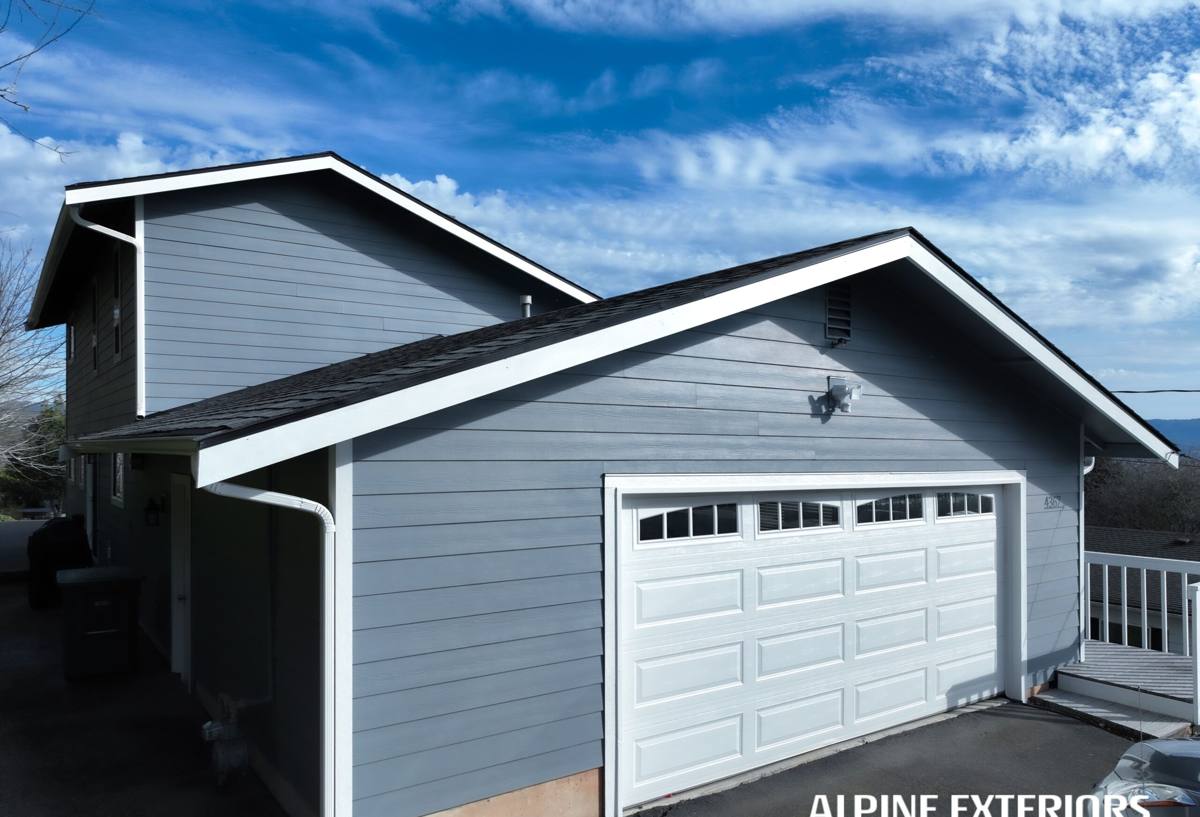
What Driving Rain and Salt Air Actually Do to a Roof
Two conditions define roofing in this part of Whatcom County, and both show up in Happy Valley:
Wind-Driven Rain
When rain comes in at an angle instead of straight down, it tests every lap, seam, and fastener on a roof. Standard installation tolerances that are fine in calmer climates can allow water to work sideways under shingles or through underlayment laps during a real Whatcom County storm. Correct installation uses tighter nailing patterns, proper shingle exposure, and self-adhered underlayment at the vulnerable points — eaves, valleys, and around any penetration — specifically because wind-driven rain doesn't behave like ordinary rainfall.
Salt Air and Moisture Load
Proximity to open water means a steady low level of moisture and mineral content in the air, even away from the immediate shoreline. Over years, that moisture accelerates corrosion on unprotected metal fasteners and flashing, and it keeps roof surfaces damp longer after every rain event. Fastener quality and flashing material matter more here than they would on a drier, inland roof.
The Long Moss Season
Shade from mature trees, persistent humidity, and mild temperatures give moss a long growing window in Sudden Valley and the surrounding area — often close to year-round on north-facing slopes. Moss isn't just cosmetic. Its root structure lifts shingle edges, holds moisture against the roof deck, and accelerates granule loss. A new roof installed without moss-resistant details will start hosting growth again within a couple of seasons.
What a Correct New Roof Installation Actually Involves
A new roof is only as good as the layers underneath the material you can see. The visible shingle or panel gets the attention, but the parts that actually keep a Happy Valley home dry are mostly hidden.
- Full tear-off and deck inspection — every layer of old roofing removed so the decking can be checked for rot, soft spots, or delamination before anything new goes down.
- Deck repair or replacement — any compromised sheathing replaced, not covered over, since a new roof over a weak deck fails from the inside.
- Ice-and-water shield at vulnerable zones — self-adhered membrane at eaves, valleys, and roof-to-wall transitions, where wind-driven rain and ice dams are most likely to force water backward.
- Synthetic underlayment across the field — a water-resistant, tear-resistant layer under the full roof, not just felt paper, to handle the extended wet season before final material goes on.
- Corrosion-resistant flashing and fasteners — metal rated for coastal-influenced air, at chimneys, skylights, dormers, and wall intersections.
- Balanced ventilation — intake at the eaves and exhaust at the ridge, sized correctly, so moisture-laden attic air actually moves instead of condensing against the underside of the deck.
- Moss-conscious detailing — proper shingle exposure and, where appropriate, zinc or copper strips near the ridge to discourage regrowth on shaded slopes.
Choosing a Roofing Material for This Neighborhood
There's no single "best" material for every home — it depends on the roof's pitch, how much shade it sits under, and the homeowner's budget and maintenance appetite. Here's how the common options actually perform under Happy Valley's conditions.
| Material | Performance in Wind-Driven Rain | Moss Resistance | Maintenance |
|---|---|---|---|
| Architectural asphalt shingle | Strong when installed with correct nailing and underlayment | Moderate — benefits from zinc strips and periodic cleaning | Low to moderate |
| Standing seam metal | Excellent — few seams for water to exploit | High — sheds moisture quickly, little surface for moss to root into | Low |
| Synthetic composite shingle | Strong, similar to asphalt when properly flashed | Moderate to high depending on product | Low to moderate |
| Cedar shake | Requires diligent maintenance to perform well in this climate | Low without regular treatment | High |
We don't push one product on every roof. On heavily shaded, north-facing sections common in wooded Sudden Valley lots, we're more likely to recommend metal or a moss-resistant shingle line. On more open, sun-exposed roofs, a well-installed architectural shingle often makes the most financial sense without sacrificing longevity. The honest answer depends on your specific roof, and we'll walk it with you before recommending anything.
Our Installation Process, Start to Finish
1. On-Site Roof Assessment
We inspect the existing roof, decking access points, attic ventilation, and any problem areas — moss buildup, soft spots, flashing wear — before quoting anything. This is also where we talk through material options based on your roof's exposure and shading.
2. Written Scope and Material Plan
You get a clear breakdown of what's being torn off, what underlayment and flashing will be used, and what material is going on, so there's no ambiguity about what "new roof" includes.
3. Tear-Off and Deck Inspection
Old roofing comes off down to the deck. Any rot or damage gets flagged and repaired before we move forward — not patched over.
4. Underlayment, Flashing, and Ventilation Install
This is where most of the roof's actual weather resistance is built. We install ice-and-water shield at the vulnerable zones, synthetic underlayment across the field, corrosion-resistant flashing, and correct intake/exhaust ventilation.
5. Material Installation
Shingles, panels, or shakes go on to manufacturer specifications, with attention to nailing pattern and exposure — the details that matter most in wind-driven rain.
6. Site Cleanup and Final Walkthrough
Magnetic sweep for stray fasteners, full debris cleanup, and a walkthrough so you know exactly what was done and what maintenance, if any, the new roof will need going forward.
Ventilation: The Step That Gets Skipped
A properly ventilated attic keeps warm, moist household air from condensing against the roof deck from underneath — a problem that's easy to miss because it happens on the side of the roof nobody looks at. In a climate as wet as Whatcom County's, poor ventilation can rot decking from the inside even while the shingles above look fine. We check and correct intake and exhaust balance as part of every new roof install, not as an upsell.
What Drives the Cost of a New Roof in Happy Valley
| Factor | Why It Matters Here |
|---|---|
| Roof pitch and access | Steeper roofs and limited driveway/staging access on wooded Sudden Valley lots add labor time |
| Deck condition | Rot from years of moisture exposure means more sheathing replacement, found only after tear-off |
| Material choice | Metal costs more upfront than asphalt but needs less long-term maintenance in this climate |
| Number of penetrations | Chimneys, skylights, and vents each need individual flashing, adding material and labor |
| Tree coverage | Heavily shaded roofs may warrant moss-resistant upgrades that add modest cost but reduce future maintenance |
We don't quote a roof over the phone or from a satellite photo. Every estimate follows an actual on-site look, because the factors above vary house to house even within the same neighborhood.
Questions Worth Asking Before You Hire
- Do you carry current liability insurance and WA state contractor licensing, and can you provide proof?
- Will you inspect and repair the decking, or just roof over whatever is underneath?
- What underlayment and flashing materials are included, not just the visible shingle or panel?
- How do you handle attic ventilation as part of the install, not as a separate line item after the fact?
- What's your plan for wind-driven rain protection at eaves, valleys, and wall transitions?
- Do you have experience with moss-prone, tree-shaded roofs specific to this area?
- What does the warranty cover — materials, workmanship, or both — and for how long?
Why Local Experience in Happy Valley Matters
A crew that mostly works drier, inland areas can still install a technically correct roof — but they're less likely to default to the details that matter most here: tighter fastener patterns for wind-driven rain, moss-conscious flashing choices, and ventilation sized for a genuinely wet climate. Working repeatedly in Sudden Valley and the surrounding Whatcom County neighborhoods means we've seen how roofs here actually age, not just how they're supposed to perform on paper. That shows up in the small decisions during installation that don't appear on an invoice but do show up in how the roof holds up ten years later.
If your Happy Valley roof is aging, showing moss, or due for replacement, we're happy to take a look and give you a straightforward, no-pressure estimate — including what we'd actually recommend for your specific roof, not a one-size-fits-all pitch. Use the form below to get started.