 Sudden Valley Exterior
 Metal Roofing on Yew Street: Built for How This Area Actually Weathers
Homes along Yew Street in Sudden Valley sit under a lot of tree cover, close to Lake Whatcom, and squarely inside Whatcom County's wet, mild, moss-friendly climate. That combination is easy on people and hard on roofs. Long stretches of drizzle, driving rain off the marine weather systems that move through this part of Washington, heavy shade, and needle and leaf litter all year add up to conditions that punish a roof that isn't detailed correctly — regardless of what material is on top of it. Metal roofing holds up well here when it's installed right, but "installed right" means something specific in a neighborhood like this one, not just a generic install.
This page is about metal roofing specifically for Yew Street and the immediate Sudden Valley area — what local homes actually need from a metal roof, what a correct installation involves, and why familiarity with this exact stretch of the county matters more than most homeowners expect.
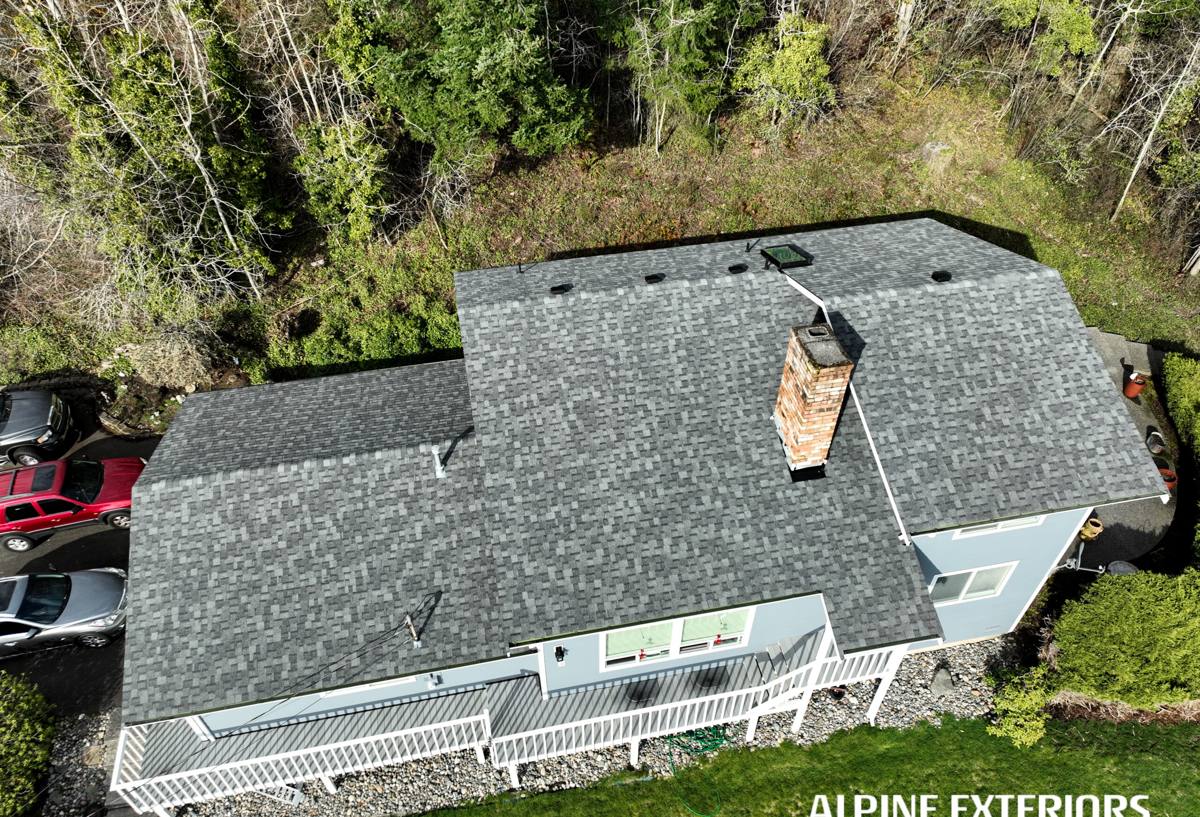
What This Climate Actually Does to a Roof
Three things drive almost every roofing problem we see in this part of Whatcom County:
- Driving rain. Wind-driven rain doesn't just fall straight down — it gets pushed sideways under shingle tabs, into open seams, and up under poorly lapped flashing. A roof here needs details that assume water will try to travel uphill at some point.
- A long moss season. Shade, moisture, and mild temperatures mean moss and algae have a long growing window — often most of the year on north-facing slopes and heavily treed lots. Moss holds water against the roof surface and, on the wrong material, works into seams and fasteners over time.
- Marine, moisture-laden air. The regional climate that moves through Whatcom County carries a lot of ambient moisture and, at times, salt-influenced air. That matters for fastener choice, flashing metal, and coating quality — cheap or mismatched hardware corrodes faster here than it would in a dry inland climate.
None of this makes metal roofing a bad fit — the opposite, actually. Metal sheds moss and standing water better than most other roofing materials and doesn't absorb water into a mat the way some products do. But it only delivers that advantage if the panel system, fasteners, and flashing are matched to this specific climate.
What a Correct Metal Roof Looks Like Here
Panel System
For Yew Street's tree-heavy, moisture-heavy lots, we lean toward standing seam or concealed-fastener panel systems over exposed-fastener panels wherever the budget allows. Concealed fasteners mean fewer penetration points for water to find over the life of the roof, which matters more on a shaded, damp lot than on a dry, open one.
Underlayment
A synthetic, high-temp underlayment rated for metal roofing is non-negotiable here — not felt paper, and not a generic underlayment sized for asphalt shingles. Given the driving rain this area gets, we also pay close attention to self-adhered underlayment at eaves, valleys, and any low-slope transitions, since those are the areas most likely to see wind-driven water back up under the panel edge.
Flashing and Fasteners
Flashing metal and fastener coatings need to match or outperform the panel material to avoid galvanic corrosion — mixing incompatible metals is one of the most common causes of premature staining and leaks we find on older roofs in this area. Given the marine-influenced moisture in the regional air, we favor fasteners and flashing rated for coastal or high-moisture exposure rather than standard-grade hardware.
Ventilation
Shaded, tree-covered lots trap moisture in the attic space more than open lots do. Proper intake and exhaust ventilation keeps condensation from forming on the underside of the metal panels — a slow, invisible problem that shows up years later as rust or rot in the decking if it's ignored during install.
Comparing Roofing Options for a Lot Like This
| Material | Moss/moisture behavior | Maintenance burden | Typical lifespan here |
|---|---|---|---|
| Standing seam metal | Sheds water and moss well; few seams for water to enter | Low — occasional debris clearing | 40-60+ years with correct install |
| Exposed-fastener metal | Good shedding, but fastener washers are a long-term wear point | Moderate — fastener inspection over time | 25-40 years, fastener-dependent |
| Asphalt composition | Absorbs moisture into the mat; moss roots into granules | Higher — regular moss treatment recommended | 15-25 years in this climate |
| Cedar shake | Prone to moisture retention and moss without diligent upkeep | High — ongoing treatment and inspection | Highly upkeep-dependent |
This isn't a knock on other materials — asphalt and cedar both have their place and their own honest trade-offs in cost and appearance. It's simply why metal is often the lower-maintenance long-term choice for shaded, moss-prone lots like the ones common around Sudden Valley.
What We Won't Do
We don't recommend exposed-fastener panel systems with mismatched or undersized washers on heavily shaded roofs, and we don't skip ice-and-water-style underlayment at valleys and eaves to save on materials. Both are places where cutting corners doesn't show up as a problem for a year or two — it shows up as a leak three or five years in, after the workmanship warranty from a less careful install has already run out.
Moss, Overhang, and the Maintenance Reality of This Neighborhood
Even a well-installed metal roof on a shaded Yew Street lot benefits from occasional attention:
- Clearing needle and leaf debris from valleys and gutter lines so water has a clear path off the roof
- Keeping overhanging branches trimmed back to reduce shade, debris load, and physical contact with the panels
- A visual check of flashing at chimneys, vents, and skylights after major wind or rain events
- Watching for streaking or moss growth on north-facing slopes, which usually signals a shaded spot worth keeping an eye on rather than an emergency
Metal roofing needs far less of this than shingle or shake, which is a big part of its appeal on lots like these — but "less maintenance" isn't "no maintenance," and we're upfront about that with every homeowner.
Our Process, Start to Finish
- On-site assessment. We walk the roof and attic, note slope, shading, existing moisture or moss damage, and any structural issues before we talk products.
- Honest scoping. We recommend a panel system and underlayment package based on your roof's exposure and your budget — not a one-size-fits-all package.
- Written estimate. Clear line items for materials, labor, tear-off (if applicable), and flashing detail work, so there are no surprise add-ons mid-project.
- Tear-off and deck inspection. If we're removing an existing roof, we check the decking underneath for rot or soft spots before anything new goes on.
- Underlayment and flashing first. This is where most long-term leaks are prevented or caused — we don't rush this stage.
- Panel installation. Installed to the manufacturer's spacing and fastening spec, with attention to valleys, penetrations, and transitions.
- Final walkthrough and cleanup. We review the finished roof with you and clear the site of debris and fasteners before we call the job done.
What Drives the Cost of a Metal Roof Here
| Factor | Why it matters on a lot like this |
|---|---|
| Panel type | Standing seam costs more upfront than exposed-fastener panels but reduces long-term fastener maintenance |
| Roof complexity | Valleys, dormers, and multiple slopes around tree-shaded homes add labor and flashing detail |
| Tear-off vs. overlay | Existing decking condition after years of moisture exposure often determines whether overlay is even an option |
| Access and tree cover | Limited access or overhanging trees can add setup time and require extra care during install |
| Underlayment package | Higher-spec underlayment at eaves and valleys costs more but matters more here than in a drier climate |
We don't publish blanket per-square pricing because these variables genuinely change the number from one Yew Street home to the next — but we'll walk you through exactly where your estimate's cost is coming from, line by line.
Why a Crew That Already Works This Area Matters
A roofing crew that's worked Yew Street and the broader Sudden Valley area knows the shade patterns, the typical roof pitches, and the moss and moisture behavior specific to lots along Lake Whatcom — not just generic Pacific Northwest roofing conditions. That familiarity shows up in small decisions: where we add extra underlayment without being asked, which valleys tend to collect debris, and how a given roof's tree cover will affect ventilation needs. It's the difference between a roof that's technically installed to code and one that's actually built for the way this specific neighborhood weathers.
Questions Worth Asking Any Contractor Before You Hire
- Do you use concealed-fastener or exposed-fastener panels, and why for my roof specifically?
- What underlayment spec do you use at eaves and valleys, and is it rated for metal roofing?
- How do you handle flashing at chimneys, skylights, and vent penetrations?
- What's your plan for attic ventilation on a shaded roof like mine?
- Are your fasteners and flashing rated for this region's moisture and marine-influenced air?
- What does your workmanship warranty cover, and for how long?
Get a Straight Answer on Your Roof
If you're on Yew Street or elsewhere in Sudden Valley and weighing metal roofing against a repair, an overlay, or another material entirely, we're happy to take a look and give you an honest read — including telling you if metal isn't the right call for your specific roof. There's no pressure and no obligation. Fill out the form below and we'll set up a time to come take a look.