 Sudden Valley Exterior
 Siding Built for Life Around Lake Whatcom
Homes around Lake Whatcom sit in one of the more demanding microclimates in Whatcom County. The lake holds humidity close to the ground long after a storm passes, tree cover keeps siding shaded and slow to dry, and the same marine air that rolls in off the Puget Sound corridor carries salt and moisture that settles on exterior walls year-round. Add Sudden Valley's tree-lined lots and steep, shaded north faces, and you get siding conditions that are noticeably tougher than what a home in an open, sunny subdivision deals with.
We install James Hardie fiber cement siding exclusively, and jobs around Lake Whatcom are a good example of why. This is a page about one service, done right, in one area: what a correct siding installation actually requires here, what we do differently because of the lake and the tree canopy, and what to expect if you're planning a project.
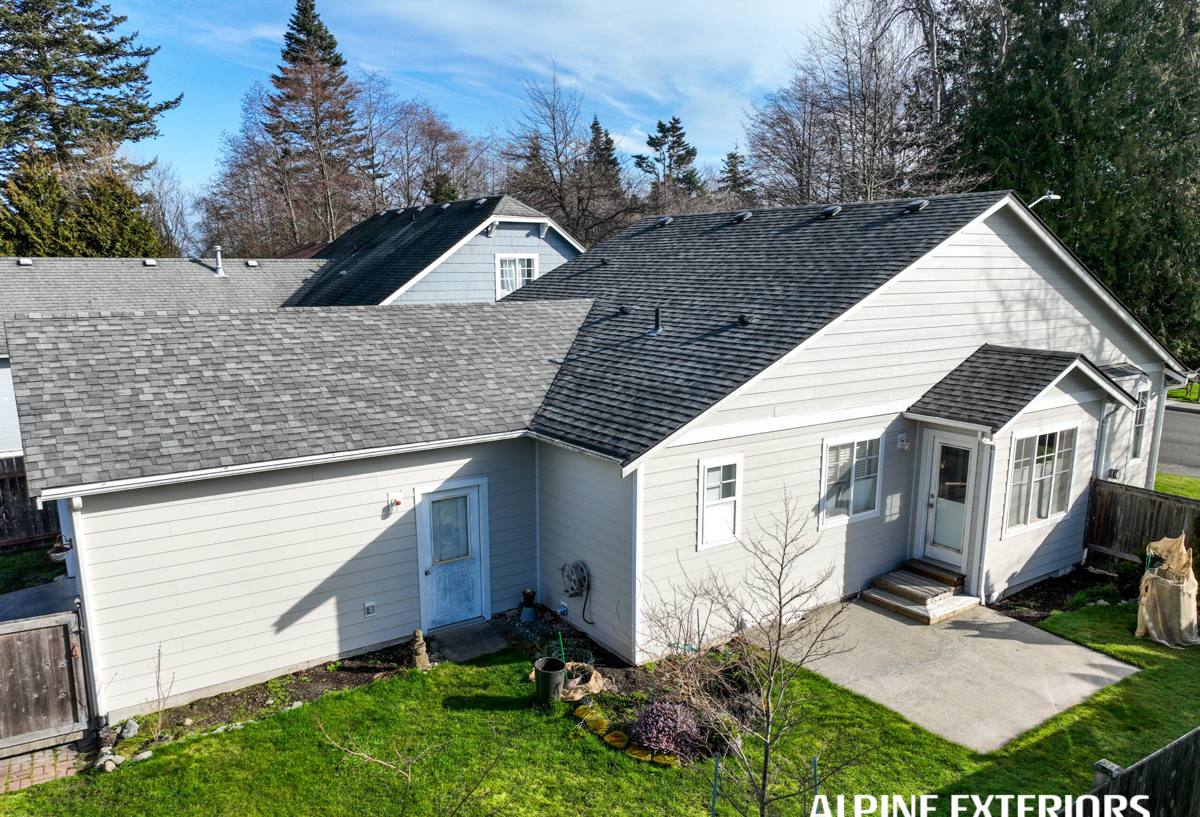
What Lake Whatcom's Climate Actually Does to Siding
Moisture That Doesn't Leave
Whatcom County gets a long, wet fall-through-spring season, and lakeside lots make it worse. Morning fog off the water, shade from mature trees, and limited direct sun on many lots mean siding stays damp longer after every rain. Materials that absorb water or swell when wet are working against the environment here, not with it.
Moss and Organic Growth
Shaded, moisture-retaining walls are exactly where moss, algae, and mildew take hold. On wood-based or wood-look products, sustained dampness combined with organic growth accelerates rot at seams, corners, and butt joints — the areas installers can't fully protect with paint or caulk alone.
Wind-Driven Rain and Salt-Bearing Air
Storms moving through the county push rain sideways into exposed wall faces, especially on lots with less tree buffer along the lake's open water. Combined with the salt content carried in from the broader Puget Sound air mass, siding here is exposed to more corrosive, more penetrating moisture than an inland, sheltered property would see.
Why We Install James Hardie Fiber Cement — Not the Alternatives
Fiber cement is not the only siding material on the market, and we're upfront about why we've standardized on one product line instead of offering several.
Vinyl
Vinyl is inexpensive and low-maintenance in mild, dry climates, and it has real advantages there. In a shaded, damp environment like Lake Whatcom, though, it doesn't hold up to the constant moisture cycling the same way — panels can warp with temperature swings, seams are a moisture entry point, and it doesn't offer the fire resistance a wildland-urban interface property benefits from.
LP SmartSide, Primed Spruce, and Cedar
Wood-based products, whether engineered or solid-sawn, perform well when they stay dry and are maintained on schedule. Around a lake with heavy shade and long damp stretches, that maintenance schedule gets demanding fast — recoating, caulking, and inspecting joints regularly is the only thing standing between these products and moisture damage. Cedar in particular looks excellent new but requires the most ongoing attention of any option here.
Why Hardie Fits This Property Type
James Hardie fiber cement is non-combustible, doesn't swell or rot from moisture the way wood-based products can, and its ColorPlus factory finish is baked on rather than field-applied, so it resists the fading and moss-friendly surface breakdown that shows up on painted wood siding in shaded, damp settings. Hardie's HZ5 product line is engineered specifically for climates with heavy moisture exposure — which describes a Lake Whatcom lot better than almost anywhere else in the county.
What a Correct Installation Involves Here
The siding material is only part of the equation. Around Lake Whatcom, the installation details matter as much as the product choice, because a poorly executed install defeats the advantages Hardie offers.
Drainage Plane and Rainscreen Gap
A weather-resistive barrier alone isn't enough on a shaded, damp lot. We install a proper drainage plane and, where the wall assembly calls for it, a rainscreen gap behind the siding so any moisture that does get past the surface has somewhere to go and can dry out instead of sitting against the sheathing.
Flashing at Every Penetration
Windows, doors, hose bibs, light fixtures, and deck ledgers are the most common points where water gets behind siding. Each one needs correctly lapped flashing — not just caulk — because caulk fails long before flashing does, and on a shaded wall that stays damp, a failed seal turns into rot much faster than it would on a wall that dries out quickly.
Clearance Off Grade and Hardscape
Hardie's own installation instructions call for a minimum clearance between the bottom of the siding and grade, roofing, decks, and paved surfaces. On lakeside and wooded lots where landscaping and grade changes are common, we check this clearance carefully — it's one of the most frequently ignored details in siding installs and one of the fastest ways to create a moisture problem at the bottom course.
Fastening and Joint Treatment
Fiber cement needs to be fastened per Hardie's specification — correct fastener type, spacing, and embedment — and butt joints need to be treated correctly, whether that's a factory-primed joint with sealant or a flashed joint per Hardie's detail. Done wrong, joints become the first failure point on a shaded wall.
| Wall Condition | Why It Matters at Lake Whatcom | What We Do |
|---|---|---|
| Shaded, tree-covered walls | Slower drying time after rain increases rot and moss risk | Rainscreen gap, correct clearances, breathable drainage plane |
| Window and door penetrations | Primary water entry points under wind-driven rain | Full flashing details, not caulk-only sealing |
| Bottom course near grade/deck | Splashback and standing moisture at the base | Hardie-spec clearance verified before install |
| North-facing and lake-facing walls | Least sun exposure, highest moss and mildew risk | ColorPlus finish resists surface growth better than field-painted wood |
Our Process for a Lake Whatcom Siding Install
- On-site assessment — we walk the property, note shade patterns, drainage, existing moisture or rot damage, and grade clearance issues before anything is quoted.
- Sheathing and moisture check — once old siding is removed, we inspect sheathing condition. Lakeside homes occasionally have hidden moisture damage from prior siding that didn't manage water correctly, and we address it before closing the wall back up.
- Weather barrier and drainage plane installation — installed per manufacturer spec, with attention to laps and seams.
- Flashing at all penetrations — windows, doors, and any wall-mounted fixtures.
- Hardie panel or lap siding installation — fastened and jointed to spec, with correct clearances maintained throughout.
- Final walkthrough — we review the completed install with the homeowner and confirm everything meets both Hardie's installation requirements and our own standard.
Why Local Experience Around the Lake Matters
A crew that hasn't worked lakeside, tree-shaded lots before can miss the details that matter most in this setting — treating a Sudden Valley property the same as an open, sunny lot in town. We've worked properties around the lake enough to know where moss builds up first, which wall orientations dry slowest, and where past installations in this area have failed. That local pattern recognition is part of what a correct install depends on — it's not something you get from a general spec sheet alone.
Signs Your Current Siding Is Losing the Fight
- Moss or dark streaking that returns shortly after cleaning, especially on shaded or lake-facing walls
- Soft spots, bubbling paint, or visible warping near the bottom courses or around windows
- Gaps opening at butt joints or corner trim
- A musty smell near exterior walls inside the home, which can indicate moisture has reached the sheathing
- Caulk that's cracked or missing at window and door trim
What Affects the Cost of a Siding Installation Here
Every property is different, but a few factors consistently move the price on Lake Whatcom and Sudden Valley homes: the amount of existing siding removal and sheathing repair needed, the home's wall height and roofline complexity (multi-story lake-view homes often have more cut lines and detailing), how much flashing and trim work the window and door count requires, and whether there's hidden moisture damage discovered once the old siding comes off. We walk through all of this on-site before giving a number, rather than quoting off a rough square footage guess.
Get a Straight Answer for Your Property
If your Lake Whatcom or Sudden Valley home has siding that's showing its age, or you're planning ahead for a project, we're happy to come take a look and give you an honest read on what your walls actually need. There's no pressure and no obligation — just a straightforward assessment from a crew that installs James Hardie fiber cement siding and knows this lake. Request a free estimate using the form below.