 Sudden Valley Exterior
 Building Decks for Lake Whatcom, Not Just Any Backyard
A deck built at Lake Whatcom has to do more work than a deck built in a dry inland suburb. Homes around Sudden Valley sit close to the water, often on sloped lots with tree cover, and Western Washington's marine climate reaches all the way into Whatcom County. Salt-tinged air drifting in from Bellingham Bay, driving rain off the water, and a moss season that can run eight or nine months out of the year all put steady pressure on any structure that lives outdoors. A deck that isn't detailed for that environment will show it within a few seasons — soft spots, black staining, slippery boards, and hardware that rusts long before the wood itself gives out.
This page covers custom deck building and replacement specifically for the Lake Whatcom side of Sudden Valley — what the site conditions demand, what a correctly built deck actually involves, and how we run the job from first call to final walkthrough.
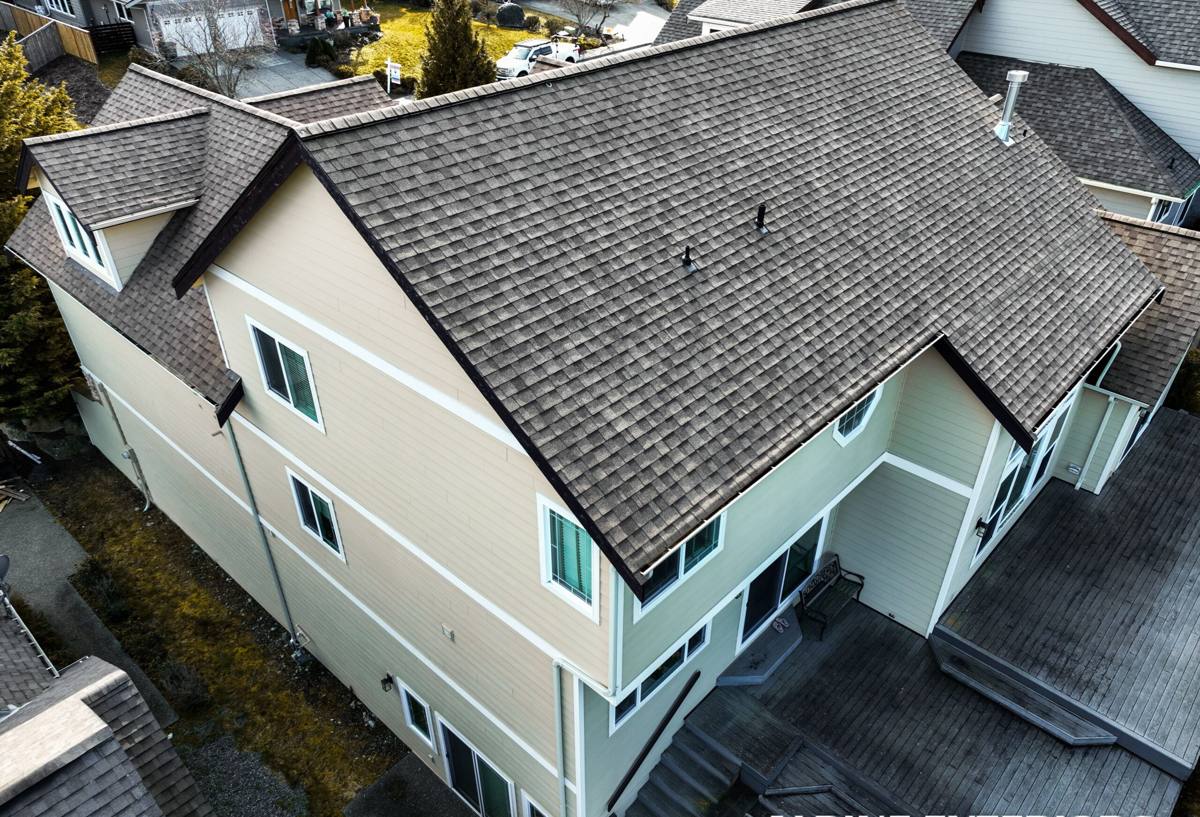
What Lake Whatcom Properties Actually Need From a Deck
Three things drive most of our decisions on lake-side jobs here:
Slope and Elevation
Many lots around the lake step down toward the water, which means decks are often multi-level or built with taller posts and footings than a flat-lot deck would need. Taller structures need more attention to bracing and post connections — this isn't a place to under-engineer the substructure to save a few boards.
Shade and Moisture Retention
Mature tree cover is common around Sudden Valley, and shade plus proximity to the lake means decking surfaces stay damp longer after rain than they would in an open, sunny yard. That damp cycle is exactly what feeds moss, algae, and eventually rot if the deck isn't ventilated and drained properly underneath.
Year-Round Use Expectations
A lot of homeowners here want a deck that's usable for more than three dry months — for grilling, morning coffee, watching the water. That means surface selection and drainage matter as much as looks.
Choosing the Right Decking Material for This Site
There's no single "best" decking material — the right call depends on how much maintenance a homeowner actually wants to do, and how much shade and moisture the specific lot gets. Here's how the common options compare for a Lake Whatcom setting:
| Material | How It Handles This Climate | Maintenance Reality |
|---|---|---|
| Pressure-treated lumber | Holds up structurally but takes on moisture readily and grows moss fast in shaded spots without regular cleaning and sealing | Needs cleaning and re-sealing roughly every 1-2 years to keep moss and graying in check |
| Cedar | Naturally more rot- and insect-resistant, ages well in a marine climate, but is a softer wood that shows wear on high-traffic boards | Periodic sealing recommended to preserve color and resist moisture |
| Composite decking | Doesn't absorb moisture the way wood does, so it resists rot, but it still needs to be cleaned — surface algae and moss will grow on any material in a shaded, damp spot | Low upkeep, but not maintenance-free; periodic washing is still required |
| PVC / capped polymer | Most moisture-resistant option, holds up well against driving rain and prolonged dampness | Lowest maintenance of the common options, higher upfront material cost |
We'll walk through these trade-offs honestly during the estimate rather than pushing whatever has the best margin — the right material depends on your lot's sun exposure, your budget, and how much upkeep you're realistically willing to do.
What a Correctly Built Deck Involves
A deck is only as good as what's underneath it. On lake-side and sloped lots especially, we don't cut corners on the parts nobody sees after the ribbon-cutting:
- Footings sized for the slope and soil — a deck on a sloped Sudden Valley lot often needs deeper or additional footings compared to a flat-lot build.
- Proper ledger board flashing — where the deck attaches to the house is the single most common source of hidden rot; correct flashing keeps water from working behind the siding.
- Joist spacing and blocking matched to the decking material chosen, since composite and wood have different span requirements.
- Airflow underneath the deck — low, enclosed decks trap moisture and accelerate rot; we detail skirting and clearance to keep air moving.
- Fasteners and hardware rated for wet, coastal-influenced air — standard hardware corrodes faster here than it would inland; we use connectors suited to the moisture exposure.
- Drainage planning so water sheds off the deck and away from the foundation instead of pooling against the house.
Skipping any one of these is how a deck ends up needing major repair in five years instead of lasting for decades.
Moss, Algae, and the Long Wet Season
Whatcom County's wet season is long, and a lake-adjacent, tree-shaded lot in Sudden Valley sees more of it on the deck surface than most yards. Moss and algae aren't just a cosmetic problem — they hold moisture against the decking material and make the surface genuinely slippery, which matters on stairs and multi-level decks especially.
Two things reduce how much of a problem this becomes over time:
Surface Choice and Spacing
Grooved or heavily textured boards trap more debris and moisture than smooth-surfaced boards. Proper board spacing during installation also helps water drain through rather than sitting on top.
Site Grading and Sun Access
Where it's possible without removing healthy trees, orienting or sizing a deck to capture more available sun exposure meaningfully cuts down on moss growth. We'll flag this during the site visit if it applies to your lot.
Our Process for Lake Whatcom Deck Projects
- Site visit — we look at slope, shade, existing structure (if replacing), and how the deck will connect to the house.
- Honest scope and estimate — a written estimate covering material options, structural needs specific to your lot, and a realistic timeline.
- Permitting — most new decks and many replacements in Whatcom County require a permit; we handle that process rather than leaving it to the homeowner.
- Build — footings and substructure first, inspected before decking goes down, then surface, railing, and stairs.
- Final walkthrough — we go over the finished deck with you, including basic maintenance guidance specific to the material you chose.
Why a Crew That Already Works Lake Whatcom Matters
Sudden Valley's lake-adjacent lots aren't generic building sites. A crew that hasn't worked this specific area can miss the slope-driven footing needs, underestimate how much moisture a shaded lakeside lot holds onto, or spec hardware that isn't suited to the marine-influenced air. We work in this community regularly, which means we already know the kinds of soil, access, and drainage issues that come up on these lots before we ever start digging footings — and we're not guessing at what actually holds up here versus what looks good in a showroom.
What Affects the Cost of a Custom Deck Here
| Factor | Why It Moves the Price |
|---|---|
| Deck height and slope of the lot | Taller decks and steeper sites need more substructure, footings, and bracing |
| Decking material | Pressure-treated, cedar, composite, and PVC span a wide cost range; composite and PVC cost more upfront but less in upkeep |
| Railing type | Wood, metal cable, and glass railings vary significantly in material and labor cost |
| Size and number of levels | Multi-level decks require more framing, more stairs, and more flashing detail than a single flat deck |
| Site access | Sloped, tree-covered, or lake-adjacent lots can require more careful equipment access and hand-digging |
| Permitting requirements | Whatcom County permit and inspection requirements add time and cost that's easy to overlook when budgeting |
We give a broad range up front and narrow it down once we've actually seen the site — nobody should be handed a firm number over the phone without a look at the lot.
Signs Your Existing Deck Needs Attention
- Soft or spongy spots anywhere on the decking surface
- Persistent black staining or thick moss that returns quickly after cleaning
- Rust streaking around fasteners or metal connectors
- Gaps or separation where the deck meets the house
- Railings or stair stringers that feel loose or flex under weight
- Standing water that doesn't drain within a few hours of rain stopping
Any one of these is worth a look before it turns into a structural repair instead of a maintenance fix.
If you're planning a new deck or need to replace one that's not holding up to the Lake Whatcom weather, we're glad to come take a look. Estimates are free and there's no pressure — use the form below to get started.