 Sudden Valley Exterior
 Roofing Built for Lake Whatcom, Not Just "Whatcom County"
Lake Whatcom sits in its own microclimate inside an already wet corner of the state. The lake itself moderates temperature swings but adds humidity, the surrounding tree canopy keeps large sections of every roof in shade most of the day, and the terrain funnels weather off the water onto rooflines that rarely get a chance to fully dry out between storms. Add in the marine-influenced air that moves through this part of Whatcom County and you get a combination that's harder on asphalt shingles than most homeowners realize until they're dealing with premature granule loss, soft decking, or moss creeping up from the eaves.
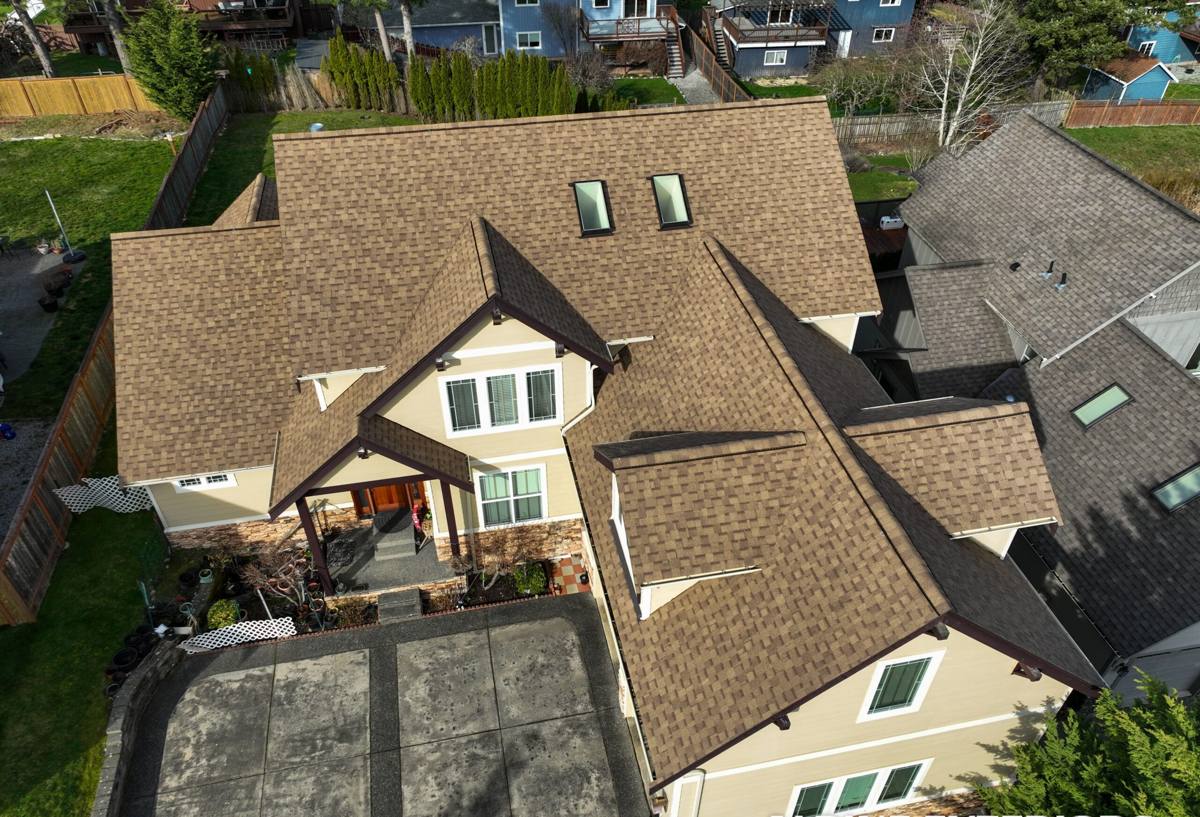
A correct asphalt shingle roof for a Lake Whatcom home isn't just "shingles nailed to plywood." It's a system — underlayment, flashing, ventilation, and shingle selection — chosen specifically to handle sustained moisture exposure, shaded drying conditions, and driving rain that doesn't always fall straight down. This page covers what that actually looks like, and what to expect if you're planning a repair, re-roof, or new installation in the Sudden Valley / Lake Whatcom area.
What the Local Climate Actually Does to a Roof
Persistent Moisture
Long stretches of overcast, drizzly weather mean shingles near the lake often stay damp longer than the same product would on a roof further inland or in full sun. That extended moisture contact is what accelerates moss and algae growth, softens exposed felt or synthetic underlayment at seams, and slowly degrades the adhesive sealant strips that hold shingle tabs down against wind.
Driving Rain and Wind-Driven Water
Storms coming off the water don't always drop rain straight down — wind pushes it sideways under shingle tabs, into exposed nail heads, and along valleys and flashing lines. A roof that would perform fine in calm rain can still leak if flashing details and shingle overlap weren't done with wind-driven rain specifically in mind.
Shade and a Long Moss Season
Mature tree cover around much of Sudden Valley means many roofs get partial or heavy shade for most of the day. Shaded, moisture-retentive roof sections are exactly where moss and algae establish first, and once established they hold water against the shingle surface and work into granule loss and eventually the decking underneath.
What a Correct Asphalt Shingle Installation Involves Here
Given those conditions, a properly done roof on a Lake Whatcom home should include the following — not as upsells, but as the baseline for the climate:
- A synthetic or high-quality felt underlayment installed with proper overlap and sealed fastener penetrations, not just stapled down
- Ice-and-water shield or self-adhering membrane at eaves, valleys, and around penetrations where wind-driven rain and standing moisture are most likely
- Step flashing and counter-flashing at every wall intersection and chimney, not just a bead of sealant over old flashing
- Balanced intake and exhaust ventilation so the attic can actually dry out between wet periods instead of trapping moisture against the deck from underneath
- Shingles with algae-resistant (AR) granules on any section that sits in shade for a meaningful part of the day
- Correct nailing pattern and nail placement — high-wind and high-moisture climates are unforgiving of shortcuts here
Skip any one of these and the roof may still look fine for a year or two, but the failures that show up in wet, shaded coastal climates almost always trace back to one of these steps being rushed or skipped.
Choosing the Right Shingle for This Environment
Not every asphalt shingle product is a good fit for a shaded, moisture-heavy roof near the lake. The table below outlines the practical trade-offs we walk homeowners through.
| Shingle Type | Typical Lifespan Here | How It Handles Moisture & Shade | Best Fit |
|---|---|---|---|
| 3-tab, standard granule | 15–20 years | Lower moss/algae resistance; needs more frequent cleaning in shaded sections | Budget re-roofs, outbuildings, sun-exposed roof planes |
| Architectural (laminate), standard | 25–30 years | Thicker profile sheds water better, but still benefits from AR granules in shade | Most Lake Whatcom homes |
| Architectural, algae-resistant (AR) | 25–30 years | Copper- or zinc-infused granules actively resist algae/moss growth in shaded, damp areas | Homes with heavy tree canopy or north-facing roof planes |
| Premium/designer laminate | 30+ years | Best wind and moisture performance, often paired with longer manufacturer warranties | Homes where longevity and reduced maintenance outweigh upfront cost |
For most properties around Sudden Valley, we lean toward algae-resistant architectural shingles as the practical middle ground — the AR granules specifically address the moss and algae problem this area is known for, without pushing the budget into premium-tier territory unless a homeowner wants that longer runway.
Our Process for a Lake Whatcom Roof
1. On-Site Assessment
We walk the roof (not just look from the ground) and check decking condition, existing ventilation, flashing details, and how much shade and moss exposure each roof plane actually gets — shade patterns vary a lot lot by lot around the lake.
2. Straightforward Scope and Options
We explain what's actually needed versus what's optional, including shingle-tier trade-offs like the ones above, so the decision is yours to make with real information rather than a generic package.
3. Tear-Off and Deck Inspection
Old roofing comes off down to the deck so we can catch soft or water-damaged sheathing before it's covered up again — this is the step that gets skipped on rushed jobs and causes problems years later.
4. Underlayment, Flashing, and Ventilation First
These get installed and inspected before a single shingle goes down, because they're the parts of the system doing the real work against wind-driven rain and trapped attic moisture.
5. Shingle Installation to Manufacturer Spec
Correct nail placement, exposure, and overlap — done to the manufacturer's published specifications, which is also what keeps any product warranty valid.
6. Cleanup and Walkthrough
Full site cleanup including magnetic sweep for nails, followed by a walkthrough so you know what was done and what to watch for going forward.
Signs a Lake Whatcom Roof Needs Attention
Because so much of this area's roof damage develops gradually under moss and shade rather than showing up as an obvious leak right away, it's worth checking for these periodically:
- Moss or dark algae streaking on shaded roof sections, especially north-facing planes
- Granules collecting in gutters or at downspout outlets
- Shingle edges curling, lifting, or looking "fuzzy" at the tab edges
- Soft or spongy feel when walking the roof (a sign of deck moisture damage)
- Daylight visible through the attic roof deck, or damp insulation below it
- Flashing that's rusted, lifted, or has visible gaps around chimneys and walls
- Interior ceiling stains, especially after a wind-driven rain event
Any one of these on its own isn't necessarily an emergency, but catching them early is almost always cheaper than waiting for a leak to show up inside the house.
Cost Factors for This Area
Pricing for asphalt shingle roofing varies by roof size, pitch, tear-off complexity, and shingle tier chosen — we won't quote a number without seeing the roof — but these are the factors that most commonly move the price up or down on Lake Whatcom homes specifically:
| Factor | Why It Matters Here |
|---|---|
| Roof pitch and access | Steeper roofs and limited lakeside or wooded-lot access add labor and safety-equipment time |
| Tree canopy overhang | May require trimming coordination before work starts, and affects how much of the roof needs AR shingles |
| Existing deck condition | Moisture-damaged sheathing found during tear-off adds material and labor to replace |
| Number of valleys, penetrations, and wall intersections | Each one needs individual flashing work, which is labor-intensive regardless of shingle choice |
| Shingle tier | Standard vs. algae-resistant vs. premium laminate changes material cost and long-term maintenance |
| Ventilation upgrades | Older homes often need intake or exhaust vent additions to meet current moisture-management standards |
Why a Crew That Already Works Lake Whatcom Matters
A roofing crew that regularly works Sudden Valley and the immediate Lake Whatcom shoreline already knows which roof orientations around the lake hold moss the longest, how tree cover typically affects a given lot, and what flashing details tend to fail first on homes exposed to wind coming off the water. That's the kind of pattern recognition that only comes from doing the work here repeatedly — not from a general knowledge of asphalt shingle roofing applied to any climate.
It also means faster response for storm damage or emergency tarping, since we're not traveling in from outside the area, and a better sense of realistic timelines around here given how weather windows for tear-off work can be tighter near the lake than in drier parts of Whatcom County.
Maintenance That Extends the Life of Your Roof
Between installations, a few habits go a long way in this climate:
- Keep gutters and downspouts clear so water isn't backing up under the eave line
- Have overhanging branches trimmed back to reduce shade and debris buildup on the roof surface
- Address moss growth early with proper roof-safe treatment rather than pressure washing, which can strip granules
- Schedule a visual inspection after major windstorms, not just on a fixed annual schedule
- Check attic ventilation isn't blocked by insulation, especially after any insulation upgrades
If you're weighing a repair, a full re-roof, or just want an honest read on where your roof stands, we're glad to take a look. Fill out the form below for a free, no-pressure estimate.