 Sudden Valley Exterior
 Roofing Built for Alger's Weather, Not a Generic Climate
Homes in the Alger area near Sudden Valley sit in a corner of Whatcom County where the roof works harder than most homeowners realize. It isn't one big storm that wears a roof out here — it's the steady combination of salt-tinged air off the water, driving rain that comes in sideways during fall and winter fronts, and a moss season that can stretch from October well into spring. Asphalt shingle roofing that's installed correctly for this specific mix of conditions will hold up. Asphalt shingle roofing installed to a generic spec — the kind used in drier, calmer parts of the country — tends to show its age early, usually in ways that are preventable.
This page is about one job in one area: asphalt shingle roof installation and replacement for Alger-area homes. We're not going to give you a broad overview of every roofing material on the market. We're going to walk through what actually matters for a shingle roof going on a house in this part of Whatcom County, what a correct installation looks like, and what our process is when you bring us in.
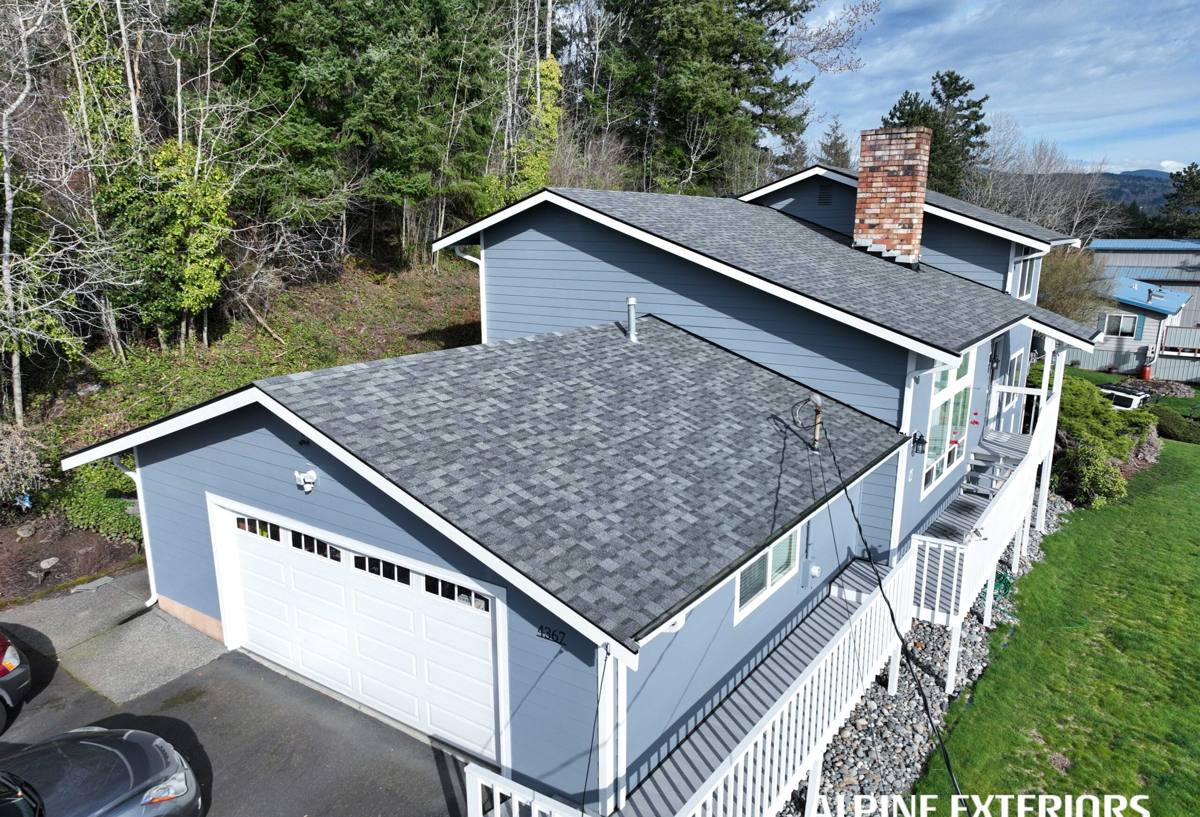
What Salt Air, Rain, and Moss Actually Do to a Shingle Roof
Each of these three factors stresses a roof differently, and a roof that only accounts for one of them will still fail against the other two.
Salt Air and Moisture
Proximity to open water means airborne salt and near-constant moisture in the air, even on days without rain. Over time this accelerates corrosion on any exposed metal — nail heads, flashing, drip edge, and vent stacks — faster than it would inland. Fasteners and flashing that aren't rated for a coastal-adjacent environment corrode from the inside of the roof system, which is exactly the kind of failure you don't see until water is already getting into the deck.
Driving, Wind-Driven Rain
Rain that falls straight down is easy for any roof to shed. Rain that's pushed sideways by wind works its way up under shingle tabs, around chimney and skylight flashing, and into any gap in the underlayment. A roof detailed for this region needs extra attention at every transition point — valleys, wall intersections, penetrations — because that's where wind-driven rain finds its way in first.
Extended Moss Season
Whatcom County's damp, shaded conditions give moss and algae a long runway to establish themselves, especially on north-facing slopes and under tree cover. Moss doesn't just look bad — it holds moisture against the shingle surface, works its root structure under shingle edges, and can lift tabs enough to let water underneath. A roof that isn't given some resistance to this from day one will need moss remediation far sooner than it should.
What a Correctly Installed Asphalt Shingle Roof Involves
A shingle roof is a system, not a single layer of material. Skipping or shortcutting any layer shows up later as a leak, premature wear, or a warranty claim that gets denied because the installation didn't meet manufacturer specifications.
Deck Inspection and Ventilation
Before any new material goes down, the roof deck needs to be checked for soft spots, delamination, or rot — problems that are common on older Whatcom County homes where a previous roof trapped moisture against the sheathing. Attic ventilation gets evaluated at the same time. Poor ventilation traps warm, moist air against the underside of the deck, which accelerates rot and can void a shingle manufacturer's warranty regardless of how well the shingles themselves were installed.
Underlayment and Water Barrier
Given how much wind-driven rain this area sees, underlayment choice matters more here than it would in a drier climate. Ice-and-water shield membrane at eaves, valleys, and around every penetration gives the roof a second line of defense if wind ever forces water up under the shingles themselves. This isn't an upgrade we push to run up a bid — it's a standard part of doing the job right in this climate.
Flashing and Water Management
Flashing is where most roof leaks actually start, not in the open field of shingles. Chimneys, skylights, sidewalls, and valleys all need flashing that's sized, lapped, and fastened correctly — and given the salt air here, flashing material and fasteners need to be corrosion-resistant, not just whatever is cheapest at the supply house.
Shingle Installation and Fastening
Nail placement, nail count per shingle, and exposure alignment all affect wind resistance and warranty validity. In an area that sees real wind events, under-nailing is one of the most common causes of shingles blowing off in a storm that a properly fastened roof would have shrugged off.
Choosing a Shingle for Alger's Conditions
Not every asphalt shingle product performs the same way once it's dealing with sustained damp, salt-air exposure, and shaded moss-prone roof planes. The table below breaks down the general categories homeowners in this area typically choose between.
| Shingle Type | Typical Lifespan Here | Best Suited For | Trade-Offs |
|---|---|---|---|
| Standard 3-tab | Shorter end of the range | Budget-focused projects, secondary structures | Less wind resistance, wears faster under this area's moisture load |
| Architectural (laminated) | Mid-to-long range | Most primary homes in the area | Higher upfront cost than 3-tab, but far better wind and weather performance |
| Algae-resistant architectural | Long range, holds appearance longer | Shaded lots, north-facing roof planes, homes near tree cover | Slight cost premium; the best match for this region's moss and algae pressure |
| Impact-rated architectural | Long range | Homes wanting added durability against debris and hail | Higher cost, sometimes offset by insurance discounts depending on your carrier |
For most Alger-area homes, an algae-resistant architectural shingle is the right balance of upfront cost, appearance, and how long it will actually look good given the moss season this region deals with. We'll walk through the specific product lines and warranty terms during your estimate rather than pushing one option before we've seen your roof.
Our Process, Start to Finish
Every job follows the same sequence, whether it's a full tear-off or a smaller section replacement.
1. On-Site Assessment
We inspect the existing roof, deck condition, ventilation, and any moss or algae growth in person before quoting anything. This is also when we identify problem areas specific to your property — a shaded north slope, a valley that's clearly been trapping debris, flashing that's already showing corrosion.
2. Scope and Estimate
You get a written scope covering material selection, underlayment and flashing details, and a clear price — no vague allowances that turn into surprise add-ons mid-project.
3. Material Staging and Protection
Landscaping, siding, and gutters get protected before tear-off starts. Materials are staged to minimize how long your roof deck is exposed to weather, which matters in an area where rain can move in with little warning.
4. Tear-Off and Deck Repair
Old material comes off down to the deck, any damaged sheathing gets replaced (not covered over), and ventilation gets corrected if it's inadequate.
5. Underlayment, Flashing, and Shingle Installation
Water barrier goes down first at all vulnerable points, followed by properly lapped flashing, then shingles installed to manufacturer nailing and exposure specifications.
6. Final Walkthrough and Cleanup
We walk the finished roof and the property with you, including a magnetic sweep for stray fasteners, before calling the job complete.
Moss and Algae Maintenance That Actually Helps
A good installation reduces moss and algae pressure, but this climate means ongoing homeowner maintenance still matters. Here's what's worth doing on a shingle roof in the Alger area:
- Keep overhanging branches trimmed back so roof planes get more sun and airflow, especially on north-facing slopes
- Clear gutters and valleys of debris at least twice a year — trapped organic matter is what gives moss a foothold
- Have visible moss growth removed using methods that don't damage the granule surface, rather than pressure washing shingles
- Watch for algae streaking, which is cosmetic on its own but often signals the roof is holding moisture longer than it should
- Check flashing and exposed fasteners periodically for early corrosion, given the salt air in this area
- Don't ignore small leaks around chimneys, skylights, or valleys — these are almost always flashing issues that get worse, not better, over time
What Drives Roofing Costs in This Area
Pricing on a shingle roof depends on more than square footage. These are the factors that most affect cost on Alger-area homes specifically.
| Factor | Why It Matters Here |
|---|---|
| Roof pitch and access | Steeper or harder-to-access roofs take longer and require more safety setup |
| Deck condition | Moisture-related sheathing repair is more common on older roofs in this climate |
| Number of penetrations | Each chimney, skylight, and vent needs individual flashing work |
| Shingle grade selected | Algae-resistant and impact-rated products cost more but last longer under local conditions |
| Ventilation upgrades | Correcting inadequate attic ventilation adds labor but protects the new roof's warranty |
| Tear-off layers | Removing multiple existing layers of roofing takes more labor than a single-layer tear-off |
We'll give you an itemized estimate so you can see exactly what's driving the number, rather than a single lump figure.
Why a Crew That Already Works Alger Matters
Roofing crews that work this specific area regularly develop a feel for which details actually matter here — where moss tends to establish first on a given roof orientation, how much extra attention flashing needs given the salt air, and what underlayment setup holds up against the wind-driven rain this part of Whatcom County sees each winter. That's different from general roofing experience. A crew that's worked Alger and Sudden Valley roofs knows what tends to fail here and builds against it from the start, rather than learning it on your roof.
Being local also means we're not disappearing after the job is done. If a question comes up during the first heavy storm season after your install, you're calling a crew that's still working in your neighborhood, not chasing down a company that was only in town for one project.
Signs Your Current Roof Needs Attention
If you're not sure whether your roof needs a look, these are common warning signs on shingle roofs in this area:
- Granules collecting in gutters or at downspout outlets
- Visible moss or thick algae staining, especially on shaded slopes
- Curling, cracked, or missing shingle tabs
- Soft spots when walking the roof, or sagging visible from the ground
- Water stains on interior ceilings, particularly near chimneys or skylights
- Daylight visible through the attic roof deck
Any one of these is worth a professional look before it turns into a deck repair or an interior water damage issue.
If you're weighing a roof replacement or just want an honest read on how much life is left in your current shingles, we're happy to take a look. Use the form below to request a free, no-pressure estimate for your Alger-area home.