 Sudden Valley Exterior
 Why Metal Roofing Makes Sense for Homes in the Acme Area
Homes in and around Acme sit under heavy tree cover, deal with long stretches of damp weather, and rarely get more than a few weeks of dry sun in a row. That combination is hard on roofing. Shade keeps surfaces wet longer after every rain, needles and debris collect in valleys and behind chimneys, and the moisture just sits there. Asphalt shingles in this kind of setting tend to grow moss, hold algae stains, and lose granules faster than the same product would on a more exposed, sun-drenched roof.
Metal roofing was built for exactly this problem. A properly installed metal roof sheds water fast, doesn't give moss the rough, porous surface it needs to take hold, and holds up to decades of Whatcom County's driving rain without the slow degradation shingles go through. That's the case for metal here — not because it's trendy, but because it matches what this climate actually does to a roof over time.
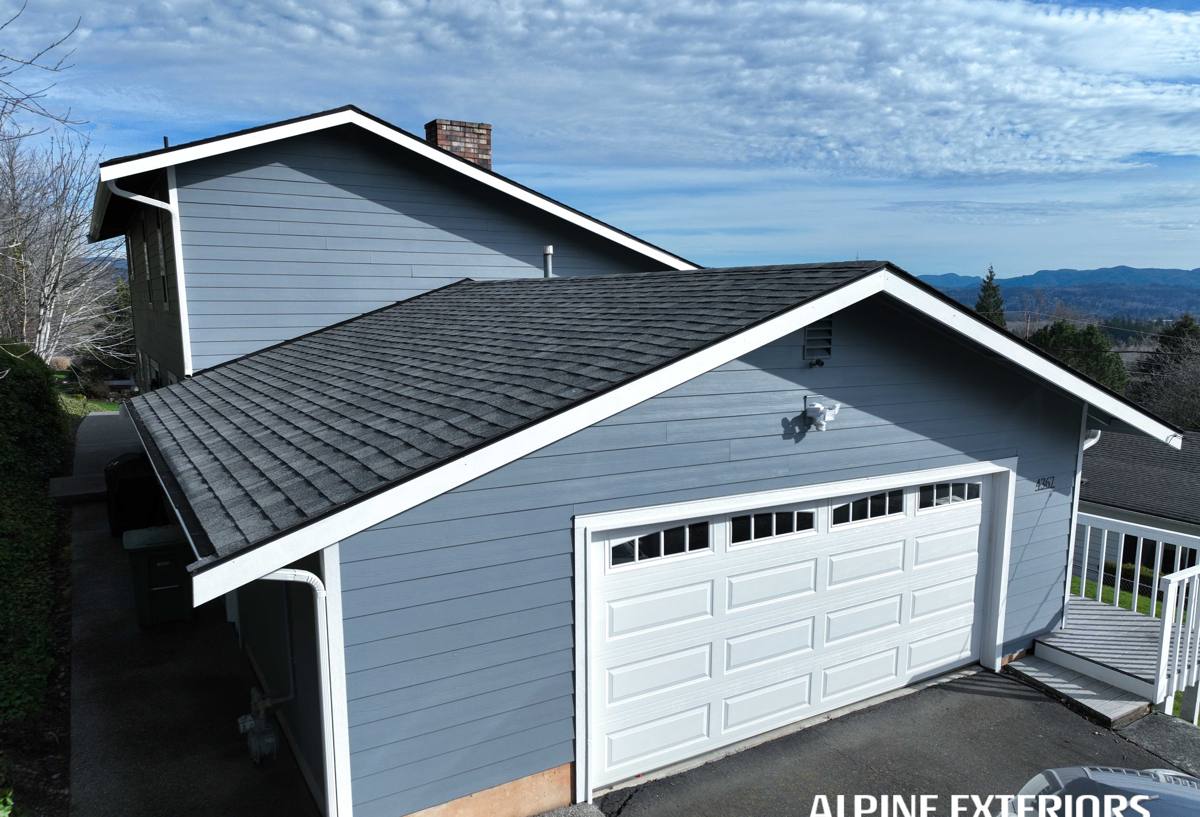
What Acme's Climate Actually Does to a Roof
A few things define roofing conditions in this part of Whatcom County, and they compound on each other:
- Persistent moisture: long wet seasons mean roofs rarely get a full dry-out period, so any weak point in the roofing system stays damp instead of drying and recovering.
- Tree cover and shade: homes tucked among fir and cedar get less direct sun, which slows drying and creates ideal conditions for moss and moss to establish on rougher roofing surfaces.
- Wind-driven rain: storms off the Salish Sea and the broader Puget Sound region push rain sideways under poorly lapped flashing and undersized underlayment, not just straight down onto the field of the roof.
- Salt-influenced marine air: even set back from open water, this region's air carries enough marine moisture and salt content to accelerate corrosion on unprotected or poorly coated metal fasteners and trim.
None of these conditions are unique to Acme, but the combination of shade, moisture, and marine-influenced air is what separates a "generic" roofing job from one that's actually built for this specific area.
What a Correct Metal Roof Install Requires Here
Underlayment and Water Management
Given how long Acme roofs stay wet, we don't treat underlayment as an afterthought. A synthetic, high-temperature underlayment paired with self-adhered ice-and-water membrane at eaves, valleys, and any low-slope transitions gives the roof a real second line of defense if wind-driven rain ever gets past the metal panels themselves — which it can, at any roof, during a bad enough storm.
Fastener and Flashing Choices
Every fastener and piece of flashing on a metal roof is a potential weak point if it's the wrong material or poorly installed. In a marine-influenced climate, mismatched metals (steel fasteners in an aluminum panel, for example) set up galvanic corrosion that eats away at the connection over years. We match fastener and flashing metal to the panel system and use factory-matched sealant washers, not generic hardware-store screws.
Ventilation
Metal roofs perform differently than shingles when it comes to attic moisture — they don't "breathe" the same way, and condensation on the underside of cold metal in an unventilated attic can cause its own moisture problems. Proper ridge and intake ventilation is part of a correct metal roof install, not an optional upgrade.
Panel Types: What We Recommend and Why
Not every metal roofing product is a good fit for a shaded, wet, rural property. Here's how the common options compare for a home in this kind of setting:
| Panel Type | Best For | Trade-offs in This Climate |
|---|---|---|
| Standing Seam (concealed fastener) | Most Acme-area homes, especially under tree cover | Higher upfront cost, but no exposed fasteners for moss or corrosion to attack over time |
| Exposed-Fastener Panel | Outbuildings, shops, budget-conscious projects | Lower cost, but exposed screws need re-torquing or replacement as gaskets age — more maintenance in a wet climate |
| Stone-Coated Steel | Homeowners wanting a shake or shingle look with metal's durability | Textured surface can hold moisture and debris slightly longer than smooth standing seam under heavy shade |
For most properties in the Acme area, we lean toward standing seam because the concealed fastener system removes the single biggest long-term maintenance item — exposed screws — from a roof that's already dealing with more moisture exposure than average. That said, exposed-fastener panels are a legitimate, lower-cost option for detached shops and outbuildings where the roof is easier to inspect and service.
Moss and Algae: What Actually Prevents It on Metal
Moss needs a rough surface, organic debris, and sustained moisture to establish itself. Metal roofing removes the first ingredient almost entirely — there's no granule texture for spores to grip — but that doesn't mean a metal roof under heavy tree cover is maintenance-free. Needles, cones, and leaf litter still collect in valleys and against any obstruction, and if that debris isn't cleared, it creates the wet, organic microclimate moss needs even on a hard metal surface.
We also pay attention to panel finish. A quality painted or coated finish sheds water and debris more effectively than a bare or poorly finished panel, and it resists the kind of surface staining that shaded, damp roofs are prone to. This is a maintenance and finish-quality issue, not a reason to avoid any particular manufacturer — it's simply part of matching the product to the site.
Our Process for an Acme Metal Roofing Project
- On-site evaluation: we look at existing roof structure, decking condition, ventilation, tree exposure, and drainage paths specific to your property.
- Tear-off vs. overlay decision: in most cases we recommend a full tear-off so we can inspect decking for hidden moisture damage — a real risk on long-shaded roofs — rather than covering a problem up.
- Underlayment and flashing install: ice-and-water membrane at vulnerable points, synthetic underlayment across the field, and new flashing matched to the panel system.
- Panel installation: panels run and fastened to manufacturer spec, with attention to expansion allowance so panels don't buckle or loosen over temperature swings.
- Ventilation check and correction: ridge and intake vents sized and cleared so the attic can manage moisture properly under the new roof.
- Site cleanup and walkthrough: magnetic sweep for stray fasteners, debris removal, and a walkthrough of what to expect and watch for going forward.
Maintenance: What Homeowners in This Area Should Actually Do
A metal roof cuts down on maintenance significantly compared to shingles, but "low-maintenance" isn't "no-maintenance," especially under tree cover. A simple seasonal routine keeps a metal roof performing the way it should for decades:
- Clear needles, leaves, and debris from valleys and gutters at least twice a year, more often on heavily treed lots
- Check gutters and downspouts for blockages before the heaviest rain months
- Look for any overhanging branches that drop debris directly onto the roof and trim back where practical
- Have flashing around chimneys, vents, and skylights inspected every few years for sealant wear
- Address any scratches to the panel finish promptly with manufacturer-approved touch-up to prevent localized corrosion
Why It Matters to Hire a Crew That Already Works This Area
Roofing installation instructions from a manufacturer are written for average conditions. A crew that regularly works properties in and around Acme knows this area isn't average — the shade patterns, the moisture that lingers longer than it would on an open lot, and the debris load from surrounding trees all change how a roof should be detailed. That local experience shows up in small decisions: where extra membrane goes, how ventilation is sized, and which fastener and flashing combinations actually hold up here rather than just on paper.
It also matters for follow-up. A crew that's local to Whatcom County isn't disappearing after the invoice is paid — warranty service, a maintenance question three years down the road, or a storm-damage inspection all go smoother with a contractor who's still working in the area and stands behind the install.
What Affects the Cost of a Metal Roof in This Area
| Factor | Why It Affects Cost |
|---|---|
| Panel type (standing seam vs. exposed fastener) | Concealed-fastener systems cost more in materials and labor but reduce long-term maintenance |
| Roof complexity (valleys, dormers, skylights) | More flashing detail and cut panels means more labor time |
| Tear-off vs. overlay | Full tear-off costs more upfront but allows inspection and repair of hidden decking damage |
| Ventilation upgrades | Correcting undersized or blocked ventilation adds cost but protects the whole roof system |
| Access and site conditions | Steep slopes, tree cover, or limited driveway access can add time and equipment needs |
We don't quote metal roofing off a generic per-square number, because the factors above genuinely change what a correct job costs on a given property. A site visit gives a far more honest number than a phone estimate ever could.
If you're weighing options for a roof on your Acme-area property, we're glad to walk the roof with you, explain what we're seeing, and put together a straightforward, no-pressure estimate. There's a form below to get that scheduled.