 Sudden Valley Exterior
 Why Decks in Happy Valley Take Extra Abuse
A deck in Happy Valley doesn't fail the same way a deck does in a dry climate. Out here, the damage is almost always moisture-driven, and it builds slowly enough that homeowners don't notice until a board flexes underfoot or a railing post wiggles. Whatcom County gets long stretches of steady, driving rain rather than short downpours, which means water has more time to find its way into seams, fastener holes, and end grain. Add a moss season that can run from fall through spring, and you've got a deck surface that stays damp far longer than the wood was ever designed to handle.
Salt-laden air moving inland off the Sound accelerates corrosion on anything metal — nails, screws, joist hangers, railing brackets — long before the wood itself gives out. That's a big part of why deck repair here is as much about fasteners and hardware as it is about lumber. A board can look fine on top while the hanger holding its joist is rusted through underneath.
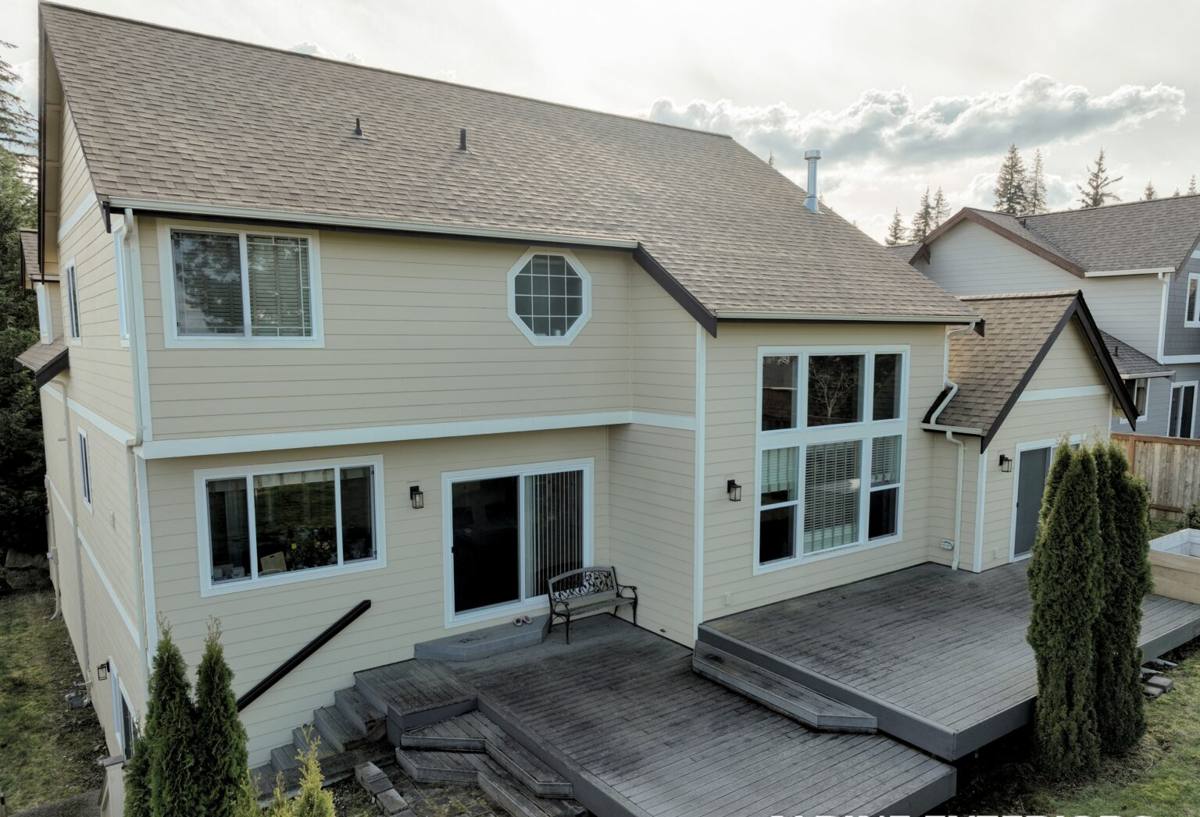
Signs Your Deck Needs Repair, Not a Fresh Coat of Stain
Staining or sealing a deck that already has structural problems just hides them for another season. Before you decide between a cosmetic refresh and an actual repair, walk the deck and check for these:
- Boards that feel spongy, springy, or noticeably softer than the boards next to them
- Gaps opening up where the deck ledger meets the house, or daylight visible behind it
- Rust streaks running down from screw heads or hardware
- Railings or posts that move more than a slight wobble when pushed
- Moss or dark green-black staining that stays wet 24-48 hours after rain stops
- Stair stringers that feel uneven or have visible checking (splitting) along the grain
- A hollow or dull sound when you tap boards with a mallet, compared to solid boards elsewhere
- Visible daylight or soft wood where support posts meet concrete footings
Any one of these on its own might be a minor fix. Two or three together usually means the deck's structural layer — not just the surface — needs attention.
What a Correct Deck Repair Actually Involves
Structural repairs
This is the part that matters most and shows the least. The ledger board — the piece bolted to the house that the whole deck hangs from — is the single most common failure point in this region, because it sits where water running off the house siding collects against end grain. A correct repair means pulling boards back far enough to actually inspect the ledger and the rim joist behind it, not just caulking the visible gap. If the ledger is compromised, it gets replaced and properly flashed, with the flashing lapped correctly so water sheds away from the house rather than behind the board.
Joists, beams, and posts get the same scrutiny. Any wood that's gone soft, any hanger that's rusted or undersized, any post that's lost contact with its footing gets addressed at this stage — before a single new board goes down. Skipping this step and just replacing decking on top of a weak frame is the most common shortcut we see, and it's why a deck can look brand new and still fail within a couple of seasons.
Surface and cosmetic repairs
Once the structure is sound, individual board replacement, railing repair, stair tread work, and refastening happen. This is also when we swap out corroded fasteners for hardware rated for exterior, coastal-influenced conditions, since reusing rusted screws in new boards just restarts the same failure on a shorter timeline.
Repair or Replace? What Actually Drives the Decision
Homeowners usually ask this in the first five minutes of a visit, and the honest answer depends on where the damage is, not how old the deck looks. A 20-year-old deck with a sound frame and a few bad boards is often a repair. A 10-year-old deck with a rotted ledger and multiple failed joists can cost more to patch piecemeal than to rebuild.
| Situation | What's Usually Involved | How It Affects Cost |
|---|---|---|
| A handful of surface boards cupping or splitting, frame is sound | Board replacement, refastening, spot sealing | Lower — limited labor, limited material |
| Ledger board showing rot or gapping from the house | Partial deck-off, ledger replacement, re-flashing | Moderate to higher — access work drives the cost, not the board itself |
| Rusted hangers or fasteners throughout, boards still okay | Hardware replacement across the frame, minimal decking work | Moderate — mostly labor, less material |
| Multiple joists soft, posts undermined, or footing failure | Frame rebuild, possibly full deck replacement | Higher — approaches or exceeds cost of a new deck |
| Railings loose or out of code, deck otherwise sound | Railing and post repair or replacement only | Lower to moderate, isolated to that system |
As a rough rule: if the frame is sound, repair almost always makes sense. If the frame is compromised in more than one place, we'll tell you plainly when a rebuild is the more honest use of your money — we don't pad out a repair just to avoid recommending replacement.
Our Process, Step by Step
1. Inspection from the ground up
We start underneath the deck, not on top of it. That means checking ledger attachment, joist condition, hardware corrosion, and post-to-footing contact before we ever look at the decking surface. Most of what actually fails is invisible from a standing walkthrough.
2. Structural work first, always
Any compromised framing, flashing, or hardware gets corrected before new boards go down. We won't fasten new decking to a frame we haven't verified, even if that means a slightly longer first visit.
3. Surface repair and refastening
Damaged boards are replaced, everything is refastened with corrosion-resistant hardware suited to this climate, and railings and stairs are brought back to solid, code-appropriate condition.
4. Finish and protect
Depending on the material, this is cleaning, brightening, and sealing or staining — done after repairs, not instead of them, so the finish is protecting sound wood rather than sealing in a problem.
Materials We Use and Why
Most Happy Valley decks are built with pressure-treated framing and either wood or composite decking on top, and each has real trade-offs worth understanding rather than a clear "best" answer.
Wood decking is straightforward to repair board by board, matches easily, and costs less up front, but it needs regular cleaning and refinishing to keep moss and moisture from getting a foothold — skip a season or two of maintenance here and it shows. Composite decking resists moss staining and doesn't need refinishing, but it's a different repair job: boards are typically wider and fastened differently, some older composite products can trap moisture against the frame beneath them if ventilation wasn't planned into the original build, and matching an aged composite board's color exactly isn't always possible since these products fade unevenly over the years. Neither is "wrong" — the right call depends on your budget, how much upkeep you want to do, and what's already on the deck now. When we recommend one over the other for a repair, it's based on what will hold up on your specific deck, not a blanket preference.
Keeping a Repaired Deck Healthy After We Leave
A correct repair buys you years, but the climate doesn't let up once we're done. A few habits make a real difference through a Whatcom County moss season:
- Sweep leaves and debris off the deck regularly in fall — trapped organic matter holds moisture against the boards and feeds moss growth
- Keep gutters and downspouts clear so runoff isn't dumping extra water directly onto or under the deck
- Rinse or lightly scrub moss and algae off the surface before it gets a chance to stain or root into the wood grain
- Check the ledger-to-house connection once a year for gapping or new staining
- Reseal or refinish wood decking on the schedule the product calls for, not just when it looks faded
- Keep planters and rugs elevated or moved periodically so they're not trapping moisture against the same spot for months
Why a Crew That Already Works Happy Valley Matters
Deck problems here follow patterns tied to how homes in this area were built and how the local climate behaves — where ledgers tend to fail first, which hardware holds up and which corrodes fast in this air, how long moss actually takes to root into a board versus just sitting on top of it. A crew that repairs decks around Sudden Valley and Happy Valley regularly has already seen the same failure points on similar homes, which means less time spent diagnosing and more time spent fixing the actual problem. It also means we're not guessing at what materials and fasteners perform here versus somewhere with a drier, milder climate — we're specifying what we've watched hold up over years of Whatcom County weather.
If you've noticed soft boards, rust streaks, a wobbly railing, or a deck that just doesn't feel as solid as it used to, we're glad to come take a look. The estimate is free, there's no pressure, and you'll get a straight answer about whether you're looking at a repair or something bigger — just fill out the form below.