 Sudden Valley Exterior
 Why Geneva's Setting Is Hard on Exterior Siding
Geneva sits in a pocket of Whatcom County shaped by two things at once: a large freshwater lake at its doorstep and a broader climate that pulls damp, salt-tinged marine air in off the Salish Sea for much of the year. That combination creates conditions that are genuinely tougher on siding than what you'd find twenty miles inland. Tree cover around many Geneva lots holds moisture against exterior walls longer after a storm, lake-effect humidity keeps siding surfaces damp well past the rain itself, and driving rain off the water finds its way behind poorly flashed trim and lap joints that would stay dry on a more sheltered lot.
The result is a longer moss and algae season than most of Washington sees, more freeze-thaw cycling on north-facing walls that never fully dry out, and steady exposure to airborne moisture that keeps working at any weak point in a home's exterior. None of this is unusual for Whatcom County — it's just the trade-off of living somewhere this green and this close to the water. But it does mean siding here has to do more work than a spec sheet from a warmer, drier region assumes.
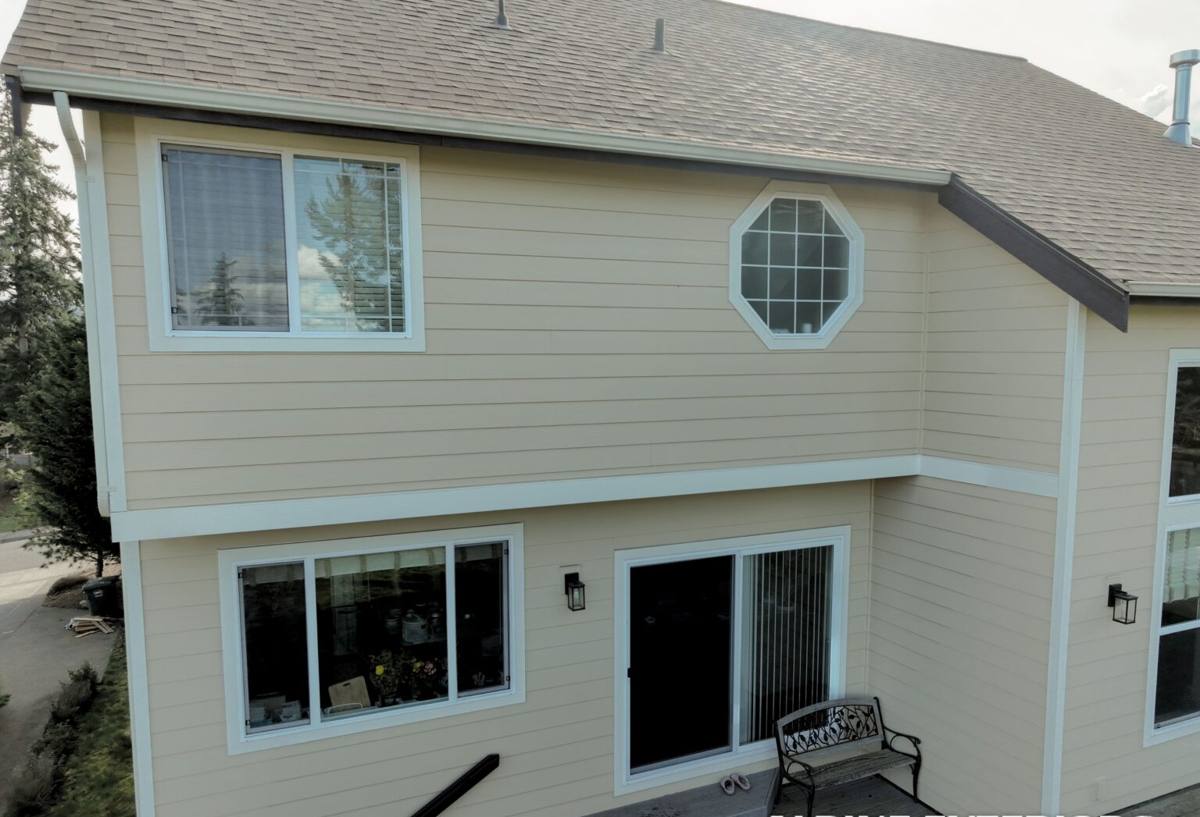
Signs a Geneva Home Needs Siding Replacement, Not Just Repair
Not every problem calls for a full tear-off. But there's a point where patching keeps chasing the same failure instead of fixing it. Homeowners in Geneva should watch for:
- Soft or spongy spots when you press on siding near the bottom courses or under windows
- Paint that keeps failing in the same spots season after season, even after repainting
- Persistent green or black staining that comes back within a few months of cleaning
- Visible warping, cupping, or separation at panel joints and corner boards
- Cracked or delaminating siding, especially on walls that get the least sun
- Musty smell or visible staining on interior walls that back up to exterior siding
- Siding that's original to a home built more than 20-25 years ago, especially wood-based products
One or two of these on their own might be a repair. Several together, especially combined with soft sheathing underneath, usually mean the water-resistive barrier has failed and repair would just be patching over a moisture problem that's already inside the wall.
What a Correct Siding Replacement Actually Involves
Siding replacement isn't just removing old material and nailing up new panels. In a climate like Geneva's, what happens underneath the siding matters as much as the siding itself. A correct job includes:
Tear-Off and Sheathing Inspection
Once the old siding is off, the sheathing gets inspected for rot, soft spots, or existing moisture damage. This is the point where hidden problems from years of trapped moisture usually surface — and it's also the only point where they can be fixed properly, before new siding closes the wall back up.
Water-Resistive Barrier and Flashing
A new weather-resistive house wrap or building paper goes on correctly lapped, shingle-style, so water is always directed outward and down. Flashing gets installed at every window, door, and horizontal trim transition — the exact spots where driving rain finds gaps in older installations. This layer is what actually keeps a home dry; the siding on top is the second line of defense, not the first.
Proper Fastening and Clearances
Siding needs to be fastened per the manufacturer's specification, with the correct nail type, spacing, and penetration depth. It also needs proper clearance from grade, roofing, decks, and other siding transitions, so water has somewhere to go instead of wicking up into the bottom edge of a panel.
Trim, Caulking, and Paint
Corner boards, trim, and caulking at penetrations are what keep water out of the seams over the long run. On a lake-adjacent property with heavier moisture exposure, getting these details right is the difference between siding that looks good for two years and siding that looks good for two decades.
Why This Company Installs Only James Hardie Fiber Cement
We don't install vinyl, LP SmartSide, primed spruce, cedar, or other fiber cement brands. That's a deliberate standard, not a lack of options. In a climate like Geneva's — sustained dampness, a long moss season, and driving rain off the lake — the trade-offs of those other products show up faster than they would somewhere drier. Vinyl can warp and doesn't hold paint if a color change is ever wanted. Wood and wood-based products need real ongoing maintenance to keep moisture out once the factory coating is compromised. Other fiber cement brands may be reasonable products, but we've standardized our crews, our installation details, and our warranty backing on one system so every job gets the same level of expertise instead of splitting attention across five different product lines.
James Hardie fiber cement is non-combustible, engineered specifically for the Pacific Northwest's wet climate through its HZ5 product line, and comes with a factory-applied ColorPlus finish that resists the fading and chalking that painted siding eventually shows. It carries a strong, transferable limited warranty when installed to spec — which matters on a lakeside property where the siding is going to face more moisture exposure over its lifetime than the average home in a drier part of the state.
Our Siding Replacement Process
Every project follows the same sequence, whether it's a full home or a single elevation:
- On-site assessment — we walk the exterior, check for soft sheathing, moisture intrusion, and existing damage, and talk through what we find before any work is scoped.
- Written estimate — a clear scope of work and price, no vague allowances.
- Tear-off — old siding and trim removed, sheathing exposed for inspection.
- Sheathing repair — any rotted or compromised sheathing is replaced before anything else goes back on.
- Weather barrier and flashing — installed per manufacturer detail at every penetration and transition.
- Hardie installation — panels, lap siding, or shingles installed to manufacturer fastening and clearance specs.
- Trim, caulk, and touch-up paint — factory finish matched and sealed at cut edges and joints.
- Site cleanup and final walkthrough — debris hauled off, magnetic sweep for nails, and a walkthrough so you can see the finished work up close.
What Affects the Cost of a Siding Replacement
Every home is different, but the same handful of factors drive most of the cost variation we see on Geneva-area projects:
| Factor | Why It Matters |
|---|---|
| Home size and wall complexity | More corners, gables, and dormers mean more cutting, trim, and labor time |
| Extent of hidden damage | Rotted sheathing found during tear-off adds repair scope not visible in an initial estimate |
| Siding profile chosen | Lap siding, panel, and shingle profiles carry different material and labor costs |
| Access and lot conditions | Steep grades, tree cover, or tight lake-lot access can slow staging and material handling |
| Trim and detail work | Corner boards, window trim, and fascia detail add finish-carpentry time |
| Tear-off complexity | Multiple layers of old siding or asbestos-era materials require extra handling |
We won't quote a number without seeing the home, but we're always upfront about which of these factors apply to your project and why, so there aren't surprises once tear-off starts.
Why a Crew That Already Works Geneva Matters
A contractor who mainly works drier, more sheltered parts of the county doesn't always plan for what a lake-adjacent, tree-shaded lot actually does to an exterior. Crews familiar with Geneva and the surrounding Sudden Valley area know which elevations tend to hold moisture longest, how much moss pressure to expect on north- and shade-facing walls, and where driving rain off the lake tends to find weak flashing details first. That local pattern recognition shows up in small decisions — where to add extra flashing attention, which trim details need extra caulking, how tight to set clearances near grade — that a crew unfamiliar with the area might not think twice about.
Familiarity with Whatcom County's permitting process also keeps projects moving without delays that catch out-of-area contractors off guard. It's a small thing until it isn't.
Keeping New Siding Looking Right in a Moss-Prone Climate
Even the right product installed correctly benefits from a little ongoing attention in a climate like this. A few habits go a long way:
- Keep gutters clear so water isn't overflowing directly onto siding below
- Trim back vegetation and tree limbs that shade siding and keep it damp longer than necessary
- Rinse siding gently once or twice a year to knock back early moss and algae growth before it takes hold
- Check caulking at trim joints and penetrations every couple of years and refresh as needed
- Address any soft spots or staining early rather than waiting for a full season to pass
James Hardie's factory finish resists moss and algae growth better than bare wood or field-painted siding, but no siding is completely maintenance-free in a climate that stays this damp this much of the year. A little seasonal attention keeps a new installation looking like new for a lot longer.
Get a Straightforward Estimate
If your Geneva home's siding is showing its age — or you just want an honest read on whether repair or replacement makes sense — we're happy to take a look. The estimate is free, there's no pressure, and you'll get a clear explanation of what we find and why. Fill out the form below to get started.