 Sudden Valley Exterior
 Geneva Sits in a Tough Spot for Roofs
Geneva sits along the north end of Lake Whatcom, wedged between open water and heavy tree cover, just up the shoreline from Sudden Valley. That combination is hard on roofing in ways that don't show up on a typical Western Washington roof. Moist air off the lake keeps shingles and decking damp longer after every rain. Tall conifers throw shade across large sections of most roofs for much of the day, which slows drying even further. And because Whatcom County sits close enough to Bellingham Bay and the Salish Sea, homes here also pick up a measure of salt-laden air that speeds up corrosion on fasteners, flashing, and any exposed metal.
None of that means a Geneva roof is doomed — it means repairs have to account for moisture and organic growth as the root cause, not just patch the symptom. A shingle that's curling or a flashing seam that's leaking is usually the visible end of a problem that started with trapped moisture weeks or months earlier.
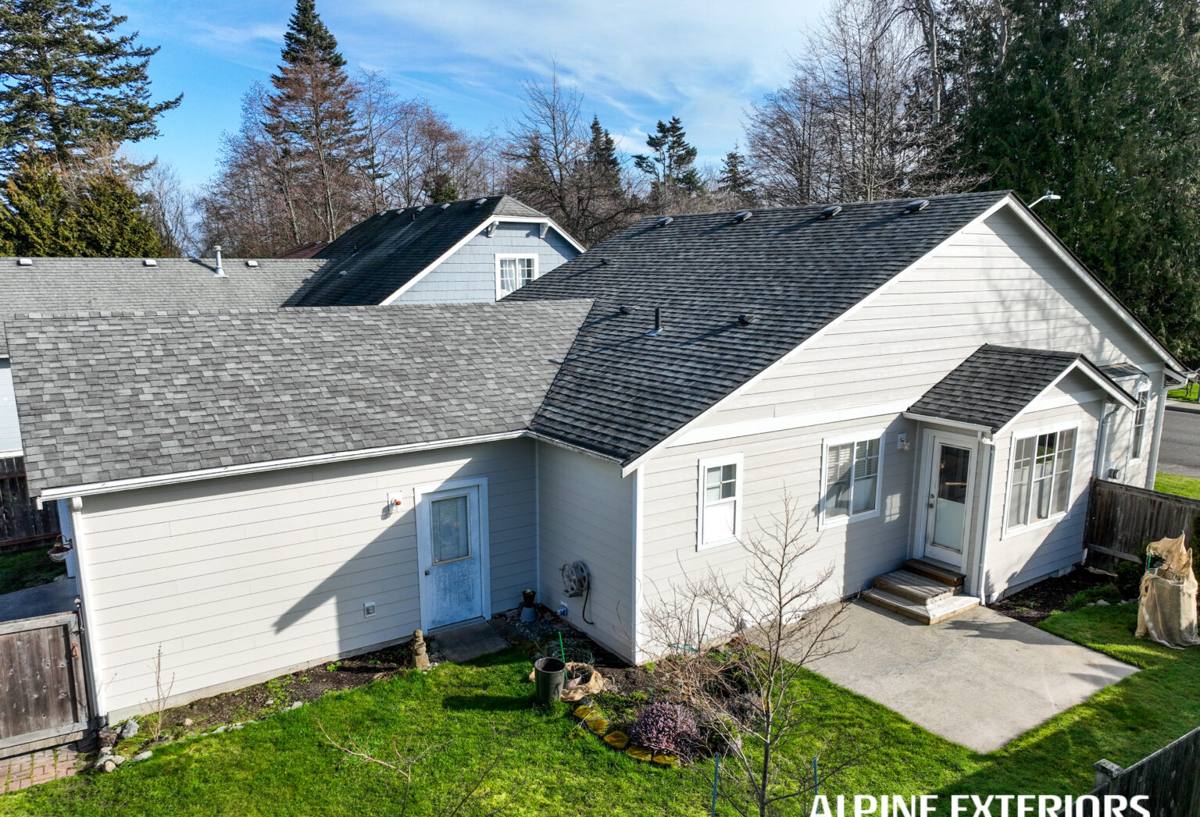
What Actually Wears Out a Geneva Roof
Moss and Algae Season Runs Long Here
In most of the country, moss is a spring nuisance. Around Lake Whatcom, the combination of shade, humidity, and mild winters means moss and algae can gain a foothold nearly year-round, with the heaviest growth from fall through late spring. Moss doesn't just look bad — its root structure lifts shingle edges and holds water against the roofing material, which is exactly the condition that leads to granule loss, soft spots, and eventually leaks at the shingle laps.
Driving Rain Finds Weak Flashing First
Whatcom County storms often come with wind, which pushes rain sideways into valleys, chimney step-flashing, skylight curbs, and anywhere two roof planes meet. A roof can be in otherwise decent shape and still leak because a single flashing seam has opened up or been under-lapped. Wind-driven rain also exposes any repair that was done with sealant alone instead of proper flashing and shingle work.
Salt Air and Metal Fatigue
Nails, drip edge, valley metal, and vent flashing all corrode faster near the water than they would further inland. Once a fastener starts to rust, it loses its grip on the shingle beneath it, and that's a common, easy-to-miss cause of lifted shingles that people assume is wind damage.
What a Correct Repair Actually Involves
A repair that holds up in this climate goes beyond swapping a shingle or squeezing in a tube of sealant. Every repair we do starts with figuring out why that section failed, not just what's visibly broken.
- Confirm the actual leak path — water often travels along the decking before it shows up on a ceiling, so the stain point and the leak point are rarely the same spot.
- Check the decking underneath for soft or delaminated plywood before any new shingles go down.
- Remove and rebuild flashing at valleys, chimneys, and vent penetrations rather than caulking over old flashing.
- Match shingle type, weight, and where reasonably possible, color and exposure to the surrounding roof.
- Clear moss and debris from the surrounding field, not just the repair area, so growth doesn't undermine the new work.
- Check attic ventilation near the repair — poor airflow is a common reason the same section fails again.
Our Process, Start to Finish
- Walk the roof, not just the trouble spot. We look at the whole roof plane, the attic from below when access allows, and anywhere moss or debris is holding moisture.
- Explain what we find in plain terms. You get an honest read on whether this is a straightforward repair, a repair with a limited lifespan, or a sign the roof is nearing replacement.
- Written estimate before any work starts. No surprise add-ons once we're on the roof.
- Repair the cause, not just the symptom — flashing, decking, and shingle work as needed, not sealant shortcuts.
- Clean up moss and debris from the work area and blow off the roof so water sheds the way it's supposed to.
- Photos and a summary of the work so you have a record of what was done and where.
Repair or Replace? How We Help You Decide
Not every roof problem in Geneva needs a full tear-off, but a lake-adjacent, shaded roof also ages differently than one out in the open. Here's how we weigh the decision:
| Factor | Leans Toward Repair | Leans Toward Replacement |
|---|---|---|
| Roof age | Under roughly 15 years | Nearing or past the typical 20-25 year lifespan of composition shingles |
| Extent of damage | Isolated to one or two areas | Widespread granule loss, curling, or moss across multiple slopes |
| Decking condition | Solid, no soft spots found | Soft, delaminated, or repeatedly wet decking |
| Leak history | First occurrence, clear single cause | Recurring leaks in different spots each season |
| Typical cost range | A few hundred to a couple thousand dollars | Several thousand and up, depending on size and materials |
We'll give you our honest read rather than push toward whichever job is bigger. Plenty of Geneva roofs genuinely just need targeted repair and a moss treatment plan to buy several more good years.
Materials and Methods We Rely On
For most Geneva repairs, we're matching into existing composition (asphalt) shingle roofing, which remains the most common roofing material in this part of Whatcom County. Where a roof has metal roofing or cedar shake, repair calls for different techniques, and we'll walk you through what's realistic for that specific material.
A few standards we hold to on every repair:
- We rebuild flashing with new metal rather than layering sealant over failing flashing — sealant-only fixes tend to fail again within a season or two once UV exposure and freeze-thaw cycles work on the caulk.
- We use corrosion-resistant fasteners given how much faster standard fasteners can rust this close to the water.
- We're selective about installing anything that traps moisture against the decking, since our priority is a repair that survives a full wet season, not just looks finished on repair day.
Timing a Repair Around Our Seasons
Late spring through early fall is the most reliable window for roof repair work around Lake Whatcom — drier conditions mean shingles seal properly and flashing sealant cures the way it's supposed to. That said, a genuine leak shouldn't wait for ideal weather. We do cold-weather and wet-weather repairs regularly; we just plan around the rain rather than working through it, and we're upfront if conditions mean a temporary fix now with a permanent repair once things dry out.
Moss treatment is worth scheduling separately from repair — treating and clearing moss in early fall, before the heaviest winter rains set in, gives it the best chance to work before the wettest months arrive.
A Homeowner's Pre-Winter Roof Checklist
- Look for moss or dark streaking, especially on north-facing or shaded slopes.
- Check gutters for granule buildup, which signals shingle wear.
- Scan flashing around the chimney, skylights, and any roof valleys for gaps or lifted edges.
- Look inside the attic for daylight, staining, or damp insulation near the roof deck.
- Trim back tree limbs that overhang the roof or keep sections in constant shade.
- Note any shingles that look curled, cracked, or missing after a windy storm.
If any of these turn up, it's worth having someone look before winter rather than after the first hard leak.
Why a Crew That Already Works This Neighborhood Matters
Geneva and the surrounding Sudden Valley area have their own quirks — narrow and sometimes steep driveways, homes tucked under heavy tree canopy, lake-effect humidity that doesn't match forecasts for Bellingham proper, and in some cases HOA or community expectations about exterior work. A crew that's already worked in the neighborhood isn't guessing at any of that. We know what moss regrowth looks like on a two-year-old repair versus a twenty-year-old roof, and we know which failure points show up again and again on homes near the water. That familiarity means fewer surprises, a more accurate first estimate, and a repair built for the conditions your roof actually faces rather than a generic regional average.
If you've got a leak, a soft spot, or a roof that's overdue for a look, we're happy to come take a walk across it. Reach out for a free, no-pressure estimate — we'll tell you straight whether you're looking at a simple repair, a bigger fix, or something that can wait, using the form below.