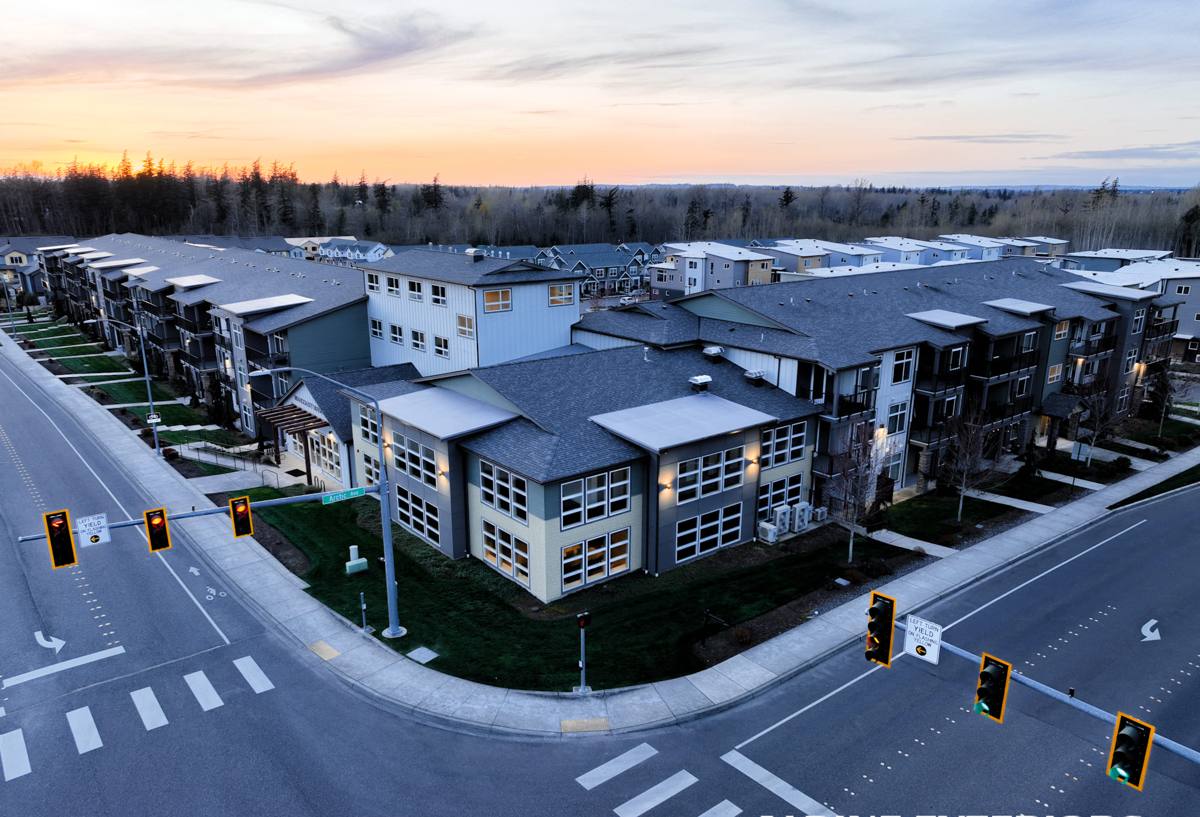
 Sudden Valley Exterior
 Fairhaven's Climate Is Hard on Siding — Here's Why
Homes near Fairhaven deal with a combination most inland Whatcom County properties don't: salt-laden air off the water, wind-driven rain that hits siding sideways instead of straight down, and a moss season that can run most of the year in the shade of mature trees. Any one of those is manageable. Together, they shorten the life of the wrong siding material fast.
Salt air is corrosive to fasteners and accelerates the breakdown of coatings that aren't formulated for it. Driving rain doesn't just wet the surface of a wall — it pushes moisture up under laps, around trim, and into any gap in the water-resistive barrier that wasn't detailed correctly. And moss doesn't just look bad; it holds moisture against the siding surface for weeks at a time, which is exactly the condition that causes rot, delamination, and paint failure on products that aren't built to shed water aggressively.
None of this means Fairhaven is an unusually difficult place to keep a home's exterior looking good. It means the material and the installation both have to be right for the conditions, not just for the budget.
What "Correct" Siding Installation Actually Means Here
A siding job can look finished and still fail early if the water management underneath it is wrong. This matters more in a driving-rain, salt-air environment than almost anywhere else in the region. A correct installation includes:
- A continuous, properly lapped water-resistive barrier (house wrap) with no gaps at seams, corners, or penetrations
- Flashing at every window, door, and roof-to-wall intersection, integrated with the water-resistive barrier so water sheds outward, not inward
- Correct fastener type, spacing, and penetration depth — undriven or overdriven fasteners are a leading cause of early siding failure
- Proper clearance at the bottom of the siding from grade, decks, and roof lines so water and moss-prone debris don't sit against the material
- Rain screen or drainage gap detailing where the wall assembly calls for it, so any incidental moisture behind the siding can drain and dry
- Caulking and sealant only where the manufacturer specifies it — over-sealing traps moisture just as badly as under-sealing lets it in
Every one of these steps is invisible once the job is done. That's exactly why they get skipped by crews working fast on volume, and exactly why they matter most in a climate like this one.
Why We Install Only James Hardie Fiber Cement
We made a decision years ago to install one siding system: James Hardie fiber cement. Not vinyl, not LP SmartSide, not cedar, not primed spruce. That's a narrower lineup than most exterior contractors offer, and we think that's the point — every one of those alternatives asks a homeowner to accept a trade-off that fiber cement doesn't.
How It Handles Moisture and Salt Air
Fiber cement is a mix of cement, sand, and cellulose fibers — it doesn't rot, it isn't a food source for moss or algae the way wood-based products can be, and it doesn't corrode. It's non-combustible as well, which matters independent of the coastal climate discussion but is worth noting. The ColorPlus factory finish is baked on under controlled conditions, which gives it better adhesion and UV/salt resistance than field-applied paint typically achieves, and it holds color longer in a marine-influenced environment.
Climate-Engineered HZ Product Lines
Hardie makes region-specific formulations — HZ5 for areas with regular freeze-thaw and moisture exposure, and HZ10 for the wettest, harshest coastal climates. For a property exposed to driving rain and salt air, this isn't a marketing distinction — it changes how the product performs over 20-plus years. We spec the line to match the actual exposure of the home, not a one-size-fits-all default.
We won't pretend vinyl and LP SmartSide don't have real advantages — vinyl is inexpensive and low-maintenance in mild climates, and LP SmartSide's engineered wood is lighter and easier to install than fiber cement. But vinyl can warp and fade under UV and thermal cycling, and its seams are a known path for wind-driven rain intrusion. LP SmartSide is an engineered wood product — it depends on its factory coating staying intact, and any breach exposes wood substrate to exactly the sustained moisture this climate produces. Cedar and primed spruce require ongoing refinishing to stay ahead of moss and moisture, which is a real ongoing cost most homeowners underestimate. We'd rather install the one product that doesn't ask a Fairhaven homeowner to manage those risks.
Our Fairhaven Installation Process
The steps don't change from house to house, but the details we pay closest attention to are shaped by what this specific area throws at a wall assembly.
1. Inspection and Tear-Off
We remove the existing siding and inspect the sheathing underneath for moisture damage, especially around window and door openings and lower wall sections — the areas most exposed to driving rain and splash-back. Any compromised sheathing gets replaced before anything else happens.
2. Water-Resistive Barrier and Flashing
New house wrap goes on with correct laps and taped seams, and flashing is integrated at every penetration. This step is where most future leaks are either prevented or guaranteed, and it's the step that's easiest to shortcut on a fast timeline.
3. Hardie Installation to Spec
Panels or lap siding go on with manufacturer-specified fastener spacing, clearances from grade and roofline, and factory-finish touch-up only where Hardie's own guidelines allow it — not painted over broadly, which can void warranty coverage.
4. Trim, Caulk, and Final Detail
Trim boards, corners, and transitions are sealed per spec — enough to block wind-driven rain, not so much that moisture gets trapped behind the siding.
5. Walkthrough
We walk the finished exterior with the homeowner, point out what regular maintenance to expect looks like, and register the manufacturer warranty.
Signs Your Current Siding Is Already Losing the Battle
Homeowners often wait longer than they should because siding damage isn't always obvious from the ground. Worth checking for:
- Soft or spongy spots when you press on the siding, especially near the bottom courses
- Persistent moss or green staining that comes back within weeks of cleaning
- Paint that's peeling, bubbling, or chalking rather than just fading evenly
- Visible gaps or separation at seams, corners, or trim joints
- Warping, bowing, or panels that no longer sit flat against the wall
- Water stains or musty smells on interior walls that back up to exterior siding
Any of these is worth a look before it becomes a sheathing or framing problem, which costs considerably more to fix than the siding itself.
Cost Factors for Siding Installation
Every home is different, but the variables that actually move the number are consistent. We won't quote a price without seeing the house, but this is what drives the estimate:
| Factor | Why It Matters |
|---|---|
| Home size and wall complexity | More corners, dormers, and roof-to-wall intersections mean more flashing and cutting time |
| Existing sheathing condition | Rot or moisture damage found during tear-off adds repair scope before siding can go on |
| Siding profile chosen | Lap siding, panel systems, and shingle-style Hardie products differ in material and labor cost |
| HZ product line (HZ5 vs. HZ10) | Higher-exposure formulations for driving rain and salt air cost more but perform longer here |
| Site access | Tight lots, slopes, or landscaping near the walls affect staging and labor time |
| Trim and detail work | Custom trim, corner treatments, and color-matched accessories add to the finished cost |
Why Local Experience in This Area Actually Matters
A crew that's installed siding on multiple homes in and around Fairhaven has already seen how this specific exposure to salt air, driving rain, and moss behaves against a wall over years — not just on install day. That shows up in small decisions: which side of a house needs extra flashing attention because of prevailing wind direction, where moss buildup tends to concentrate, how much clearance to leave near landscaping that stays damp longer in this microclimate. None of that is guesswork when you've done the work here before.
It also means we're not learning Whatcom County's building requirements and inspection expectations on someone's home for the first time. That's less risk and fewer surprises for the homeowner.
Maintenance After Installation
James Hardie siding is genuinely low-maintenance, not maintenance-free. In this climate, that means an annual rinse to keep moss and salt residue from building up, prompt attention to any caulking that starts to separate at trim joints, and keeping gutters and downspouts clear so water isn't sheeting down the wall face. That's a fraction of the upkeep wood or vinyl siding demands in the same conditions, but it's not nothing — and we tell homeowners that plainly rather than overselling "zero maintenance."
If your Fairhaven home needs new siding, or you're not sure whether what's on it now is holding up the way it should, we're happy to take a look and give you a straight answer. Reach out for a free, no-pressure estimate using the form below.