 Sudden Valley Exterior
 Fairhaven's Climate Is Not Kind to Siding
Homes near the Fairhaven waterfront take a different kind of beating than houses further inland in Whatcom County. The combination of salt-laden air off Bellingham Bay, wind-driven rain that hits siding sideways instead of straight down, and a moss season that can run eight months out of the year adds up to conditions that most siding products were never designed to handle long-term. We see it in the field constantly: siding that looked fine on installation day and started failing within five to eight years, not because the crew did a bad job, but because the material itself couldn't take what this microclimate throws at it.
Salt air is corrosive to exposed fasteners and abrasive to painted finishes over time. Driving rain finds every gap, seam, and unsealed edge and pushes water in rather than letting it run off. And moss doesn't just grow on roofs — it colonizes any siding surface that stays damp and shaded, working into seams and holding moisture against the substrate. On a lot of Fairhaven-area homes, that's a north or west-facing wall that never fully dries out between storms.
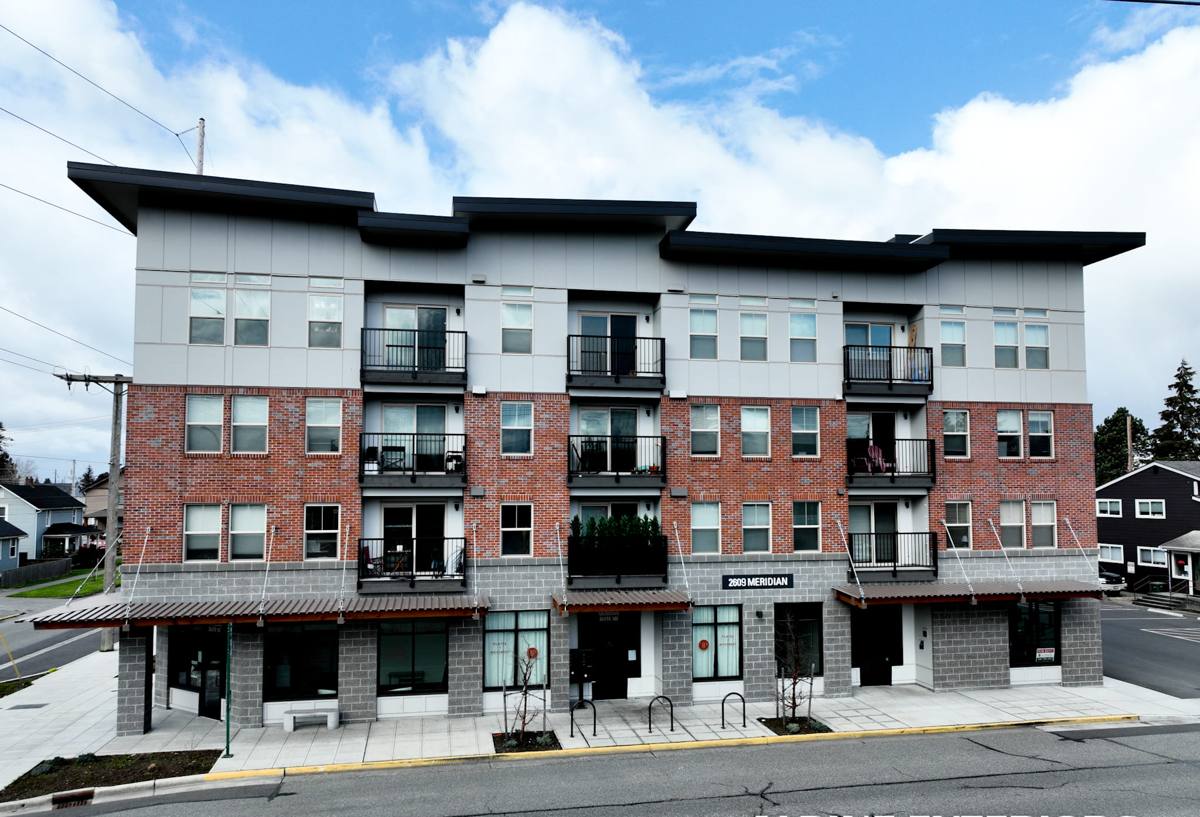
Why We Install Only James Hardie in This Area
We made the decision years ago to install James Hardie fiber cement exclusively — no vinyl, no LP SmartSide, no Cemplank or Allura, no primed spruce or cedar. That's not a marketing position, it's a practical one built around what actually holds up in a marine-influenced climate like Fairhaven's.
Fiber Cement vs. the Alternatives Here
Vinyl siding expands and contracts with temperature swings, and in driving rain it relies almost entirely on lap geometry rather than a sealed surface to keep water out — any warping or gapping over time gives wind-driven rain a path in. Wood and primed wood products (cedar, primed spruce) are attractive but need consistent refinishing to resist moisture and rot, and in a climate with this much sustained dampness and moss pressure, that maintenance window shrinks fast. Engineered wood products like LP SmartSide use a wood-strand core that, while treated, is still an organic substrate — if the factory coating is ever compromised at a cut edge or fastener point, moisture intrusion becomes a real risk.
James Hardie's fiber cement is cement, sand, and cellulose fiber — there's no organic core to rot and nothing for moisture to feed on. It's also non-combustible, which matters increasingly for insurance considerations across Western Washington. Hardie engineers specific product lines (their HZ5 and HZ10 climate zones) for different moisture and temperature profiles, and factory-applied ColorPlus finish is baked on under controlled conditions rather than field-painted, which gives it far better UV and salt-air resistance than a site-applied coat.
What a Correct Fairhaven Installation Actually Involves
Hardie siding performs the way it's rated to perform only when it goes on correctly. In a high-moisture, high-wind-driven-rain environment, the installation details matter more than they would in a drier inland climate, and shortcuts that might go unnoticed elsewhere show up fast here.
Weather Barrier and Drainage Plane
Every job starts with a code-compliant water-resistive barrier and, on most Fairhaven-area homes, a drainage gap behind the siding. That gap lets any moisture that does get past the siding face drain and evaporate instead of sitting against the sheathing. Skipping this — or reusing house wrap that's already compromised — is one of the most common corners cut on lower-bid jobs.
Fastening and Gaps
Hardie specifies exact fastener types, spacing, and clearances, along with minimum gaps at butt joints, corners, and around penetrations (windows, vents, hose bibs). In a driving-rain climate, those gaps aren't cosmetic — they're where caulking and flashing do their job. Fasteners driven improperly (too shallow, too deep, or the wrong type for coastal exposure) become the first failure point.
Flashing and Sealant at Every Penetration
Windows, doors, dryer vents, and hose bibs are where wind-driven rain finds its way in on almost every failed siding job we've inspected. Proper head flashing above openings and correctly sequenced sealant (not just a bead of caulk over the top) are non-negotiable in this climate.
Field Cuts and Touch-Up
Every cut edge on Hardie board exposes raw fiber cement that needs to be sealed or touched up with Hardie's matched touch-up product before it's exposed to weather. On a coastal job, an unsealed cut edge is an invitation for moisture and salt to work into the material over time.
How Our Process Works
- On-site assessment — we look at your home's specific exposure: which walls take the worst of the wind-driven rain, where moss and moisture are already collecting, and the condition of the existing siding and sheathing underneath.
- Product and color selection — we walk through Hardie's plank profiles, panel options, and ColorPlus palette suited to the home and the neighborhood's character.
- Substrate check — before anything new goes up, we confirm the sheathing underneath is sound. Siding installed over rotten or compromised sheathing fails regardless of the material.
- Installation to spec — weather barrier, drainage gap, correct fastening, flashing, and sealed cut edges, done in the sequence Hardie's installation manual requires.
- Final walkthrough — we go over the finished job with you, including what routine maintenance looks like in a salt-air, high-moss climate.
Signs Fairhaven Homeowners Should Watch For
A lot of siding failure in this area is gradual enough that homeowners don't catch it until it's a bigger repair than it needed to be. Watch for these:
- Soft or spongy spots when you press on siding near the bottom courses or around window trim
- Moss or dark streaking that keeps returning to the same wall section within weeks of cleaning
- Visible gaps opening up at butt joints or corners that weren't there a year or two ago
- Peeling, chalking, or fading paint on wood or engineered wood siding, especially on west- and north-facing walls
- Musty smell or visible staining on interior walls that back up to exterior siding
- Fastener heads showing rust or "bleeding" staining down the face of the siding
Cost Factors on a Fairhaven Siding Job
Every home is different, but the factors that move the price on a Hardie installation here are fairly consistent. We give honest, itemized estimates rather than a flat per-square-foot number pulled out of the air, because the variables below genuinely change the scope.
| Factor | Why It Matters in This Area |
|---|---|
| Existing siding removal & disposal | Older layers (cedar, vinyl over original siding) often hide moisture damage that adds scope once uncovered |
| Sheathing repair | Coastal moisture and past leaks sometimes mean sections of sheathing need replacing before new siding goes on |
| Home exposure & wall count | Walls facing prevailing wind-driven rain need extra attention to flashing and sealant detail |
| Product line & profile | Plank, panel, and shingle-style Hardie products carry different material and labor costs |
| Trim & accessory work | Fascia, corner boards, and window trim replacement is often bundled in for a consistent, sealed result |
| Access & site conditions | Sloped lots and tight setbacks common in this area can affect staging and labor time |
Maintenance in a Salt Air, High-Moss Climate
Hardie siding is low-maintenance compared to wood, but "low-maintenance" isn't "no-maintenance" in a climate like this. A yearly soft rinse to clear salt film and moss spores before they establish, prompt attention to any caulking that starts to crack or pull away, and keeping vegetation trimmed back from walls so they can dry between rain events will get you the most out of the material and the finish. ColorPlus factory finish holds up well against fading and chalking, but it still benefits from being kept clean in an environment with this much airborne salt and organic growth.
Why Hiring a Crew That Already Works This Area Matters
Siding installation isn't uniform across Whatcom County. A crew that mostly works drier, inland neighborhoods and treats a Fairhaven job the same way is missing details that matter here — drainage gap sizing, flashing sequencing at penetrations, and fastener choices that account for salt exposure. We work this specific area regularly, which means we already know which walls on which orientations take the worst of it, what local permitting expects, and how to install Hardie so it actually delivers the lifespan it's rated for instead of failing early because the details got skipped.
If your siding is showing any of the warning signs above, or you're planning ahead for a replacement, we're happy to take a look and give you a straightforward, no-pressure estimate — just fill out the form below.