 Sudden Valley Exterior
 Why Edgemoor's Climate Is Hard on Siding
Edgemoor sits in one of the tougher spots in Whatcom County for exterior materials. The combination of salt-laden air off the water, wind-driven rain that hits siding sideways instead of straight down, and a long, shaded moss season adds up to more punishment than most homeowners realize until a repair is already overdue. Salt air accelerates corrosion on fasteners and metal trim, and it works into any gap in a siding system faster than plain rainwater would. Driving rain forces water up under laps and around trim that would stay dry in a calmer climate, which is why siding that looks fine from the street can be rotting from the inside at the seams. And the tree canopy that makes Edgemoor's older, established lots so appealing also keeps siding shaded and damp for long stretches of the fall, winter, and spring — exactly the conditions moss and algae need to take hold.
None of this means siding is a bad investment here. It means repairs have to account for the actual failure mechanism, not just the cosmetic symptom, or the same problem comes back in a year or two.
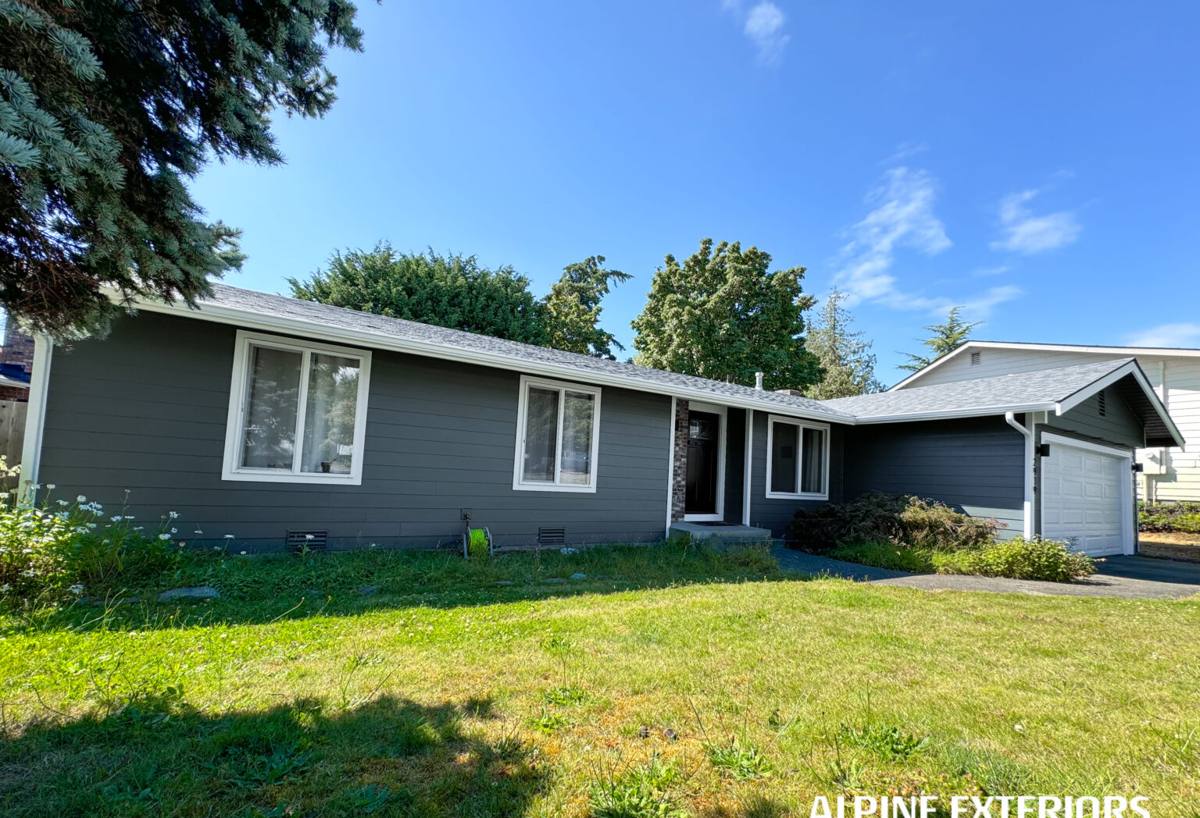
Signs an Edgemoor Home Needs Siding Repair, Not Just a Paint Touch-Up
A lot of siding damage in this area starts small and gets ignored because it doesn't look urgent. By the time it's obviously urgent, the repair is bigger than it needed to be. Watch for:
- Cracked, split, or visibly bowed boards, especially on walls that take direct wind and rain
- Persistent moss or dark algae staining on shaded, north-facing sections
- Soft or spongy spots when you press near the bottom courses or around penetrations
- Paint that's bubbling, peeling, or failing faster than the rest of the house
- Gaps opening up at seams, corner trim, or window and door casings
- Staining or discoloration streaking down from under window sills
- A musty smell or visible mold on the interior wall directly behind a suspect section
Any one of these on its own might be minor. Two or three together, especially on the same wall, usually means water has been getting behind the siding for a while.
What a Correct Siding Repair Actually Involves
Diagnosing the real cause first
Swapping a cracked board for a new one without figuring out why it cracked is a temporary fix at best. A correct repair starts with tracing the damage back to its source — a failed sealant joint, a flashing detail that was never installed right, a downspout dumping water against the wall, or simple age and weather exposure. Skipping this step is the single biggest reason siding repairs fail again within a year or two.
Checking the moisture barrier and flashing behind the siding
Any time siding comes off, whatever is behind it — house wrap, flashing, tape at seams — needs to be inspected and corrected if it's compromised. This is invisible work that doesn't show up in the finished look of the repair, but it's the part that actually keeps water out long-term. In a climate that drives rain sideways, a repair that puts new siding over damaged underlayment is a repair that will need to be redone.
Matching board profile, exposure, and color
A patch that doesn't match the reveal, profile, or finish of the surrounding siding stands out immediately and can also create a water path if the lap lines don't align correctly. Getting this right takes both the right materials and the experience to install them to the original lines.
Correct fastening and sealant, not just "make it look sealed"
Manufacturer fastening patterns exist for a reason — wrong nail placement or spacing is a common cause of splitting and premature failure. Sealant belongs only where the manufacturer specifies it; over-caulking gaps that are supposed to allow drainage traps water instead of shedding it.
How Different Siding Materials Hold Up to Repair in This Climate
Not every siding material repairs, or ages, the same way once it's dealing with salt air, driving rain, and shade year after year. This is part of why we standardized on one product system rather than patching whatever a house happens to have.
| Material | Moisture & moss resistance | How well repairs blend in | Long-term outlook here |
|---|---|---|---|
| Cedar | Absorbs moisture, prone to moss and rot without diligent upkeep | Weathers unevenly, hard to color-match an old repair | High maintenance in a shaded, wet lot |
| Engineered wood (LP-type) | Vulnerable at cut edges and seams if moisture gets in | Possible but edge-sealing must be redone correctly | Sensitive to installation quality over time |
| Vinyl | Doesn't absorb water, but can warp, crack, or fade in strong weather cycling | Discontinued colors and profiles make matching difficult | Brittle with age; cracks rather than repairs cleanly |
| James Hardie fiber cement | Non-combustible, engineered for moisture cycling, resists moss buildup better when properly ventilated | ColorPlus factory finish gives a consistent, matchable color | Built for long-term performance in wet coastal climates |
Our Siding Repair Process
- Inspection. We look at the damaged area and the surrounding wall, not just the spot you noticed, since related problems often hide nearby.
- Diagnosis. We identify the actual cause — flashing, drainage, sealant failure, or simple wear — before proposing a fix.
- Written scope. You get a clear explanation of what's being repaired, what it involves, and what it costs, in plain language.
- The repair itself. Damaged material comes out, the barrier behind it gets checked and corrected, and new material goes in matched to the existing siding.
- Cleanup and walkthrough. We clear debris and walk the repair with you so you know exactly what was done.
Repair or Replace? What Actually Drives That Decision
| Factor | Leans toward repair | Leans toward replacement |
|---|---|---|
| Extent of damage | Isolated to one or two boards or a small section | Spread across multiple walls or recurring in the same areas |
| Age of existing siding | Relatively recent, otherwise sound | Near or past its expected service life |
| Water intrusion evidence | Contained, source identified and fixable | Signs of ongoing intrusion behind multiple sections |
| Material match availability | Matching profile and color available | Original product discontinued or unmatchable |
Honest answer: a lot of Edgemoor homes fall in between. We'll tell you plainly when a repair makes sense and when you'd be spending money to delay a replacement you'll need anyway.
Why We Repair and Patch Only With James Hardie
We install and repair exclusively with James Hardie fiber cement siding. We don't patch or install LP SmartSide, vinyl, Cemplank, Allura, or primed wood siding, and that's a deliberate professional standard, not a lack of familiarity with those products. Hardie's ColorPlus factory finish means a repair section can be matched much more consistently than field-painted alternatives, where sun and weather exposure shift the color of the original siding faster than a touch-up can track. Hardie's HZ product lines are engineered for climate zones like this one, built to handle repeated wet-dry cycling without the swelling or edge failure that catches up with engineered wood over time, and the material itself is non-combustible. When we're called out for a repair on a home with a different siding material, we'll still tell you honestly what's going on and what your options are — we just won't pretend a like-for-like patch in a product we don't stand behind is the right long-term fix.
Why Hiring a Crew That Already Works in Edgemoor Matters
Siding repair in Edgemoor isn't identical to siding repair five miles inland. Crews unfamiliar with the neighborhood's mix of mature tree cover, closer proximity to the water, and older home construction sometimes miss the actual cause of a problem because they're used to diagnosing damage in drier, more open conditions. A crew that has worked on other homes nearby already understands how shade patterns hold moisture longer on certain walls, how salt air affects fasteners and trim differently than it does further from the water, and what these particular houses tend to have going on behind the siding once it's opened up. That local pattern recognition is the difference between a repair that solves the problem and one that just covers it back up.
Keeping Repaired Siding Protected Going Forward
A good repair buys you time, but a few habits keep it from needing a repeat visit:
- Keep gutters and downspouts clear so water isn't dumping against the wall
- Trim back vegetation and tree limbs that keep siding shaded and damp
- Rinse moss and algae buildup off shaded walls before it gets established
- Check caulking at trim and penetrations once a year and re-seal where it's failing
- Walk the exterior after major storms and note anything that looks different
If you're seeing cracked boards, moss buildup, soft spots, or staining on your Edgemoor home, we're happy to take a look and give you a straightforward assessment of what's going on and what it would take to fix it right. Reach out for a free, no-pressure estimate using the form below.