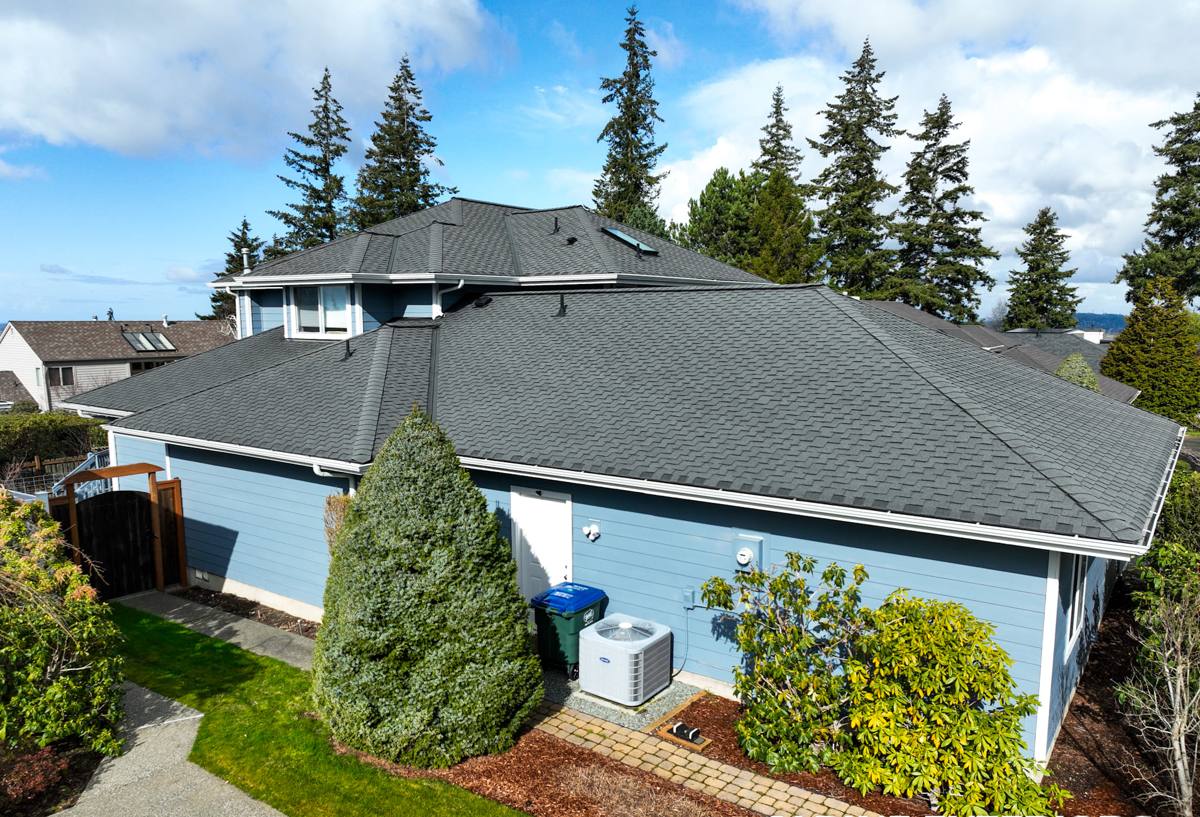
 Sudden Valley Exterior
 Building a Deck That Actually Holds Up in Deming
Deming sits along the Nooksack River valley, tucked under heavy tree cover on the way toward the Mt. Baker foothills. That setting is beautiful, but it's tough on an outdoor structure. Between the shade, the moisture off the river bottom, and the same driving rain and long moss season that hits the rest of Whatcom County, a deck out here works harder than one built in a drier, more open part of the state. We've built and repaired decks throughout this area long enough to know which shortcuts show up as problems in year three, not year one.
This page is about one job: building a deck for a Deming property, done the way the climate actually demands, not the way a generic spec sheet says it should be done.
What Deming's Climate Does to a Deck
A few local conditions matter more here than in a typical suburban lot:
- Shade and airflow. Mature tree cover means slower drying after rain. Wood and even composite surfaces stay damp longer, which is exactly what moss, algae, and mildew need to take hold.
- Driving rain. Whatcom County storms don't just fall straight down — wind-driven rain gets pushed sideways into ledger boards, fascia, and any gap where water shouldn't collect.
- River-valley humidity. Being close to the Nooksack keeps ambient moisture higher for longer stretches of the year than you'd get closer to open, breezy ground.
- Freeze-thaw swings. Elevation and proximity to the foothills mean Deming sees more cold snaps and occasional snow load than lower, closer-to-the-water parts of the county, which matters for footings and fasteners.
None of this makes a deck impossible to build well here — it just means the build has to account for slower drying, more standing moisture, and a longer moss season than a textbook installation guide assumes.
Where We See Decks Fail Early
Most premature deck failures we get called out for in this area trace back to a handful of repeat causes: ledger boards attached without proper flashing, joists set too close to grade with no airflow underneath, deck boards installed tight against each other with no drainage gap, and fasteners that weren't rated for treated lumber's chemical makeup. Every one of those is preventable at build time and expensive to fix after the fact.
What a Correctly Built Deck Involves
Footings and Framing
Footings need to sit below frost depth and bear on solid, undisturbed soil — river-valley lots can have softer or more variable soil than you'd expect, so we don't guess; we check it. Joists and beams get sized to the actual span and load, not just "what's always been done," and we keep the framing high enough off grade to let air move underneath. Standing water and dead air under a deck is the single fastest way to rot a substructure in a shaded, humid spot like Deming.
Ledger Attachment and Flashing
Where the deck ties into the house is the single highest-risk point on the whole structure. It has to be flashed correctly — proper metal flashing, correctly lapped, with a gap or drainage plane behind it so water can't wick into the house's rim joist. This is also the detail most likely to be skipped or done half-right on a rushed job, because it doesn't show once the decking goes down. We treat it as non-negotiable.
Fasteners and Hardware
Modern pressure-treated lumber uses a chemical preservative that corrodes standard fasteners over time. In a wet climate like ours, that corrosion happens faster. We use fasteners and structural hardware rated for treated lumber contact — hot-dip galvanized or stainless, depending on the application — because a deck that's structurally sound but held together with fasteners that are quietly rusting apart underneath isn't actually sound.
Choosing Decking Material for This Climate
There's no single "best" decking material — there's the right trade-off for how much upkeep you want to do versus what you want to spend up front. Here's how the common options actually perform in a shaded, wet, moss-prone spot like Deming:
| Material | Moisture & Moss Behavior | Maintenance | Typical Lifespan |
|---|---|---|---|
| Pressure-treated wood | Resists rot with proper coating, but holds surface moisture and stains/grays without upkeep | Annual cleaning, periodic sealing or staining | 15–20 years with upkeep |
| Cedar | Naturally moisture- and insect-resistant, but softer surface needs regular sealing to fight graying and moss | Sealing every 1–2 years, regular cleaning | 15–25 years with consistent care |
| Composite | Won't rot, but surface can still hold algae/moss film in deep shade and needs periodic washing | Occasional washing, no sealing or staining | 25–30+ years, manufacturer-dependent |
In heavily shaded Deming yards, composite tends to hold up with the least ongoing work, but it isn't maintenance-free — it still needs periodic washing to keep moss and algae film from building up in the grain texture, especially on the north or shaded side of a house. Wood costs less up front but asks for more attention every year to stay ahead of moisture. We'll walk you through what fits your yard's actual sun exposure, not a one-size answer.
Why We're Selective About Which Composite Products We Install
Not all composite decking is built the same. Some budget lines are more sensitive to installation gaps and expansion spacing than others, and getting that wrong shows up as buckling or gapping within a few seasons — especially with our temperature swings. We stick to product lines with warranty structures and installation specs we trust, and we follow manufacturer spacing and fastening requirements to the letter rather than eyeballing it. That's a build-quality decision on our part, not a knock on any specific brand.
Drainage and Ventilation Details That Matter Here
Two things separate a Deming deck that lasts from one that doesn't, and neither is visible once the project is finished:
- Board spacing. A small, consistent gap between deck boards lets water shed through instead of pooling on the surface — critical when the deck sits under tree cover and dries slowly.
- Under-deck airflow. Skirting, if you want it, needs vents or gaps built in. A fully enclosed underside on a shaded, low deck traps humidity against the framing year-round.
We also grade and, where needed, add drainage away from footings so water isn't sitting against concrete and framing after every storm — which, in this area, is often.
Permits and Code Basics
Most new deck construction and many significant deck replacements in Whatcom County require a building permit, along with inspections at key stages like footings and framing. Guardrail height, baluster spacing, and stair requirements are all governed by code, not preference — these exist because they're the parts of a deck that cause injuries when they're wrong. We handle the permit application and inspection scheduling as part of the job, so you're not the one chasing paperwork or guessing what the inspector wants to see.
Our Process
- On-site walkthrough. We look at your yard's sun exposure, grade, soil, and how the deck ties into the house before we talk materials.
- Design and material selection. We go over the trade-offs above in plain terms and land on a decking material and layout that fits your budget and how much upkeep you actually want to do.
- Written estimate. Clear scope, materials, and price before anything starts — no surprise add-ons mid-project.
- Permitting. We pull the necessary permits and schedule required inspections.
- Build. Footings, framing, ledger flashing, decking, and railings, built to the details above, not shortcuts around them.
- Final walkthrough. We go over the finished deck and basic care so you know what to expect from your specific material choice.
Deck Maintenance Checklist for Deming Homeowners
- Sweep leaves and debris off the deck surface regularly, especially in fall — trapped organic matter under tree cover is what feeds moss growth.
- Rinse or lightly scrub surfaces at least once or twice a year to interrupt algae and moss before it takes hold, more often on shaded sections.
- Check ledger flashing and the house connection point yearly for any signs of staining or soft wood.
- Reseal or restain wood decking on the manufacturer's or your builder's recommended schedule — don't wait until it's visibly gray and dry.
- Keep gutters and downspouts near the deck clear so roof runoff isn't dumping extra water onto or under the structure.
- Confirm skirting vents aren't blocked by landscaping, mulch, or debris buildup.
Why Local Experience Matters for This Job
A deck built to a generic national spec will often technically meet code and still underperform in a shaded, wet, river-valley spot like Deming. The difference between a deck that needs a moss treatment and a light wash once a year and one that's fighting rot by year five usually comes down to details that don't show up on a materials list: how the ledger was flashed, whether there's real airflow under the frame, whether the fasteners were actually rated for treated lumber, and whether drainage was planned instead of assumed. A crew that already works this stretch of Whatcom County has already seen what fails here and builds around it from the start, rather than learning it on your project.
If you're planning a new deck or replacing one that's past its prime, we're happy to walk your property, look at your sun exposure and grade, and put together a straightforward, no-pressure estimate using the form below.