 Sudden Valley Exterior
 Metal Roofing Built for What This Climate Actually Does
Bellingham and the surrounding Sudden Valley area sit in a stretch of Whatcom County where roofs work harder than they do in drier parts of the state. Salt-laden air off the Sound, wind-driven rain that comes in sideways more often than straight down, and a moss season that can run most of the year all chip away at a roof's weak points. Metal roofing, installed correctly, handles that combination better than almost anything else on the market — but "installed correctly" is doing a lot of work in that sentence. A metal roof that's detailed wrong for this climate will fail in the same ways a cheap asphalt roof does, just more expensively.
This page is about what a metal roof needs to actually deliver on its promise here: long service life, low maintenance, and a clean look that doesn't turn into a streaked, corroding liability after a decade.
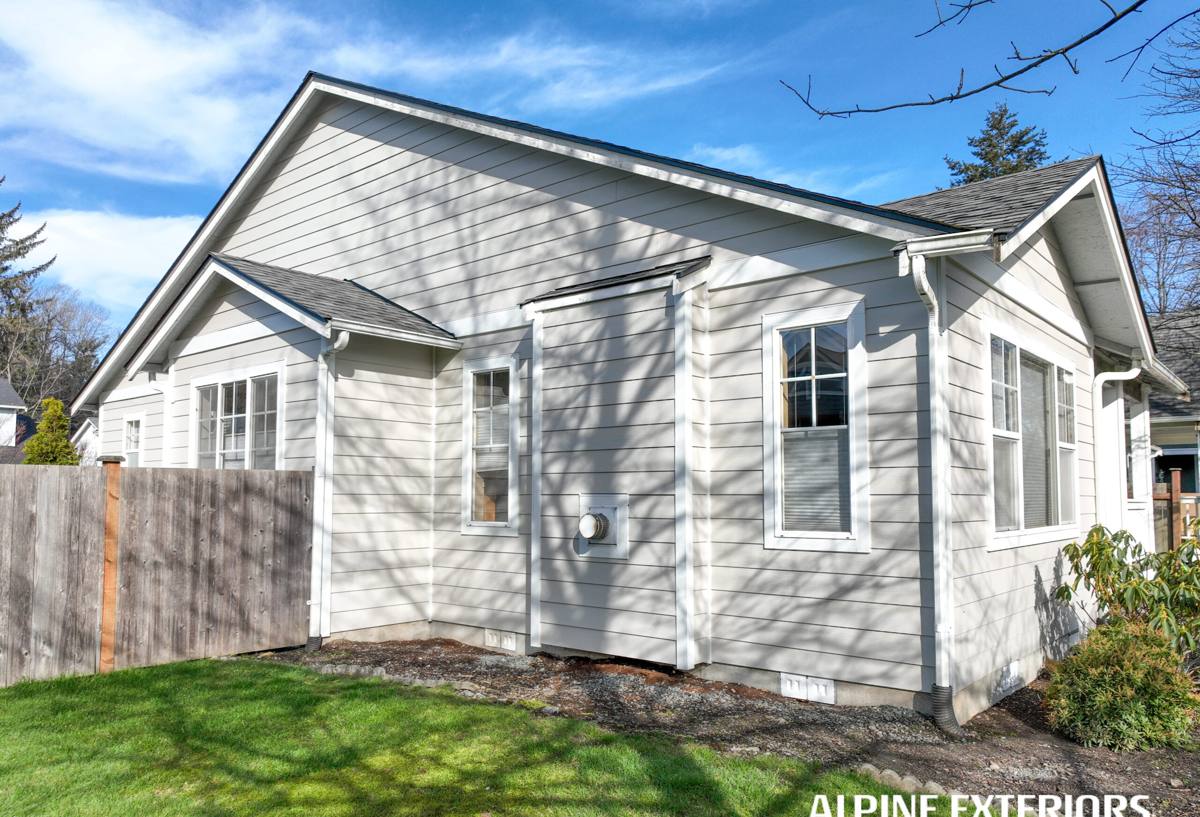
What Salt Air, Rain, and Moss Do to a Roof Over Time
Salt Air and Corrosion
Homes closer to the water deal with airborne salt that settles on every exterior surface, including the roof. On metal roofing, this matters most at fasteners, cut edges, and any spot where the protective coating has been scratched or drilled through without being properly sealed. Bare steel exposed at a cut edge or a poorly sealed screw hole is where rust starts, and once it starts under a panel lap, it's hard to see until it's already spread.
Driving Rain and Wind-Driven Water
A lot of roofing details that work fine in calm rain fail here because our storms push water sideways and uphill under laps and around penetrations. Roof valleys, chimney flashing, skylight curbs, and vent boots take the brunt of it. Underlayment quality and flashing technique matter more in this climate than panel choice alone.
Moss and Trapped Moisture
Whatcom County's long damp season is ideal moss-growing weather, especially on north-facing slopes and roofs shaded by mature trees, which is common on wooded Sudden Valley lots. Moss itself doesn't corrode metal the way it can degrade asphalt shingles, but it does hold moisture against the surface longer than the roof would otherwise see, and it can dam water at laps and fastener rows if it's allowed to build up unchecked.
Standing Seam vs. Exposed-Fastener Panels
Both systems are legitimate choices, and the right one depends on the roof, the budget, and how much long-term maintenance the homeowner wants to take on. We install both, but we're honest about the trade-offs rather than pushing whichever is easier to sell.
| Factor | Standing Seam | Exposed-Fastener |
|---|---|---|
| How panels attach | Hidden clips, no exposed screws through the panel face | Screws driven through the panel face into the deck |
| Weather performance here | Best resistance to wind-driven rain; no gasket to fail | Good, but relies on screw gaskets staying sealed over decades |
| Long-term maintenance | Very low | Gaskets should be checked periodically; some will need re-tightening or replacement |
| Upfront cost | Higher material and labor cost | Lower upfront cost |
| Typical best use | Primary roofs, exposed elevations, homes near the water | Outbuildings, shops, budget-driven projects, lower-pitch sections |
For a house that takes the full brunt of driving rain off open water, we generally recommend standing seam because there's no fastener penetration through the weather surface to eventually leak. For a detached shop or a secondary roof where budget matters more than a 40-plus-year outlook, exposed-fastener panel is a reasonable, honest choice — as long as the homeowner understands the gaskets are a maintenance item, not a set-it-and-forget-it detail.
What a Correct Metal Roof Installation Actually Involves
Underlayment and Moisture Barrier
In a climate this wet, we don't treat underlayment as an afterthought. A synthetic, high-temp underlayment goes down first, with self-adhered ice-and-water membrane at the eaves, valleys, and any low-slope transitions — the spots where wind-driven rain and ice most commonly find a way in. This is the layer that protects the house if a panel is ever damaged or a seal ages out; it should never be treated as optional to save a day of labor.
Flashing and Penetrations
Every chimney, vent pipe, skylight curb, and wall transition is a place where two different materials meet, and that's where roofs actually fail — rarely in the middle of a flat panel run. Flashing has to be formed to shed water downhill in every direction the wind can push it from, not just installed to look tidy from the ground.
Fastening, Expansion, and Panel Layout
Metal panels expand and contract with temperature swings, and standing seam clips are specifically designed to let the panel move without tearing loose fasteners or buckling the seam. Panels also need to be run and lapped correctly relative to prevailing wind and rain direction for the specific roof slope and orientation, not just laid out for convenience.
Ventilation
A roof deck that can't breathe traps moisture underneath the metal, which leads to deck rot and condensation problems that have nothing to do with the roofing material itself. Ridge and soffit ventilation should be checked and corrected as part of any metal roof project, not assumed to already be adequate.
What Drives the Cost of a Metal Roof Here
| Cost Factor | Why It Matters |
|---|---|
| Roof pitch and complexity | Steep pitches, multiple valleys, and dormers all add labor time and flashing detail |
| Tear-off vs. overlay | Removing old roofing and repairing the deck costs more upfront but avoids trapping moisture under new panels |
| Panel system chosen | Standing seam runs higher than exposed-fastener due to material, fabrication, and install time |
| Access and site conditions | Tree-covered, sloped, or hard-to-reach lots common around Sudden Valley can add setup and safety costs |
| Coating and gauge | Heavier gauge steel and better corrosion-resistant coatings cost more but hold up longer against salt air |
| Ventilation and deck repair | Any rot or inadequate venting found during tear-off adds to the scope, but skipping it costs more later |
We won't quote a roof without seeing the deck condition, pitch, and access in person — anyone offering a firm number over the phone for a metal roof is guessing, and that guess usually turns into change orders once the crew is on the roof.
How Our Process Works
- On-site assessment. We walk the roof, check the deck from the attic side where possible, and look at existing ventilation and any moss or water staining that points to a trouble spot.
- Written estimate. A clear scope covering tear-off (if needed), underlayment, flashing plan, panel system, and ventilation corrections — no vague line items.
- Tear-off and deck prep. Old roofing comes off, the deck is inspected and repaired where needed, and any soft or rotted sections are replaced before anything new goes down.
- Underlayment and flashing. Ice-and-water membrane at vulnerable areas, synthetic underlayment across the field, and custom-formed flashing at every penetration and transition.
- Panel installation. Panels run and fastened to spec, with attention to how this specific roof's slopes face prevailing wind and rain.
- Final walk-through. We review the finished roof with the homeowner, point out anything worth knowing for long-term care, and clean the site of debris and fasteners.
Living With a Metal Roof in a Salt Air, Moss-Prone Climate
A correctly installed metal roof needs very little upkeep, but "very little" isn't "none." A short annual check catches small issues before they become expensive ones.
- Clear overhanging branches and needles that hold moisture and feed moss growth on shaded slopes
- Rinse off built-up moss or debris rather than scraping it, which can scratch protective coatings
- Check that gutters and downspouts aren't backing water up under the eave edge
- Look at exposed fasteners (on exposed-fastener systems) every couple of years for early rust or a loosening gasket
- After any major windstorm, do a visual check for lifted flashing or debris damage
- Avoid pressure washing directly at seams and laps, which can force water where it shouldn't go
Why a Crew That Already Works This Area Matters
A metal roof designed for a dry-climate house doesn't automatically perform the same way on a roof that faces driving rain off the water and months of moss pressure. A crew that already works Bellingham, Sudden Valley, and the rest of Whatcom County has already seen which flashing details hold up here and which ones come back as callbacks. That's not a marketing point — it's the difference between a roof that's still tight in fifteen years and one that needs re-flashing after the first few hard winters. Local permitting requirements, typical deck conditions in older area homes, and the realities of steep, tree-covered lots are all things that are faster and cheaper to get right the first time when the crew has already dealt with them nearby.
If you're weighing a metal roof for a home in Bellingham or Sudden Valley, we're glad to take a look and give you a straight, no-pressure estimate — what your roof actually needs, what it will cost, and why. There's a form below to get that conversation started.