 Sudden Valley Exterior
 Deck Building in Barkley: Built for This Climate, Not Just Any Climate
A deck in the Barkley area of the greater Sudden Valley region has to earn its keep against conditions that are more demanding than they look. Whatcom County sits under a marine-influenced weather pattern most of the year — long stretches of driving rain, salt-tinged air moving inland off the Sound, and shaded, damp corners where moss takes hold and never fully lets go. None of that is exotic or rare here; it's just the baseline. A deck built without accounting for it will look fine for a season or two and then start showing problems that are expensive to fix and easy to have prevented.
We build and repair decks for homes in this part of Whatcom County regularly, and the failures we get called out for follow a pattern: water trapped where it shouldn't be, fasteners that weren't rated for the moisture load, and framing that was sized for a drier climate. Correct deck building here isn't about upgrading everything to "premium" — it's about getting the details right that matter for this specific environment.
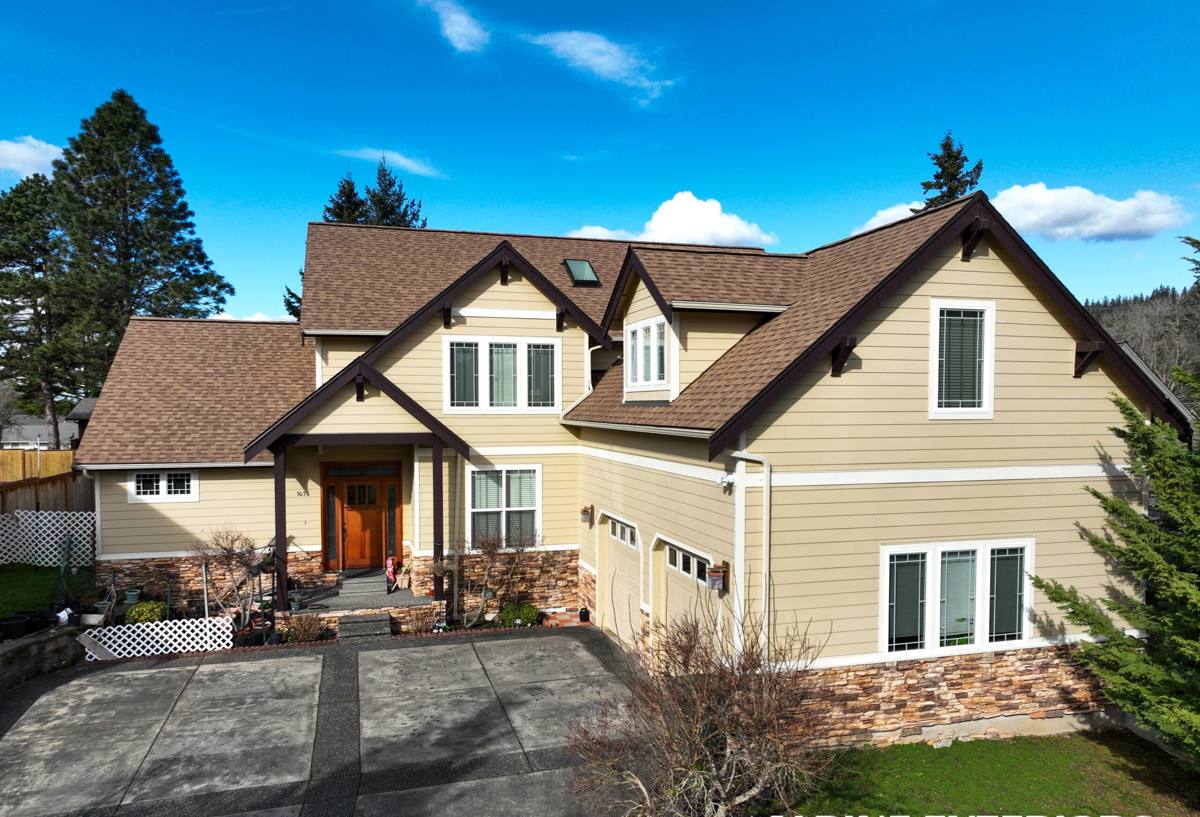
What Barkley's Climate Actually Does to a Deck
Three regional factors drive almost every deck problem we see in this area:
Driving Rain
Storms here don't just fall straight down — wind-driven rain gets pushed sideways into ledger boards, under railings, and into any gap that isn't properly flashed or sealed. Over time, water finds its way behind fascia boards and into end grain, which is where rot actually starts.
Salt-Influenced Air
Whatcom County's proximity to Puget Sound and Bellingham Bay means the air carries a mild salt content even well inland. That air accelerates corrosion on lower-grade fasteners, hardware, and hinges. It's a slow process, but it's constant — the kind of thing that quietly undermines a deck's hardware years before the decking itself shows wear.
Extended Moss Season
Between the shade cover common in wooded lots around Sudden Valley and the sheer number of wet, overcast days, moss has months to establish itself on decking, stairs, and railings. Beyond being a slip hazard, moss holds moisture directly against the wood or composite surface, which is exactly the condition that shortens a deck's service life.
A deck design that ignores any one of these three factors will underperform here, regardless of how good the materials look on a spec sheet.
What a Correctly Built Deck Involves
There's no shortcut version of this that holds up long-term. A deck built to handle Barkley's conditions needs attention in a few specific places most homeowners never think to ask about.
Ledger Attachment and Flashing
The ledger board — where the deck attaches to the house — is the single most common failure point in this climate. It needs proper flashing that directs water away from the house structure, not just caulk over a lag bolt. We treat ledger flashing as a non-negotiable step, not an upsell.
Footings Set to Local Frost and Soil Conditions
Footings need to be sized and set to depth appropriate for the soil and drainage conditions on the specific lot. Sloped or poorly draining sites — common around Sudden Valley — need extra attention to footing placement so the deck doesn't shift as ground saturation changes seasonally.
Fastener and Hardware Grade
Given the salt-influenced air, we use fasteners and structural hardware rated for coastal or high-moisture exposure, not standard interior-grade hardware. It costs a bit more upfront and saves the homeowner from hidden corrosion failures down the line.
Board Spacing and Airflow
Proper gapping between deck boards and adequate airflow underneath the structure lets the deck dry out between rain events instead of staying damp. Decks built too tight to the ground, or with boards spaced for appearance rather than drainage, hold moisture longer and moss faster.
Decking Material Options for This Climate
There's no single "best" decking material — the right choice depends on how much maintenance a homeowner wants to take on versus what they're willing to spend upfront. Here's how the common options actually compare under Whatcom County conditions:
| Material | Upfront Cost | Maintenance in This Climate | Moss/Moisture Behavior |
|---|---|---|---|
| Pressure-treated wood | Lowest | Annual cleaning, periodic sealing | Prone to moss in shaded areas if not sealed regularly |
| Cedar | Moderate | Regular sealing to maintain color and resist moisture | Naturally rot-resistant but still needs upkeep against moss |
| Composite (capped) | Higher | Occasional washing, no sealing needed | Resists rot well; can still grow surface moss if shaded and not cleaned |
| PVC decking | Highest | Minimal — occasional washing | Best moisture resistance; least likely to hold water in the board itself |
We don't push any one product as automatically "correct" for every home. Composite and PVC reduce ongoing maintenance but cost more upfront and require attention during installation, since they behave differently than wood under fasteners and heat expansion. Wood costs less to install but requires the homeowner to stay on top of sealing and cleaning — skip that in this climate and it shows fast. We'll walk through the honest trade-offs for your specific lot, shade exposure, and budget rather than defaulting to whatever has the highest margin.
Moss, Mildew, and Long-Term Deck Care
Moss isn't just cosmetic here — it's a maintenance issue with real consequences. A deck that stays shaded and damp for months at a time, which describes a lot of lots in the Sudden Valley area, needs a maintenance rhythm built around that reality:
- Sweep debris and standing organic matter off the deck surface regularly, especially in fall and winter
- Clean boards at least once a year with a deck-safe cleaner, more often in shaded sections
- Keep gutters and downspouts clear so runoff isn't dumping directly onto or near the deck
- Trim back overhanging branches to reduce shade and let boards dry between rain events
- Reseal wood decking on the schedule recommended for the specific product — don't wait until it looks dry
- Check under-deck ventilation isn't blocked by stored items, plants, or debris
None of this is complicated, but it does need to actually happen. A lot of the "deck failures" we get called to inspect aren't material failures at all — they're maintenance gaps that moss and moisture exploited over a few wet seasons.
Our Deck Building Process
We keep the process straightforward and don't skip steps to hit a lower number:
- On-site assessment — we look at drainage, sun/shade exposure, existing structure (for repairs or replacements), and any site-specific challenges like slope or soil conditions
- Design and material selection — we walk through decking, railing, and structural options with honest cost and maintenance trade-offs for your situation
- Permitting — we handle the permit application and coordinate any required inspections
- Framing and structural work — footings, ledger flashing, joists, and hardware sized and rated for this climate
- Decking and railing installation — proper spacing, fastening, and finish work
- Final walkthrough — we go over care and maintenance specific to the material you chose so the deck actually reaches its expected lifespan
Permits and Local Code Considerations
Deck construction in Whatcom County typically requires a permit once the structure exceeds a certain height or size threshold, and inspections are usually required at the footing and framing stages before decking goes down. Requirements can vary depending on the specific jurisdiction and whether the property falls under county code or an applicable local overlay. We handle the permit process as part of the job rather than leaving homeowners to sort it out — it's a normal part of doing this correctly, not an extra service.
Why a Crew That Already Works in Barkley Matters
Deck building isn't a one-size-fits-all trade, and a crew that only occasionally works in this specific climate zone tends to default to generic specs — standard fasteners, standard flashing details, standard maintenance advice — that don't hold up as well against sustained Whatcom County rain and moss exposure. Working regularly in the Sudden Valley and Barkley area means we've seen how different lots handle drainage, how much shade different yards actually get through the year, and which details cause callbacks versus which ones hold up. That local pattern recognition is part of what a homeowner is paying for when they hire a crew that already knows the area, not just the trade in general.
Signs Your Current Deck Needs Attention
If you already have a deck and aren't sure whether it needs repair, replacement, or just a maintenance catch-up, look for these signs:
- Soft or spongy spots underfoot, especially near the ledger board or stair stringers
- Persistent moss or dark staining that comes back quickly after cleaning
- Rust streaks around fasteners or visible corrosion on hardware
- Gaps or separation where the deck meets the house
- Railings that feel loose or flex more than they should
- Standing water that doesn't drain within a few hours after rain stops
Any of these can be early signs worth a professional look before they turn into a structural issue rather than a maintenance one.
If you're planning a new deck in the Barkley area or want an honest read on whether your current one needs repair, replacement, or just better maintenance, we're happy to take a look. Reach out for a free, no-pressure estimate using the form below.