 Sudden Valley Exterior
 New-Construction Windows in Cordata: Why the Install Method Matters More Than the Window
When a home is being framed, added onto, or opened up to the studs, you have a choice most homeowners never get again: install windows with a full nailing flange, tied directly into the weather-resistant barrier and flashing system before the siding goes on. That's what "new-construction windows" means in the trade — as opposed to pocket or retrofit windows, which get inserted into an existing frame from the outside and rely on the old flashing underneath. For a build in Cordata or anywhere around Sudden Valley, getting this install right the first time isn't a nicety. It's the difference between a window that sheds Whatcom County's rain for forty years and one that starts feeding water into the wall cavity within a decade.
We work new-construction and full-gut jobs across the Sudden Valley area, and Cordata's mix of newer builds, infill lots, and additions to older homes means we see this install done well and done poorly in close proximity. The difference almost never comes down to the window brand. It comes down to the flashing sequence, the fastening pattern, and whether the crew understood what this specific climate does to a wall assembly over time.
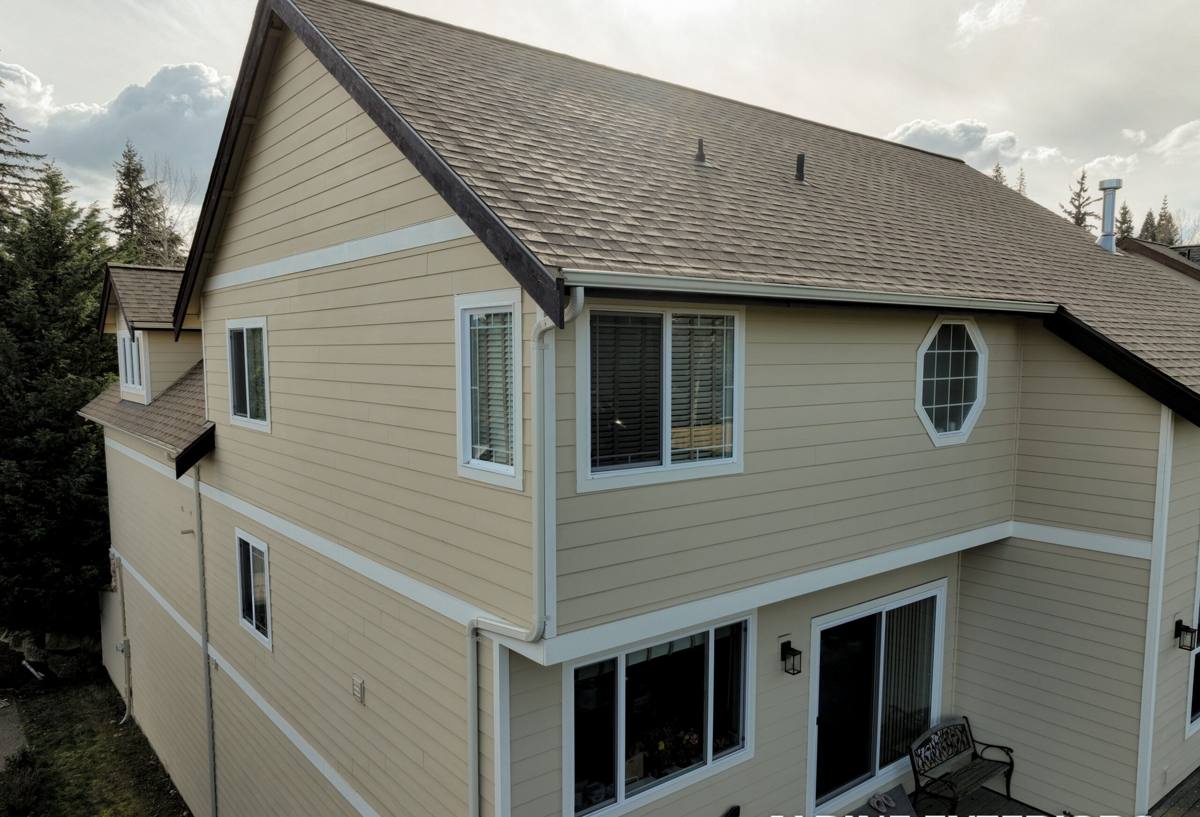
What Cordata's Climate Actually Does to a Window Opening
Whatcom County sits in a marine climate that's damp for most of the year, with weather moving in off the Sound and Georgia Strait. Three things matter specifically for window installation here:
Driving Rain
Wind-driven rain doesn't just fall — it gets pushed sideways and upward under trim, over sills, and into any gap in the flashing. A window that's simply caulked around the edges will eventually leak here. The flashing has to be layered so water is directed out and down at every course, the same way siding sheds water, regardless of wind direction.
Salt Air
Proximity to marine air accelerates corrosion on fasteners, hinges, and uncoated hardware. Standard zinc-coated screws and staples degrade faster here than they would inland. It shows up years later as streaking, stuck hardware, or a nailing flange that's lost its grip.
Long Moss and Damp Season
Whatcom County's extended wet season means any water that does get behind a window has months to sit before things dry out. Wood trim, sheathing, and framing that stay damp for weeks at a time are what let rot and moss-friendly organic growth take hold. A well-flashed window keeps that moisture out of the wall in the first place — because once it's in, drying it back out is slow and often invisible until damage shows.
The Anatomy of a Correct New-Construction Install
New-construction windows give a crew full access to the rough opening before anything is closed in. That access is the whole advantage — and it's wasted if the sequence isn't followed correctly.
Sill Pan First
Before the window ever sits in the opening, the sill gets a sloped, sealed pan — either a manufactured pan flashing or a correctly lapped flexible membrane — so that any water that does get past the window has a built-in path back outside instead of soaking into the framing below.
WRB Integration, Shingle-Style
The weather-resistant barrier (housewrap or equivalent) has to be cut and lapped so that each layer overlaps the one below it, like shingles. The window's flashing tape then ties into that sequence — sill first, then the sides, then the top last, so water draining down the wall always meets an overlap that sheds it outward rather than a seam that traps it.
The Nailing Flange — Not All Four Sides
Manufacturer instructions typically call for fastening the top and side flanges fully, while leaving the bottom flange unfastened or minimally fastened. That's intentional — it lets any water that reaches the sill pan drain back out rather than getting trapped behind a fully sealed bottom edge. A crew that fastens and caulks all four sides "for good measure" is actually working against the drainage design.
Fastener Selection
Given the salt-air exposure around this area, we favor corrosion-resistant fasteners at the flange and trim rather than the cheapest standard option. It's a small cost difference at install time and a real difference in how the window performs fifteen years out.
Frame Material: What Holds Up in This Climate
| Frame Material | How It Handles Damp/Marine Conditions | Maintenance |
|---|---|---|
| Vinyl | Won't rot or corrode; performs consistently in wet climates; seams and welds matter for long-term water tightness | Low — occasional cleaning |
| Fiberglass | Dimensionally stable in temperature and moisture swings; strong long-term performer in coastal-adjacent climates | Low |
| Aluminum-clad wood | Good look and stiffness, but any breach in the cladding or seal exposes wood to sustained moisture — a real risk given our wet season length | Moderate — seals and cladding joints need periodic checking |
| Bare wood | Requires diligent finishing and upkeep to resist the extended damp season; we don't recommend it as a primary exterior frame here without a strong maintenance commitment | High |
We don't push one material as universally "best" — it depends on budget, the look the homeowner wants, and how much upkeep they're willing to commit to. What we do insist on is that whatever frame material is chosen, the installation and flashing detail around it are done to the same standard, because a good window installed badly will still leak.
Mistakes We See on New-Construction Jobs Around Cordata
- Housewrap lapped upward instead of shingle-style, so water gets funneled behind the window instead of over it
- All four flange sides fully caulked and fastened, blocking the sill's drainage path
- Missing or improvised sill pan — a bead of caulk substituted for an actual sloped drainage detail
- Standard fasteners used where corrosion-resistant hardware would hold up better against salt air over time
- Flashing tape applied to wet or dirty sheathing, so it never actually bonds
- Window openings sized without accounting for the manufacturer's specified rough-opening tolerance, forcing the installer to compensate with extra sealant instead of a proper fit
None of these show up as a problem on install day. They show up two, five, or ten years later as staining, soft trim, or a musty smell near the window — by which point the fix is opening the wall back up, not just re-caulking.
How We Approach a New-Construction Window Job
Whether we're brought in during framing on a new build in Cordata or a Sudden Valley addition that's opened to the studs, our process stays consistent:
- Site walk during framing — we confirm rough openings against the specified window sizes before anything is closed in, catching sizing issues while they're still cheap to fix.
- Material and product selection — we walk through frame material, glass package, and hardware options based on the home's exposure and the homeowner's budget, without steering toward whatever happens to be easiest for us to install.
- Sill pan and WRB integration — installed and inspected before the window ever goes in the opening.
- Window set and flange fastening — following manufacturer sequence, not a generic "seal it all" approach.
- Flashing tape and trim integration — tied into the broader wall assembly so the window becomes part of one continuous drainage plane, not an isolated component.
- Final check — a walk-through before siding or trim closes everything in, since this is the last point where any flashing issue can be corrected without demolition.
Cost Factors on a New-Construction Window Job
Every new-construction window job in this area prices out a little differently. The main variables:
| Factor | Why It Affects Cost |
|---|---|
| Number and size of openings | More and larger windows mean more flashing labor and material, not just more units |
| Frame material | Vinyl, fiberglass, and clad-wood carry different material costs and installation time |
| Wall assembly complexity | Custom trim details, unusual siding transitions, or multiple wall claddings meeting at the opening add labor |
| Access and timing | Coordinating install during active framing versus after the fact affects scheduling and crew logistics |
| Glass and performance package | Upgraded glazing for energy performance or sound control adds cost per unit |
We give straightforward, itemized estimates rather than a single lump number, so a homeowner or builder can see exactly what's driving the price and where there's flexibility.
Why Hiring a Crew That Already Works Cordata and Sudden Valley Matters
Flashing details that work fine in a dry inland climate aren't always sufficient here. A crew that installs windows across a range of climates may default to a generic sequence rather than one tuned to sustained wind-driven rain and a long wet season. We work new-construction and remodel jobs throughout the Sudden Valley area regularly enough that the flashing sequence, material choices, and fastener selection for this climate aren't an adjustment — they're just how we build it. That local repetition is what keeps a window installation from becoming a callback five years later.
If you're framing a new build, planning an addition, or opening a wall for a remodel in Cordata or the surrounding Sudden Valley area, we're happy to walk the site, look at your rough openings, and put together a clear, no-pressure estimate for the window work — just fill out the form below.