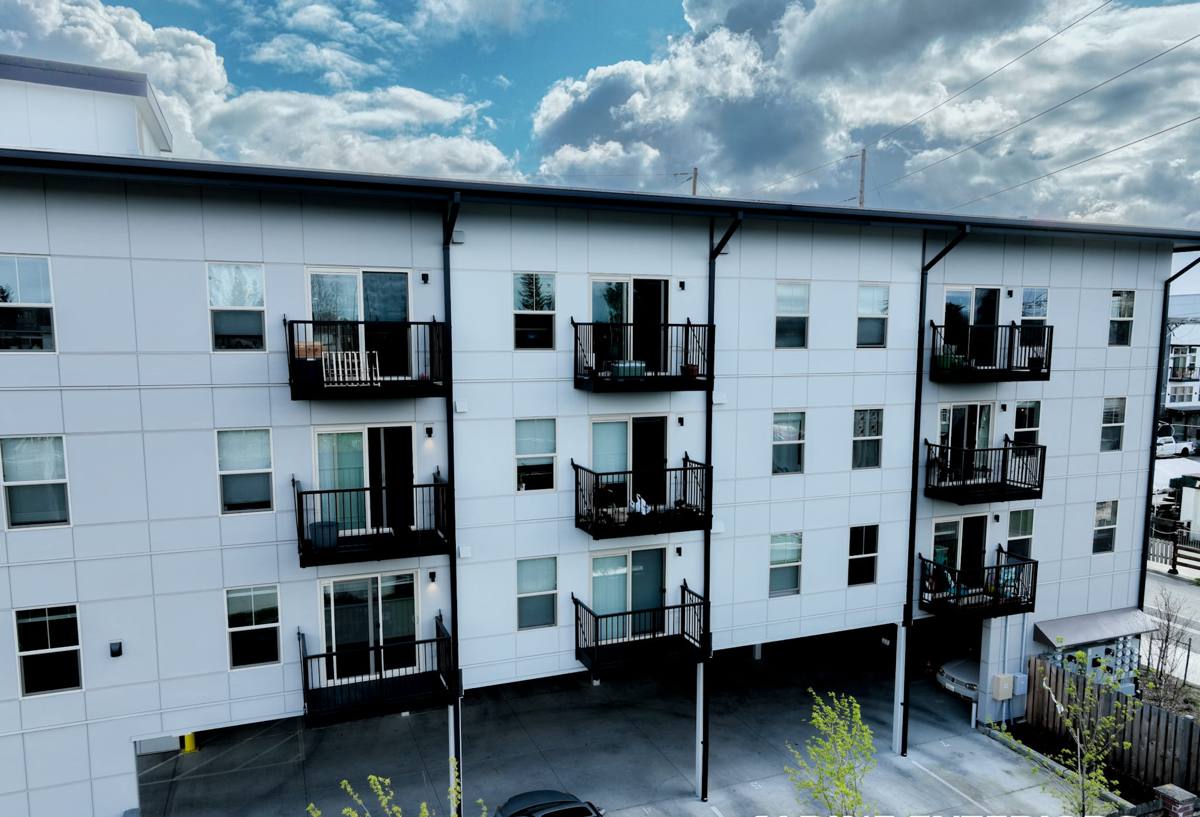
 Sudden Valley Exterior
 Why Cordata Homes Need a Different Approach to Windows
Homes in the Cordata area sit in a part of Whatcom County that takes a steady beating from Pacific weather systems. Between the salt-laden air rolling in off the Sound, driving rain that comes in sideways more often than straight down, and a moss season that seems to stretch longer every year, windows here work harder than windows almost anywhere else in the state. An energy-efficient window that was engineered and tested for a drier, milder climate can underperform fast once it's installed on a house that faces this kind of exposure year-round.
That's the gap we focus on closing. Energy efficiency on paper — a good U-factor, a solid Solar Heat Gain Coefficient — only holds up if the window and its installation are matched to the actual conditions the house sits in. For Cordata homeowners, that means windows and flashing details chosen specifically for wind-driven moisture and long stretches of damp, not just a general Pacific Northwest spec sheet.
The Regional Climate Factors That Shape Our Recommendations
Salt Air and Metal Fatigue
Even homes that aren't right on the water pick up salt content in the air, especially during winter storm patterns. Salt accelerates corrosion on hardware, fasteners, and lower-grade aluminum components. Over years, this shows up as pitted latches, stiff or seized locks, and cloudy or stained sills on windows that weren't specified with corrosion-resistant hardware from the start.
Driving Rain and Wind-Loading
Whatcom County storms frequently push rain sideways rather than straight down, which puts real pressure on the window's water-management system — not just the glass and frame, but the flashing, sill pan, and sealant details around it. A window that's watertight in a still, gentle rain can still leak under wind-driven conditions if it wasn't installed with the right flashing sequence.
Moss Season and Prolonged Dampness
The long stretch of wet, low-light months here means anything organic — siding, trim, window sills — stays damp longer than it would in a drier climate. That prolonged moisture exposure is exactly what allows moss and mildew to take hold on window sills, sashes, and the trim surrounding them, and it's also what causes wood rot in frames that aren't properly sealed or that use lower-grade materials.
What a Correct Energy-Efficient Window Job Actually Involves
A lot of window "replacement" jobs are really just glass and sash swaps into an existing frame, with minimal attention to what's happening behind the trim. That approach can look fine for a year or two and then start leaking, fogging, or letting drafts in around the edges. A correct job addresses the whole opening, not just the window unit itself.
- Full removal of the old unit down to the rough opening, so hidden rot or water damage can actually be found and fixed
- Inspection and repair of the sill pan, header, and side jambs before anything new goes in
- Proper flashing sequence — sill pan flashing, side flashing, and head flashing installed in the correct shingle-style order so water sheds outward, not into the wall
- Selection of glass and frame ratings matched to the window's orientation (a west-facing window dealing with driving rain needs different consideration than a sheltered north-facing one)
- Correct insulation and air-sealing around the perimeter of the frame, not just caulk over gaps
- Exterior trim and sealant details that account for local moss and mildew exposure, not generic products
Skipping any one of these steps is usually where the problems start — not with the window itself, but with what's around it.
Window Types and Ratings Worth Comparing for This Climate
There's no single "best" window for every home — orientation, budget, and the existing wall assembly all matter. But for Cordata's climate, some factors carry more weight than they would in a drier region.
| Factor | Why It Matters Here | What to Look For |
|---|---|---|
| Frame material | Salt air and prolonged moisture accelerate corrosion and rot | Corrosion-resistant hardware; frame materials with proven moisture tolerance |
| U-factor | Determines how much heat escapes through the window in our cool, wet winters | Lower U-factor for better heat retention, especially on north and west exposures |
| Solar Heat Gain Coefficient (SHGC) | Affects comfort and energy use during the limited sun we do get | Balanced SHGC — not so low it blocks welcome winter sun, not so high it overheats in summer |
| Water resistance rating | Wind-driven rain tests seals harder than still rain does | Higher water penetration resistance rating, verified by testing, not just marketing language |
| Hardware and weatherstripping | Constant damp cycling wears out cheap components faster | Quality weatherstripping and hardware rated for coastal or high-moisture use |
We walk homeowners through these trade-offs honestly, including where a mid-range option makes more sense than the top-tier product for a given wall or budget.
Why We're Selective About What We Install
We don't install every product on the market, and that's a deliberate standard, not a limitation. Some window systems that perform fine in drier climates require maintenance schedules or installation tolerances that are hard to keep up with realistically once a house is dealing with Whatcom County's rain and moss cycle. Others have warranty structures that don't hold up well against coastal exposure claims. When we steer a homeowner away from a particular product, it's because we'd rather explain the trade-off up front than have them deal with a callback in three years.
Our Process, From Estimate to Final Walkthrough
- On-site assessment — we look at each window opening individually, including current condition, orientation, and any signs of past water intrusion
- Honest recommendation — we explain which products and ratings make sense for that specific opening and budget, including options we'd steer you away from and why
- Written estimate — clear scope, materials, and timeline before any work starts
- Removal and inspection — old units come out fully so we can check the rough opening for hidden damage
- Installation — proper flashing, insulation, and air-sealing, not just a unit dropped into the old frame
- Final walkthrough — we check operation, sealing, and finish work with you before calling the job done
Problems We Commonly Find From Prior Installations
A meaningful share of the window work we do in the Cordata area isn't new construction — it's correcting issues from a previous install that didn't account for local conditions. Common findings include missing or reversed flashing that channels water into the wall instead of away from it, caulk used as a substitute for proper flashing, hardware that's already corroding from salt exposure, and sills or trim showing early rot because moisture was trapped rather than allowed to drain and dry.
What Affects the Cost of a Window Project
| Cost Factor | Why It Varies |
|---|---|
| Number and size of openings | More or larger windows mean more materials and labor |
| Condition of the existing opening | Hidden rot or water damage found during removal adds repair work |
| Frame material and glass package | Higher-performance glass and corrosion-resistant hardware cost more upfront but reduce long-term issues |
| Access and site conditions | Upper-story or hard-to-access windows take more time and equipment |
| Trim and exterior finish work | Matching existing trim or upgrading materials affects both cost and durability |
We give real ranges during the estimate, not a number pulled out of thin air — and we flag anything found mid-project before proceeding, so there are no surprises on the final invoice.
Keeping Your New Windows Performing Long-Term
Even a properly installed window benefits from some basic upkeep, especially given how much moisture and organic growth this area deals with for months at a time.
- Rinse sills and tracks a few times a year to clear salt residue and organic debris before it builds up
- Check and clear weep holes so water can drain out rather than pool
- Inspect exterior caulking annually, especially after a hard winter, and re-seal any cracked joints
- Watch for early moss or mildew on sills and trim and clean it off before it spreads to the frame
- Test locks and hardware periodically — stiffness can be an early sign of corrosion starting
- Have flashing and trim checked if you notice any drafts, fogging between panes, or soft spots in nearby wood
Why Local Experience in Cordata Matters
A crew that's worked windows throughout Whatcom County and the greater Sudden Valley area already knows which details matter most here — because we've seen what happens when they're skipped. That's different from a crew applying a generic install method regardless of region. We've dealt with the corrosion, the wind-driven leaks, and the moss buildup enough times to know where to focus attention before those problems start, not just after a homeowner notices a draft or a stain.
If you're weighing whether your current windows need replacing, or you want a second opinion on a previous install, we're happy to take a look. Reach out for a free, no-pressure estimate using the form below — we'll walk the property, answer your questions honestly, and give you a clear picture of what your home actually needs.