 Sudden Valley Exterior
 Why Decking Choices Matter More in Cordata
Cordata sits in one of the wetter corners of Whatcom County, and that shows up fast on an outdoor deck. Long stretches of driving rain, a moss season that can run from fall through spring, and the humidity that settles into low-lying yards all put steady pressure on any decking material. A deck built without those conditions in mind doesn't fail overnight — it fails slowly, through soft spots, discoloration, warping boards, and a substructure that traps moisture where you can't see it until it's a real problem.
Composite decking exists specifically to handle that kind of exposure better than solid wood, but "composite" is not a single product with one set of rules. The board itself, the way it's fastened, and how the substructure underneath is built all determine whether a deck holds up through a Whatcom County winter or starts showing trouble in year three.
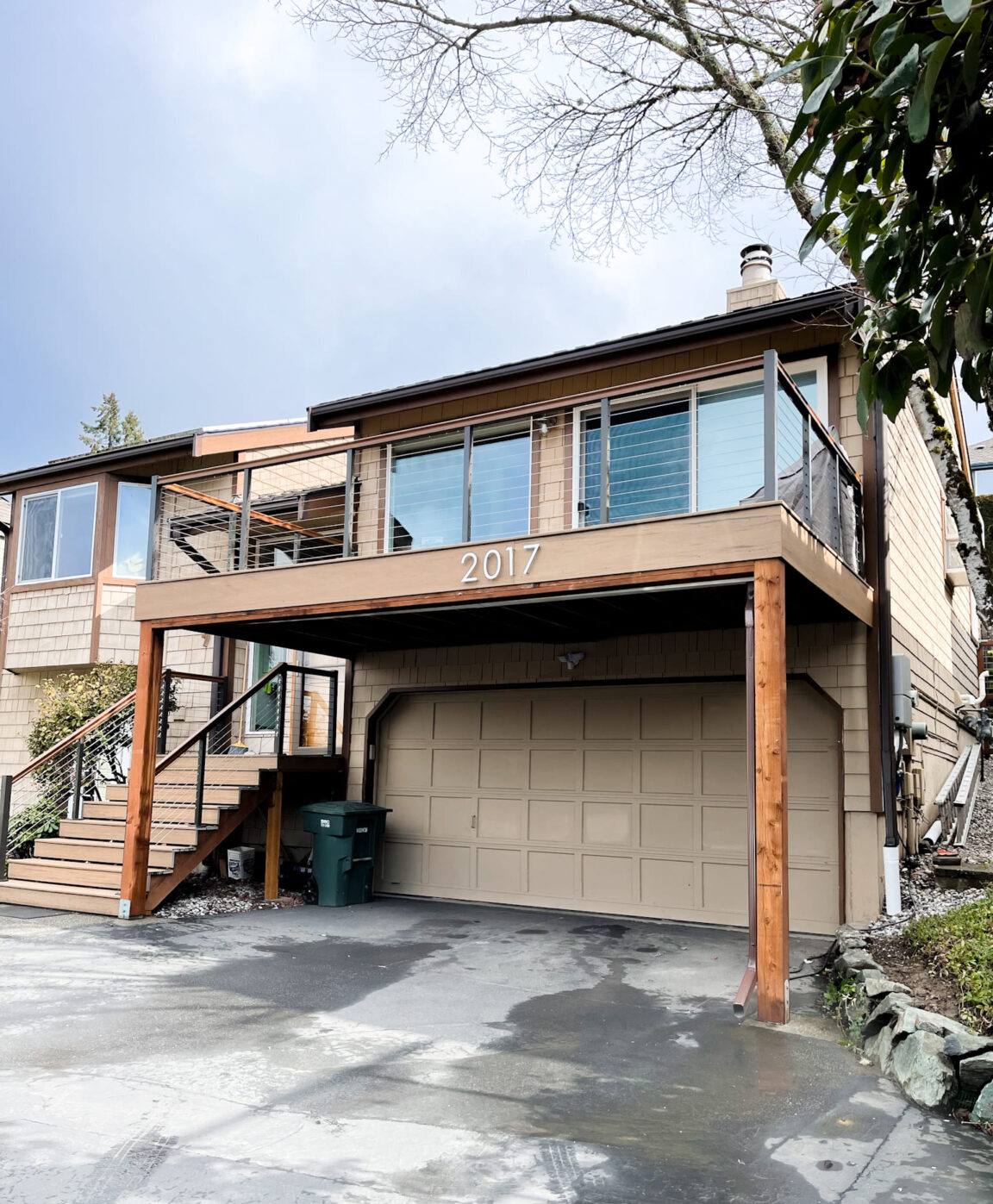
What Cordata's Climate Actually Does to a Deck
Constant Moisture Cycling
The Pacific Northwest doesn't just get rain — it gets rain that lingers. Decks in Cordata spend long periods damp rather than getting a hard rain followed by dry sun, which is a very different stress pattern than a deck sees in a drier climate. Wood fibers swell and contract with that cycling; composite cores handle it better, but only if the boards are properly ventilated underneath and not sitting in standing water.
Moss and Algae Growth
A long moss season means anything horizontal and shaded — deck boards, especially on the north or east side of a house, under trees, or near fences — will grow moss and algae if airflow and drainage aren't accounted for at installation. This isn't a flaw in the material; it's a fact of the region, and it's why deck spacing, board orientation, and substructure ventilation matter as much as the decking product itself.
Salt Air and Coastal Influence
Whatcom County's proximity to Puget Sound and Bellingham Bay means homes throughout the area, including Cordata, get some degree of salt-laden air carried inland. Salt exposure accelerates corrosion on fasteners and hardware faster than most homeowners expect, which is why fastener choice on a composite deck build is not a place to cut corners.
Composite vs. Other Decking Materials for This Climate
| Material | Moisture Behavior | Moss/Algae Resistance | Maintenance | Typical Lifespan Here |
|---|---|---|---|---|
| Pressure-treated wood | Absorbs and releases moisture; prone to swelling/splitting | Low — needs regular cleaning and re-sealing | Annual sealing/staining | 10-15 years with upkeep |
| Cedar | Naturally moisture-resistant but still absorbs water | Moderate — still grows moss if shaded | Sealing every 1-2 years | 15-20 years with upkeep |
| Composite (capped) | Doesn't absorb water into the core; shell resists rot | Better resistance, but still needs airflow and occasional cleaning | Periodic washing, no sealing/staining | 25-30+ years |
| PVC decking | Fully synthetic, no moisture absorption | Good resistance, still needs cleaning in shaded areas | Low; can feel/flex differently underfoot | 25-30+ years |
We install capped composite decking as our standard recommendation for most Cordata homes because it strikes the right balance: it handles sustained Northwest moisture far better than wood, it doesn't require the yearly sealing routine that wood demands, and it's forgiving of the kind of shaded, damp conditions common in this area's tree-lined lots.
What a Correctly Built Composite Deck Actually Involves
The decking boards get the attention, but most of the problems we see on failed or failing decks trace back to what's underneath. A composite deck built for this climate needs:
- A substructure with adequate slope and drainage so water doesn't pool against ledger boards or posts
- Joist spacing matched to the specific composite product's span rating, not just standard wood-frame spacing
- Ventilation gaps maintained between the deck surface and grade, especially on lower decks close to the ground
- Corrosion-resistant fasteners and hardware rated for coastal/high-moisture exposure
- Proper flashing at the ledger board where the deck meets the house, to stop water intrusion into the structure itself
- Hidden fastening systems installed per manufacturer spec, since incorrect fastener spacing is a common cause of board buckling
Skipping any of these doesn't usually cause an immediate, visible problem — that's what makes it risky. A deck can look fine for a season or two before drainage or ventilation issues show up as soft framing, staining, or boards that shift underfoot.
Our Process for Cordata Composite Decking Projects
1. On-Site Assessment
We walk the property, look at drainage patterns, sun/shade exposure, existing structure condition if it's a replacement, and how the deck will actually be used before recommending a board and layout.
2. Structural Evaluation
If we're building on an existing frame, we check ledger attachment, joist condition, and footing stability. Composite decking is heavier than wood in some product lines, and an undersized or moisture-damaged substructure needs to be addressed before new decking goes on top of it — not after.
3. Drainage and Ventilation Planning
Given how much rain Whatcom County sees, we plan slope and airflow underneath the deck as a core part of the design, not an afterthought. This is the single biggest factor in whether a deck stays moss-free longer and avoids trapped moisture.
4. Installation
Boards are installed to the manufacturer's fastening and spacing specifications, with attention to expansion gaps — composite still moves with temperature, just less dramatically than wood. Fasteners and hardware are chosen for the region's moisture and salt exposure, not generic hardware-store options.
5. Final Walkthrough
We go over care basics with the homeowner: what to expect in the first moss season, how to clean the surface safely, and what warranty coverage applies to the specific product installed.
Maintenance Realities for a Composite Deck in This Area
Composite decking is lower-maintenance than wood, but "low-maintenance" doesn't mean "no maintenance" in a climate like this. Homeowners in Cordata should expect to:
- Rinse or sweep debris off the deck regularly, especially in fall when leaves and organic matter collect and hold moisture
- Do a periodic wash (a soft-bristle brush and mild cleaner, or a low-pressure wash) to keep moss and algae from establishing on shaded sections
- Check that gaps between boards stay clear so water keeps draining through rather than sitting on the surface
- Confirm any planters, rugs, or furniture aren't creating permanently damp, shaded spots on the deck surface
None of this is heavy work, but skipping it entirely in a wet, moss-prone climate will shorten the time before a deck needs a real cleaning to restore its appearance.
Cost Factors Homeowners Should Understand
| Factor | Why It Affects Price |
|---|---|
| Board tier/brand | Composite products range from entry-level capped boards to premium lines with longer warranties and more color/texture options |
| Substructure condition | Replacing or reinforcing an existing frame adds cost but is not optional if the current structure is compromised |
| Deck size and layout complexity | Multi-level decks, curves, or built-in features (benches, railings) add labor time |
| Railing and fastener systems | Hidden fastener systems and corrosion-resistant hardware cost more than basic screws but perform far better long-term here |
| Site access | Difficult access, slope, or removal of an old deck affects labor time and disposal costs |
Composite decking generally costs more upfront than pressure-treated wood but less than the total cost of wood over its lifespan once you factor in annual sealing, staining, and earlier replacement. We give homeowners a straightforward breakdown so the comparison is based on real numbers for their project, not a generic price-per-square-foot figure that doesn't account for their specific site.
What to Look for When Hiring a Deck Contractor Here
- Experience with composite-specific installation requirements, not just general carpentry
- A clear explanation of how they'll handle drainage and ventilation for your specific lot
- Use of fasteners and hardware rated for coastal/high-moisture exposure
- Manufacturer certification or training on the composite product they're recommending, where applicable
- A written scope that specifies board brand/line, substructure work, and warranty terms
- Local references or project history in Whatcom County, where the climate demands are consistent with your own property
A crew that already works regularly in Cordata and the surrounding Sudden Valley area has already seen how local drainage patterns, shade cover, and moss growth behave on real decks in this exact climate. That's not a marketing point — it's the difference between a design that accounts for how this specific area behaves through a wet winter and one that's copied from a generic spec sheet.
Get a Straightforward Estimate
If you're planning a new composite deck or replacing an aging one in Cordata, we're happy to walk the property, look at drainage and structural condition, and give you an honest read on what the job actually needs. There's no pressure and no obligation — just a clear estimate based on your home and this area's conditions. Use the form below to request a free estimate.